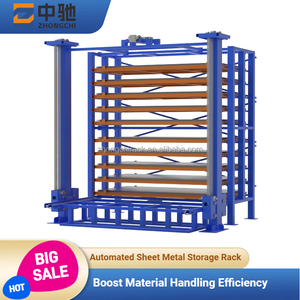
 Automated
Precision Manufacturing Portfolio
Industrial High-Density Storage & Warehouse Racking Solutions
Explore our factory-engineered systems manufactured from Q235B/Q355B structural steel, tested for seismic durability, high dynamic loads, and extreme operational throughput across international logistics hubs.
Automated
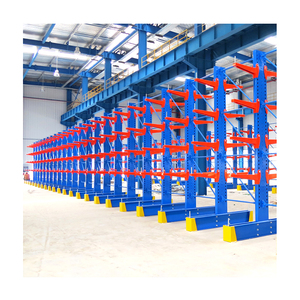 Cantilever
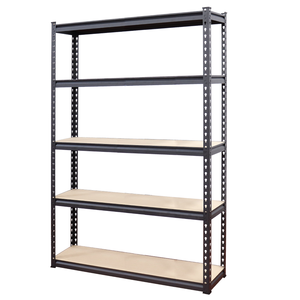 Boltless Rack
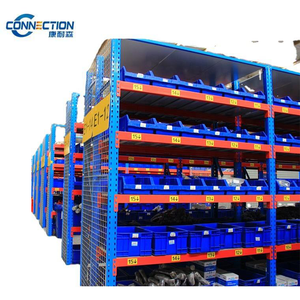 Stacking
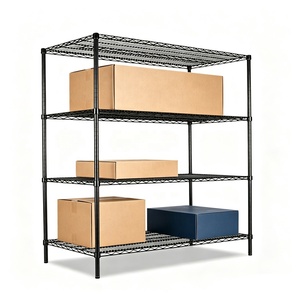 NSF Certified
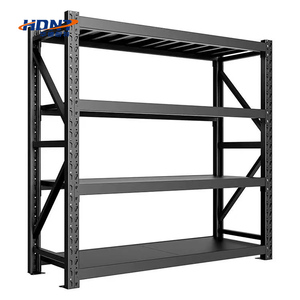 Longspan
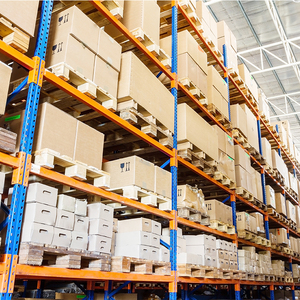 Custom Roll
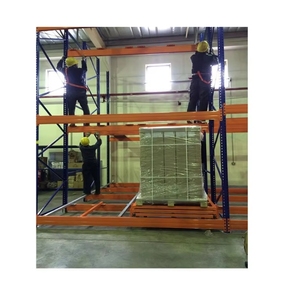 Flagship System
White Paper: Kinematic Design & Load Mechanics
Engineering Architecture of High-Yield Push Back Racking Systems
An authoritative technical analysis of telescoping cart assemblies, inclined structural rail physics, and low-profile carriage stability under heavy dynamic load conditions.
Nested Cart Kinematics
Push back racking utilizes a progressive nested trolley arrangement riding on inclined structural steel channels. When the initial pallet is placed on the top cart, incoming pallets smoothly displace existing positions uphill along low-friction precision steel wheel tracks.
- Multi-depth lane staging from 2, 3, 4, 5, to 6 pallets deep
- Low profile nest height conserving up to 4.5" vertical clear lift
- Flanged heavy-duty cast steel wheels with sealed bearings
Controlled Incline Gradient
Gravity acceleration is strictly governed by an engineered pitch slope, calibrated typically between 2.2% and 2.8% grade. This ensures smooth pallet presentation to the pick face without aggressive impact velocity, guarding against load tipping or structural jar.
- Continuous deceleration dampening via wheel rolling resistance
- Positive mechanical front-stop catches forged from ASTM A36 plate
- Dual safety links preventing cart derailment during seismic motion
Pallet Integrity & SKU Flexibility
Unlike drive-in racking where pallets sit precariously on thin perimeter rails, push back carts form a continuous structural platform. Pallets with broken bottom boards, odd footings, or non-standard footprint dimensions transfer weight across the unified cart structure.
- Full GMA 48"x40", Euro 1200x800mm & custom skid support
- Eliminates mast collisions into deep storage rack bays
- Immediate selectivity of front facing pallet at every vertical tier
| Storage Racking System | Pallet Density Ratio | Selectivity / Access | Forklift Cycle Speed | SKU Breadth vs Depth | Structural Impact Risk |
|---|---|---|---|---|---|
| Push Back Racking (HEDA) | Very High (75%+) | Immediate Face Access (LIFO) | Rapid (Fast Pick-face) | Medium to High SKU Diversity | Minimal (No Bay Entry) |
| Drive-In / Drive-Through | Very High (80%+) | Strict Lane Access Only | Slow (Mast Navigation) | Low SKU Diversity (Bulk single) | High (Forklift drives in bay) |
| Standard Selective Racking | Low (Aisle Demanding ~40%) | 100% Immediate Direct Access | Fast Single-Pallet Pick | Unlimited Unique SKUs | Moderate (Column Guards Req.) |
| Gravity Pallet Flow Rack | Very High (85%+) | FIFO Strict Date-Code Control | Separate Charge / Pick Aisle | High Volume / Perishable SKU | Low (Dedicated Pick Face) |
| Radio Shuttle Automation | Maximum (90%+) | FIFO or LIFO via Smart Cart | Automated Internal Transfer | Very Deep Bay Facilities | Minimal (Cart Does Transfer) |
2001.
Established Year (25+ Yrs Industry Leadership)
323,000 ft²
Massive 30,000 m² Advanced Production Hub
30,000 Tons
Monthly Structural Steel Processing Volume
10,000+
Turnkey Warehouse Projects Deployed Globally
Original Manufacturing Authority
Factory-Direct Quality: The 10-Step Controlled Fabrication Process
At Guangzhou Heda Shelves Co., Ltd., raw carbon steel coils are converted into precision-welded, corrosion-inhibited structural push back assemblies through our integrated ten-stage manufacturing sequence.
01
Certified Mill Coils
Strict spectroscopic testing of hot-rolled structural steel coils for certified tensile strength.
02
Precision Slitting
High-speed longitudinal slitting lines cutting strip steel to exact dimensional tolerances.
03
CNC Punching
Automated punching machines punching teardrop or diamond upright slots on precise pitch.
04
Cold Roll-Forming
Heavy multi-pass continuous roll-forming lines creating rigid boxed beams and uprights.
05
Cart Profile Bending
CNC hydraulic bending of low-profile nested cart chassis for distortion-free tracking.
06
Robotic Welding
CO2 shielded automated robotic welders bonding beam connectors and baseplate joints.
07
Deburring & Polish
Mechanical grinding and shot blasting removing slag, sharp edges, and surface impurities.
08
Pickling Pretreatment
8-stage chemical pickling and phosphating tank wash ensuring maximum coating adhesion.
09
Electrostatic Powder
Automated powder line applying 60-80μm durable epoxy-polyester cured at 200°C.
10
QC & Ocean Stacking
Micrometer dimensional verification, batch load testing, and container-optimized steel banding.
Engineered Compliance for North America & Global Jurisdictions
Guangzhou Heda Shelves provides complete engineering documentation packets ready for review by local Engineers of Record (EOR). Dual-unit calculation sheets (imperial lbs/ft and metric kg/mm) are issued to verify baseplate anchor pullout resistance, seismic design categories (IBC 2024 / ASCE 7), and beam deflection limits (L/180).
ISO 9001:2015 Cert #18624Q00169R0M
CE Construction Mark #2435-CPR-8605159
RoHS Heavy-Metal Free Coatings
Ready to Optimize Your Storage Density?
Send our senior engineering team your warehouse DWG floor plan, pallet load parameters, and ceiling clearance heights.
Inquire Now
Strategic Intelligence 2025–2035
Future Procurement Trends in Push Back Racking & Bulk Storage
Anticipating supply chain evolution: how next-generation warehouse developments are reshaping procurement criteria for high-density dynamic racking systems worldwide.
Automation
AMR / AGV Hybrid Integration
Forklift-free facilities are deploying Autonomous Mobile Robots (AMRs) fitted with high-reach masts to interface with push back pick faces. Carts are being re-engineered with optical target locators, laser-guided front stops, and ultra-precise track parallelism to eliminate loading errors.
Cold Chain Surge
Sub-Zero Cryogenic Lubrication
The rapid expansion of refrigerated and freezer DCs (-20°F to -40°F) demands advanced wheel bearing metallurgy. Modern procurement requires food-grade synthetic polyalphaolefin (PAO) low-viscosity greases that prevent cart freeze-ups and eliminate track stiction.
Sustainability
High-Strength Micro-Alloy Steel
Global decarbonization goals are driving the adoption of high-yield-strength micro-alloyed hot-rolled steels (yield points ≥ 50,000 PSI). This reduces structural tare weight while increasing pallet weight capacity, minimizing embodied carbon per pallet footprint.
Risk Mitigation
Seismic Resilience & Dynamic Damping
Building codes in earthquake-prone coastal zones now enforce finite element modeling of hydrodynamic fluid movement in pallet liquid storage. Push back tracks now incorporate progressive spring snubber buffers to prevent dynamic cart derailment during seismic events.
Procurement White Paper
Comprehensive Engineering Specification Checklist for B2B Importers
Essential mechanical parameters that procurement directors, system integrators, and plant engineers must define prior to placing factory-direct push back orders.
1. Pallet Under-Clearance & Weight
Evaluate bottom runner direction. Push back systems can be configured for pallets loaded parallel or perpendicular to the rail direction. Always calculate:
- Maximum actual dynamic weight per pallet (up to 3,000 lbs)
- Pallet bottom deflection limit under ambient & cold states
- Overhang tolerances (allowable 2" left/right clearances)
2. Rail Channel Profile & Steel Grade
Industrial push back rails endure heavy rolling loads and forklift nudges. Specify continuous roll-formed or structural channel rails:
- Heavy structural steel channel rails for high-cycle DCs
- Galvanized steel options for washdown & outdoor yards
- Enclosed rail designs that prevent debris accumulation
3. Forklift Mast Tilt Angle Compatibility
Because the rail slope is inclined at 2-3%, standard counterbalanced, reach trucks, or narrow-aisle forklifts must account for tilt geometry:
- Mast back-tilt of at least 3° required for level pallet seating
- Side-shifter attachments recommended for entry centering
- Minimum 6" vertical lift clearance between carts and upper beams
Expert Knowledge Base
Frequently Asked Questions: Push Back Racking Engineering & Export
Answers to critical technical, operational, and commercial questions asked by warehouse directors and structural engineers.
How does Push Back racking compare to Drive-In racking in daily operations? +
While both systems provide high storage density, their mechanical operation and warehouse productivity profiles differ significantly. In a Drive-In racking system, the forklift driver must enter the rack bay to deposit or retrieve pallets. This slows down cycle times, limits SKU selectivity (since an entire lane must generally contain only one SKU), and drastically elevates the likelihood of rack upright damage from mast collisions. Conversely, with Push Back racking, the lift truck operator remains in the main operating aisle at all times. Pallets are loaded and retrieved from the single front pick face on nested rolling carts. As a result, forklift cycle speeds are up to 60% faster, bay collision risk is nearly eliminated, and each vertical level in the push back bay can house a completely different SKU.
What happens if a damaged or non-standard pallet is placed on the cart? +
HEDA's push back carts feature a continuous welded structural frame rather than simple perimeter ledges. This rigid platform design supports the pallet evenly across its surface. Even if a pallet has loose bottom deck boards, broken runners, or uneven skid footings, its load is securely distributed across the cross-members of the cart rather than resting on narrow rails. In addition, our carts are engineered with positive side-guide lips that prevent skewed pallets from shifting or binding against the structural upright frame during loading and unloading.
Can HEDA Push Back Racking operate reliably in cold storage and blast freezers? +
Yes. Push Back systems are widely used in cold storage and sub-zero freezer warehouses (-25°C to -40°C) where maximizing storage cube density is paramount to lowering refrigeration energy costs. For cold chain applications, HEDA specifies low-temperature synthetic lubricants inside the shielded roller wheel bearings, heavy-duty anti-corrosion finishes, and cold-formed structural steel components that maintain yield ductility without low-temperature embrittlement. The elimination of electrical drives or sensors also makes push back significantly more dependable in freezing conditions than complex automation.
How are structural load calculations and permit requirements handled for US and Canadian projects? +
HEDA provides comprehensive submittal packets for every export order. Our structural engineering department prepares full shop drawings, frame load tables, beam connection capacity values, and baseplate anchorage shear/tension calculations in imperial measurements (inches, feet, pounds). These calculation sets conform to RMI (Rack Manufacturers Institute) MH16.1 guidelines, AISI North American Cold-Formed Steel Specifications, and the International Building Code (IBC). These documents are structured specifically for convenient stamping by your local licensed Professional Engineer (PE) or Engineer of Record (EOR) during the municipal permitting phase.
What is the standard manufacturing lead time and ocean container stowage method? +
Our standard production lead time is typically 20 to 30 calendar days from formal CAD layout sign-off. As an experienced exporter, we optimize container loading to prevent transit deformation. Upright frames are nested on custom timber cradles, beams are grouped with steel strapping and edge-protectors, and nested carts and precision track assemblies are boxed or securely banded onto structural steel skids. Every 40-foot high-cube container is packed to maximize volumetric cube utilization while ensuring smooth offloading at your facility dock using standard forklifts.
What maximum lane depth can be achieved with Push Back Racking? +
Push Back racking typically accommodates configurations of 2, 3, 4, 5, and 6 pallets deep per lane. While 2-deep and 3-deep configurations represent the majority of high-turnover grocery and distribution operations, our reinforced 5-deep and 6-deep heavy cart systems are commonly deployed in cold storage and high-density industrial manufacturing facilities where maximum pallet positions per square foot are essential.