2400x600x2200 Medium Duty Longspan Industrial Shelves
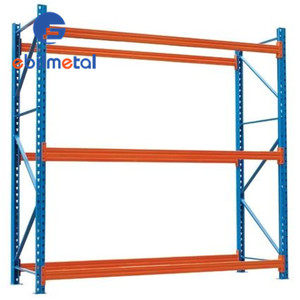
Standard 4-tier steel configuration engineered with a 400kg (880 lbs) distributed capacity per level, stepped beam profile, and boltless safety lock assembly for manual picking aisles.
Engineered for structural rigidity, rapid SKU turnover, and international compliance. Below are our premier industrial racking modules deployed in modern manufacturing plants, 3PL logistics centers, and cold-chain hubs worldwide.
Standard 4-tier steel configuration engineered with a 400kg (880 lbs) distributed capacity per level, stepped beam profile, and boltless safety lock assembly for manual picking aisles.
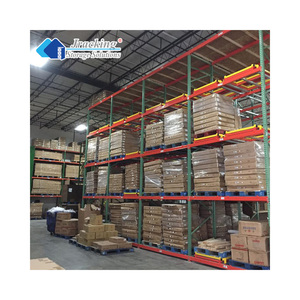
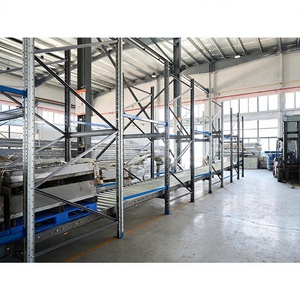
Dynamic nested cart system on inclined steel rails accommodating 2 to 6 pallets deep. Maximizes lane cubic utilization while reducing lift-truck travel distance into the rack structure.
Cold-rolled high-tensile steel frames with 50mm/75mm hole pitch adjustability. Supports North American GMA 48x40-inch pallets with beam capacities scaling past 3,000kg per pair.
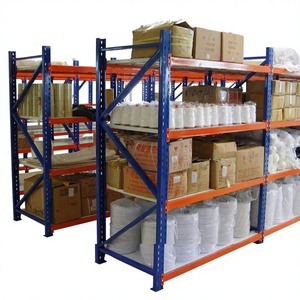
Reinforced steel upright assemblies suited for fast-fulfillment parcel centers, bulk express sundries distribution, and commercial retail stockroom operations requiring high tier flexibility.
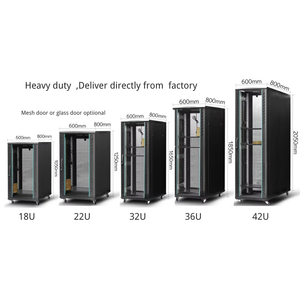
Available from 16U to 42U configurations. Built with electrostatic coated cold-rolled sheet steel, ventilation mesh doors, and 4 heavy-duty castors for integrated automated warehouse server nodes.
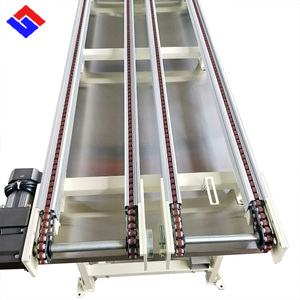
Extruded aluminum rail structure paired with double-speed chain mechanisms. Seamlessly interconnects static stacking pallet zones directly into automated assembly lines and dispatch docks.
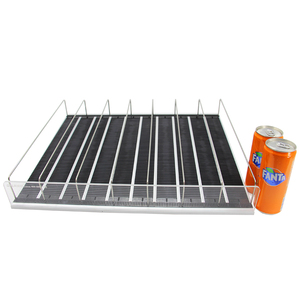
Engineered for heavy packaged retail goods, beverage cases, and cash-and-carry stores. Features 8 customizable gravity roller decks ensuring continuous front-facing product replenishment.
Equipped with heavy-duty aluminum alloy roller tracks and dividers. Separates loading and picking faces completely to accelerate order preparation and eliminate forklift aisle interference.
A rigorous examination of post pallet mechanics, structural metallurgy, automated integration, and total cost of ownership (TCO) benchmarks for global supply chain leaders.
In the contemporary landscape of high-velocity intralogistics, standard fixed warehousing frameworks frequently exhibit operational bottlenecks when exposed to seasonal surge pressures, fluctuating raw material supplies, and dynamic warehouse tenant requirements. Custom OEM stacking pallet racks—often designated across North American, European, and Asia-Pacific industrial sectors as manuracks, post pallets, or portable stack racks—represent the structural convergence between modular storage agility and the extreme structural load bearing of heavy-duty selective steel framing.
Engineered using certified Q235B and Q355B cold-rolled structural steel, custom stacking racks resolve the long-standing logistics paradox: how to attain high-density vertical storage without committing capital to permanent, bolted floor anchor installations that permanently constrain building layouts. Through finite element analysis (FEA) and robotic CO₂ shielded welding methodologies, our OEM manufacturing infrastructure delivers post pallet systems with dynamic load ratings up to 2,500 kg (5,500 lbs) per unit, stackable up to 5 tiers high under maximum design loading.
| Performance Attribute | Modular OEM Stacking Post Pallets | Conventional Fixed Selective Racks | Wooden Pallet Floor Stacking |
|---|---|---|---|
| Volumetric Space Efficiency | High (Up to 80% clear vertical recovery) | Medium (Constrained by fixed forklift aisles) | Low (Crush limits cap stacks at 1-2 tiers) |
| Structural Relocation Flexibility | Immediate (100% demountable / fork-movable) | Low (Requires unbolting, slab repair, re-permitting) | Immediate (Zero structural support) |
| Product Protection Against Crushing | 100% Load Borne by Steel Upright Posts | 100% Load Borne by Horizontal Box Beams | Zero Protection (Lower goods bear all weight) |
| Tare Weight to Capacity Ratio | Optimized tubular engineering (1:25 ratio) | Standard profile engineering | Poor load rating per unit footprint |
| Empty Return Logistics Footprint | Folds or nests down to 20% original volume | Immobile; non-collapsible | Fixed wooden pallet dimensions |
From an operational standpoint, stacking racks act as their own structural pallets. By integrating specialized interlocking conical feet, inverted cups, or nesting target registers, each level securely nests into the tier below with zero structural slippage during seismic acceleration or forklift vibration. When inventory levels drop following production peaks, post uprights are swiftly dismounted from the base or folded flat, reclaiming up to 80% of warehouse floor area for manufacturing or cross-dock staging.
Navigating structural steel indices, nearshoring initiatives, and rigorous safety mandates driving next-generation warehouse procurement cycles.
Third-party logistics (3PL) providers operating short-term customer contracts are increasingly steering away from multi-million-dollar fixed bolted racking systems. Stacking pallet racks empower operations to ramp vertical storage up or collapse it away across 18 to 36-month contract windows without risking immovable capital.
Industrial refrigerated warehouses endure immense electricity overhead per cubic meter of cooled airspace. Stacking post racks eliminate dedicated structural forklift flues and empty beam runs, drastically condensing pallets of frozen meat, seafood, and vaccines inside blast freezers operating down to -30°C.
Global logistics hubs across seismically active zones in Western North America, Japan, and Latin America demand verifiable FEM 10.2.02, RMI MH16.1, and EN 15512 calculation compliance. Buyers are standardizing procurement around pre-engineered finite element reports and verified high-yield steels.
Automotive tier-1 suppliers and agricultural bulk distributors are shifting toward closed-loop transport stacking containers. Stacking racks double as shipping cradles directly rolled into ocean containers or flatbeds, bypassing repetitive unpalletizing and re-palletizing touchpoints across international borders.
Procurement specifications are pivoting rapidly toward hot-dip galvanization (HDG) and zinc-rich fluorocarbon powder coatings. Facilities operating outside, in coastal salt fog, or in harsh fertilizer and chemical environments require 15+ years of corrosion protection against surface oxidization and structural thinning.
Direct sourcing from advanced Chinese OEM manufacturing hubs leverages automated laser-cutting, state-of-the-art roll forming, and optimized ocean container nesting techniques. This yields a 30% to 45% capital expenditure reduction against Western regional fabricators, even after ocean freight factoring.
How cutting-edge materials science and robotic automation are reinventing standard post pallets into smart logistics assets.
Historical post pallets relied on crude hand-welded angle iron and standard hollow structural sections (HSS). In sharp contrast, modern OEM design has implemented high-strength, low-alloy (HSLA) micro-alloyed steels, reducing deadweight by up to 18% while simultaneously boosting yield strength past 355 MPa. The integration of deep-drawn nesting conical feet produced by 400-ton hydraulic presses guarantees tolerance margins tighter than ±0.5mm, ensuring smooth automated placement.
Furthermore, autonomous mobile robots (AMRs) and automated guided vehicles (AGVs) are revolutionizing facility transport. Traditional stacking racks lacked guidance precision; modern units are fabricated with optical alignment markers, laser-cut chamfered bottom runners for dual AGV fork and tugger engagement, and welded RFID transponder pods. This architecture bridges the gap between rugged bulk stacking and lights-out automated warehouse orchestration.
Every beam, upright column, and cup bracket is subjected to uncompromising continuous inspection across our ISO 9001:2015 and CE certified facility.
Clear, unvarnished engineering answers covering structural safety, logistics efficiencies, ocean containerization, and custom OEM manufacturing.
Our standard certified configurations support stacking up to 4 to 5 tiers high when each individual rack is loaded up to its rated capacity (typically 1,000kg to 2,000kg per tier). However, overall stack height must comply with your local seismic regulations, concrete slab floor loading capacity (psi rating), overhead fire sprinkler clear space (minimum 18 inches / 450mm from head), and forklift mast operational reach.
Unlike permanently bolted selective racks whose uprights experience direct shear stress anchored to the concrete slab, stacking racks are engineered as free-floating modular structures. Dynamic stability is guaranteed through our deep-seat nesting conical feet and self-centering locators. For high-seismic zones (such as California or coastal Pacific rims), our structural engineers generate project-specific seismic calculations to specify broader base geometries and lowered stack limits.
Demountable (detachable) post racks utilize rigid, individual tubular columns that slide cleanly into corner sockets of the base frame. They deliver maximum structural rigidity, lower tare weight, and the lowest initial manufacturing cost. Foldable (hinged) stack racks incorporate permanently hinged side frames that fold flat over the base in seconds without loose components, which eliminates post misplacement risks in extremely high-churn cross-dock setups.
Ocean freight efficiency is fundamental to landed product economics. Base platforms are designed to nest snugly on custom timber skids or interlocking steel dunnage, while post columns are bundle-strapped with heavy-gauge PET banding into matched lengths. A standard 40ft High Cube container routinely accommodates 150 to 280 disassembled stacking rack units (depending on specified dimensions and base deck configurations), effectively minimizing ocean freight cost per pallet position.
Yes. As an OEM/ODM direct factory, roughly 65% of our monthly tonnage is customized. We build systems tailored to standard North American GMA 48x40" pallets, European 1200x800mm pallets, circular tire cradles, long carpet and textile roll cradles, and heavy industrial glass crates. We simply require your cargo dimensions, center-of-gravity profiles, maximum unit weight, and operational handling drawings.
For standard temperature-controlled warehouses, our automated electrostatic polyester powder coating (60–90 microns) offers supreme abrasion resistance and vibrant identification colors. For prolonged outdoor yard exposure or coastal storage, we mandate Hot-Dip Galvanization (HDG according to ISO 1461), which provides sacrificial metallurgical zinc protection against rain, salt spray, and extreme sub-zero cold storage cycling.
We supply full engineering documentation packages including comprehensive 2D CAD layout schematics, 3D stress visualization models, structural calculations detailing dead load, live load, impact allowance, and mill material test certificates (MTC). These packages are prepared specifically to assist your domestic Professional Engineer (PE) or Engineer of Record (EOR) during the building permit sign-off stage.
Standard lead times for 1 to 5 forty-foot high cube containers range between 18 to 25 calendar days following technical drawing sign-off and material requisition. Rapid prototype samples can be manufactured and photographed/video-inspected within 5 working days for client validation prior to full-scale fabrication batch release.
Combining 25+ years of production excellence with global compliance standards and end-to-end engineering integrity.
Certified under ISO 9001:2015 (Cert No. 18624Q00169R0M) and European Construction Products Regulation CE Marking (No. 2435-CPR-8605159). Fully aligned with RoHS environmental limits for pre-treatment finishing and non-toxic powder applications.
Supply our dedicated project engineers with your warehouse dimensional blueprint, forklift specifications, and cargo parameters. We return precision CAD layout plans, imperial/metric load rating tables, and 3D visual renderings within 24 hours.
Container-optimized packaging designed specifically for smooth transit to North American gateways (Los Angeles/Long Beach, Houston, Savannah, New York/NJ, Vancouver) and European terminals (Rotterdam, Hamburg, Felixstowe) under reliable FOB, CIF, or DDP terms.
Consult with our lead structural racking engineers today. Receive custom design drawings, full seismic calculation sheets, and competitive landed export quotations within 24 hours.