Precision-Engineered Industrial Shelving & Racking Solutions
From manual carton picking and automated high-density shuttle racking to reinforced mezzanine systems, explore our heavy-duty cold-formed storage product lines built strictly to international warehouse safety standards.
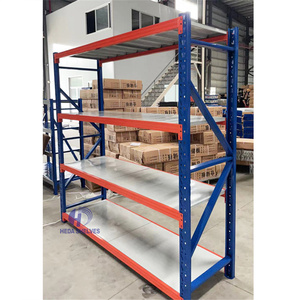 Medium Duty
Customized Factory Supply Industrial Workshop Display Shelving Iron Storage Rack
- 300–800 kg/Tier
- Boltless Clip Assembly
- Epoxy Coated
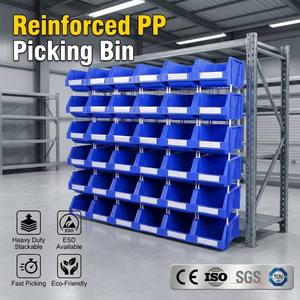 Modular Picking
INORDER Semi-Open Stacking Warehouse Bin Spare Parts Picking Storage Organizer
- High-Impact PP
- Louvered Panel Fit
- SKU Subdivision
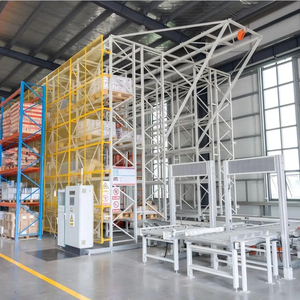 Automated ASRS
Steel Structure Automated Racking System AS/RS Stereoscopic Warehouse Storage Rack
- High-Bay Tolerance
- WMS/WCS Docking
- Extreme Density
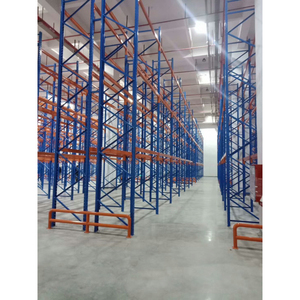 Longspan System
Easy Assemble Light Duty Steel Shelving Rack High Bay Racking Heavy Duty Shelves
- Upright Pitch 50mm
- Cold-Formed Beam
- Steel Deck Inset
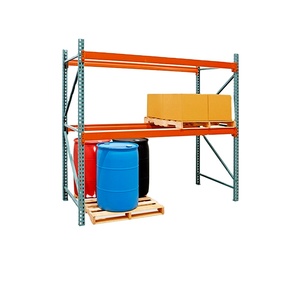 Teardrop Pattern
Selective Industrial Warehouse Shelving Teardrop Pallet Rack System
- RMI Standard
- 48"x40" GMA Pallet
- Dual Locking Pins
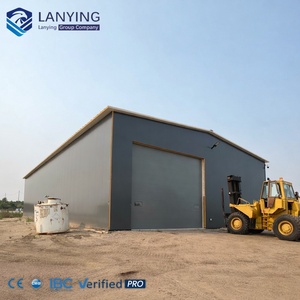 Structural Framing
Free Design Prefabricated Steel Factory Industrial Warehouse Structural Buildings
- Integrated Mezzanine
- Clear-Span Portal
- Galvanized Purlins
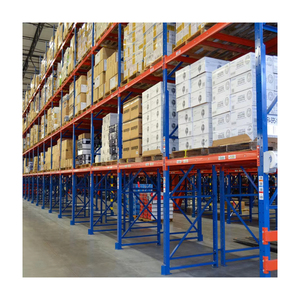 Heavy Pallet
Wholesale Price Heavy Duty Warehouse Stacking Selective Steel Pallet Racking
- 1,000–4,000 kg/Tier
- Box Beam Profile
- Seismic Certified
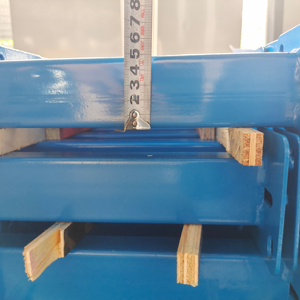 Safety Components
Row Spacer for Selective Pallet Racking Column 5-Layer Corrosion Protection
- Back-to-Back Tie
- Structural Rigidity
- Electrostatic Finish
Engineering Excellence in Custom Medium-Duty Racking Fabrication
An authoritative evaluation of load dynamics, cold-formed steel metallurgy, OEM tolerances, and long-term asset lifecycle optimization for distribution centers and supply chains.
1. The Mechanical Foundations of Medium-Duty Industrial Storage
Modern distribution centres demand storage frameworks that balance high cubic space utilization with immediate manual accessibility. As an OEM and ODM production powerhouse, our factory designs medium-duty racking systems around specialized cold-formed structural steel grades—predominantly high-tensile Q235B and Q355B hot-rolled strip steel. Through precision multi-stage roll-forming profiles, cold work hardening enhances the yield strength of the steel, producing upright columns and step-beams that resist torsional twisting, impact shear, and long-term elastic creep.
The standard geometry of an industrial medium-duty upright employs a 55mm × 47mm or 60mm × 50mm omega-shaped profile with a profile thickness ranging between 1.5mm to 2.0mm. The front face features precision CNC-punched teardrop, butterfly, or diamond pitch holes at exact 50mm or 75mm increments. This affords distribution managers complete flexibility to modify shelf elevations according to fluctuating SKU packaging geometries without requiring welding, unbolting, or hot works inside operational facilities.
Load Distribution Dynamics: Static Uniformly Distributed Load (UDL) vs. Impact Cycling
Specifying a medium-duty rack requires calculating not merely the nominal static load, but understanding dynamic deflections under Uniformly Distributed Loads (UDL). In compliance with FEM 10.2.02, ANSI MH16.1, and EN 15512 codes, the maximum allowable vertical deflection limit for intermediate load beams is strictly bounded at L/200 (where L equals clear span length). For spans of 2,000mm, vertical sagging must remain under 10mm when loaded to full design capacity (typically 500 to 1,000 kg per tier).
| Racking Tier Classification | Typical Load Rating (UDL) | Common Upright Dimension | Beam Section Profile | Optimum Handling Mode |
|---|---|---|---|---|
| Light-Duty Commercial | 100 – 250 kg / level | 38 × 38 × 1.2 mm (Angle) | Folded sheet or clip rails | Manual hand picking, retail archives |
| OEM Medium-Duty Type A | 300 – 500 kg / level | 55 × 47 × 1.5 mm (Omega) | P-Beam / Step Beam 50×30 mm | Tote bins, automotive parts, hardware |
| OEM Medium-Duty Type B (Heavy Longspan) | 600 – 1,200 kg / level | 60 × 50 × 1.8–2.0 mm | Closed Box / Step Beam 60×40 mm | Heavy subassemblies, mixed pallet tiers |
| Structural Heavy Pallet Rack | 1,500 – 4,500 kg / level | 80–120 mm wide column | Interlocking Twin C-Box 80–140 mm | Counterbalance & Reach Truck handling |
2. Corporate Manufacturing Competencies & Technical Capabilities
Backing our international export distribution is Guangzhou Heda Shelves Co., Ltd., a specialized designer and manufacturer founded in 2001. Over more than 25 years of deep manufacturing heritage, our facilities have expanded into an advanced 30,000 m² (over 323,000 sq ft) industrial production campus manned by more than 300 highly qualified structural engineers, roboticists, and technical artisans. Our production infrastructure maintains an aggregate throughput capacity reaching 30,000 metric tons of finished fabricated steel monthly, enabling rapid completion and container consolidation for massive greenfield logistics installations.
Rapid 24-Hour CAD/BIM Layouts
Our engineering division leverages proprietary parametric design software to deliver comprehensive CAD layouts, structural calculations, and 3D BIM spatial models within 24 hours of receiving site dimensions, clear heights, and material flow parameters.
Dual ISO 9001:2015 & CE Quality
Certified under ISO 9001:2015 (Reg: 18624Q00169R0M) and European Construction Products Regulation CE Marking (No. 2435-CPR-8605159). Tensile, yield, impact, and weld penetration testing are recorded per heat batch before release.
Over 10,000 Global Projects
Since 2001, we have successfully deployed turnkey installations across 10,000+ logistics hubs, cold stores, 3PL distribution centres, automotive aftermarket warehouses, and pharmaceutical clean stores worldwide, including extensive North American ports.
3. 10-Stage Precision Manufacturing Workflow & Surface Metallurgy
Corrosion resistance and structural tolerance are heavily dictated by surface preparation and powder chemistry. Unlike small job shops that apply manual wet paint over raw mill scale, our fully automated electrostatic powder coating facility guarantees uniform adhesion, resistance to impact chipping, and anti-corrosive longevity in humid or coastal environments.
01. Slitting & Roll-Forming
High-precision coil uncoilers feed strip steel into 16-station automated cold roll-forming lines, maintaining column straightness within 1/1000 variance across full vertical lengths.
02. Continuous CNC Punching
Pneumatic index punching ensures connector hole spacing retains an absolute positional accuracy within ±0.15mm, enabling flawless field interchangeability of beams.
03. Robotic Seam Welding
Connector claw brackets and structural baseplates are joined using continuous CO2/Argon shielded robotic gas metal arc welding (GMAW), eliminating cold laps and incomplete root penetration.
04. Multi-Stage Pretreatment
Hot alkaline degreasing, water rinsing, pickling rust removal, and chemical zinc-phosphating create a micro-crystalline conversion layer that chemically binds the subsequent powder layer.
05. Electrostatic Powder Coating
Automated reciprocator spray booths apply thermosetting epoxy-polyester hybrid powder at 60 to 80 microns thickness, cured at 190°C–210°C for exceptional abrasion resistance.
06. Rigorous QC & Packaging
Every bundle undergoes dimensional cross-checks, dry film thickness (DFT) gauge verification, cross-hatch adhesion testing, and containerized bundle wrapping for export transit protection.
4. Future Procurement Trends in Medium-Duty Racking (2025–2030)
Industrial procurement is undergoing a fundamental structural transition driven by supply chain volatility, total cost of ownership (TCO) prioritization, and nearshoring trends across North America and Europe. Procurement executives and supply chain architects must evaluate upcoming medium-duty racking requisitions against four emerging paradigm shifts:
A. Hybridization: Integrating Manual Picking with Autonomous Mobile Robots (AMRs)
Medium-duty racking is no longer a static human-only work cell. High-growth e-commerce fulfillment hubs are retrofitting lower shelving tiers with QR-code guidance floor grids, magnetic strips, and specialized pick-to-light LED profiles. Upright frames are being specified with reinforced base anchoring and heavy deflector guards to absorb unintended torsional bumps from collaborative fleet robots (Cobots) and Autonomous Mobile Robots (AMRs) operating down tight pick tunnels.
B. Circular Metallurgy & Carbon Border Adjustment Mechanism (CBAM) Compliance
Corporate ESG directives are reshaping metal procurement. Global buyers are mandating third-party environmental product declarations (EPDs) demonstrating scrap steel recycling rates, electric arc furnace (EAF) steel sourcing, and solvent-free TGIC-free powder chemistries. Racks engineered with higher-strength steel grades (reducing raw steel gauge while retaining identical payload ratings) directly decrease dead weight, shipping emissions, and container ocean freight overhead.
C. Modular Multilevel Mezzanine Upgradability
Given escalating industrial real estate lease costs, forward-looking procurement models specify medium-duty shelving uprights pre-engineered with vertical splicing sleeves and perforated column heads. This gives warehouse operators the operational agility to transform ground-floor longspan picking shelves into two-tier or three-tier rack-supported mezzanine walkways two to three years later without scrapping original capital assets.
5. Medium-Duty Racking Technology & Engineering Development Trends
Technological advancement within the steel fabrication and warehousing sector continues to redefine product capabilities:
Integrated Digital Twin & Stress Sensors
Emerging smart warehouse prototypes embed fiber-optic Bragg grating or wireless piezoresistive load cells into beam step ledges to monitor live deflection, alerting warehouse managers to dangerous localized overload conditions via IoT dashboard alerts before structural micro-fissures develop.
High-Resilience Bio-Based Antimicrobial Coatings
For cold chain grocery distribution, pharmaceuticals, and agricultural seeds, powder finishes are being infused with non-leaching antimicrobial silver-ion compounds. These coatings inhibit mold and microbial pathogen biofilm growth during fluctuating ambient humidity and condensation cycles.
Finite Element Analysis (FEA) Seismic Optimization
Advances in structural modeling enable our engineering team to simulate complex dynamic response spectra (UBC, IBC, and seismic Zone 4 parameters). We tailor column baseplates, back-to-back row spacers, and horizontal diagonal bracing chords specifically to match regional ground acceleration factors.
6. Comprehensive Procurement FAQ: Engineering, Logistics & Compliance
Answers to common structural, logistics, and engineering inquiries submitted by project managers, facility directors, and procurement teams:
How does your factory determine the exact steel thickness and beam profile for custom OEM projects?
Can you provide complete imperial drawings (feet, inches, pounds) for local US & Canadian municipal permitting?
What shelf decking materials are compatible with your OEM medium-duty step beams?
How are components packaged to ensure zero transit damage during long-distance ocean container shipping?
What is the typical production lead time for an OEM medium-duty racking order?
Request a Custom CAD Layout & Factory Quote Within 24 Hours
Connect directly with our senior racking engineering department. Provide your warehouse dimensions, clear height, and load parameters to receive complete 2D/3D system drawings, structural calculation sheets, and competitive FOB/CIF factory direct pricing.