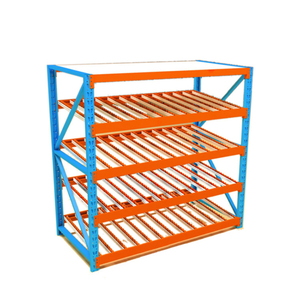
 Dynamic Flow
Engineered Storage Portfolio
Factory-Direct Narrow Aisle & High-Density Pallet Systems
Every square meter of floor space in high-throughput distribution hubs, cold stores, and manufacturing facilities dictates operational profitability. Below are eight foundational heavy-duty structural solutions engineered at our 323,000 sq ft production campus to integrate seamlessly with Narrow Aisle (NA) and Very Narrow Aisle (VNA) material handling layouts.
Dynamic Flow
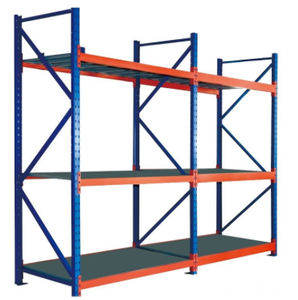 Semi-Automated
Heavy-Duty Industrial Radio Shuttle Racking System | Adjustable Pallet & Storage Solutions
View Specifications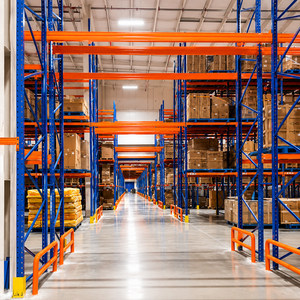 Heavy-Duty VNA
Steel Storage Rack 2000kg Load Modular Heavy Duty Pallet Rack System For Bulk Storage Direct
View Specifications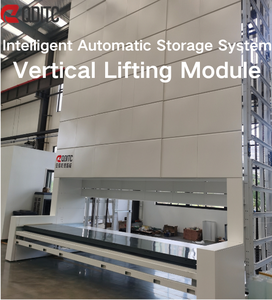 Robotic AS/RS
Vertical Lift Automated Storage Retrieval System | Logistic Pallet Rack | Smart Light Duty 500kg
View Specifications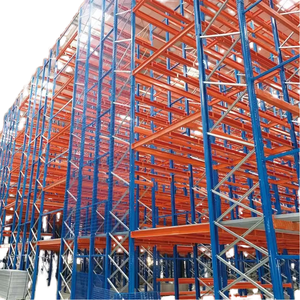 100% Selective
China Factory Customized Metal Selective Storage Racking Racks Shelf Unit For Distribution
View Specifications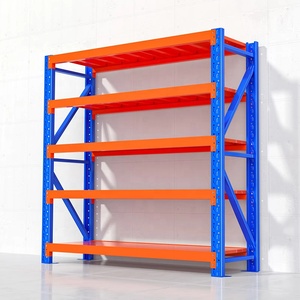 Manual Pick Aisle
Low Price Racking Adjustable Metal Boltless Shelf and Racks Warehouse Medium Duty Metal Rack
View Specifications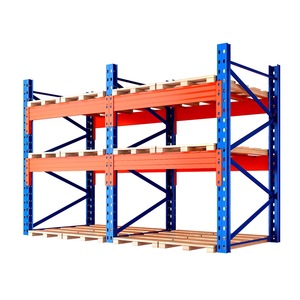 Ultra-Dense LIFO
Heavy-Duty Beam-Type Steel Industrial Warehouse Drive-In Storage Racks Thickened Multi-Tier
View Specifications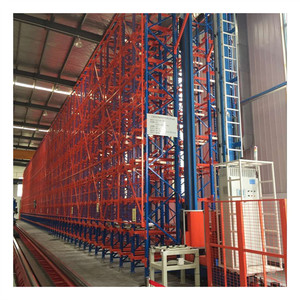 Automated Ready
Heavy Duty Industrial Warehouse Storage Rack Shelf Automated Steel Racking System
View SpecificationsThe Engineering Anatomy of Narrow Aisle (NA) and Very Narrow Aisle (VNA) Storage
In modern industrial logistics, commercial real estate costs have decoupled warehouse profitability from pure land square footage, forcing supply chain engineers to transition their operations into the vertical cubic dimension. Standard wide-aisle selective pallet racking requires aisle clearances ranging from 3,200mm to 3,800mm (10.5 to 12.5 feet) to accommodate standard counterbalance forklifts. This layout squanders more than 55% to 60% of total facility floor space purely on vehicle turning radii.
By engineering and implementing a Very Narrow Aisle (VNA) racking infrastructure, working aisles are compressed down to 1,500mm – 1,800mm. Specialized articulated forklifts, man-up order pickers, or swing-reach turret trucks rotate forks 180 degrees without requiring the vehicle body to pivot. This technical transition liberates upwards of 45% in additional pallet storage capacity within the exact same structural footprint, directly deferring costly facility relocation and expansion investments.
However, narrow aisle geometry presents rigorous civil and mechanical challenges. As upright heights scale to 12m, 14m, or 16m+ to exploit building clear height, the horizontal deflection of structural uprights under dynamic seismic and operational loads must be constrained within strict engineering thresholds (such as EN 15620 Class 300 tolerances). Below, we systematically examine the structural framework, mechanical guidance variants, and procurement specifications essential for Tier-1 supply chain execution.
Structural Specification Matrix: VNA vs. Conventional Pallet Racking Systems
Selecting the optimal storage typology demands balancing SKU access speed, cubic volumetric efficiency, equipment capital investment, and floor slab tolerance requirements. Review this comparative engineering breakdown:
| Racking Architecture | Aisle Width (Clearance) | Volumetric Space Density | SKU Selectivity | Floor Flatness Class | Primary MHE Type |
|---|---|---|---|---|---|
| Very Narrow Aisle (VNA) | 1,500 mm – 1,800 mm | Very High (80-85%) | 100% Direct Access | DIN 18202 / VDMA 41414 (Superflat) | Man-Up Turret / Articulated Forklift |
| Standard Selective | 3,200 mm – 3,800 mm | Baseline (40-45%) | 100% Direct Access | Standard Industrial Slab (Class E) | Counterbalance / Reach Truck |
| Double Deep Racking | 3,000 mm – 3,400 mm | Moderate (55-60%) | 50% Immediate Access | Standard Levelled Slab | Pantograph Double-Reach Truck |
| Radio Shuttle System | Variable (Lane Entry Only) | Maximum (85-90%) | Batch / Lane Dependent | Industrial Heavy Duty | Internal Carrier + Standard Forklift |
| Drive-In Racking | Forklift Chassis + 150mm | High (70-75%) | LIFO Batch Selectivity | Standard Reinforced Slab | Counterbalance / Deep-Reach |
Precision Civil & Structural Interface
VNA Guide Systems & Superflat Slab Tolerances
Operating heavy turret trucks lifting 1,500 kg loads to elevations of 15 meters within an aisle gap of merely 150mm on either side leaves zero margin for engineering error. High-bay narrow aisle systems depend on three interrelated pillars: mechanical/inductive vehicle guidance, rigid upright roll-formed profiles, and strict concrete slab flatness.
Superflat Slab Tolerances (VDMA 41414 / TR34)
At 14 meters of mast extension, a sub-floor angular deviance of only 2mm across the wheel track translates into a catastrophic 40mm mast sway at the top beam level. Consequently, VNA installations demand strict floor flatness compliance, adhering to DIN 18202 Table 3 Group 4, VDMA 41414 Part 2, or Concrete Society TR34 (Category Fmin/FM2). Our engineering team conducts comprehensive slab surveys prior to final layout sign-off to prescribe shimming and baseplate anchor specifications.
Mechanical Guide Rails vs. Inductive Wire Guidance
VNA trucks navigate through aisles via either structural low-profile steel guide rails (L100×75 or L125×75 angle steel mounted to the floor with welded entry horns) or low-frequency submerged electromagnetic inductive wire guidance. Mechanical rails provide physical collision barriers that safeguard lower upright frames from operator error. In contrast, inductive wire guidance embedded 15mm into the slab enables seamless floor cleaning, cross-aisle accessibility, and eliminates trip hazards.
Top-Tie Structural Portals & Anti-Sway Bracing
To eliminate vertical mast oscillation and counter lateral shear forces generated during rapid turret truck acceleration, our narrow aisle racking incorporates high-bay top-tie beams spanning cross-aisle portals. Combined with back-to-back spacer connectors, heavy diagonal K-bracing, and thickened floor anchor plates with M16 chemical dowels, our structures achieve exceptional structural rigidity conforming to European EN 15512 and American RMI MH16.1 building codes.
Strategic Procurement & Technology Trends in Narrow Aisle Racking (2025–2030)
Global logistics executives and procurement directors are facing rising warehouse labor shortages, shifting sustainability regulations, and unprecedented industrial land costs. As a premier Chinese manufacturer with over two decades of export leadership, HEDA Shelves tracks key industrial shifts transforming narrow aisle racking procurement worldwide:
1. Transition to AGV & Autonomous Mobile Turrets
Manual man-up turret operations are transitioning toward automated guided VNA vehicles (AGVs) and autonomous mobile robots (AMRs). Modern racking systems must now be manufactured with tighter millimeter beam tolerance thresholds, retrofitted reflective optical positioning markers, and integrated barcode/RFID target plates to facilitate robotic laser scanner navigation.
2. High-Strength Cold-Rolled Q355B Alloy Optimization
To reduce shipping weight and ocean freight container costs without compromising yield strength, progressive manufacturers are replacing standard commercial Q235B carbon steel with cold-formed high-tensile Q355B micro-alloy steel. This material upgrade enables thinner-gauge upright columns to deliver 35% higher yield resistance and superior seismic energy dissipation.
3. Cold Chain Thermal & Energy Densification
Refrigerated and blast freezer facilities represent the highest operational cost per cubic meter in the modern supply chain. Thermal loss through oversized ceilings has spurred massive demand for VNA systems in sub-zero environments (-25°C to -30°C). Epoxy-polyester powder coats formulated for freeze-fracture resistance prevent micro-cracking and rust creep during continuous defrost cycles.
Why HEDA Shelves Leads China's Export Market
Tier-1 Manufacturing Powerhouse in Guangzhou
Established in 2001, Guangzhou Heda Shelves Co., Ltd. has grown from a specialized roll-forming workshop into an international manufacturer of engineered warehouse systems. We maintain full in-house command over the entire production cycle—from slitting raw steel coils to computerized multi-nozzle automated electrostatic powder finishing.
2001
Established Year
Over two decades of continuous structural engineering leadership
323,000sq ft
Modern Production Plant
30,000 m² integrated workshop with CNC punching & roll forming
30,000t
Monthly Steel Capacity
Massive throughput ensuring reliable multi-container export cycles
10,000+
Global Projects Delivered
Installed across the USA, Canada, Europe, Australia & Southeast Asia
Rapid CAD/3D Engineering Layouts within 24 Hours
Our engineering department utilizes advanced structural simulation software to deliver complete warehouse layout drawings, 3D spatial renderings, and load-deflection calculation packages in both imperial (feet, inches, lbs) and metric formats within 24 hours of your initial inquiry.
Independently Certified: ISO 9001:2015 & CE Marking
Quality assurance is backed by accredited third-party auditing. We hold ISO 9001:2015 certification (Cert. No. 18624Q00169R0M), CE Construction Products conformity (No. 2435-CPR-8605159), and RoHS compliance, qualifying our systems for building permit submittals globally.
Container-Optimized Palletizing & Ocean Freight Readiness
Upright columns and box beams are nested, banded with structural steel strapping, padded with protective edge-boards, and marked with color-coded bundle tags. This ensures maximum shipping density in 40ft High Cube containers while eliminating transit abrasion damage.
Standardized 10-Step Factory Production Protocol
Structural reliability in tall narrow aisle racking relies directly on steel grain uniformity and dimensional consistency. HEDA Shelves enforces a rigid ten-step quality control lifecycle for every beam, frame, and base connector manufactured in our facility:
01. Raw Material Verification
Mill test certificates (MTC) and spectral composition analyses inspect incoming hot-rolled carbon steel coils for specified tensile properties.
02. Precision Slitting
Automated slitting machines cut steel coils into calibrated longitudinal strips matching profile specifications with ±0.2mm edge tolerance.
03. Automated CNC Punching
High-speed hydraulic punch presses stamp uniform 50mm or 75mm teardrop/diamond pitch holes along upright columns to guarantee exact beam fit.
04. Continuous Cold Roll-Forming
Multi-stand continuous roll-forming lines bend steel profiles gradually, preserving crystalline yield integrity along all structural folds.
05. Box Beam Interlocking
Twin C-channels are interlocked and seam-welded to create high-rigidity box beams with superior torsional and anti-buckling performance.
06. Robotic Connector Welding
Multi-prong beam end connectors are joined via automated robotic gas metal arc welding (GMAW), delivering clean, deep penetration welds.
07. Surface Polishing & Deburring
Mechanical blast cleaning and grinding eliminate sharp burrs, spatter, and surface oxides to prepare steel for chemical pretreatment.
08. Pickling & Phosphating
Components pass through an automated chemical wash to remove oils, etch the steel, and deposit a micro-crystalline zinc phosphate conversion coating.
09. Electrostatic Powder Coating
Computerized spray booths coat components with premium TGIC-free polyester powder, cured in ovens at 200°C for high impact and scratch resistance.
10. Batch QC & Bundling
Coating thickness gauges, load testing rigs, and vernier calipers verify tolerances before components are strapped and labeled for international export.
Strategic Procurement Knowledgebase
Frequently Asked Questions for Industrial Buyers
Clear engineering and commercial answers to the most common technical questions encountered by warehouse operators, facility planners, and sourcing teams when evaluating narrow aisle racking systems from China.
What is the exact clear aisle width required for Very Narrow Aisle (VNA) racking?
Clear aisle width depends directly on the model and chassis width of your selected Material Handling Equipment (MHE). For man-up turret trucks handling standard 48" × 40" GMA or 1200 × 800mm Euro pallets, aisle widths typically span between 1,600mm and 1,800mm (approx. 63 to 71 inches). Articulated forklifts (like Bendi or Aisle-Master) generally need 1,800mm to 2,000mm. When designing your CAD layout, HEDA Shelves engineers calculate total clear space as: Pallet Diagonal/Width + Truck Chassis Clearance + Minimum 100mm safety clearance on each side, in accordance with FEM 10.2.07 regulations.
How do you evaluate and compensate for concrete floor flatness issues?
Operating heavy lift trucks at heights above 10 meters requires concrete floors meeting DIN 18202 Group 4, VDMA 41414, or TR34 Superflat classifications. Prior to installation, a comprehensive profileograph survey is recommended to map floor waviness along aisle wheel paths. If minor unevenness exists, high-strength structural steel shims (ranging from 1.0mm to 5.0mm) can level the baseplates, locked in place with non-shrink structural grout under upright shoes. If deviations exceed permissible thresholds, precision floor grinding along wheel paths must be completed before anchoring.
Can HEDA Shelves provide seismic engineering calculations and PE stamps for North America?
Yes. Our engineering division produces structural calculation books conforming to RMI (Rack Manufacturers Institute) MH16.1 specifications, AISI S100 cold-formed steel standards, and ASCE 7 seismic guidelines. We calculate exact base shear, overturning moments, beam deflection ratios (L/180 or L/240), and anchor bolt pull-out loads based on your site's specific seismic spectral response factors (Ss, S1). These documents are structured specifically for third-party review by local licensed Professional Engineers (PE) to secure municipal building and fire permits.
Should we select physical guide rails or inductive wire guidance for our VNA warehouse?
The choice comes down to budget, operational maintenance, and building design:
Mechanical Steel Guide Rails: Cost-effective upfront, easy to install, and provide a continuous steel barrier protecting upright columns from direct pallet or wheel impact. However, rails obstruct side pallet entry at bottom levels (requiring bottom pallet support beams or high rails) and complicate floor cleaning.
Inductive Wire Guidance: Clean floor surface, enables floor-level pallet staging without extra bottom beams, and simplifies emergency truck exiting. However, it requires saw-cutting the concrete slab to lay wire loops, frequency generators, and truck sensors, resulting in higher initial system costs.
What are the typical manufacturing and ocean shipping lead times from China?
Production lead times for standard narrow aisle projects (1 to 5 forty-foot containers) run approximately 18 to 25 business days from final CAD drawing sign-off. High-volume industrial distribution projects (10+ containers) are manufactured on staggered schedules to align with customer delivery windows. Ocean transit to US/Canada West Coast ports (Los Angeles/Long Beach, Vancouver) requires 14 to 20 days; East Coast ports (Savannah, New York) take 28 to 35 days. European destinations (Rotterdam, Hamburg) average 25 to 30 days.
How does HEDA Shelves protect components against corrosion and scratches during sea freight?
We protect every shipment against ocean salt mist and container humidity through multi-stage packaging: uprights and beams are bundled with high-tensile PET plastic strapping, wrapped in protective bubble foam, and sealed with waterproof stretch film. Exposed ends feature heavy-duty cardboard edge protectors. Desiccant packs inside the container absorb condensation during sea voyage temperature shifts, ensuring components arrive clean and rust-free.
Engineering Consultation
Request Your Custom CAD Layout & Factory-Direct Quotation
Whether optimizing an existing facility or building a new high-bay distribution hub, our senior racking engineers are ready to design your layout, run capacity calculations, and provide an itemized CIF/FOB quote within 24 hours.
ISO 9001:2015 Audited
CE Certified EN 15512
24-Hour Layout Turnaround
323,000 sq ft Manufacturing Base