Export Inventory Portfolio
High-Throughput Storage & Gravity Flow Solutions
Engineered to maximize cubic capacity while minimizing forklift travel times. Browse our core industrial lines certified for North American and global operations.
Whitepaper Deep Dive
Engineering Principles of Gravity Fed Dynamic Live Storage
In modern industrial intralogistics, gravity fed racking—frequently classified under pallet flow racking or gravity flow systems—serves as the gold standard for high-density, First-In, First-Out (FIFO) material handling. Operating without electrical consumption, gravity flow infrastructure harnesses kinetic energy by positioning slightly inclined roller tracks (typically pitched between 2.5% and 4.0% depending on pallet weight and substrate material) across deep multi-tier racking lanes.
Pallets are introduced from the rear replenishment aisle (charging face) and glide smoothly downward toward the picking face (discharging face). This architectural segregation inherently divides logistics traffic: forklift replenishment operations never collide with picking and fulfillment personnel, substantially cutting collision risks, eliminating internal traffic congestion, and slashing forklift fuel and cycle times by up to 40%.
"The optimization of a gravity fed live storage lane lies in balanced dynamic friction: combining heavy-gauge cylindrical steel rollers, precision centrifugal brake controllers, and mechanical end-stop separators to guarantee zero pallet runaways regardless of pallet load variations from 500 lbs to 3,300 lbs."
For operations facing escalating warehouse rental overhead and strict inventory expiry governance—such as cold chain freezers, dairy processing, pharmaceuticals, fast-moving consumer goods (FMCG), and automotive line sequencing—gravity fed dynamic racking transforms inactive transit aisle space into prime, revenue-generating cubic storage density.
25+
Years Manufacturing Experience
30Kt
Monthly Structural Steel Output
10K+
Global Warehouses Engineered
65%
Floor Space Footprint Saved
Comparative Engineering Analysis
Gravity Flow vs. Competing High-Density Technologies
Evaluate structural kinematics, stock rotation capability, equipment wear, and capital investment requirements before issuing your project RFP.
| Storage Architecture | Kinematic Type | Rotation Principle | Aisle Space Saved | Forklift Cycle Speed | Ideal Application Scenario |
|---|---|---|---|---|---|
| Gravity Pallet Flow | Passive Inclined Rollers | Strict FIFO | Up to 65% | Ultra-Fast (Decoupled Aisles) | Perishable food, cold storage, FMCG, batch expiry |
| Push Back Racking | Nested Inclined Carts | Strict LIFO | 40% – 55% | Moderate (Single Aisle In/Out) | Medium rotation, 2-6 pallets deep per SKU |
| Drive-In Racking | Cantilever Floor Rails | Strict LIFO | Up to 75% | Slow (Forklift Enters Rack) | Bulk homogeneous SKUs, non-urgent seasonal stock |
| Radio Shuttle System | Semi-Automated Robot | FIFO / LIFO | Up to 80% | High (Automated Deep Travel) | Extreme density, cold storage (-25°C), high-bay hubs |
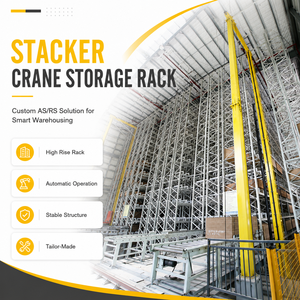
| ASRS High-Bay Racking | Full Crane Stacker | Dynamic FIFO | Up to 85% | Continuous Machine Pick | Fully unmanned smart logistics centers |
Forward Horizons
Future Procurement Trends in Gravity Fed Systems (2025–2030)
The global intralogistics hardware supply chain is undergoing profound shifts driven by energy prices, automated warehouse integration, and nearshoring warehousing dynamics. Engineering directors and global sourcing managers must prepare for key structural evolutions:
1. Zero-Energy Passive Automation
As industrial kilowatt costs surge worldwide, distribution planners are pivoting away from motor-driven live conveyors toward passive gravity energy systems. Gravity flow requires zero wiring across hundreds of lanes, delivering an operational carbon-neutral buffer zone between manufacturing lines and shipping docks.
2. Hybrid AMR & AGV Discharging
Next-generation gravity fed pick faces now interface directly with Autonomous Mobile Robots (AMRs) and automated tuggers. Chinese precision manufacturers are engineering magnetic brake dampening and pneumatic lane-end separators with sub-millimeter stop positioning to enable robot vision sensors to pick pallets cleanly without human intervention.
3. Ultra-Resilient Metallurgical Coatings
With massive expansion in sub-zero pharmaceutical cold chain storage (-30°C) and corrosive chemical handling, demand has transitioned to electrostatically cured nano-polymer powder coats, zinc-rich epoxy primers, and hot-dip galvanized cold-formed profiles that resist embrittlement and micro-fissures under extreme thermal cycles.
Enterprise Credentials & Capacity
Why Tier-1 Importers Source from HEDA Shelves
Operating a 30,000 m² (323,000 sq ft) production campus in Guangzhou, China, HEDA Shelves bridges high-volume industrial steel fabrication with North American engineering precision.
PHASE 01
Certified Raw Q235B / Q355 Steel
Strict chemical composition and tensile testing of prime steel coils directly sourced from Tier-1 national mills.
PHASE 02
CNC Continuous Roll-Forming
Multi-station precision roll lines shape upright profiles with uniform 50mm/75mm hole pitches to guarantee field adjustability.
PHASE 03
Pickling, Phosphating & Powder Coat
Multi-stage chemical washing removes microscopic scale before 180°C heat-cured electrostatic epoxy coating application.
PHASE 04
Container-Optimized Sea Packaging
Steel bundle banding, edge-protector wrap, and custom palletizing engineered to fit 40ft HQ ocean containers with zero maritime shifting.
Full RMI & CE Compliance Ready
All calculations, beam deflection thresholds (L/200, L/250), and column loadings are engineered to align with North American RMI standards, European EN 15512 specifications, and regional seismic zone codes.
Complimentary 24h CAD & 3D Modeling
Submit your facility DWG files, pallet load specs, and forklift mast data. Our 30+ licensed warehouse architects return full engineering plan-views, 3D renderings, and pallet capacity simulations within 24 hours.
True Factory-Direct Landed Value
By eliminating multiple layers of domestic middlemen and trading agents, HEDA delivers factory-direct FOB/CIF quotes to major ports including Los Angeles, Houston, Savannah, New York, and Vancouver.
Procurement Intelligence
Frequently Asked Questions on Gravity Fed Racking Procurement
Direct technical guidance addressing common engineering, logistics, and quality assurance inquiries.
What gradient angle is required for gravity fed pallet flow racking?
Typically, gravity pallet flow lanes are pitched between 3.0% and 3.5% (approximately 3/8" to 7/16" per foot of run). However, the precise gradient depends strictly on the bottom configuration of your pallets (e.g., GMA 48x40" wood pallets, Euro-pallets, or plastic pallets), total cargo weight, and roller wheel friction coefficients. For heavy loads exceeding 2,500 lbs, we install speed-limiting centrifugal brake rollers every pallet position to ensure controlled, uniform descent speeds between 0.2 m/s and 0.3 m/s.
How do speed controllers and pallet separators work at the pick face?
In long gravity lanes (ranging from 4 to 20+ pallets deep), the combined hydrostatic pressure of trailing pallets against the front pick pallet can cause dangerous back-pressure, making it impossible or hazardous for a forklift operator to lift the front pallet. We integrate mechanical pallet separators (load isolators). When the front pallet arrives at the exit ramp stop, the separator mechanical link engages, locking back all trailing pallets 6 inches behind the first pallet. Only when the lead pallet is completely lifted off does the separator release the next pallet down the lane.
Can gravity fed systems accommodate weak, damaged, or plastic pallets?
Standard wooden pallets with broken bottom runners or uneven slats can cause point-friction stalls in simple wheel-track setups. For mixed pallets or plastic pallets prone to center-sagging under warm temperatures, we specify full-width cylindrical steel rollers with sealed ball bearings rather than dual plastic skate-wheel tracks. Full-width rollers spread the contact surface area across the entire pallet underside, preventing hang-ups and ensuring reliable transit.
Do your structural calculations support North American seismic and building permits?
Yes. Every export project ships with imperial engineering documentation (lbs, inches, feet) including upright frame section properties, connection moments, anchor bolt shear forces, and seismic base plate calculations. These documents are calibrated to assist your local licensed Professional Engineer (PE / SE) or Engineer of Record (EOR) to stamp permit drawings and submit them smoothly to local municipal building authorities.
What are the lead times and container loading specifications from Guangzhou port?
Standard manufacturing cycles for customized gravity flow systems typically range from 20 to 30 business days depending on steel tonnage and roller lane configurations. We ship directly out of Nansha or Huangpu ports in Guangzhou or Shenzhen/Yantian. All components are packed on custom steel transport dunnage and strapped with anti-abrasion polyester bands, facilitating simple unloading with standard counterbalance forklifts at your destination facility.
Transform Your Warehouse Throughput & Density Today
Send your building dimensions, clear stack height, pallet specifications, and throughput targets to our senior intralogistics engineers. We will formulate an optimized gravity flow layout and formal quote within 24 hours.