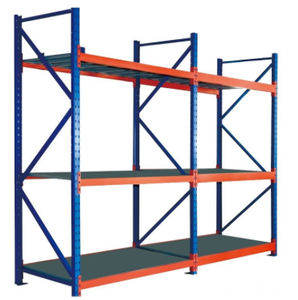
 Semi-Automated
25+ Yrs
Structural Racking Expertise
30,000T/Mo
High-Yield Steel Fabrication
10,000+
Global Warehouses Delivered
75%
Footprint Density Increase
High-Performance Storage Equipment
Engineered Systems & Heavy-Duty Warehouse Solutions
Precision-manufactured utilizing Q235B cold-rolled structural steel, robotic plasma punching, and automated electrostatic powder curing. Select a production configuration or consult factory structural engineers directly.
Semi-Automated
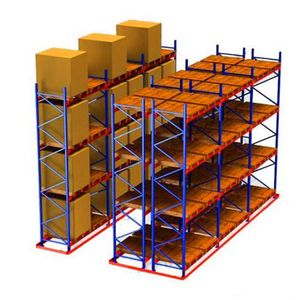 VNA System
High Density Heavy Duty VNA Pallet Racking ISO Certified 1000-3000kg/layer
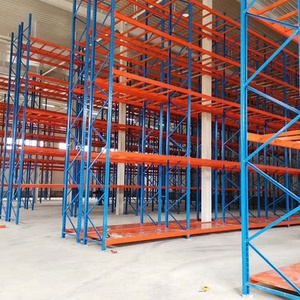 Selective Steel
OEM ODM Good Quality Heavy Duty Pallet Racking Selective Steel Q235 Shelf
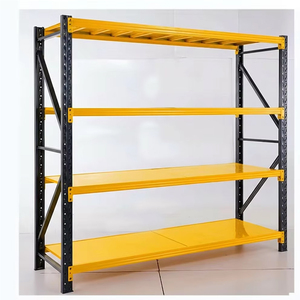 Boltless Shelf
Durable Heavy Duty Steel Adjustable Boltless 5-Layer Powder Coated Storage Rack
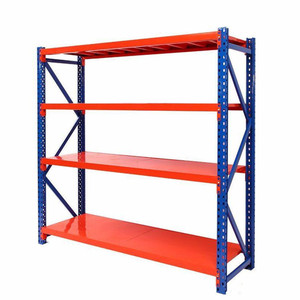 Custom Built
Custom Heavy-Duty Metal Rack Storage Shelf High Quality Iron Cargo Equipment
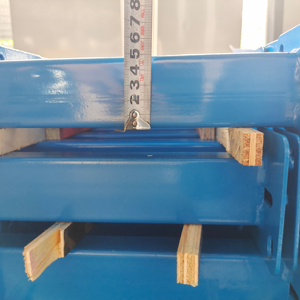 Accessory
Row Spacer for Selective Pallet Racking Column 5 Layer Corrosion Protection
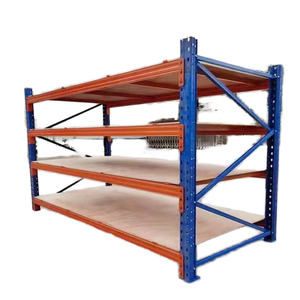 Wire Decking
Industrial High Capacity Heavy Duty Boltless Steel 4-Layer Beam Pallet Shelf
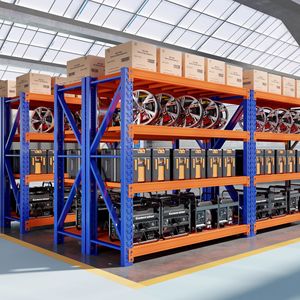 CE Certified
Boltless Adjustable Industrial Heavy Duty Steel Racking CE Certified System
Industry Whitepaper & Strategic Procurement Analysis
Drive-In Pallet Racking: Mechanics, Structural Safety & Architectural Scalability
Drive-in and drive-through pallet racking represents the industry benchmark for high-density, low-SKU inventory consolidation. By condensing access aisles into continuous structural storage channels, industrial logistics centers reclaim up to 75% of wasted floor area compared to conventional selective rack layouts.
Structural Dynamics & Cantilever Rail Engineering
Unlike standard selective beams supported at both ends, drive-in racking uses continuous cantilever support rails anchored to upright columns. This requires meticulous cross-sectional moment inertia calculations to counter longitudinal deflection and torsional stress caused by forklift loading dynamics.
Our upright portals utilize cold-formed high-strength Q235B/Q355B coils with patented multi-bend profiles. Heavy-duty top-tie bracing beams and rear vertical X-bracing create a unified spatial truss that resists seismic shear forces (complies with ANSI MH16.1 and FEM 10.2.02 standard load-limit specifications).
- Pallet Stop Assemblies: Prevents over-travel in blind bays
- Asymmetric Tapered Arms: Smooth pallet guide entry
- Reinforced Base Columns: Resists mast collision impacts
TCO Optimization & Cold Chain Thermodynamics
In sub-zero cold storage facilities (-25°C to -30°C), cooling costs are directly proportional to empty cubic atmospheric volume. Standard selective racks waste over 60% of refrigerated space on truck traffic corridors, leading to substantial energy loss.
By implementing a high-density Drive-In or Drive-Through matrix, facilities drastically reduce refrigeration cubic waste. Our electrostatically cured TGIC-free polyester powder finish resists micro-cracking and peel-off in sub-zero thermal cycling, eliminating moisture corrosion around bolted anchors.
- Thermal Shrinkage Proof: Grade 8.8 tensile zinc-plated hardware
- LIFO Rotation Efficiency: Bulk manufacturing lot tracking
- Sub-Zero Steel Options: Tested Charpy V-Notch impact resistance
Future Procurement Trends: AGV & Shuttle Migration
Modern supply chain procurement is shifting toward hybrid systems. Forward-thinking facility architects now commission drive-in rail profiles compatible with both traditional counterbalance forklifts and autonomous Pallet Radio Shuttles.
This dual-purpose design allows companies to deploy budget-conscious manual drive-in operations today, and later upgrade to automated robotic shuttles by swapping rail inserts—without replacing upright upright frames or taking down structural steel.
- Laser-Guided AGV Compatibility: Millimeter-accurate floor channels
- Digital Twin Ready: CAD 3D layout integration for WMS
- Modular Vertical Extension: Splice kits engineered for height expansion
Comparative Decision Matrix
System Density, Throughput & Operational Fit
Identify the ideal racking configuration based on SKU profile, pallet velocity, rotation requirements, and floor utilization targets.
| Racking System Classification | Space Utilization | Inventory Rotation | Typical Lane Depth | Floor Space Footprint Saving | Ideal Industrial Application |
|---|---|---|---|---|---|
| Drive-In Pallet Racking | Very High (Up to 85%) | LIFO (Last-In, First-Out) | 4 to 10 Pallets Deep | +65% to +75% vs Selective | Cold storage, seasonal inventory, low-SKU batch goods |
| Drive-Through Pallet Racking | High (Up to 80%) | FIFO (First-In, First-Out) | 4 to 8 Pallets Deep | +55% to +65% vs Selective | Date-sensitive items, pharmaceutical lots, bulk food packaging |
| Radio Shuttle Cart Racking | Maximum (Up to 90%) | FIFO / LIFO Automated | Up to 30 Pallets Deep | +75% to +85% vs Selective | Automated distribution centers, high-volume fast FMCG |
| Selective Pallet Racking | Moderate (40-50%) | 100% Direct Access | 1 Pallet Deep (2 for Double-Deep) | Baseline (0%) | High-SKU 3PL warehouses, e-commerce fulfillment hubs |
| Push-Back Racking (Carts) | High (70-75%) | LIFO (Gravity Assisted) | 2 to 6 Pallets Deep | +45% to +55% vs Selective | Medium SKU consolidation, buffer shipping docks |
Enterprise Manufacturing Capabilities
Why Global Logistics Engineers Partner with Us
Originating from Guangzhou Heda Shelves Co., Ltd., we combine over two decades of heavy-duty cold-formed steel manufacturing with international logistics project management.
25+ Years Experience
Over 10,000 projects completed across North America, Europe, Australia, and Southeast Asia. Our engineers optimize steel cross-sections to eliminate excess material weight while upholding seismic safety factors.
Free 24hr CAD / 3D Layouts
Submit your warehouse CAD floor plan, ceiling clear heights, and forklift specifications. Our project team generates full 3D layout renderings and imperial/metric structural load calculations within 24 business hours.
Certified Structural Safety
Manufacturing adheres strictly to ISO 9001:2015, CE European standards (2435-CPR-8605159), and RoHS compliance. Cold-formed profiles undergo rigorous tensile yield testing, ultrasonic weld inspection, and coating adherence checks.
Export Container Packing
All beams, uprights, and support rails are bundled with corrugated edge guards, heavy-duty steel strapping, and waterproof wrap. Packed to maximize 40HC container cube utilization and allow direct dock forklift unloading.
Procurement Engineering FAQ
Drive-In Pallet Racking Technical Questions Answered
Direct technical guidance from factory structural engineers to streamline project scoping, site preparation, and logistics deployment.
Q1: How does Drive-In racking prevent upright mast collision damage from forklifts?
Because forklift trucks enter deep into the storage matrix, frame impact resistance is critical. We engineer reinforced upright column boots (minimum 5mm-8mm structural steel wrap), floor-anchored continuous guide rails (angle or box beam channels), and heavy structural entrance guide bullnoses. These features deflect truck wheels away from column corners and maintain correct alignment inside the lane.
Q2: What are the standard dimensional clearances required for GMA 48x40 pallets?
For standard 48" wide x 40" deep GMA pallets (or 1200x1000mm ISO pallets), we typically configure drive-in lanes with a minimum clear entry span of 1350mm to 1400mm between cantilever arms. This leaves 75mm-100mm of operational clearance on either side of the pallet overhang, protecting packaging wrap while maintaining sufficient beam bearing contact on the support rail flange.
Q3: Can Drive-In racking meet local seismic codes (e.g., California CBC or European Eurocode 8)?
Yes. Our engineering department designs systems tailored to project-specific Spectral Acceleration coefficients (Ss, S1) and Site Soil Classes. We provide complete structural calculation packages, component yield data, and connection node finite element analyses (FEA), ready for review and stamping by local structural Engineers of Record (PE / SE).
Q4: How do you solve bottom-level forklift wheel outrigger clearance?
Reach trucks and counterbalance forklifts have varying mast heights and chassis widths. Depending on your equipment fleet, we either mount bottom cantilever arms directly to the floor slab (allowing pallets to rest on guided floor rails) or elevate the first beam level above mast outriggers. This ensures smooth vehicle entry without losing lower-level pallet positions.
Q5: What surface pretreatment is applied to prevent rust under cold storage condensation?
Every cold-rolled component undergoes a rigorous 9-stage pre-treatment process: automated degreasing, ultrasonic water rinsing, acid rust-pickling, dense zinc-phosphating, and deionized neutralization. Components then receive thermoset TGIC-free polyester powder coating baked at 200°C, producing an airtight 70-90 micron barrier that resists thermal condensation corrosion.
Q6: What lead time and shipping documentation are standard for overseas container orders?
Standard manufacturing lead time is 15-22 days from approved CAD drawings. Shipments include complete Bill of Ladings, Form E / Certificates of Origin, detailed packing lists with bundle barcode tags, mill test reports (MTRs), and step-by-step 3D exploded assembly diagrams to streamline on-site mechanical installation.
Optimize Your Warehouse Cubic Storage Footprint Today
Send your warehouse dimensions, ceiling clear heights, pallet sizes, and forklift models. Our engineering team will supply an optimized 2D/3D CAD layout, structural capacity report, and itemized direct-from-factory quote within 24 hours.
100% Free Consultation
Imperial & Metric CAD Deliverables
Direct Factory Export Pricing