Export-Grade Heavy Duty Industrial Racking & Custom Shelving Solutions
Guangzhou HEDA Shelves Co., Ltd. delivers engineered racking frameworks manufactured with high-tensile Q235B cold-rolled structural steel, optimized for automated storage interfaces, high-capacity cantilever racking, and space-multiplying mezzanine systems.
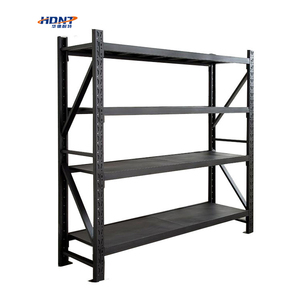
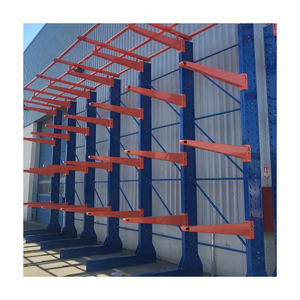
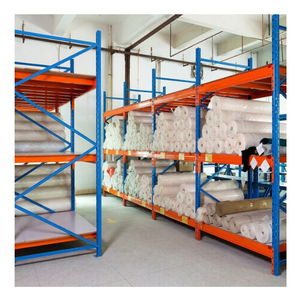
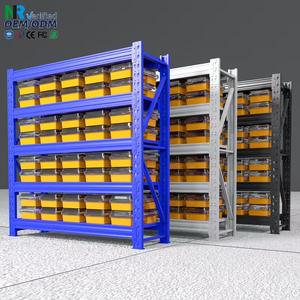
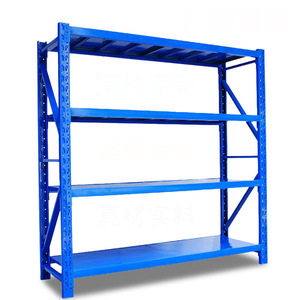
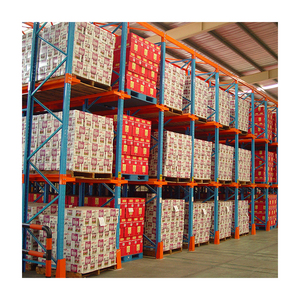
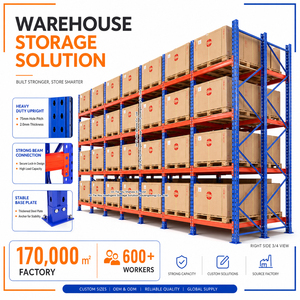
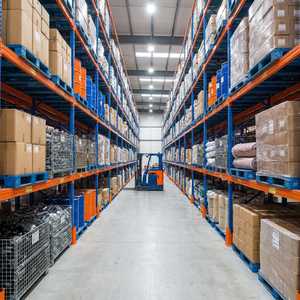
Structural Engineering Integrity in High-Volume Logistics Infrastructure
Modern warehouse logistics require dynamic flexibility, rigorous seismic tolerance, and exact structural load capacity calculations. As supply chain infrastructure transitions toward automated guided vehicles (AGVs) and dense vertical utilization, selecting CE-certified steel storage becomes a foundational operational decision.
High-Grade Q235B Cold-Formed Steel
HEDA utilizes certified Q235B cold-rolled structural steel offering a yield point minimum of 235 MPa and ultimate tensile strength up to 510 MPa. Through precision multi-roll cold forming lines, steel profiles gain work-hardened corners that resist localized torsional deflection under irregular pallet loads and forklift vibrations.
Seismic Deflection & Limit State Testing
In accordance with EN 15512 and FEM 10.2.02 racking codes, our upright frame designs account for second-order sway effects (P-Delta), frame shear stiffness, and bolt-group bearing resistance. This structural diligence ensures that lateral seismic accelerations in North American and European fault zones do not trigger catastrophic progressive collapse.
Automated Electrostatic Coating
Our multi-stage metal treatment integrates automated alkaline spray degreasing, zinc phosphate passivation, and high-voltage electrostatic epoxy-polyester powder baking (200°C). The cured coating achieves 60–90 micron thickness, with cross-hatch adhesion tested to Class 0 (ISO 2409) and 500-hour salt spray neutral corrosion resistance.
Structural Typologies & Architectural Application Matrix
Evaluate throughput dynamics, accessibility ratios, and load capacities across industrial shelving and heavy-duty structural racking configurations.
| System Typology | Primary Structural Section | Design Load Limits | Pallet Accessibility | Optimal Industrial Use-Case |
|---|---|---|---|---|
| Selective Pallet Racking | Roll-formed 90×70 / 100×70 uprights, Box Beams | 1,000 kg – 4,500 kg / Level | 100% Direct | 3PL, FMCG, retail distribution with dynamic high SKU rotation. |
| Heavy-Duty Cantilever | H-Section Hot Rolled / C-Shaped Cold Formed | 500 kg – 3,000 kg / Arm | 100% Unobstructed | Lumber yards, steel tubing, aluminum profiles, long extruded commodities. |
| Drive-In / Drive-Through | Reinforced Uprights, Punch-formed Cantilever Rails | 1,000 kg – 1,500 kg / Pallet | FILO / FIFO (Lane) | Deep cold chain freezing, pharmaceutical bulk, identical SKU batches. |
| Rack-Supported Mezzanine | Structural I-Beams, Omega Floor Decking | 300 kg – 1,000 kg / m² | Multi-Tier Pick | E-commerce fulfillment, manual split-case picking, auto part operations. |
| Radio Shuttle Automation | Precision Guide Rail Roll-Forms, Q235B High Inverted | 500 kg – 1,500 kg / Pallet | Programmed Semi-Auto | Zero-emission cold stores, raw material bulk staging, continuous buffers. |
Warehouse Storage Procurement Trends & Next-Gen Technology Vectors
Strategic manufacturing demands continuous alignment with global supply chain macro-shifts, ESG mandates, and warehouse automation architectures.
1. AGV and Autonomous Mobile Robot (AMR) Integration
Traditional static storage is evolving into hybrid structures accommodating AMR point-to-point movement. Racking frames are now designed with widened ground clearance, laser-calibrated guide tracks, and tighter fabrication tolerances (±0.5mm) to interface smoothly with autonomous straddle carriers and automated guided forklifts.
2. Cold Chain High-Density Optimization
With global temperature-controlled food and biologics markets expanding rapidly, the cost per cubic meter of chilled volume has risen dramatically. Buyers are transitioning away from standard wide-aisle configurations toward high-density Radio Shuttle and Drive-In racking, achieving up to 80% volume saturation while reducing thermal leakage.
3. Full Life-Cycle Structural Digital Twin Models
Engineering departments increasingly demand complete BIM (Building Information Modeling) and IFC output files during initial project procurement. Export packages must supply detailed load-distribution geometry, column base reactions, and anchor pull-out parameters to coordinate directly with fire suppression layouts and civil floor slab engineering.
4. Sustainable Metallurgy & Carbon Footprint Tracking
International procurement frameworks are beginning to review steel fabrication energy consumption and recyclability metrics. HEDA works with scrap-reducing CNC slitting lines, utilizes low-VOC thermosetting powder systems, and relies on 100% recyclable structural grade carbon steel, ensuring our products comply with European green building requirements.
End-to-End Precision Manufacturing Execution
From initial structural analysis through sea-container loading, Guangzhou HEDA Shelves Co., Ltd. controls the complete supply chain under strict ISO 9001:2015 processes.
Frequently Asked Questions on Importing Industrial Racking Systems
Key technical, structural, and regulatory considerations for warehouse logistics managers, systems integrators, and project engineers.
How does HEDA guarantee compliance with CE marking and international codes (EN 15512, RMI)?
Can load calculations and CAD project layouts be delivered in Imperial units?
What engineering documentation is supplied to support regional building permits?
What are your manufacturing tolerances and surface treatment standards?
How are oversized steel components protected during intermodal container shipping?
What is the typical engineering and manufacturing turnaround time for large-scale orders?
Request Engineering Layout & Factory-Direct Quotation
Connect with our technical team to receive custom CAD warehouse layouts, seismic calculation packs, and volume container pricing tailored to your storage facility footprint.