Engineered Racking & High-Density Systems for the Paris Market
Direct manufacturer supply of precision dynamic pallet flow, push-back systems, mobile racking, and high-bay narrow aisle structural racks tailored to European logistics standards.
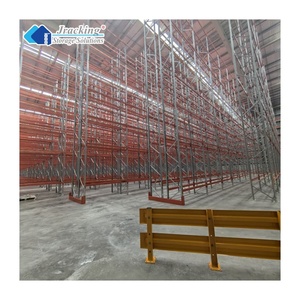
Jracking Heavy Duty Steel Warehouse Storage Rack System Customized AU Standard Pallet Racking For Factory Workshops
View Specifications →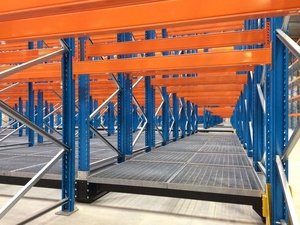
The Mobile Racking System Is One of the Best Racking Solutions for Pallets, Designed to Increase Warehouse Capacity
View Specifications →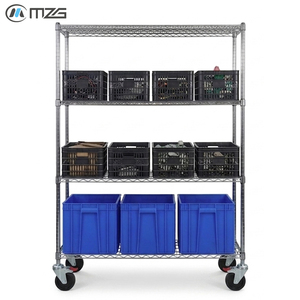
MZG ODM Factory Industrial Warehouse Parts Metal Heavy Duty Storage Organizer Rack Wire Shelving Systems with Wheel
View Specifications →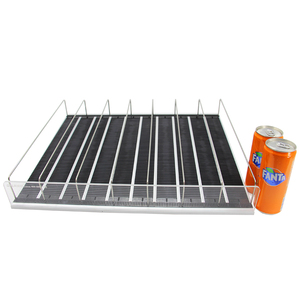
Heavy Duty Single-Sided Freestanding Supermarket Rack 8 Shelves Customizable Size Gravity Roller Display Sliding Shelf
View Specifications →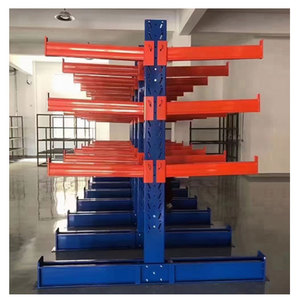
DJ Heavy-Duty Steel Adjustable Cantilever Rack Warehouse Standard Pallet Storage Shelf Sheet Metal 500kg-2000kg Capacity Powder
View Specifications →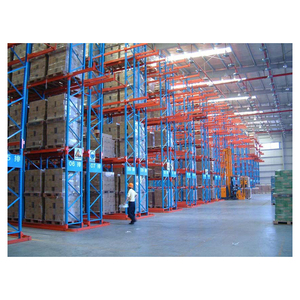
Narrow Aisle Racks Factory Price Heavy Duty VNA Rack Very Narrow Aisle Racking High Density Warehouse Storage Rack
View Specifications →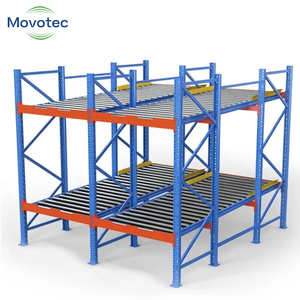
Warehouse Storage Racks Shelving Systems Pallet Rack Gravity Roller Flow Racking Movotec MTG100 1 Year Warranty
View Specifications →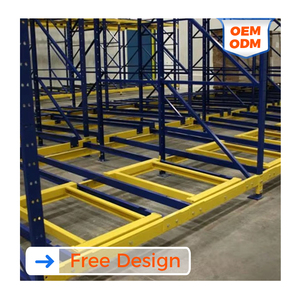
DJ Gravity Steel Push Back Rack For Warehouse Storage Racking System Cargo & Storage Equipment
View Specifications →Engineering Whitepaper: The Mechanics of Gravity Flow Racking in High-Throughput Warehousing
Gravity feed pallet racking systems—also designated across the European supply chain as dynamic pallet flow racking or palettier dynamique par gravité—represent the zenith of mechanical, non-powered compact storage. Designed fundamentally around the First-In, First-Out (FIFO) inventory rotation methodology, these systems harness an integrated incline slope (typically engineered between 3.5% to 4.0% decline) that transforms natural gravitational potential into fluid pallet propulsion across deep storage channels extending up to 20 to 30 pallets deep.
For warehouse operators, 3PL providers, and distribution network directors operating in high-cost logistics rings, the operational physics of gravity flow deliver an unprecedented compression of footprint. Conventional selective racking architectures typically allocate more than 60% of total warehouse floor area solely to reach-truck operating aisles. In sharp contrast, a gravity flow matrix consolidates operations into just two dedicated aisles: one loading (induction) aisle at the higher elevation, and one picking (extraction) aisle at the lower discharge terminal. This consolidation instantaneously cuts operating aisle space by up to 65% while escalating cubic capacity utilization past 85%.
Achieving absolute reliability in pallet flow systems demands rigorous mechanical balancing. When heavy metric loads (ranging from 500 kg to over 1,500 kg per pallet position) travel down an inclined roller bed, kinetic acceleration must be precisely restrained. Our engineered gravity lanes feature continuous cylindrical steel rollers with heavy-duty ball bearings paired with centrifugal speed controllers (brake rollers) distributed at calculated intervals. These speed-limiting brake rollers actively maintain pallet descent at a controlled speed below 0.3 meters per second, mitigating severe pallet impact risks, product tipping, and structural frame degradation. At the discharge end, specialized mechanical pallet separators isolate the lead pallet from the combined accumulated back-pressure of the rear queue, allowing forklift operators to perform safe, resistance-free extractions without hazardous lane jams.
Gravity Flow vs. Competing High-Density Systems
Evaluating kinematics, rotation compliance, spatial efficiency, and total operational velocity for modern European distribution nodes.
| Storage Racking System | Inventory Rotation | Aisle Requirement | Footprint Efficiency | Throughput Speed | Best Suited Application |
|---|---|---|---|---|---|
| Gravity Pallet Flow | Strict FIFO | Dedicated Loading & Picking | Very High (85%+) | Rapid (Gravity-Fed Picking) | Perishables, Pharmaceuticals, High-Turnover FMCG |
| Push-Back Racking | Strict LIFO | Single Front Entry | High (70%–75%) | Moderate (Push Resistance) | Medium-turnover batch manufacturing, cold rooms |
| Drive-In Racking | Strict LIFO | Forklift Lane Entry | High (70%–80%) | Slow (Operator Travel Inside) | Low SKU count, seasonal buffer storage |
| Selective Pallet Racking | Any (FIFO/LIFO) | Aisle Between Every Rack Row | Standard (35%–45%) | Direct Pallet Accessibility | High SKU counts, unpredictable fulfillment paths |
| Radio Shuttle System | FIFO or LIFO | Single or Dual Access Aisle | Maximum (85%–90%) | Automated Cart Retrieval | Massive deep-freeze facilities, mega-logistics hubs |
Localized Industrial Applications Across the Greater Paris Market
From the central food hub of Rungis to the urban fulfillment centers along the Seine corridor, how Paris enterprises leverage gravity storage.
Marché de Rungis (MIN) Fresh Logistics
The Rungis International Market—spanning over 234 hectares south of Paris—represents the world's largest wholesale fresh food hub. In this critical node, inventory turnover is measured in hours rather than weeks. Dairy, meat, seafood, and fresh produce require absolute cold-chain integrity under strict FIFO governance. Gravity feed racking installed in chilled (+2°C to +4°C) staging buffers guarantees that older date-coded pallets automatically roll to the front pick face, preventing costly food spoilage, human rotation errors, and cross-dock delays.
Pharma Distribution in Val-de-Marne & Évry
The pharmaceutical clusters surrounding Bièvre and the Genopole biocluster in Évry handle life-critical temperature-sensitive vaccines, active ingredients, and medicines. Regulatory compliance under the French ANSM and European GDP (Good Distribution Practice) rules mandates rigorous lot tracking and zero-error lot purging. Pallet flow channels configured with stainless-steel roller elements ensure frictionless movement of cleanroom-wrapped palletized medical supplies with zero oil emissions or mechanical contamination.
Urban Hubs & Low Emission Zone (ZFE-m)
As Greater Paris enforces the strict Zone à Faibles Émissions (ZFE-m) restricting diesel transport inside the A86 ring, logistics operators are transitioning to micro-fulfillment centers and high-velocity urban logistics cross-docks (e.g., Saint-Ouen, Gennevilliers, Pantin). Because square-meter real estate leases in urban Paris reach record highs, companies deploy gravity flow racking inside intermediate mezzanines to store fast-moving retail items directly above dispatch docks, keeping ground fleet cycles rapid and emission-free.
Strategic Logistics Trends & French Regulatory Compliance (ICPE & Standards)
The logistics landscape of the Île-de-France region is currently navigating a profound structural shift driven by territorial policies, sky-high land valuation, and stringent safety codes. Warehouse and industrial logistics supply in prime corridors—such as the Dorsale Logistique (the premier French freight axis connecting Le Havre, Rouen, Paris, Lyon, and Marseille) and the Grand Paris multimodal hubs (HAROPA Port network)—demands the maximum volumetric storage density attainable per cubic meter.
1. ICPE Rubrique 1510 Compliance & In-Rack Fire Sprinkling: In France, facilities storing combustible materials above statutory thresholds fall under the ICPE (Installations Classées pour la Protection de l'Environnement) regulatory regime. Storage facilities classified under Rubrique 1510 face exacting fire barrier and sprinkler design requirements dictated by APSAD R1 rules. Gravity flow racks engineered by our team are structurally modeled with calculated flue spaces between roller lanes. This spatial engineering accommodates NFPA/APSAD compliant ESFR (Early Suppression, Fast Response) and intermediate in-rack sprinkler pipe heads, ensuring certified compliance during DREAL safety audits.
2. Strict Adherence to European Norms (NF EN 15512 & NF EN 15620): Structural integrity across all European projects is governed by standardized European Committee for Standardization (CEN) codes. Our engineering team calculates beam section profiles, cold-formed upright gauge thicknesses, baseplate anchoring, and bracing geometry in strict accordance with NF EN 15512 (Steel static storage systems – Adjustable pallet racking systems – Principles for structural design) and NF EN 15620 for structural tolerances and clearances. Furthermore, our calculation dossiers incorporate Eurocode 8 requirements for regions with specific seismic design categories, providing French certifiers (Bureau Veritas, Apave, Socotec) with immediate verification documentation.
3. Operational Safety Aligned with INRS ED 771: Warehouse workplace accident prevention in France is strictly governed by the INRS (Institut National de Recherche et de Sécurité). Document ED 771 outlines explicit safety requirements for pallet storage installations, including column corner protectors (protections d'échelles) anchored to withstand a minimum 400 J dynamic forklift collision, safety stop barriers at roller lane extremities, and safety anti-drop mesh cladding along non-loading facades. Our turnkey system shipments supply all matching INRS-compliant safety accessories direct from the manufacturing line.
Why Global Logistics Planners Partner with HEDA Shelves
Eliminate intermediary markups with direct factory supply, precision European standard fabrication, and comprehensive engineering documentation.
25+ Years Industrial Heritage
Operating continuously since 2001, Guangzhou Heda Shelves Co., Ltd. has delivered over 10,000 warehouse projects internationally. Our 300+ expert production staff and structural engineers master both heavy roll-forming mechanics and automated dynamic storage systems.
Free 24h CAD & 3D Engineering
Supply your facility CAD floorplans, clear ceiling heights, pallet specs (Euro EPAL 1, EPAL 2, or industrial skids), and forklift turning radiuses. Our dedicated engineering office returns fully optimized 2D layout drawings, 3D structural renderings, and itemized quotations within 24 hours.
CE & ISO 9001:2015 Certified
Our complete manufacturing lifecycle adheres to certified quality assurance standards under ISO 9001:2015 (Cert No. 18624Q00169R0M) and European Construction Products Regulation CE Marking (No. 2435-CPR-8605159), ensuring guaranteed weld integrity, raw steel tensile strength, and non-toxic powder coating.
Container-Optimized French Logistics
We pack system components in specialized steel-strapped bundles engineered for sea freight loading inside 40-foot High Cube containers. Shipments dock at Le Havre (HAROPA Port) or Dunkirk, transshipping seamlessly via rail or river barge up the Seine straight to Gennevilliers or Bonneuil-sur-Marne hubs.
Frequently Asked Questions by Logistics Buyers in Paris
Detailed engineering, standard compliance, pallet geometry, and shipping questions answered by our structural design team.
Are your gravity flow racking systems compatible with standard European EPAL pallets?
Yes, absolutely. The vast majority of our European installations are engineered around standard EPAL 1 (1200 mm × 800 mm) and EPAL 2 / EPAL 3 (1200 mm × 1000 mm) wooden and composite pallets. In gravity flow systems, the orientation of bottom skid runners relative to the steel rollers is critical. EPAL pallets typically travel along the 1200 mm depth with runners oriented perpendicular to roller axles, ensuring uniform surface contact. If your warehouse utilizes perimeter-base pallets, half-pallets (600 mm × 800 mm), or plastic skids, we tailor roller spacing, roller diameter (50 mm or 60 mm heavy-wall steel), and roller track profiles to eliminate sag or deflection.
How do you ensure proper pallet descent speed and prevent crushing damage in deep lanes?
In lanes exceeding 3 to 4 pallets deep, gravity acceleration creates severe terminal velocity and hydrostatic back-pressure. To guarantee controlled deceleration, we install indirect mechanical centrifugal brake rollers at every 1.5 to 2.5 pallet pitch along the lane. These internal brake rollers exert counter-torque proportional to pallet speed, keeping velocity strictly below 0.25 to 0.30 m/s. At the discharge pick-face, an automatic pneumatic or mechanical pallet separator latches onto the second pallet in line, keeping the entire rear queue back by approximately 150 mm. This relieves all accumulated pressure on the front pallet, allowing forklift operators to extract the load cleanly without damaging goods or snagging the rack uprights.
Can HEDA Shelves supply structural calculations for French building permits and Apave/Bureau Veritas audits?
Yes. Every project engineered for the French market is accompanied by a full structural calculation dossier prepared according to NF EN 15512 and relevant Eurocodes. This technical pack itemizes dead loads, dynamic live loads, impact factors, steel grade yield stresses (e.g., Q235B / Q355B certified equivalent to European S235JR and S355JR), floor slab anchor shear calculations, and deflection limits. French inspection bodies such as Apave, Bureau Veritas, or Socotec can readily review, approve, and certify these calculation dossiers during initial commissioning or recurring annual inspections.
How does gravity feed racking perform in cold storage and blast freezing environments in Île-de-France?
Gravity pallet flow is one of the most cost-effective cold-storage configurations because it packs high pallet density into expensive refrigerated volume while eliminating electrical motors, sensor wiring, and battery degradation found in powered shuttle systems. For facilities operating down to -30°C (such as frozen food DCs in Sénart or Trappes), we outfit our roller beds with low-temperature synthetic lubrication greases, zinc-plated cold-resistant anti-corrosive rollers, and high-tensile structural steel that prevents cold embrittlement.
What is the lead time, shipping port, and container delivery procedure to Paris / Île-de-France?
Production lead time at our 30,000 m² Guangzhou manufacturing campus typically ranges from 15 to 25 days following signed CAD approval, depending on steel tonnage. Standard shipping routes dispatch from Guangzhou or Shenzhen ports directly to Port of Le Havre (HAROPA) or Dunkirk, with an average ocean transit time of 28 to 35 days. From Le Havre, containers move via road freight directly along the A13 motor-corridor or via container barge up the Seine River into urban multimodal terminals including Gennevilliers and Bonneuil-sur-Marne. We offer flexible terms including FOB, CIF, or DPU delivered to your warehouse site.
Transform Your Paris Warehouse with High-Density Gravity Pallet Flow
Accelerate throughput, cut cubic storage overhead, and achieve seamless FIFO material handling. Submit your building dimensions and pallet specifications today for a complete structural layout and competitive factory-direct quote within 24 hours.
Send an Inquiry