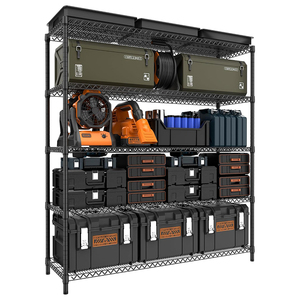
Direct Manufacturing Lineup
Engineered Industrial Racking Systems for Canadian Distribution Hubs
Precision-manufactured utilizing premium cold-rolled steel, engineered to strict RMI and Canadian structural engineering thresholds for heavy industrial loads and high-density throughput.
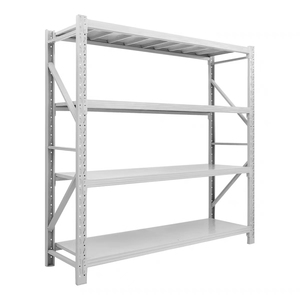
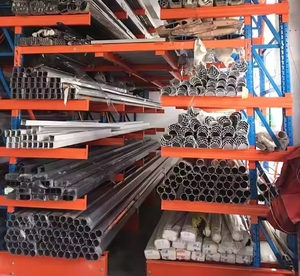
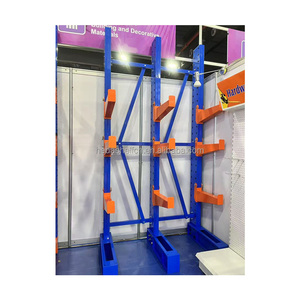
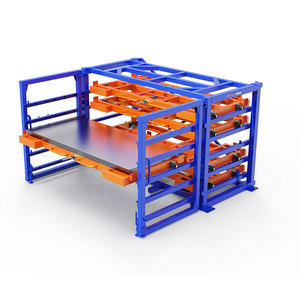
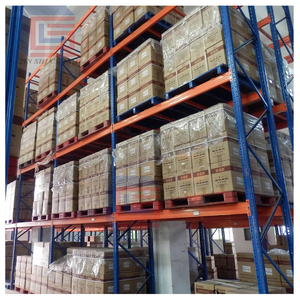
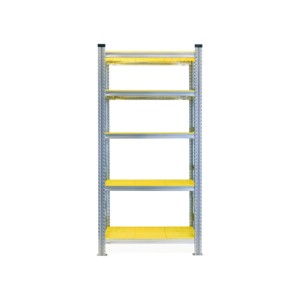
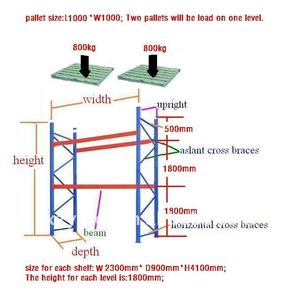
Comprehensive Industry Whitepaper
Gravity Feed (Pallet Flow) Racking Dynamics in the Canadian Supply Chain
Gravity feed pallet racking—widely recognized across logistics corridors as Pallet Flow Racking—represents the gold standard of dynamic, high-density industrial warehousing. Engineered on an inclined plane (typically 2.5% to 4% pitch) equipped with precision heavy-duty skate wheel or full-width steel roller tracks, these systems convert gravitational kinetic energy into seamless, controlled material flow. Operating under a rigorous First-In, First-Out (FIFO) stock rotation strategy, gravity flow racking isolates inventory loading lanes from retrieval corridors, immediately mitigating internal forklift traffic, reducing collision risk, and multiplying vertical space utilization by up to 60% compared to standard selective setups.
For warehouse facilities operating throughout Ontario (Greater Toronto Area), Quebec (Montreal logistics corridor), Alberta (Calgary-Edmonton logistics axis), and British Columbia (Metro Vancouver), commercial industrial real estate valuations continue to hit unprecedented price-per-square-foot metrics. Logistics planners can no longer afford wide, non-productive operating aisles. Furthermore, the extreme climate variations inherent to Canada—where interior cold-storage and deep-freeze operations must contend with intense energy overhead—require storage systems that dramatically contract the cubic footprint per unit stored, lowering per-pallet thermal conditioning costs.
60%
Floor Footprint Reduction
100%
Strict FIFO Inventory Rotation
-35%
Forklift Operational Travel Time
3,000+
Lbs / Pallet Lane Capacity
Critical Localized Application Scenarios Across Canadian Sectors
The operational versatility of gravity feed systems makes them indispensable for fast-moving Canadian consumer, manufacturing, and perishables sectors:
Cold Storage & Food Distribution
Operates seamlessly in -30°C Canadian deep-freeze meat, dairy, and produce facilities. Centrifugal speed controllers and cold-resistant polymer or galvanised steel rollers eliminate viscosity lockups while preserving time-sensitive cold chain integrity.
Pharmaceutical & Traceable Goods
Health Canada (GUI-0001) mandates strict expiration lot control. Gravity flow physically enforces FIFO: newly received batches are impossible to pick before pre-existing inventory reaches the forward discharge face.
High-Velocity E-Commerce Buffering
Serving major Canadian cross-dock terminals and multi-carrier postal hubs. Configured at staging lines to accumulate palletized sorting bins, dispatching directly to dock levelers without cross-traffic congestion.
Structural Engineering: Meeting National Building Code of Canada (NBC) & CSA Standards
Deploying heavy-capacity storage systems in Canada requires precise adherence to structural safety standards. Unlike rudimentary shelving, gravity pallet flow racks bear extreme static and kinetic loads. Uncontrolled pallet acceleration represents a severe facility hazard. Our systems incorporate three mission-critical mechanical innovations:
- Centrifugal Speed Controllers: Direct-braking rollers positioned at calculated intervals down the lane ensure pallets travel at a safe, constant velocity (<0.3 m/s), regardless of load weight differences ranging from 500 lbs to 3,000 lbs.
- Pallet Separation Stops: Pneumatic or mechanical foot separators hold back upstream pallets until the frontline lead pallet is lifted by the forklift, eliminating line backpressure and preventing rack hang-ups or tip-over risks.
- Seismic Ductility Compliance (CSA S16 / S136): Designed specifically to meet seismic performance factors (Sa values) mandated by provincial building codes—especially crucial for the high-risk seismic zones of British Columbia (Cascadia subduction zone) and Eastern Ontario/Quebec (St. Lawrence valley).
| Engineering Dimension | Standard Gravity Flow Spec | Heavy Freeze Duty Spec (Canadian Winter) | Operational Impact |
|---|---|---|---|
| Steel Specification | Q235B / Cold-Rolled Carbon Steel | Q355B / High Yield Normalized Steel | Prevents embrittlement down to -40°C |
| Roller Track Mechanism | Triple-Row Steel Skate Wheels | Full-Width Zinc-Plated Heavy Steel Rollers | Handles irregular, warped, or weak wood pallets |
| Braking Architecture | Internal Speed Governor (Every 2 Pallets) | Self-Energizing Viscous Fluid Controllers | Maintains consistent velocity regardless of frost buildup |
| Pallet Pitch Standard | 3.0% (3/8" per foot) | 3.5% - 4.0% Adjusted Pitch | Overcomes cold-induced roller drag |
| Standard Pallet Standard | 48" x 40" GMA Class Pallets | 48" x 40" GMA + CHEP / PECO Stamped | Universal handling for North American consumer retail |
Canadian Warehousing Trends: What Purchasing Agents Are Watching (2025–2030)
1. Integration with Autonomous Forklifts & AGVs: As Canadian logistics hubs face severe labor shortages, facilities are shifting to automated guided vehicles. Gravity feed systems provide fixed, predictable pickup and drop-off coordinates, serving as the perfect mechanical intermediary between automated and manual zones.
2. Net-Zero Carbon Operations & Energy Densification: Heating, cooling, and lighting massive warehouse footprints is unsustainable under Canada's tightening federal environmental regulations. By eliminating unnecessary aisles, gravity flow systems allow operators to shrink building footprints, reduce lighting runtimes, and maximize refrigeration efficiency.
3. Pre-Inspected Pre-Fabrication: Long installation lead times and high local welding costs in Canada have prompted facility managers to import modular, pre-punched, boltless beam designs that assemble swiftly on-site without hot work permits.
Procurement Clarity
Frequently Asked Questions: Sourcing Racking for Canada
Clear, unvarnished guidance on permits, seismic stamping, customs clearance, and pallet compatibility for Canadian engineers and purchasing agents.
How do you handle Canadian Pre-Start Health and Safety Reviews (PSR) and PE Stamped Drawings?
Under Ontario Ministry of Labour regulations (and similar provincial safety guidelines in QC, BC, and AB), racking installations typically require a Pre-Start Health and Safety Review (PSR / PSHSR). We supply comprehensive finite element calculations, raw material mill test certificates (MTC), imperial-dimensioned shop drawings, and beam capacity charts. These engineering document packages are formulated for seamless final review and stamping by your local Canadian Professional Engineer (P.Eng).
Are your roll tracks fully compatible with standard North American GMA & CHEP pallets?
Yes. Our roller tracks, guide channels, and load discharge trays are calibrated around the standard 48" x 40" GMA pallet format utilized widely across Canadian retail chains (such as Loblaws, Metro, Sobeys, and Costco). In addition, our multi-roller layouts accommodate 4-way block pallets (CHEP, PECO), soft-wood runners, and custom returnable plastic shipping containers without bottom-board sag or jam-ups.
What shipping terms, ports, and transit times can we expect for Canadian deliveries?
We regularly pack and route heavy 20GP and 40HQ ocean containers through the Port of Vancouver (for British Columbia and Western Canada distribution) as well as the Port of Montreal or via rail-linked intermodal transfers to Toronto and Calgary. We provide FOB, CIF, or DDP (Delivered Duty Paid) coordination. Components are packaged in container-optimized steel crating with waterproof wrapping to withstand long trans-Pacific maritime transit.
How do dynamic gravity systems perform under Canadian sub-zero ambient warehouse conditions?
Extreme sub-zero operation can freeze inferior bearings and crack brittle plastic rollers. For Canadian cold storage and unheated industrial applications, we engineer our systems with low-temperature synthetic lubricants inside sealed zinc-chromate roller bearings, heavy-gauge galvanized steel tracks, and cold-resistant polyurethane brake sleeves that retain their viscoelastic friction parameters down to -40°C.
How does the total cost of ownership (TCO) of Gravity Flow compare to Selective Racking?
While dynamic roller-lane steelwork has a higher upfront component cost than static selective racking, the payback period in high-throughput Canadian distribution centers is typically 12 to 24 months. This ROI is driven by the elimination of forklift operating aisles, a 30% to 50% decrease in lift truck fleet count and battery maintenance, accelerated truck turnaround at loading docks, and near-zero product spoilage due to strict automatic FIFO rotation.
Why Global Logistics Leaders Partner with Guangzhou Heda Shelves
Since 2001, Guangzhou Heda Shelves Co., Ltd. has stood at the forefront of structural warehousing innovation. Our modern 30,000 m² (323,000+ sq ft) production campus operates with 300+ certified engineers, robotic welding stations, automatic roll-forming lines, and eco-friendly electrostatic powder-coating systems. With an expansive monthly output exceeding 30,000 tons of structural steel, we engineer, manufacture, and supply comprehensive storage projects that satisfy rigorous international building guidelines.
ISO 9001:2015 & CE Certified
10,000+ Global Warehouses Installed
Imperial & Metric Shop Drawings
Turnkey CAD Layouts within 24 Hours