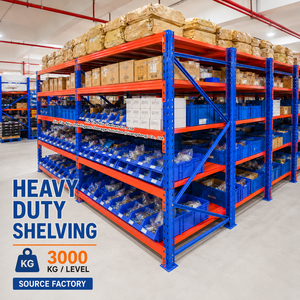
3000KG Custom Steel Deck Storage Rack For Small Parts & Bins
Engineered for high-density plastic container integration and bin-level picking environments.
Years Engineering Legacy
Modernized Facility
Monthly Steel Output
Global Facilities Designed
Explore our foundational storage systems built with structural steel profiles, high-load electrostatic coatings, and configurable deckings designed for extreme industrial applications.
Engineered for high-density plastic container integration and bin-level picking environments.
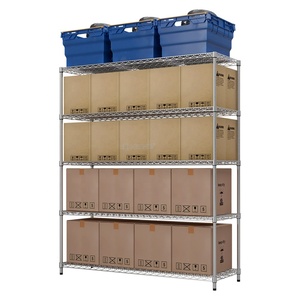
NSF-grade ventilation decks engineered for cleanroom, retail staging, and cold-aisle accessibility.
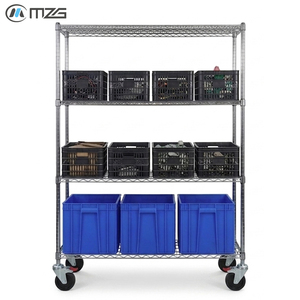
Dynamic intra-logistics cart assembly supporting versatile inventory re-allocation and picking mobility.
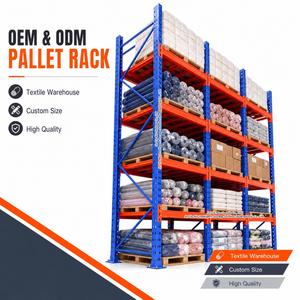
Broad-span clear entry configuration for long-span fabric cores and oversized textile bundle storage.
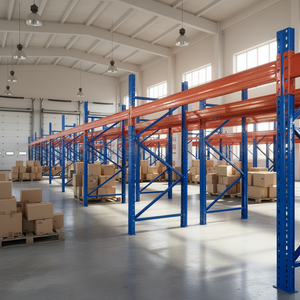
Standardized palletized logistics support with engineered beam connectors and drop-in locking pins.
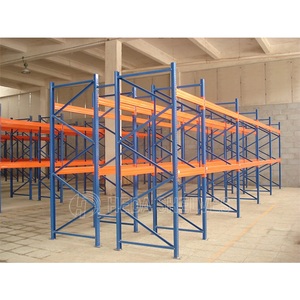
Manufactured strictly conforming to EN 15512 and FEM standard profiles for international logistics.
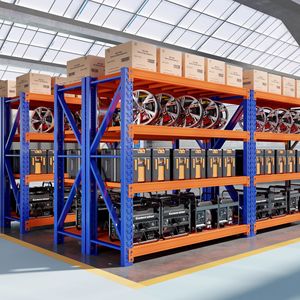
Interlocking pitch frame for fast zero-tool layout reconfigurations and automated warehouse cell sorting.
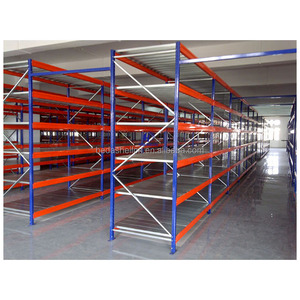
The optimal trade-off between deadweight steel investment and pick-face surface area accessibility.
In accordance with global RMI (Rack Manufacturers Institute) and FEM standards, modern warehouse racking demands strict deflection-limit verification and structural yield tolerances.
Every upright channel originates from virgin-certified Q235B structural grade steel. Continuous roll-forming line tension tests maintain an ultimate tensile strength of 375 to 500 MPa with consistent elongation, safeguarding vertical racking frames against unexpected shock and dynamic overload.
Distribution centers located in active seismic zones require specialized calculation of baseline sheer, second-order (P-Delta) sway, and beam-to-column connector rotational stiffness. We supply certified finite-element analysis (FEA) reports ensuring baseplates transfer horizontal seismic forces safely into the slab.
Longevity is dictated by substrate preparation. Our multi-stage automated immersion cycle applies high-pressure chemical degreasing, ultrasonic rust removal, and zinc-phosphate conversion, finished with electrostatic TGIC polyester resin cured at 200°C for superior impact resilience and scratch defense.
The transition toward dark warehouses, micro-fulfillment centers, and high-density cubic optimization is reshaping how global supply chain leaders allocate infrastructure capital.
| Procurement Dimension | Traditional Approach (Legacy Logistics) | Emerging Paradigm (2025-2030 Architecture) | Operational Impact & ROI Factor |
|---|---|---|---|
| Spatial Optimization | Wide Aisle Selective Racks (3.5m–4.0m Clearances) | Very Narrow Aisle (VNA) & Multi-Tier Rack Platforms | Increases vertical density by up to 65% per square meter footprint. |
| Automation Compatibility | Manual Counterbalance Forklift Interaction | AMR/AGV Tunneling, Pallet Shuttle & ASRS Ready | Cuts operational labor expenses while reducing pallet collision damage by 80%. |
| Procurement Lifecycle | Standard Spot Replacement via Local Wholesalers | Turnkey Factory-Direct Modular Scalability via OEM/ODM | Decreases capital expenditure by 30% through direct factory supply chain alignment. |
| Safety & Sensor Integration | Periodic Manual Auditing and Visual Inspections | IoT-Driven Upright Strain-Gauges & Impact Sensors | Prevents progressive collapse scenarios with real-time deflection telemetry. |
From simple timber-supported angle iron racks to sophisticated multi-tier mezzanine ecosystems, the engineering design of warehouse storage has matured into an exact science.
Historically, warehouses prioritized instant accessibility over volumetric density. Selective racking dominated due to the low land costs of horizontal facility expansion. Standardized teardrop frames and universal hook connectors minimized setup times but severely compromised vertical cube utilization.
As urban real estate and cold-storage energy footprints soared, deep-lane storage became mandatory. The industry developed drive-in, push-back gravity carts, and dynamic roller beds. While these systems achieved 70%+ volume occupation, mechanical wear and forklift impact risks highlighted the need for structural reinforcements.
Today, intelligent intralogistics favors high-bay rack-supported buildings (clad racks) where the structural racking doubles as the facility's outer shell. Combined with high-speed automated vertical lifts and four-way shuttle tracks, shelving systems now function as active mechanical machinery rather than passive storage steel.
With an established presence since 2001, our ISO 9001:2015 and CE certified factory provides a resilient manufacturing supply chain that eliminates intermediary markups and delivery bottlenecks.
Send us your building schematics and our dedicated project engineers return complete space-maximizing layout drawings, clearance simulations, and capacity metrics in imperial and metric units within 24 hours.
Our manufacturing floor operates under ISO 9001:2015 (Cert No. 18624Q00169R0M) and EN 1090-compliant CE Marking (No. 2435-CPR-8605159), paired with heavy-metal RoHS environmental raw-material compliance.
Steel uprights and cross-beams are bundled with steel strapping, shock-absorbing cardboard cradles, and moisture-resistant polyethylene wrapping to maximize container cubic capacity and protect delicate paint finishes during transit.
From custom RAL color powder-coating matching your corporate identity to specialized teardrop, slotted, or hex hole patterns compatible with your existing warehouse racking systems, we build to exact client specifications.
Essential technical clarifications addressing load verification, engineering approvals, shipping logistics, and compliance factors for procurement professionals.
Consult directly with our structural storage engineers. We deliver tailored CAD spatial layouts, precise load calculations, and competitive factory-direct quotations to streamline your warehouse expansion.