Factory-Direct Warehouse Storage & Roller Racking Solutions
Engineered to strict international standards (ISO 9001:2015, CE Marking, and RMI MH16.1 specifications). Discover high-density, dynamic, and selective systems precision-manufactured for extreme longevity and zero-downtime operation.
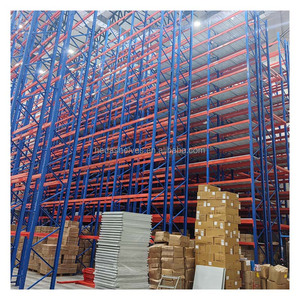
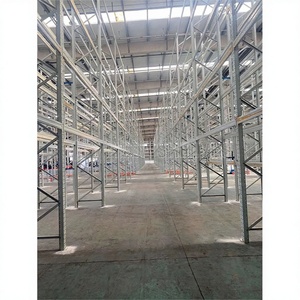
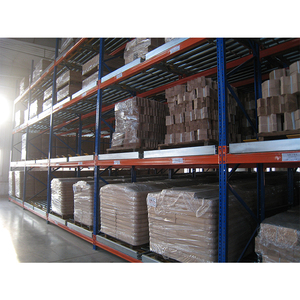
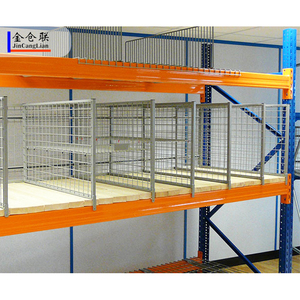
Technical White Paper: The Structural Dynamics & Material Handling Mechanics of Roller Racking Systems
Modern distribution centers, cold-storage logistics complexes, and fast-moving consumer goods (FMCG) fulfillment facilities face an intensifying operational paradox: the need for maximum volumetric storage density paired with extreme pick velocities and strict rotational compliance. Roller racking systems—commonly categorized under dynamic storage, pallet live storage, and carton gravity flow systems—resolve this friction by transforming dead storage capacity into kinetic accumulation lanes operated entirely by natural gravitational potential energy.
As a leading ISO 9001:2015 and CE certified factory producing over 30,000 metric tons of precision warehouse racking steel monthly, our engineering division approaches roller racking design through meticulous force-vector calculations, kinetic coefficient balancing, and structural load analysis. Unlike static selective racks, roller racking introduces continuous dynamic stresses, impact accelerations, and backpressure phenomena that require superior metallurgical yield integrity and calibrated friction modulation.
Slope & Gradient Optimization
The standard operational gradient across heavy pallet flow lanes is calculated between 3.0% and 4.2% (approx. 1:28 to 1:24 inclination angle). This pitch is mathematically balanced against the rolling resistance of cylindrical galvanized steel rollers and pallet bottom deflection variables, ensuring self-starting motion without terminal runaway velocity.
Centrifugal Brake Retarders
To arrest acceleration across long deep-lane tracks (reaching up to 20 pallets deep), indirect and direct-contact centrifugal speed controllers are inserted into the roller tracks at calculated intervals. These eddy-current or friction brake rollers mechanically govern glide velocity to a constant, controlled speed below 0.3 m/s (60 ft/min).
Backpressure Relief Separators
Backpressure in deep-lane storage is cumulative: a lane of 15 pallets of 1,000 kg each imparts substantial horizontal load onto the lead pallet. Automatic mechanical separators lock trailing pallets 400mm back from the pick face, permitting forklifts to safely extract the forward pallet without load clamping or binding.
Whether deploying full-width heavy steel roller tracks for wooden GMA pallets, three-track split roller beds for industrial plastic runners, or precision skate-wheel lanes for carton flow picking operations, every component manufactured in our Guangzhou production hub is built using cold-formed Q235B structural carbon steel. Precision CNC punching lines guarantee beam hook connectors engage into upright frames with absolute dimensional accuracy, resisting dynamic sway and operational fatigue under intense shift patterns.
Future Procurement Trends: Where Dynamic Roller Storage Is Headed (2025–2030)
Strategic procurement directors and supply chain engineers evaluating multi-million dollar warehouse infrastructure projects are shifting their capital expenditure criteria. The procurement landscape for industrial roller racking and gravity live storage is being reshaped by four macroeconomic and technological developments:
1. AGV/AMR Interface Compatibility
Manual forklift retrieval at the roller rack discharge face is increasingly giving way to autonomous counterbalanced forklifts and Automated Guided Vehicles (AGVs). Procurement specifications now mandate optical beam sensors, laser-cut pallet centering entry funnels, and zero-backpressure mechanical locks that present pallets within millimeter-precise pick windows.
2. Cold Chain & Cryogenic Resilient Engineering
With pharmaceutical cold chains and frozen food e-commerce expanding exponentially, roller racking deployed in -30°C (-22°F) blast freezer environments requires specialized procurement specifications: food-grade synthetic low-temperature lubricants, zinc-passivated anti-seize bearings, and thermal contraction compensation tolerances along rack beams.
3. Circular Metallurgy & Low Carbon Footprints
Global Fortune 500 logistics firms are prioritizing ESG credentials. Procurement audits require suppliers to verify high-percentage recycled content in structural coils, zero-VOC electrostatic powder coatings, and acid-free pickling/phosphating pretreatments that minimize toxic effluents during roll-forming and surface finishing.
4. Modular Hybrid Conversion Kits
Fixed warehousing layouts are declining in favor of adaptable floor footprints. Buyers are choosing roller bed assemblies that can be dropped onto standard selective or teardrop horizontal beams via bolt-on snap brackets. This allows rapid conversion between static storage and dynamic FIFO flow without tearing down upright frameworks.
By standardizing on engineering-first manufacturing lines capable of custom-tooling roller diameters (from 38mm up to 89mm) and wall thicknesses (up to 3.5mm thick high-strength steel), Guangzhou HEDA Shelves empowers procurement heads to future-proof their distribution infrastructure against labor shortages and changing operational footprints.
System Architecture Comparison: Roller Gravity Flow vs. Alternative Storage Systems
Understanding where roller racking fits within the spectrum of industrial material handling equipment is essential for capital allocation. The following engineering matrix compares gravity roller flow against other prominent high-density systems:
| Evaluation Parameter | FIFO Roller Flow Racking | Push-Back Racking (Carts) | Drive-In Racking Systems | Radio Shuttle Racking |
|---|---|---|---|---|
| Inventory Logic | Strict FIFO (First-In, First-Out) | LIFO (Last-In, First-Out) | LIFO (Occasionally FIFO) | Both FIFO & LIFO Supported |
| Storage Density | Very High (Up to 85% footprint utilization) | High (2 to 6 pallets deep) | High (Aisle elimination) | Maximum (Up to 40+ pallets deep) |
| Operating Energy Cost | Zero (100% Gravity Powered) | Zero (Gravity Return) | Zero (Forklift Travel) | Low (Lithium Battery Charging) |
| Forklift Rack Intrusion | None (Loading & picking at outer faces) | None (Front face access only) | High (Drivers enter rack bays) | None (Shuttle runs within lanes) |
| Pick Velocity & Throughput | Maximum (Dedicated picking faces) | Moderate (Single face access) | Slow (Careful vehicle navigation) | Very High (Automated carriage) |
| Damage & Safety Risk | Low (No vehicle structural contact) | Low-Medium (Cart track impacts) | High (Frequent upright impacts) | Extremely Low (Sensor-guided) |
| Optimal Application | Perishables, FMCG, high SKU volume | Medium batch rotation, buffer staging | Homogeneous bulk single-SKU goods | Large cold rooms, high-density hubs |
As demonstrated, while automated radio shuttle systems deliver extreme depth and drive-in racks provide low upfront racking steel costs, gravity roller flow systems achieve the highest non-powered throughput per square meter, completely segregating truck loading lanes from retrieval personnel to eliminate forklift-pedestrian collisions.
Why Partner with Guangzhou HEDA Shelves: Enterprise Manufacturing Advantages
Guangzhou Heda Shelves Co., Ltd. is not merely a trading intermediary; we are an established industrial manufacturing titan with over a quarter-century of specialized experience in commercial and industrial storage fabrication. Operating from our expansive 30,000 square meter (323,000 sq ft) facility in Guangzhou, China, our team of 300+ seasoned engineers, certified welders, and production specialists serves logistics integrators, 3PL giants, and industrial supply distributors worldwide.
Full In-House Roll-Forming Lines
We operate 16 high-precision continuous roll-forming lines capable of profiling steel columns, boxed step beams, and heavy-gauge roller beds directly from prime hot-rolled and cold-rolled steel coils. Automated CNC punching dies create crisp, repeatable teardrop and diamond hole geometries with zero camber or twist.
Certified Multi-Stage Pretreatment
Coating delamination is the primary failure mode in warehouse racking exposed to humidity and abrasion. Our 10-step automated finishing line incorporates rigorous chemical degreasing, ultrasonic rust removal, zinc phosphating, and electrostatic epoxy-polyester powder spraying cured at 200°C for exceptional salt-spray resistance.
Engineering Layouts within 24 Hours
Our dedicated engineering department utilizes advanced 3D CAD and finite element analysis (FEA) software. Send us your facility clear heights, slab floor capacities, pallet weights, and operational flow requirements; we return imperial/metric floor layouts, 3D architectural renders, and structural calculation summaries within 24 business hours.
Strict Quality Verification (ISO & CE)
Holding ISO 9001:2015 certification (No. 18624Q00169R0M) and CE Marking (No. 2435-CPR-8605159), our quality inspection technicians audit raw steel tensile thresholds, weld penetration integrity, dimensional tolerances, and roller bearing spin resistance across every production run before loading.
North American Code Alignment
We specifically engineer rack frameworks to align with Rack Manufacturers Institute (RMI) MH16.1 specifications, American National Standards Institute (ANSI) guidelines, and Canadian CSA A344 standards. Complete structural calculation packages are provided ready for your local Professional Engineer (PE) seismic review and permit stamping.
Export Container Optimization
International freight costs directly impact project ROI. Our dispatch team employs computer-modeled container packing software. Roller beds, upright frames, and beams are bundled with protective corrugated cushioning, heavy-duty steel strapping, and custom dunnage to maximize container cube and eliminate transit scuffing.
Engineering FAQ: Critical Considerations for Specifying & Purchasing Roller Racking
Here are detailed answers to the most common technical, structural, and procurement inquiries submitted by project engineers, facility managers, and purchasing officers when sourcing gravity roller racking systems:
What pallet bottom runner configuration is required for gravity roller racking?
How do you prevent excessive speed and runaway acceleration in deep roller flow lanes?
How does the entry separator protect workers and forklift operators during extraction?
Can roller flow racking operate inside cold storage and blast freezers?
How do you verify structural seismic compliance for installations in high-risk zones?
What are the typical lead times and minimum order quantities (MOQ) for custom roller racking?
What regular maintenance and inspection routines are required for roller flow beds?
How does HEDA support international freight, delivery, and site installation?
End-to-End Quality Management: From Slit Coil to Sealed Ocean Container
Precision manufacturing defines our longevity. When producing heavy dynamic roller systems, manufacturing variance cannot exceed 0.5mm, as any frame twist will cause pallets to steer into lane side-guides and jam. Our multi-stage internal production protocol enforces total consistency:
Raw Steel Verification
Every batch of slit steel coil is spectrographically tested for carbon, manganese, and sulfur chemistry. Mill test certs verify minimum yield strengths exceeding 235 to 345 MPa to ensure structural safety factors.
Automated Profiling
Continuous automated profiling ensures upright post corners feature continuous bend radii that minimize internal residual stress concentrations, boosting seismic flexural ductility.
Robotic Robotic Welding
Beam connector end plates and column base shoes are fused using calibrated multi-axis robotic welding cells, achieving continuous uniform weld penetration free of micro-cracks or porosity.
Dimensional Inspection
Pre-assembly trials verify beam-to-frame connector clip tolerances, ensuring zero onsite binding and effortless installation by local racking assembly contractors.
Transform Your Warehouse Throughput with Factory-Direct Roller Racking
Whether you are planning a high-density greenfield distribution center or converting conventional selective racks into dynamic FIFO gravity lanes, Guangzhou HEDA Shelves delivers verified engineering layouts, structural calculation packages, and direct factory pricing within 24 hours.