High-Density Warehouse Racking & Automated Storage Solutions
Precision cold-formed structural steel systems engineered for maximum cubic volumetric utilization, rapid throughput kinematics, and long-term operating durability across North American and European logistics environments.
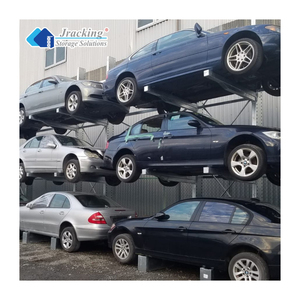
Jracking Heavy-Duty Cantilever Rack for Vehicle & Long-Stock Storage
- Capacity: Up to 6,600 lbs / arm
- Material: Hot-Rolled H-Section Q355B
- Clear span frontal obstruction-free
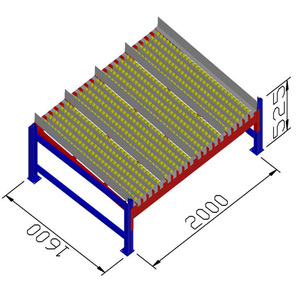
Warehouse Flow-Through Sliding Roller Track Pallet Racking
- Rotation: Strict First-In First-Out (FIFO)
- Speed: Magnetic centrifugal brake rollers
- Lane Depth: Up to 20 pallets deep
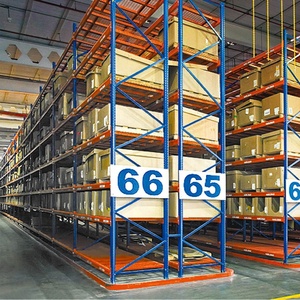
Very Narrow Aisle (VNA) Heavy-Duty Logistics Racking System
- Aisle Width: 1,500 mm – 1,800 mm
- Height: Precision cold-rolled up to 15 m
- Guidance: Steel rail or inductive wire
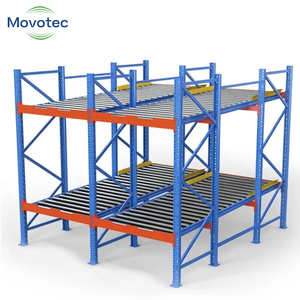
Movotec MTG100 Industrial Pallet Gravity Roller Flow Rack
- Slope Gradient: 3% engineered inclination
- Separation: End-stop pallet disconnectors
- Application: FMCG & Dairy Cold Storage
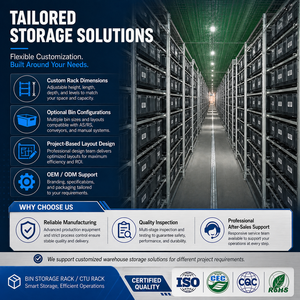
Mini-Load ASRS Automated Tote & Bin Storage Racking
- Kinematics: 300 m/min travel, 90 m/min lift
- Control: Integrated WCS / WMS interfaces
- Payload: 50 kg – 300 kg per tote/carton
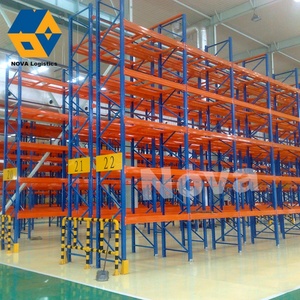
Customized Industrial Warehouse Heavy-Duty Pallet Racking
- Uprights: 80/90/100/120 mm omega profiles
- Beams: Interlocking box beams (50/75 pitch)
- Compliance: ANSI MH16.1 / RMI standard
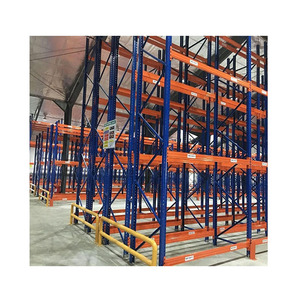
Galvanized Cold-Storage & Harsh Environment Pallet Racking
- Finishing: Hot-dip galvanized >65 µm layer
- Thermal Rating: Stable operation at -35°C
- Corrosion: Extreme acid / chemical defense

Precision Engineered MDF Light/Medium Storage Modular Shelving
- Substrate: High-density structural MDF board
- Bracketry: Concealed steel anchoring pins
- Use Case: Spare parts rooms & retail staging
Pallet Shuttle Systems: Mechanical Architecture, Kinematics & Structural Dynamics
An authoritative technical breakdown for warehouse directors, supply chain VPs, and civil logistics engineers assessing deep-lane automation versus legacy static configurations.
Modern supply chain execution requires handling unprecedented SKU proliferation while facing skyrocketing industrial land valuations and persistent labor deficits. In this operational climate, Pallet Shuttle Racking Systems (Radio Shuttle ASRS) represent the pinnacle of semi-automated and fully automated high-density material handling. Unlike conventional Drive-In racking, which forces lift trucks to travel inside narrow storage bays—causing severe upright structural degradation, protracted cycle times, and dangerous honeycombing—the pallet shuttle system isolates forklift travel strictly to exterior staging aisles.
An autonomous, self-powered cart travels along dedicated guidance rails within deep storage tunnels (often exceeding 40 pallet positions deep). The shuttle lifts, transports, and deposits standard GMA (48×40 inch), Euro (1,200×800 mm), or heavy industrial slave pallets with sub-millimeter precision. Controlled via RF radio remotes, optical barcodes, or full WCS/WMS bi-directional handshakes, pallet shuttles boost inventory density by up to 80% over conventional selective racking while reducing pallet retrieval times by over 50%.
Comprehensive System Comparison Matrix
Selecting the optimal pallet storage topology requires balancing density, cycle speeds, selective access, and capital expenditure. The following engineering matrix cross-examines dominant configurations:
| Storage Topology | Volumetric Density | Pallet Selectivity | Throughput Speed | Forklift Impact Risk | Operating Temperature | Direct Labor Overhead |
|---|---|---|---|---|---|---|
| Radio Pallet Shuttle | 96% | LIFO or True FIFO | Very High (Automated Lane Run) | Extremely Low (Aisle-Only Ops) | -30°C to +45°C | Minimal (Single Driver Multi-Shuttle) |
| Selective Pallet Racking | 42% | 100% Immediate | Moderate (Distance Dependent) | Moderate (Frequent Aisle Maneuvers) | Standard to Cold | High (Constant Driver Travel) |
| Drive-In Racking | 78% | Strict LIFO (High Honeycombing) | Slow (Deep-Bay Driving) | Severe (High Column Collision) | Cold / Ambient | High (Slow, Cautious Maneuvers) |
| Push-Back (Carts/Rollers) | 68% | LIFO (2–6 Pallets Deep) | Moderate (Gravity Push Resistance) | Low-Moderate | Standard / Cold | Moderate |
| Pallet Gravity Flow | 85% | Strict FIFO | High (Gravity Fed Run) | Low | Ambient / Chilled | Low-Moderate |
Mechanical Kinematics & Structural Rail Tolerances
The core structural element of a Pallet Shuttle system is the cold-formed shuttle track rail, formed from structural alloy steel (minimum yield strength Fy = 355 MPa / Q355B). The rail profile performs a dual mechanical duty: supporting the transverse horizontal wheel loads of the autonomous vehicle while seating the bottom perimeter skids of the stored pallet. Vertical rail deflection under full dynamic payload (typically rated for 1,000 kg to 2,000 kg per pallet position) is engineered strictly within L/400 structural limits to prevent cart drive-wheel slippage and optical sensor calibration drift.
Advanced shuttle shuttles deploy multi-sensor navigation suites combining photoelectric proximity arrays, absolute optical encoders, and solid-state laser LiDAR sensors. Acceleration and deceleration profiles follow an S-curve motion profile, mitigating load tipping forces on unstable, non-shrink-wrapped inventory. Brushless DC (BLDC) motors powered by industrial-grade lithium iron phosphate (LiFePO4) battery packs guarantee 8 to 10 hours of continuous operations under heavy cycling, with fast-swap charging modules requiring under 90 seconds of pit-lane downtime.
Structural Rail Geometry
Continuous-roll galvanized rails featuring integral guide flanges ensure anti-derailment stability during emergency e-stop braking at max velocity (1.2 m/s).
Intelligent BMS Systems
Integrated thermal management circuitry keeps high-capacity lithium cells operational at sub-zero temperatures down to -30°C without battery life degradation.
Fail-Safe Redundancy
Dual-laser positioning, mechanical drop-arrestors, and emergency recovery tow-modes prevent tunnel blockage during unexpected pallet fractures.
WCS Dynamic Interfacing
Seamless real-time data exchange across modern Enterprise Resource Planning (ERP) and automated Warehouse Management Software (WMS) layers.
Guangzhou HEDA Shelves: 25+ Years of Manufacturing Leadership
Direct-from-factory engineering excellence supporting multinational brands, third-party logistics (3PL) conglomerates, and North American distribution mega-centers.
Headquartered in Guangzhou, China, Guangzhou Heda Shelves Co., Ltd. has grown since 2001 into one of Asia’s preeminent manufacturers and exporters of heavy-duty industrial storage systems. Operating out of our expansive 323,000 sq ft manufacturing facility staffed by over 300 experienced engineers, certified welders, and quality assurance inspectors, HEDA maintains an elite monthly structural fabrication throughput exceeding 30,000 metric tons of finished steel.
For international procurement managers and project general contractors across North America (handling facilities from Los Angeles and Long Beach to Houston, Savannah, New York/New Jersey, and Vancouver), HEDA resolves the primary friction points of cross-border sourcing: we supply complete imperial-unit CAD/3D layouts within 24 hours, deliver complete calculation packages ready for local Professional Engineer (PE) seismic stamping, and pack ocean freight containers using protective steel-dunnage framing to eliminate transit damage.
10-Step In-House Precision Manufacturing Quality Framework
Every single upright column, shuttle rail, and box beam produced across our production floor follows a rigorous 10-stage quality assurance protocol, audited under our ISO 9001:2015 and CE EN 15512 frameworks:
Certified Steel Coils
Incoming inspection of Baosteel/Shougang Q235B and Q355B coils for tensile yield compliance.
CNC Precision Slitting
High-tolerance slitting to exact cross-sectional strip widths (±0.1 mm precision).
High-Speed Punching
Multi-ton automated progressive die punching of precise 50 mm / 75 mm teardrop & diamond pitch holes.
Continuous Roll Forming
24-station cold-roll forming lines engineering omega columns without micro-fracturing.
Laser Beam Profiling
Fiber-optic CNC laser cutting of box beam interlocks, end-connectors, and shuttle rail docking gates.
Robotic CO₂ Welding
Robotic pulse welding stations for column baseplates and beam ears yielding zero porosity.
Polishing & Deburring
Thorough mechanical surface finishing to eliminate micro-burrs and sharp flash.
Pickling & Phosphating
9-stage chemical pre-treatment bath line removing mill scale and applying zinc phosphate corrosion barrier.
Electrostatic Powder Coating
Automated GEMA electrostatic powder application cured at 200°C for exceptional impact hardness.
Container Pack & QA
Final ultrasonic thickness check, bundle strap labeling, and export container blocking verification.
Seismic Engineering & Stamped Calculations
Complete structural calculations according to ANSI MH16.1 (RMI standard), IBC, and Eurocode EN 15512. Ready for your local registered Professional Engineer (PE) of record review and municipal warehouse permitting.
Port-Optimized Global Export Logistics
Turnkey ocean logistics handling FOB, CIF, DDU, and DDP project shipping. Standardized bundling ensures maximum ocean container cubing (40ft High Cube) with zero forklift puncture damage during unloading at North American ports.
Tier-1 Certification Credentials
Independently verified compliance certificates, including ISO 9001:2015 (No. 18624Q00169R0M), CE Factory Production Control (No. 2435-CPR-8605159), and RoHS environmental metallurgical testing reports.
Future Procurement Trends in Pallet Shuttle Racking & ASRS
Critical industry shifts every procurement director and warehouse engineering team must integrate into their long-term CAPEX facility roadmap over the next 5 to 10 years.
Migration from 2D to 4D Multidirectional Shuttles
Traditional 2D radio shuttles operate along a single deep lane, requiring manual forklift transport between levels and tunnels. The procurement trend is shifting toward 4D autonomous shuttles equipped with longitudinal and transverse wheel assemblies. Paired with high-speed vertical reciprocating lifts, 4D shuttles roam autonomously across entire rack matrices, unlocking true lights-out ASRS operations without permanent aisle stacker cranes.
Supercapacitors & Inductive In-Rack Opportunity Charging
Battery maintenance and battery replacement cycles remain a significant total-cost-of-ownership (TCO) item for high-cycle distribution centers. Next-generation pallet shuttle designs incorporate hybrid supercapacitor modules and contactless inductive power rails embedded directly into the racking home positions. The shuttle recharges in bursts during deceleration and load staging, achieving 24/7 continuous operation with zero manual battery swapping.
Structural Digital Twins & IoT Deflection Telemetry
Structural reliability standards are expanding beyond static calculations. Modern logistics operations are integrating smart IoT strain sensors, vibration accelerometers, and optical tilt monitors into primary rack uprights and shuttle rail junctions. Real-time digital twins monitor dynamic impact spikes from lift truck entry, seismic tremors, and cumulative floor settlement, prompting predictive maintenance before micro-deflections compromise shuttle navigation.
Cryogenic Cold-Chain Optimization (-30°C)
With explosive growth in biologics, frozen foods, and cold-chain third-party logistics, cold storage operators are rapidly replacing energy-inefficient wide aisles. Shuttle racking allows maximum cubic air density, slashing refrigerated power consumption per pallet by up to 35%. Advanced procurement specifications mandate low-temperature alloy steels (Charpy V-notch impact tested at -30°C) and special condensation-resistant optical lenses.
The Technological Evolution of High-Density Pallet Racking
From static block-stacking to multi-tier autonomous robotics: how four decades of materials science and automation reshaped modern industrial storage.
Generation 1: Floor Stacking & Drive-In Systems (1970s–1980s)
The dawn of modern industrial warehousing relied heavily on wooden floor stacking and early structural steel Drive-In racking. While offering high density, these static systems suffered from catastrophic failure rates: forklift operators driving into deep, unlit 12-meter bays routinely impacted cantilevered beam arms. Structural honeycombing often rendered over 30% of theoretical warehouse capacity unusable due to strict LIFO limitations and safety restrictions.
Generation 2: Mechanical Dynamic Storage (1990s)
The introduction of push-back nesting carts and gravity roller flow lanes marked the first attempt to keep forklifts out of the rack tunnels. Gravity flow systems provided true FIFO rotation, while push-back provided 2-to-6 deep LIFO buffering. However, mechanical wear, dust accumulation on bearings, pallet slope-runaway hazards, and high installation costs capped lane depths and restricted flexibility.
Generation 3: Early Radio Shuttle Automation (2000s–2010s)
The advent of compact lead-acid and NiCad battery packs gave birth to the first autonomous radio shuttle carts. For the first time, rails carried both the pallet and an independent motorized carriage. Operators controlled shuttles using analog radio remotes. While revolutionizing density, early systems faced battery memory loss, heavy vehicle tare weights, and sluggish cycle speeds (0.5 m/s).
Generation 4: Modern Li-Ion & WCS-Integrated Pallet Shuttles (Present Era)
Today’s pallet shuttle systems represent mature, mission-critical mechatronic systems. Equipped with automotive-grade lithium chemistry (LiFePO4), dynamic optical encoders, regenerative braking, and cloud-integrated Warehouse Execution Software (WES), contemporary shuttles achieve top velocities of 1.2 m/s loaded and 1.5 m/s unloaded. Direct factory manufacturing, pioneered by HEDA Shelves, has drastically compressed CAPEX payback periods down to 12 to 18 months.
Frequently Asked Questions (FAQ) for Global Buyers
Clear technical and commercial answers directly addressing engineering, permitting, seismic safety, and logistics for industrial racking imports.
Can HEDA Shelves supply seismic calculations compliant with US & Canadian municipal building codes?
How does the Pallet Shuttle handle non-standard pallet sizes or lower-quality wooden pallets?
What are the floor slab tolerance and flatness requirements (FF/FL) for shuttle racking installations?
How does the radio shuttle operate in cold storage and deep freezer facilities down to -30°C?
What is the standard manufacturing lead time and typical ocean transit timeline to major ports?
• US West Coast (Los Angeles / Long Beach): 14 to 18 days
• US East Coast (Savannah / New York / New Jersey): 28 to 34 days
• US Gulf Coast (Houston): 26 to 30 days
• Canadian West Coast (Vancouver): 16 to 20 days
Can the system switch seamlessly between First-In, First-Out (FIFO) and First-In, Last-Out (LIFO)?
What safety measures prevent a pallet shuttle cart from driving off the front of the rack?
What spare parts, ongoing maintenance, and warranty protections are provided?
Ready to Maximize Your Storage Capacity by 80%?
Share your architectural building dimensions, clear roof heights, pallet specifications, and forklift fleet parameters. Our Senior Logistics Engineering Group will deliver an optimized CAD proposal, 3D visualization, and comprehensive CIF/DDP cost quotation within 24 business hours.
Direct Factory Engineering Desk
Connect immediately with our senior project engineers. Download our complete 2026 Pallet Shuttle Technical Spec Sheet and Warehouse Layout Planning Guide.