1000-4500kg Load
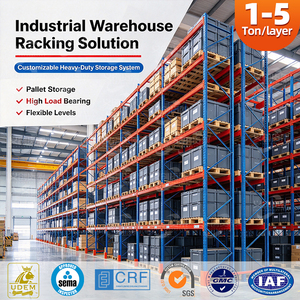
Engineered with Q235B high-tensile structural steel, our factory direct flow rack picking systems and heavy-duty industrial racks integrate seamlessly into global multi-tier distribution centers, e-commerce fulfillment hubs, and cold-chain warehouses.
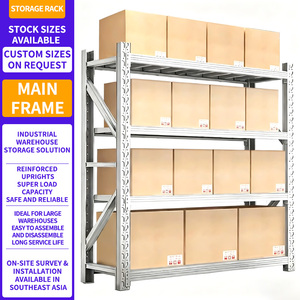
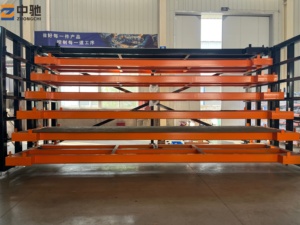
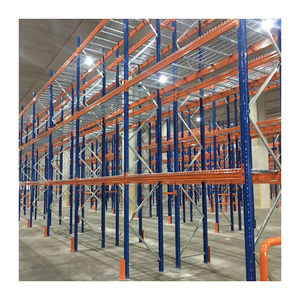
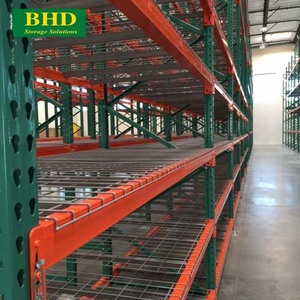
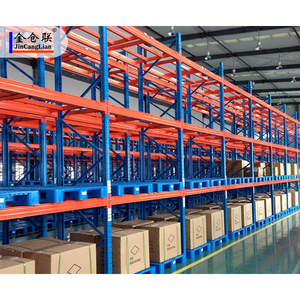
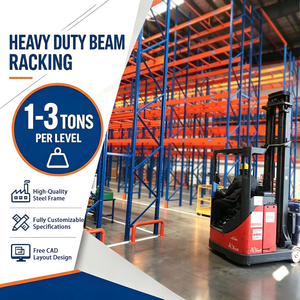
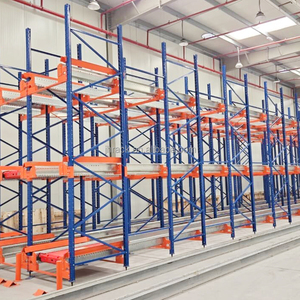
The operational core of a professional-grade flow rack picking system relies on the mathematically optimized balance between kinetic friction, incline gradient, roller inertia, and braking dissipation. Unlike generic light-duty shelves, industrial carton flow and pallet flow racks from an accredited factory utilize cold-rolled steel side channels housing staggered plastic or galvanized steel skate wheels, or continuous machined rollers mounted on heavy-gauge axle tracks.
For carton flow picking, lanes are configured at a pitch ranging between 1.5° to 3.5° (2.5% to 6.0% slope) depending on tote material, bottom deflection characteristics, and total package weight. Cardboard cartons with corrugated bases exhibit higher rolling resistance than injection-molded polypropylene totes, requiring granular adjustability along the upright column drop-holes. Guangzhou Heda Shelves manufactures precision uprights punched at incremental 50mm or 75mm pitches, enabling warehouse engineers to fine-tune shelf decline angles without disassembling primary structural bays.
In heavy pallet flow applications handling Unit Loads from 500 kg to 1,500 kg (1,100 lbs to 3,300 lbs), dynamic centrifugal speed controllers (brake rollers) are interspersed at calculated intervals (typically every pallet length). These centrifugal brakes govern acceleration, preventing heavy pallets from gaining dangerous velocity along extended lanes (e.g., 5 to 20 pallets deep). Ramp separators and mechanical end-stops at the discharge face isolate the lead pallet from subsequent rear pallet back-pressure, allowing operators or autonomous forklifts to retrieve loads cleanly without wedging or hazardous kinetic kickback.
When supply chain managers evaluate capital expenditure (CapEx) against operational yield (OpEx), selecting the correct picking topography dictates throughput velocities, picker ergonomic fatigue, and error rates. The table below outlines empirical benchmarks established across high-velocity retail, FMCG, pharmaceutical distribution, and cold chain operations:
| Storage Architecture | FIFO vs. LIFO Discipline | Picker Travel Reduction | Density Index (Pallets/Footprint) | Replenishment Interference | Pick Rate Performance |
|---|---|---|---|---|---|
| Dynamic Carton Flow Rack | Strict 100% FIFO | Up to 65% Reduction | High (Floor-to-Ceiling Lane Depth) | Zero (Rear Loaded) | 350 – 500 Lines / Hr / Operator |
| Gravity Pallet Live Storage | Strict 100% FIFO | Up to 45% Reduction | Maximum (Eliminates Cross Aisles) | Zero (Dual Aisle Isolation) | High Pallet Putaway / Fast Cross-Dock |
| Static Selective Pallet Racking | Arbitrary (Depends on Operator) | Baseline (Zero Travel Savings) | Low (Requires Multiple Reach Aisles) | High (Aisle Congestion) | 80 – 140 Lines / Hr / Operator |
| Drive-In Pallet Racking | LIFO Only | Moderate Travel Reduction | High (Deep Single Lane Storage) | High Forklift Impact Risks | Batch Outbound Only / Low Pick Density |
| Automated Shuttle Car Racking | Hybrid (Configurable FIFO/LIFO) | Autonomous Carrier Movement | Ultra-High (Deep Multi-Level) | Low (Software Managed) | Medium-High (Buffer Restricted) |
The procurement landscape for material handling structures is undergoing a paradigm shift driven by digital integration, smart warehouse management systems (WMS), strict environmental regulations, and worker ergonomic standards.
Modern flow racks are no longer passive steel assemblies. Leading factories now pre-engineer beam profiles with integrated wire chases and mounting tracks for light arrays, optical beam break sensors, and pick confirmation displays. This dynamic feedback loop eliminates paper lists, driving picking accuracy to 99.98%.
Autonomous Mobile Robots (AMRs) and automated forklifts are taking over replenishment routes. Flow racks designed for the next decade feature reinforced base plates, magnetic lane guidance tolerances, and tapered lead-in brackets that compensate for ±5mm robotic navigation offsets during high-speed tote and pallet docking.
With food and biological vaccines dominating global supply chains, cold storage flow racks must survive temperatures as low as -30°C (-22°F). Procurement specifications now mandate specialized low-temperature impact-resistant alloy steels, non-embrittling polyacetal roller wheels, and hydrophobic anti-icing zinc coatings.
Rather than sprawling outward across costly real estate, top tier distributors are layering carton flow picking tracks across multi-tier rack-supported mezzanines. Integrating flow racks into the second and third deck of a mezzanine creates dense picking villages serviced by spiral gravity chutes and vertical reciprocating conveyors.
Traditional rigid PVC wheels generate acoustic decibel spikes and can micro-fracture under rapid carton impact. Emerging procurement contracts demand heavy-duty TPU rollers equipped with sealed chrome-steel ball bearings, achieving silent 52dB fulfillment floors and zero operational friction wear.
ESG compliance requires verifiable carbon accounting. Top manufacturers are transitioning to 100% recyclable certified structural coils, pre-treated via eco-friendly non-heavy-metal zirconium chemical washing, followed by volatile organic compound (VOC)-free electrostatic powder baking cycles.
Established in 2001, Guangzhou Heda Shelves Co., Ltd. has grown into an international manufacturing powerhouse. Our state-of-the-art 30,000 m² (over 323,000 sq ft) facility employs more than 300 experienced engineers, certified welders, roll-forming artisans, and international trade specialists. Delivering a consistent monthly production output of 30,000 metric tons of finished racking steel, HEDA stands as a pillar of reliability for logistics integrators, material handling distributors, and multi-national corporations worldwide.
Serving core distribution centers across the United States, Canada, Europe, and Latin America, our structural calculation documentation directly satisfies local municipal building codes, ANSI/RMI MH16.1 specifications, and Canadian S16 structural steel standards. When you partner with HEDA Shelves, you bypass multiple tiers of middleman markups, securing factory-direct pricing alongside comprehensive engineering accountability.
Every column profile, box beam, and roller bed is manufactured using certified high-yield Q235B steel. Our facilities are audited under ISO 9001:2015 Quality Management Systems and hold CE Construction Products Regulation (CPR) No. 2435-CPR-8605159 compliance certificates.
Our in-house structural design team calculates pallet load distribution, aisle flue clearances, and seismic load resisting system (SLRS) factors. Submit your warehouse floor plan to receive complete CAD drawings, 3D BIM visualizations, and load tables in imperial (lbs/ft) and metric units.
Intermodal ocean transport can subject steel to severe humidity and shifting stresses. We implement precision bundle packing, impact-resistant corner cushions, and desiccant-infused vapor barrier packaging optimized for maximum 20GP and 40HQ container volumetric utilization to all major global ports.
Navigating cross-border procurement for industrial flow racking requires clarity across technical specifications, lead times, safety compliance, and installation mechanics. Here are direct answers to common questions posed by global procurement officers and facility engineers:
Connect directly with HEDA Shelves' technical sales and structural engineering department. Provide your facility dimensions, SKU profiles, pallet weights, and material handling objectives to receive a comprehensive CAD layout, 3D rendering, and factory-direct quotation within 24 hours.