Featured Industrial Live Storage & Heavy Warehouse Systems
Engineered using premium cold-rolled Q235B/Q355B structural carbon steel, each system is fully optimized for dynamic throughput, seismic resilience, and seamless integration with contemporary material handling equipment.
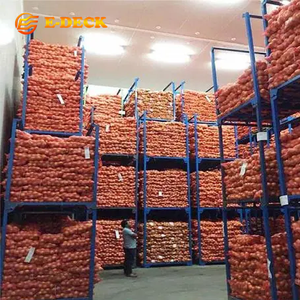
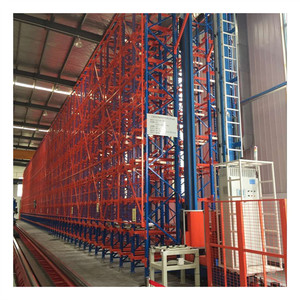
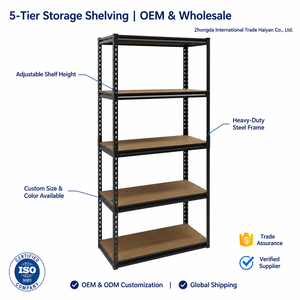
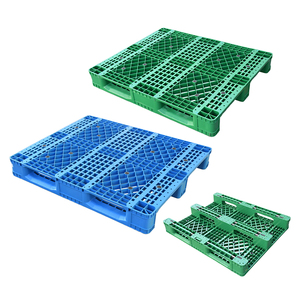
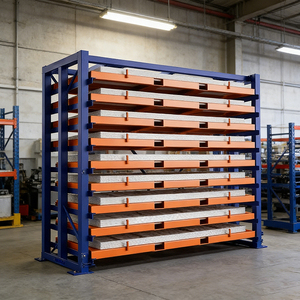
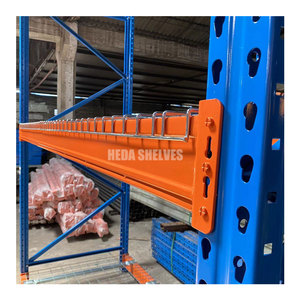
Kinematic Physics & Structural Architecture of Live Storage Racking
Live storage racking—encompassing gravity pallet flow and carton flow configurations—represents the zenith of passive mechanical automation. Operating without external electrical power, these systems utilize calibrated gravitational incline gradients to enforce precise First-In, First-Out (FIFO) dynamic buffer sequences.
Calibrated Gradient Slope
The operational efficacy of live pallet flow relies on an engineered gradient typically held between 3.0% and 4.0% (1:25 to 1:33 incline). Insufficient slope induces pallet stalling; excessive incline generates catastrophic kinetic terminal velocity.
HEDA Shelves computes rolling resistance coefficients taking into account pallet bottom-deck timber deflection, runner grain friction, and dynamic temperatures from sub-zero blast freezers (-30°C) to ambient distribution hubs.
Centrifugal & Magnetic Braking
Uncontrolled acceleration over deep lanes (up to 20 pallets deep) risks structural impact failure at the pick face. HEDA integrates direct-drive internal centrifugal brake rollers spaced at uniform pallet-pitch intervals (typically every 1,200 mm to 1,500 mm).
For premium automated systems, non-contact eddy-current magnetic speed controllers offer frictionless deceleration, capping rolling velocity at a steady 0.25 to 0.30 m/sec irrespective of payload variations between 250 kg and 1,500 kg.
Backpressure Separation Systems
In a 15-pallet-deep flow lane, the cumulative hydro-mechanical backpressure exerted by trailing pallets on the lead discharge pallet can exceed 18,000 lbs, trapping forklift tines and risking violent decompression.
HEDA fabricates mechanical automatic pallet separators. When the lead pallet docks at the unload face, an articulated lever locks the second pallet 150 mm rearward. The separation isolates line pressure until the lead load is completely extracted.
| System Architecture | Kinematic Density | Rotation Principle | Aisle Consumption | Damage Vector Risk | Primary Sector Application |
|---|---|---|---|---|---|
| Live Pallet Flow (Gravity) | Maximum (85% Cube) | Strict FIFO | 2 Aisles (Load / Unload) | Minimal (Guided Rollers) | Cold Storage, Perishables, Fast FMCG |
| Push-Back Racking | High (70% Cube) | LIFO | 1 Shared Access Aisle | Low-Medium (Cart Tracking) | Cross-Docking, Medium SKU Batches |
| Drive-In / Drive-Thru | High (75% Cube) | LIFO / FIFO | 1 or 2 Aisles | High (Forklift Channel Collision) | Uniform Seasonal Goods, Raw Materials |
| Radio Shuttle System | Maximum (90% Cube) | FIFO or LIFO | 1 or 2 Aisles | Negligible (Autonomous Shuttle) | Automated Buffer, Frozen Distribution |
| Selective Pallet Racking | Low (40% Cube) | Random Access | Aisle Per Double Row | Low (Forklift Operator Dependent) | E-Commerce Fulfillment, High SKU 3PL |
Future Procurement Trends in Industrial Live Storage (2025–2030)
Procurement directors and supply chain engineers evaluating Chinese manufacturing plants navigate a changing macroeconomic landscape characterized by automated material handling convergence, regional code compliance, and structural decarbonization.
AMR & AGV Mechanical Handshakes
Procurement is pivoting away from conventional manual forklift interfaces toward Autonomous Mobile Robots (AMRs) and Automated Guided Vehicles (AGVs). Live storage charging and discharge faces must now incorporate precision optical laser-cut guide fixtures, mechanical docking funnels, and ground-level safety trip stops with tolerances tighter than ±1.5 mm to prevent optical sensor faults during robotic handling.
Total Landed Cost (TCO) Optimization
Direct sourcing from tier-1 Chinese factories like HEDA Shelves yields baseline unit savings of 32% to 48% compared to Western domestic distributors, even after incorporating maritime shipping freight (FOB/CIF), chassis drayage, and customs clearance. The economic key lies in nested beam packaging and knockdown frame designs that push 40-foot high-cube container cubic volume utilization past 95%.
Seismic Validation & Dual Stamping
North American projects located in Pacific Rim seismic zones (IBC Seismic Design Categories D, E, F) require rigorous structural finite element analysis (FEA). Tier-1 manufacturers provide preliminary load calculations in imperial units (lbs, kips, ft-in) aligned with ANSI MH16.1 specifications, providing domestic Engineers of Record (PE/SE) with complete member matrices for local municipal permit approvals.
Cryogenic Cold Chain Expansion
With chilled third-party logistics (3PL) representing the fastest-growing sector, live storage racking is being engineered for prolonged operation down to -30°C. Sourcing requirements now mandate low-temperature impact-resistant steel alloys (avoiding ductile-to-brittle transition), specialized low-temperature greases in roller bearing cartridges, and zinc-rich epoxy powder coatings to prevent corrosion under cyclic thermal defrost conditions.
R&D Frontiers: The Next Generation of Live Storage Engineering
Material science advances, sensor integration, and high-precision cold-forming processes are transforming static steel racks into responsive mechanical logistics nodes.
Non-Contact Magnetic Induction Braking Rollers
Conventional centrifugal brake rollers rely on internal mechanical brake pads frictionally pressing against steel shells. Over thousands of load cycles, internal lining wear can lead to variable roller deceleration, dust accumulation, and ongoing maintenance demands in food and pharmaceutical settings.
Next-generation live storage systems developed by advanced Chinese manufacturers deploy closed-loop neodymium-magnet rotors inside copper eddy-current cylinders. As the roller turns, opposing Lorentz forces produce braking torque proportional to velocity without physical friction. The result: zero mechanical wear, self-regulating speed governance, and virtually silent continuous operation.
- Hermetically Sealed Bearings: Maintenance-free roller shells rated for 150,000 continuous operating hours.
- Universal Track Geometry: Universal roller lanes accommodating GMA (48×40″), Euro (1200×800 mm), and industrial slip-sheet skids interchangeably.
- Eco-Compliant Coating Chemistry: Zero-VOC electrostatic thermoset powder coatings verified through 1,000-hour ASTM B117 salt spray tests.
Hydrostatic Pressure in Pallet Flow Lanes
The static line thrust ($F_{total}$) pushing against an unseparated front discharge barrier in an inclined flow lane is calculated by:
Where W_i is individual pallet load weight, θ represents the lane incline angle, and μ_r represents rolling friction coefficients. In an unseparated 20-pallet lane with 1,000 kg pallets at a 3.5° incline, downstream thrust can exceed 1,150 kgf, underscoring the functional necessity of HEDA's automated mechanical separation levers.
Guangzhou HEDA Shelves Co., Ltd.: 25+ Years of Steel Engineering
Established in 2001, Guangzhou Heda Shelves Co., Ltd. has developed into one of Asia's primary production and export hubs for heavy-duty industrial storage racks, automated racking platforms, and multi-tier mezzanine floors.
The 10-Step Industrial Production Sequence
Every upright column, box beam, roller frame, and structural bracket is manufactured under continuous ISO 9001:2015 quality assurance protocols.
Raw Steel Inbound
Certified prime Q235B and Q355B structural coil inspected with mill test reports (MTR) verifying tensile strength.
Precision Slitting
Automated longitudinal slitting lines cut wide master coils to precise dimensional strip tolerances (±0.1 mm).
CNC Punching
High-speed multi-stage punch presses form uniform teardrop or 50/75 mm pitch connection slots in one continuous pass.
Cold Roll-Forming
22-station roll-forming lines progressively profile structural upright columns with internal stiffening ribs.
Box Beam Seaming
Interlocking twin C-channel profiles are continuously seam-welded to create high torsional rigidity box beams.
Robotic Welding
Multi-axis robotic arms weld multi-claw beam end connectors and heavy baseplates with clean, deep penetration.
Mechanical Polishing
Weld spatter, edges, and laser cuts undergo automated deburring to guarantee operator safety and smooth coating adhesion.
Pretreatment Bath
Automated 5-stage dip cycle: degreasing, acid pickling, surface conditioning, and zinc phosphating for rust prevention.
Powder Coating
Automated electrostatic spray booths apply 70–90 μm of epoxy-polyester powder cured in a 200°C baking tunnel.
QC & Export Staging
Coating adhesion cross-hatch checks, deflection verification, corrugated corner strapping, and container bundling.
Internationally Verified Factory Accreditations
Audit reports, mill certificates, and welding procedure qualification records (WPQR) supplied with each order.
Frequently Asked Technical & Sourcing Questions (FAQ)
Real-world procurement answers addressing international code certifications, seismic calculations, structural steel metallurgy, and maritime export packaging.
How does Chinese steel grade Q235B and Q355B compare to ASTM and European steel standards?
Q355B is a high-strength low-alloy (HSLA) steel equivalent to ASTM A572 Grade 50 and EN 10025 S355JR, yielding 355 MPa (approx. 51,500 psi). HEDA Shelves utilizes Q355B for high-bay upright columns, heavy-duty dynamic gravity flow bed frames, and deep cantilever arms where deflection limits (L/200 or L/300) govern profile sizing. Mill Test Reports (MTR) with heat traceability are furnished per batch.
Can HEDA Shelves supply seismic calculations and permit packages for US and Canadian installations?
All drawings and structural calculation tables are provided in both imperial units (lbs, kips, ft-in) and metric standards. These documents serve as the foundational structural package for your domestic third-party Engineer of Record (PE or SE) to review, seal, and submit for municipal building department permits.
What are the recommended pallet quality specifications for dynamic live gravity storage lanes?
Broken baseboards, missing runners, protruding nails, or severe center deflection (exceeding 1/4 inch under full payload) can cause the pallet to stall on roller lanes. For operations utilizing mixed or lightweight pallets, HEDA integrates full-width zinc-plated steel rollers with triple-track layouts and optional entry guide pans to prevent tracking deviations.
How does HEDA prevent maritime shipping transit damage and container rust corrosion?
- Upright frames and beams are nested on custom timber skids with protective corrugated edge angles and shrink-wrap moisture barriers.
- Welded beam connectors and baseplates receive protective foam isolation to avoid metal-on-metal abrasion during sea voyages.
- Small fittings, anchors, row spacers, and speed controllers are packaged in heavy-gauge wooden crates with internal desiccant bags.
- Every 20GP/40HC container is weight-distributed and secured using heavy steel strapping and anti-shifting dunnage blocking.
What is the typical lead time from initial CAD approval to shipping delivery?
Once shop drawings and structural details receive formal engineering sign-off, standard factory manufacturing requires 20 to 28 calendar days for project volumes ranging between 2 to 10 shipping containers. Ocean freight transit durations typically average 14–20 days to West Coast ports (Los Angeles/Long Beach, Vancouver) and 28–35 days to Gulf and East Coast ports (Houston, Savannah, New York/New Jersey).
Can HEDA customize upright hole patterns to match existing facility racking systems?
Plan Your Dynamic Live Storage Architecture with HEDA Engineers
Accelerate your facility throughput, eliminate warehouse floor congestion, and maximize vertical cubic capacity. Transmit your architectural CAD floor plan, target pallet parameters, and forklift fleet specifications to our senior structural engineering team for an itemized factory-direct quotation and optimized storage layout analysis.