Engineered Warehouse Storage Racks & Structural Systems
Review our primary product lines engineered for heavy-load industrial distribution centers, cold-chain storage facilities, and high-density material handling setups across the globe.
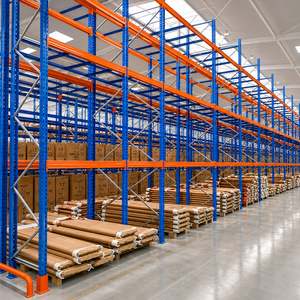
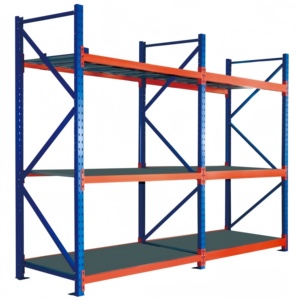
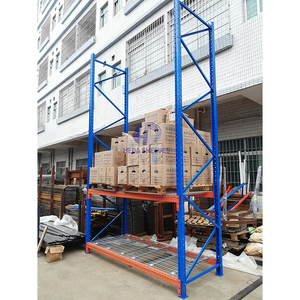
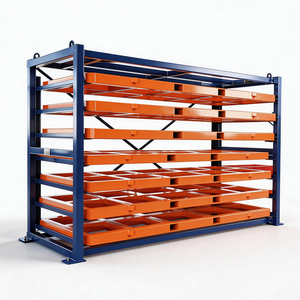
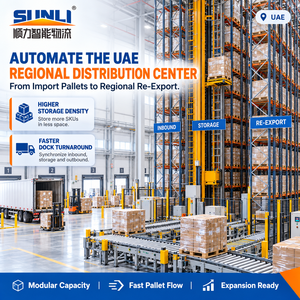
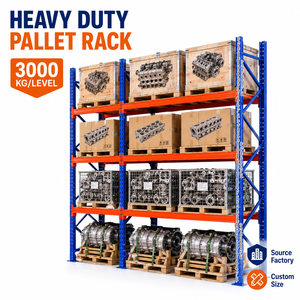
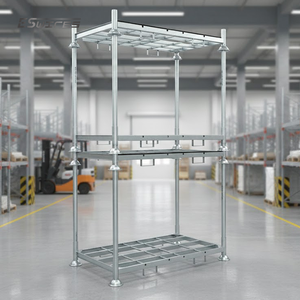
Understanding Drive-Through (FIFO) vs Drive-In (LIFO) Systems
High-density racking configurations eliminate standard access aisles to multiply volumetric cubic storage by up to 75%. However, structural engineers and supply chain directors must discern the mechanical differences between Drive-Through and Drive-In kinematics before finalizing warehouse blueprints.
Drive-Through (FIFO Rotation)
Drive-Through racking requires two distinct forklift operational aisles: one dedicated loading face and an opposing unloading face. By moving pallets in one direction through the storage tunnel, facilities execute true First-In, First-Out (FIFO) stock rotation. This mechanical design is mandatory for perishable consumer packaged goods, cold chain logistics, pharmaceutical fulfillment, and operations with strict shelf-life expirations.
Drive-In (LIFO Rotation)
Drive-In systems rely on a single common entry and exit aisle. Forklifts enter the lane from the front face, deposit loads starting from the deepest tier, and reverse out. This executes a Last-In, First-Out (LIFO) inventory protocol. Because the rear of the bay is anchored with structural X-bracing against a warehouse perimeter wall, Drive-In racks demonstrate slightly higher torsional rigidity but restrict access to dated inventory.
Cantilever Arm & Rail Mechanics
Because Drive-Through racks omit horizontal tie beams within the lane to allow mast clearance, vertical uprights must be connected using heavy-gauge cantilever brackets welded or hooked with reinforced grade 8.8 bolts. Pallets rest on cold-formed continuous pallet rails (Z-profile or folded galvanised channel) with flared guide mouths that self-center 48"x40" GMA or 1200x1000mm Euro pallets during placement.
| Storage Architecture | Inventory Rotation | Floor Space Utilization | Structural Rigidity Method | Forklift Damage Probability | Ideal SKU Profile |
|---|---|---|---|---|---|
| Drive-Through Racking | True FIFO | 65% – 75% High Density | Top-Tie Trusses & Overhead Bracing | Moderate to High (Requires Guide Rails) | Fast-turn, batch-dated, cold chain items |
| Drive-In Racking | LIFO | 70% – 85% Maximum Density | Back Wall X-Bracing + Overhead Bracing | Moderate (Internal Forklift Maneuvers) | Homogeneous bulk raw materials, non-dating |
| Standard Selective Racking | 100% Selective | 35% – 45% Standard | Standard Front & Back Box Beams | Low (Forklift never enters rack tunnel) | High SKU divergence, e-commerce picking |
| Radio Shuttle High-Bay | Programmable FIFO / LIFO | 80% – 90% Ultra High | Full Continuous Structural Framing | Extremely Low (Carts travel inside lanes) | Automated cold vaults, high-volume beverage |
Structural Steel Metallurgy & Seismic Safety Standards
Drive-through installations eliminate interior cross-beams, making upright column stiffness and torsional yield capacity vital to prevent catastrophic progressive collapse under seismic excitation or accidental forklift impacts.
Q235B vs. Q355B Hot-Rolled Strip Steel
Premium Chinese manufacturers source direct certified steel coils from Baosteel or Shougang. While Q235B (Yield Strength: 235 MPa) is ideal for standard warehouse ambient temperatures, high-bay uprights above 8 meters or cold-storage freezer vaults down to -30°C mandate Q355B (Yield Strength: 355 MPa) low-alloy steel. Q355B exhibits superior Charpy V-notch impact toughness at sub-zero temperatures, eliminating brittle fracture risks.
RMI MH16.1 & FEM 10.2.02 Standards
Export-oriented manufacturers engineer systems with finite element analysis (FEA) compliant with American Rack Manufacturers Institute (ANSI/RMI MH16.1) and European Federation of Materials Handling (FEM 10.2.02 / EN 15512). Every structural column design incorporates dynamic safety factors: upright frames carry dynamic safety coefficients ≥ 1.65, while cantilever arms are verified under maximum L/200 deflection limiters under uniform distributed loads (UDL).
Surface Finish & Impact Defense
Because forklift masts enter the racking envelope, impact abrasion is inevitable. Reliable manufacturers implement a 9-stage pre-treatment line: automated degreasing, ultrasonic rust removal, zinc-phosphating, and a minimum 70–90µm electrostatic polyester powder coating cured at 200°C. Crucial components (bottom footplates, tunnel entrance uprights) include wrap-around column protectors, floor-anchored bull-nose deflector guards, and heavy continuous floor guide angles.
Why Global Procurement Teams Choose HEDA Shelves
Operating from our massive industrial campus in Guangzhou, Guangzhou Heda Shelves Co., Ltd. serves as an integrated designer, manufacturer, and structural engineering partner for warehouse operators and racking distributors worldwide.
24-Hour Free CAD & 3D Engineering
Send your warehouse architectural AutoCAD DWG files, clear ceiling height, pallet dimensional envelopes, and lift truck turning radiuses. Our dedicated team of 30+ structural designers delivers detailed CAD layout floorplans, 3D visual renderings, and complete structural loading calculations within 24 hours.
Dual Imperial & Metric Documentation
To accelerate municipal permitting and structural review in North America, we prepare all structural capacity plaques, anchor bolting plans, seismic drift checks, and load rating tables in dual units (lbs, feet, inches alongside metric kg, mm, and meters), streamlined for your local Engineer of Record (EOR).
ISO 9001:2015 & CE Certified
Our manufacturing practices operate under independently audited ISO 9001:2015 Quality Management Systems (Certificate No. 18624Q00169R0M) and European Construction Products Regulation CE Marking (No. 2435-CPR-8605159), guaranteeing dimensional tolerances, raw material mill certs, and robotic weld integrity.
Export Container Packing Optimization
Racking components are bundled with custom steel banding, plastic film wrap, and heavy timber dunnage. By pre-calculating shipping volume using nested packing logic, we achieve maximum weight density inside 40ft High Cube containers, minimizing freight cost per pallet position to ports like LA/Long Beach, Houston, and Vancouver.
Emerging Technology & Procurement Trends (2026–2035)
The high-density storage equipment sector is evolving beyond static cold-rolled steel. Leading logistics engineers and tier-1 manufacturers are redesigning drive-through systems to integrate automation, telematics, and ESG carbon mandates.
1. Hybrid Radio Shuttle Retrofits
Conventional drive-through lanes force forklift operators into narrow, enclosed tunnels, increasing accidental rack collisions. Modern procurement is shifting toward hybrid drive-through systems equipped with motorized pallet shuttles. The shuttle travels automatically inside deep channels to retrieve pallets, allowing forklifts to remain safely in the exterior aisle. This increases throughput by up to 40% while reducing rack maintenance overhead.
2. Cryogenic Steel for Cold Chain Surge
With the exponential boom in pharmaceutical temperature-controlled supply chains and pre-packaged frozen grocery logistics, cold storage cubic space costs 3× more than standard ambient space. Manufacturers are adopting specialized micro-alloyed hot-rolled coil with heightened nickel and manganese ratios that retain structural ductility down to -45°C without undergoing cold-induced micro-fractures.
3. Low-Carbon EPD & Recycled Scrap Directives
Western institutional developers and REITs increasingly mandate verified Environmental Product Declarations (EPD) for structural warehouse fixtures. Chinese steel mills and fabricators are investing heavily in Electric Arc Furnace (EAF) manufacturing powered by clean energy, ensuring high-density racking projects comply with Scope 3 corporate decarbonization targets.
Frequently Asked Questions for Warehouse Engineers
Get direct technical answers on clearance dimensions, seismic engineering, load limits, and international shipping logistics when importing drive-through racking systems from China.
How do drive-through racks maintain structural rigidity without back X-bracing? +
What is the standard clearance required between forklift masts and drive-through pallet rails? +
Are Chinese structural steel racking calculations compliant with US IBC and local building permits? +
How does pallet quality and type impact drive-through rack engineering? +
What are the lead times and container stuffing volumes for high-density racking projects? +
Accelerate Your High-Density Storage Project
Connect directly with our senior racking structural engineering department. We review your building AutoCAD DWGs, optimize lane depths, verify forklift clearances, and return a turnkey itemized quotation with stamped engineering drawings within 24 hours.
Inquire Now