Featured Heavy-Duty Industrial Racking & Storage Systems
Explore our cold-rolled, ISO 9001 and CE-certified pallet storage frameworks built for demanding distribution hubs and automated third-party logistics centers worldwide.
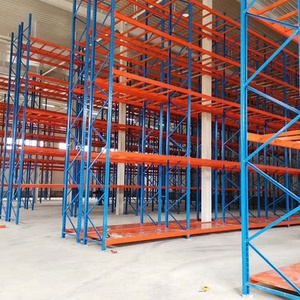
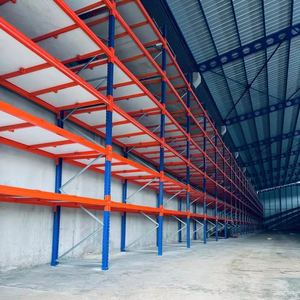
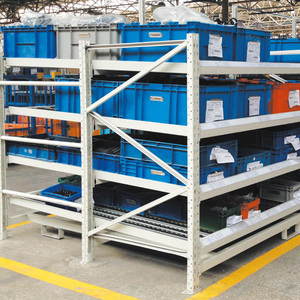
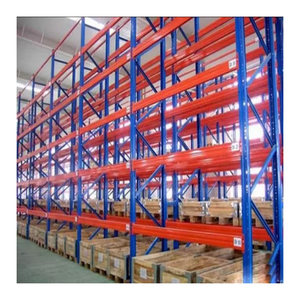
Engineering Fundamentals of Double Deep Warehouse Racking Systems
Double deep warehouse racking represents a critical inflection point between pure selective racking flexibility and high-density, multi-deep compact storage methods. By structuring storage bays to hold unit loads two pallets deep from a single aisle—placing back-to-back pairs together to form four-pallet deep modules—industrial logistics operations eliminate 40% to 50% of the interior access aisles required in standard selective configurations. As an experienced China double deep warehouse racking manufacturer, HEDA Shelves engineers these systems utilizing certified Q235B and high-yield cold-rolled steel coils, guaranteeing structural stability under rigorous Last-In, First-Out (LIFO) or batched First-In, Still-Out inventory regimes.
Kinematic and Structural Load Distribution
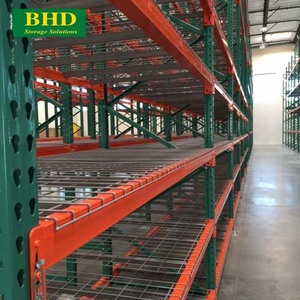
The structural anatomy of a double deep system demands precise roll-formed beam profiles and upright column punch pitch consistency. Because the forklift operator must insert forks through the first pallet location to retrieve or deposit the rear load, lateral horizontal impact forces and eccentric vertical loads increase exponentially compared to single-tier access. Our engineering team integrates welded column protectors, robust floor-bolted deflector barriers, heavy-duty row spacers, and flanged front-to-back pallet support bars. This minimizes torsional stress along upright frames and stabilizes aisle-to-aisle structural continuity under full volumetric load capacity.
| System Attribute | Selective Pallet Rack | Double Deep Pallet Rack | Drive-In Pallet Rack |
|---|---|---|---|
| Direct SKU Accessibility | 100% Immediate Access | 50% (Immediate to outer unit) | 10% - 20% (Lane end only) |
| Floor Area Utilization | ~35% - 40% Storage Density | ~55% - 65% Storage Density | ~70% - 80% Storage Density |
| Inventory Rotation Model | FIFO or LIFO unrestricted | LIFO per dual-deep location | Strict LIFO per entire bay |
| Material Handling Equipment | Standard Counterbalance / Reach | Deep-Reach Pantograph Truck | Specialized Narrow Drive-In Forklift |
| Capital Investment per Pallet | Baseline Cost Index (1.0x) | Low-to-Medium (1.15x - 1.25x) | Medium-to-High (1.45x - 1.65x) |
When balanced against total footprint lease overhead, double deep systems deliver the lowest capital expenditure per pallet location among density-increasing alternatives. They sidestep the complex active mechanization of dynamic push-back carts or roller beds while achieving significant spatial efficiency.
Future Sourcing & Procurement Trends: High-Bay Density and Smart Warehousing
Warehouse asset procurement managers and supply chain directors are navigating unprecedented macroeconomic shifts: real estate land acquisition costs near metropolitan hubs have soared, cold-chain electricity expenses have surged, and global supply chain disruptions have mandated holding larger buffer reserves. These factors are shaping distinct future trends in the acquisition and implementation of double deep warehouse racking:
Cold Chain Cost Optimization
Refrigerated and blast freezer facilities generate severe thermal conditioning costs. Transitioning from standard layouts to double deep installations reduces the required thermal airspace per cubic foot by over 25%, drastically mitigating ongoing power draw.
Automated AGV Integration
Forklift electrification and autonomous mobile robots (AMRs) equipped with optical telemetry guidance are replacing traditional deep-reach lift trucks. Next-generation double deep frameworks incorporate precise mechanical locating stops for robotic accuracy.
Seismic & FEM Standard Compliance
Global procurement teams now mandate dynamic site-specific structural design compliant with RMI (Rack Manufacturers Institute), ANSI MH16.1, and European FEM 10.2.02 codes to protect facilities against seismic events.
Technological Evolution: Anti-Corrosion Coatings and Finite Element Verification
Leading manufacturers in China are moving away from manual batch welding and simple dipping tanks. Modern facilities deploy fully automated roll-forming lines with continuous optical perforation control, followed by shot-blasting, multi-stage acid pickling, zinc phosphating, and computerized electrostatic epoxy powder deposition. This automated chain guarantees 60 to 80-micron dry film thickness (DFT), delivering exceptional salt-spray rust protection even in unconditioned coastal maritime hubs or wet food packaging facilities. Furthermore, 3D structural modeling software simulates dynamic load stresses prior to raw steel coil slitting, ensuring load ratings are rigorously verified before components enter production.
Why Partner With HEDA Shelves: Enterprise Manufacturing Excellence
Since 2001, Guangzhou Heda Shelves Co., Ltd. has stood as a pioneer among Chinese industrial storage fabricators. Operating an integrated 30,000 square meter (approx. 323,000 sq ft) production base with over 300 experienced engineers, certified welders, and logistics managers, we deliver a verified monthly steel fabrication capacity exceeding 30,000 metric tons. For North American and worldwide buyers, we eliminate intermediary markups and communication gaps through factory-direct accountability.
Certified Quality Assurance
Our quality management infrastructure operates under strict ISO 9001:2015 certification (No. 18624Q00169R0M) alongside full European CE Marking compliance (No. 2435-CPR-8605159) for structural construction safety.
Rapid Free CAD & 3D Engineering
Provide your warehouse dimensions, clear height clearances, pallet dimensions (such as 48"x40" GMA), and reach truck profiles. Our engineering office delivers comprehensive CAD floor plans and 3D schematics within 24 hours.
Container-Optimized Ocean Freight
Heavy upright frames and beams are custom-bundled with wooden chocks and high-tensile steel banding, engineered specifically for maximum container payload utilization across 20GP, 40GP, and 40HQ ocean containers.
Whether managing an enterprise logistics center expansion or serving as an OEM/ODM distributor expanding your local market inventory, HEDA Shelves supplies engineering calculations, metric-to-imperial load certification tables, and detailed step-by-step installation packages that empower smooth project approval and commissioning.
Frequently Asked Questions Regarding Double Deep Racking Procurement
Review the essential structural, engineering, and logistics questions addressed by our engineering staff during the tender and quotation phase:
How does double deep pallet racking impact forklift requirements?
Double deep racking requires specialized deep-reach trucks or forklifts fitted with double-reach pantograph scissor mechanisms or telescopic forks. Because the truck must extend the load outward to place or retrieve pallets in the second row, the forklift's rated lifting capacity is de-rated as the mast extends upward. It is vital to share your forklift model and manufacturer's de-rating charts with our design team so we correctly calculate clearance margins, beam profiles, and frame capacities.
Can standard 48" x 40" North American GMA pallets be stored directly?
Yes. We regularly design double deep systems tailored specifically around 48" wide by 40" deep GMA timber pallets, European standard pallets (1200 x 800 mm), and custom plastic bins. Frame depth is commonly configured at 42" to 44" with integrated flanged cross-support bars or galvanized wire mesh decking to support pallet under-runners and eliminate bottom-board drop hazards.
What engineering documentation do you provide for local building permits and seismic sign-off?
We provide full structural shop drawings, anchor bolt pull-out calculations, component specification sheets, and detailed dead/live load tables in both imperial (lbs, ft, in) and metric systems. These technical calculations are prepared in accordance with international structural codes (such as RMI/ANSI MH16.1 or EN/FEM) to assist your local Engineer of Record (EOR) during the permit application and stamping process.
What is the typical production lead time and ocean shipping timeframe from China?
Standard fabrication lead time runs 15 to 25 days following engineering drawing sign-off and material specification confirmation. Direct container shipping routes from Chinese ports (such as Nansha or Shenzhen) to major West Coast North American ports (Long Beach, Los Angeles, Vancouver) take approximately 14 to 18 days transit, while East Coast ports (Savannah, New York) take roughly 28 to 35 days.
How is cargo damage avoided during multi-week ocean container transit?
Uprights are nested in high-density wooden frame saddles and wrapped in protective moisture-resistant film. Box beams are packed in designated steel-strapped bundles with structural corner guards to protect powder-coated beam ears and connectors. We include silica gel desiccant packs within each sealed shipping container to prevent moisture accumulation during open ocean voyages.
Can an existing selective pallet racking installation be converted to double deep?
In many facilities, yes. Conversion involves repositioning existing upright frames, installing extended row spacers to connect frames into four-deep back-to-back configurations, re-evaluating aisle clear widths, and ensuring cross-ties or pallet support bars accommodate extended fork entry. Our engineering office provides complimentary layout conversion feasibility audits to determine if your existing steel infrastructure can be safely adapted.
Accelerate Your Facility Density with Factory-Direct Pricing
Submit your warehouse CAD floor plan, ceiling clear height, pallet loading specifications, and target completion schedule. Our structural engineers will return an optimized layout with 3D renderings and landed container quotations within 24 business hours.
Contact Us