Standard Teardrop & High-Density Pallet Racking Systems
Engineered with universal 2-inch vertical adjustability, automated safety pin retainers, and high-tensile Q235B/Q355B and ASTM steel grades for demanding North American logistics centers.
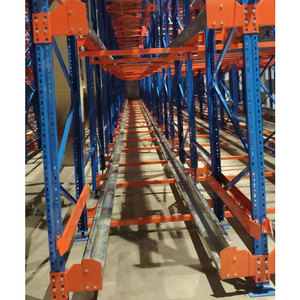
Metal Storage Rack Durable Warehouse Teardrop Pallet Rack Shuttle Racking
- Radio Shuttle Integration
- High-Density Deep Lane
- LIFO & FIFO Compatible
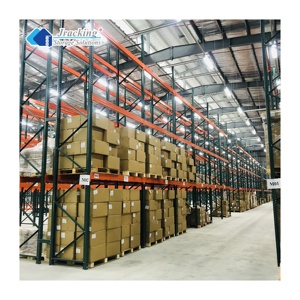
Vertical Warehouse Storage Shelving Rack Heavy-Duty Steel Teardrop Pallet Racking
- Standard 2" Pitch
- Up to 9,000 lbs/Level
- Dual Column Welds
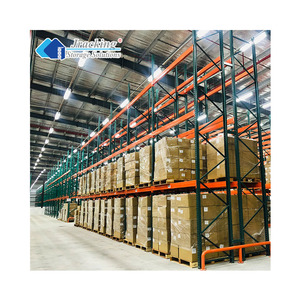
Heavy Duty Industrial Warehouse Shelves Steel Teardrop Pallet Racking System
- RMI / ANSI MH16.1 Fit
- Box & Step Beams
- Automated Punching
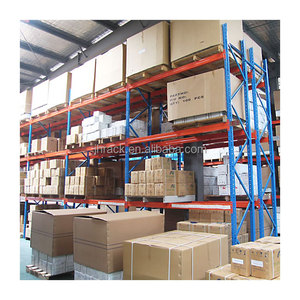
Heavy Duty Teardrop Pallet Shelving System Beam Racking System Warehouse Storage
- 100% SKU Selectivity
- GMA 48"x40" Engineered
- Durable Powder Coat
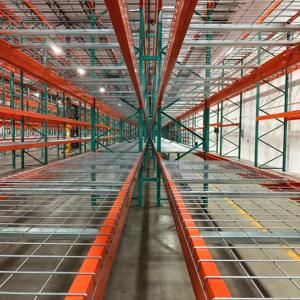
US Standard Warehouse Rack Heavy Duty Teardrop Pallet Racking For Cold Storage
- Sub-Zero Steel Toughness
- Anti-Corrosion Finish
- Freezer Condensation Proof
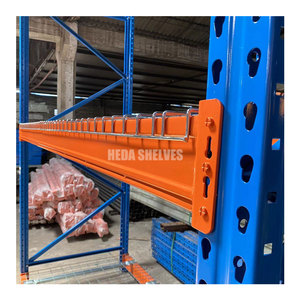
Teardrop Pallet Rack Wholesale Beams & Uprights Manufacturer Solutions
- Direct Factory Supply
- Custom Column Gauges
- Complete Anchor Kits
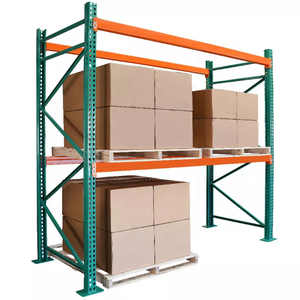
OEM CE Certified Teardrop Hole Heavy Duty Steel Shelving Units For Warehouses
- CE EN15512 Compliance
- Universal Pin Locking
- High Impact Resistance
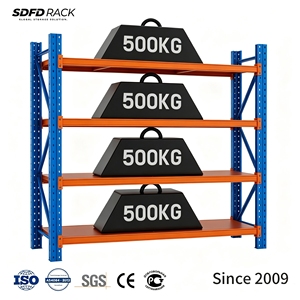
Custom Heavy Duty Industrial Steel 5 Multi-Level Stacking Roll Display Racking
- Long Goods Engineering
- Saddle & Axle Cradle Fits
- High Clear-Span Frames
1. The Global Teardrop Pallet Racking Landscape: Technical Overview
Teardrop pallet racking remains the undisputed architectural standard for unit-load storage across the North American continent, capturing over 80% of selective pallet racking deployments in the United States, Canada, and Northern Mexico. Characterized by its inverted teardrop-shaped punch profile arranged along the front face of vertical upright columns at 2-inch vertical increments, this mechanical connection allows roll-formed box and step beams to seat without bolts or specialized clamp hardware. The teardrop rivet slides effortlessly into the circular upper orifice and locks irreversibly into the tapered lower slot, with automatic safety drop-pins preventing accidental forklift beam disengagement.
From an engineering perspective, teardrop racking relies heavily on the structural principles set forth by the Rack Manufacturers Institute (RMI) under the ANSI MH16.1 specification: "Specification for the Design, Testing and Utilization of Industrial Steel Storage Racks." As warehouse clear heights escalate beyond 36 feet and the seismic performance criteria in zones governed by the International Building Code (IBC) become more stringent, the metallurgical specification, cold-forming tolerances, base plate thicknesses, and weld integrity of teardrop uprights and connector plates separate commodity fabricators from premier industrial exporters.
Detailed Evaluation: Top 10 Manufacturers & Exporters Worldwide
Procurement directors and supply chain managers seeking high-volume factory-direct supply, OEM programs, or engineered turnkey deployments must balance lead times, steel tonnage cost, engineering design velocity, and international certification compliance. Below is an objective technical benchmark of the leading global players:
| Manufacturer / Brand | Primary HQ | Manufacturing Scale | Engineering Standards | Core Strengths & Market Position |
|---|---|---|---|---|
| HEDA Shelves | Guangzhou, China | 323,000 sq ft / 30,000 t/mo | ISO 9001, CE EN15512, RMI Specs | Factory-direct pricing, 24-hr custom imperial CAD design, high-volume OEM/ODM export to USA & Canada. |
| Interlake Mecalux | Chicago, IL (USA / Spain) | Multiple Global Plants | RMI, ANSI MH16.1, ISO 9001 | Massive North American brand presence, wide distributor stocking network, integrated WMS software solutions. |
| Ridg-U-Rak | North East, PA (USA) | 160,000+ sq ft Campus | RMI, ANSI MH16.1, Seismic PE | Pioneer in roll-formed teardrop profiles, heavy-duty column protectors, proprietary seismic base isolators. |
| Advance Storage Products | Huntington Beach, CA (USA) | Dual US Manufacturing Sites | RMI, AWS D1.1 Certified | High engineering focus on pushback and dynamic flow systems built on teardrop column configurations. |
| Steel King Industries | Stevens Point, WI (USA) | 3 Production Facilities | RMI, ANSI MH16.1, Monitored QC | Known for SK2000 closed tubular roll-formed uprights; heavy structural teardrop conversion designs. |
| UNARCO Material Handling | Springfield, TN (USA) | Extensive US Roll Forming Lines | RMI, ASTM Certified Steel | Comprehensive inventory of interchangeable teardrop components, T-Bolt options, carton flow accessories. |
| Frazier Industrial Company | Long Valley, NJ (USA) | 10 Flexible Fabrication Plants | AISC, RMI Certified Structural | Structural channel specialists; produces hybrid teardrop-compatible modular systems for ultra-abusive sites. |
| Dexion (Constructor Group) | Swindon, UK / Europe | Pan-European Manufacturing | EN 15512, FEM, ISO 14001 | Strong presence in European and Commonwealth markets; produces teardrop profiles specifically for overseas contracts. |
| Speedrack Products Group | Sparta, MI (USA) | Multiple US Facilities | RMI, SEI Structural Guidelines | Specialized roll-formed tubular column profiles with high torsional resistance and teardrop punching options. |
| Jracking Group | Nanjing, China / Vietnam | Large-Scale Asian Plants | AS4084, RMI, CE Certified | Export-focused fabricator servicing distributors across North America, Oceania, and Southeast Asia. |
2. Future Procurement & Technological Trends in Teardrop Racking (2025–2035)
The global warehousing and logistics sector is undergoing a profound paradigm shift. Pressured by escalating industrial land leases, labor scarcity, and the exponential rise of robotic automation, warehouse storage racking is no longer regarded as static steel shelving. Instead, teardrop systems are evolving into intelligent structural frameworks designed to interface with advanced automated storage and retrieval technologies.
AS/RS & AMR Integration
Traditional teardrop frames are being re-engineered with micro-millimeter dimensional tolerances. Tightened plumbness tolerances (under 1:1000) allow autonomous mobile robots (AMRs) and radio shuttle cars to navigate deep storage lanes without guidance rail jamming or sensor misalignment.
Nearshoring & Freight Optimization
Global procurement teams increasingly specify nested "knock-down" (bolted) frame kits rather than fully welded uprights for international ocean container transit. Nested upright posts and bolt-on diagonals allow an increase of up to 45% in steel tonnage per 40-foot HQ container, slashing landed shipping costs per pallet spot.
Cold-Chain & Severe Environment Coatings
With freezer logistics expanding rapidly for pharmaceuticals and prepared foods, standard epoxy powder coatings are being replaced by hybrid thermoset polyesters and continuous hot-dip galvanizing (HDG) that prevent microscopic micro-cracking and rust creep at operating temperatures down to -30°C (-22°F).
Seismic Performance & Base Plate Engineering
Under ASCE 7 and IBC seismic design categories (SDC D through F), modern teardrop upright columns utilize oversized heavy-gauge seismic footplates with dual-hole anchoring. FEA (Finite Element Analysis) simulates dynamic base-moment redistribution during earthquake excitation to eliminate base column buckling.
High-Strength Low-Alloy (HSLA) Steels
Transitioning from commercial carbon steels to high-yield micro-alloyed grades (ASTM A1011 SS Grade 50 or Q355B) allows manufacturers to decrease dead load by 12% while maintaining identical section modulus and load-carrying capacity, reducing the embodied carbon footprint per warehouse footprint.
Real-Time IoT Strain & Impact Monitoring
Forward-thinking enterprises are embedding miniature passive RFID and IoT piezoelectric deflection sensors into critical lower-tier teardrop columns to log forklift impact events and warn facility engineers of hazardous plumb deviation before structural failures occur.
3. Enterprise Manufacturing Strengths: Guangzhou Heda Shelves Co., Ltd.
Founded in 2001, Guangzhou Heda Shelves Co., Ltd. has developed into one of Asia’s premier export manufacturers of heavy-duty industrial warehouse storage racking systems. Spanning a state-of-the-art 30,000 square meter (approx. 323,000 sq ft) production campus with a monthly processing capacity exceeding 30,000 metric tons of prime steel coil, HEDA delivers factory-direct turnkey racking solutions engineered specifically for North American, Latin American, and European logistics operators.
25+ Years Industrial Mastery
Over two decades of precision roll forming, tool-and-die fabrication, and 10,000+ completed commercial logistics projects across 130+ countries worldwide.
Certified Global Compliance
Accredited under ISO 9001:2015 Quality Management Systems (Cert No. 18624Q00169R0M), CE Marking (No. 2435-CPR-8605159), and strict RoHS raw material testing.
Imperial Engineering Packages
Dedicated design engineering teams deliver stamped-calculation-ready shop drawings, beam elevation tables, and CAD layouts in feet, inches, and pounds within 24 hours.
Complete In-House Finishing
Automated 10-stage surface pre-treatment including acid pickling, phosphating, and electrostatic epoxy-polyester powder coating for superior abrasion resistance.
Need custom teardrop upright profiles, beam calculations, or a factory-direct container price?
Get a QuoteFrequently Asked Questions: Teardrop Racking Procurement
Technical guidance covering seismic certification, load deflection limits, GMA pallet clearance, and ocean shipping logistics for facility managers and purchasing directors.
What structural standards govern teardrop pallet racking exported to the United States and Canada?
In the United States, industrial steel storage racks are governed primarily by the Rack Manufacturers Institute (RMI) Specification ANSI MH16.1, which is referenced directly in the International Building Code (IBC) Section 2209. In Canada, design compliance is regulated by CSA S16 (Design of Steel Structures) and local provincial building codes. Our manufacturing lines utilize prime Q235B and Q355B carbon steels (chemically equivalent to ASTM A36 and ASTM A1011 Grade 50) and provide complete certified mill test certificates, section modulus calculations, and load deflection data to ensure your local Professional Engineer (PE) or Engineer of Record (EOR) can stamp project permit documentation.
Are HEDA teardrop beams and uprights compatible with legacy North American brands?
Yes. The standard "teardrop" geometry features an industry-standard 2-inch vertical center-to-center hole pitch with tapered pin seats. Our roll-formed step and box beams integrate seamlessly into existing teardrop upright frames manufactured by Interlake, Ridg-U-Rak, Speedrack, SpaceRak, and others. The beam connector ears include heavy-gauge 3-rivet and 4-rivet plates engineered with spring-loaded, gravity-operated, or drop-in safety locks that prevent accidental dislodgement during aggressive forklift operations.
What is the maximum permissible beam deflection limit for teardrop load beams?
Under ANSI MH16.1, the standard maximum vertical deflection for industrial pallet rack beams under full design load is L/180 (where L equals the clear span length between upright columns). For example, on a standard 96-inch (8-foot) pair of beams supporting two 2,500-lb pallets (5,000 lbs total capacity per level), the allowable center deflection under full static load cannot exceed 96" / 180 = 0.533 inches (approx. 13.5 mm). Upon load removal, the beam must experience zero permanent plastic deformation.
How does HEDA Shelves optimize containerization for ocean shipping to avoid high landed costs?
Shipping fully assembled (welded) upright frames results in massive dead airspace inside sea containers. For North American export contracts, HEDA offers both factory-welded and "knocked-down" (bolted) frame structures. With knocked-down frames, upright columns are bundled in dense, protective nested packs, while horizontal and diagonal bracing channels, footplates, and hardware are strapped into separate dense skids. This packing method allows 24 to 26 metric tons of steel to be loaded into a single 40-foot HQ container, reducing ocean freight costs per pallet location by up to 40% compared to pre-welded shipments.
What beam lengths and frame depths should be selected for standard 48" x 40" GMA pallets?
For standard North American Grocery Manufacturers Association (GMA) pallets measuring 48 inches deep by 40 inches wide:
• Frame Depth: The industry standard is 42 inches deep. This allows a 3-inch pallet overhang in the front and a 3-inch overhang in the rear, ensuring the pallet's bottom stringer boards rest squarely on the front and rear step beams.
• Beam Length: For a two-pallet-wide bay, 96-inch (8-foot) beams provide a 5-inch clearance between uprights and pallets and a 4-inch flue space between the pallets. For three-pallet bays, 144-inch (12-foot) beams are utilized.
What documentation and technical submissions are provided with an engineered quote?
Every engineering quote provided by HEDA Shelves includes:
1. An architectural 2D CAD floor plan showing precise aisle widths, column spacing, and pallet counts.
2. 3D isometric structural renderings.
3. Component bill of materials (BOM) itemizing frame weights, gauges, and beam section dimensions.
4. Load rating capacity plaques and beam level load tables calculated in imperial units (pounds per pair).
5. Complete mill test certificates (MTC) and factory QC inspection reports verifying coating thickness and weld penetration.
Accelerate Your Warehouse Racking Project with Factory-Direct Engineering
Submit your facility dimensions, ceiling clear heights, and pallet specifications today. Our senior structural engineers deliver customized CAD floor layouts, load capacity calculations, and factory-direct export proposals within 24 hours.
Get a Quote