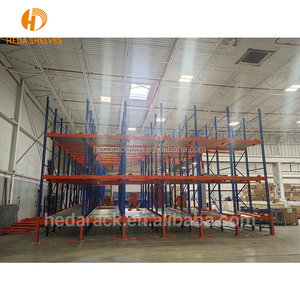
High Quality FIFO Gravity Carton Flow Rack Pallet Rack System
Continuous dynamic roller lanes operating via gravity. Guarantees absolute First-In, First-Out throughput for temperature-controlled cold chains and perishable stock.
Years Industrial Fabrication (Since 2001)
Monthly Steel Processing Capacity
Modernized Automated Campus
Turnkey Projects Completed Worldwide
Precision-formed, stress-tested steel configurations compliant with ANSI MH16.1, EN 15512, and FEM guidelines for demanding logistics operations.
Continuous dynamic roller lanes operating via gravity. Guarantees absolute First-In, First-Out throughput for temperature-controlled cold chains and perishable stock.
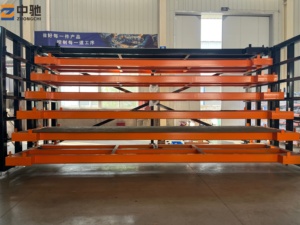
Reinforced Q235B cold-rolled profiles engineered to withstand vertical beam deflection and side torsional impact under persistent maximum rated static loads.
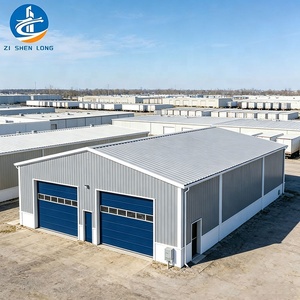
High-clearance pre-engineered structural frameworks. Engineered for rack-supported buildings (clad-racking) to eliminate conventional interior structural columns.
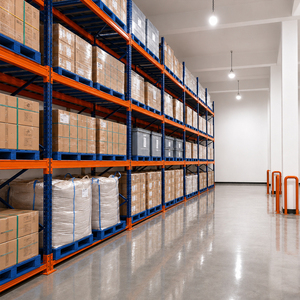
Electrostatic thermoset powder-finished industrial racking. Resists industrial chemical degradation while handling 1,000kg+ pallet weights per level.
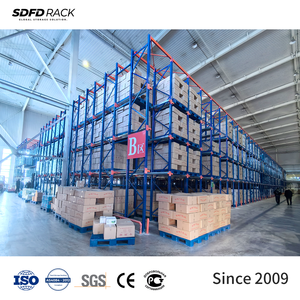
High-density deep lane system consolidating aisle corridors. Increases usable warehouse floor utilization up to 80% for high-volume, uniform SKUs.
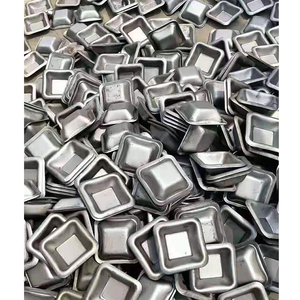
Targeted cupped-feet interlocking components for modular stackable posts. Ensures positive structural nesting and dynamic tilt resistance when tiered 4 to 6 units high.
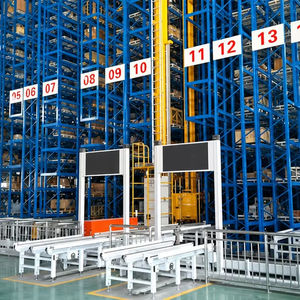
Ultra-narrow tolerance structural uprights designed specifically to interface with high-velocity automated crane stackers and autonomous mobile robotic fleets.
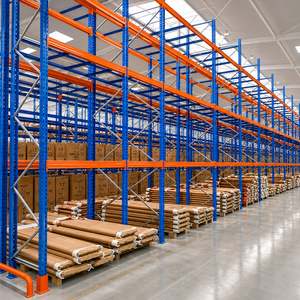
Modular demountable post pallets. Eliminates permanent footprint constraints, enabling bulk seasonal stacking configurations and immediate knockdown flat-pack transit.
In modern high-density distribution centers and global fulfillment hubs, stackable warehouse racks (also classified as post pallets, modular stillages, or portable stacking frames) represent a critical intersection between physical agility and structural safety. Unlike rigid, anchored selective pallet racking bolted permanently into concrete floor slabs via chemical anchors, free-standing stackable systems depend entirely on mechanical geometry, precision weld metallurgy, and gravity-locked nesting cups for lateral stability.
The structural backbone of high-capacity stackable warehouse racking relies heavily on Chinese Grade Q235B (or its Western equivalents ASTM A36 and European EN 10025-2 S235JR). With a certified carbon content maintained between 0.14% and 0.22%, manganese between 0.30% and 0.65%, and phosphorus/sulfur constrained under 0.045%, cold-rolled Q235B delivers a balanced minimum yield strength of 235 MPa and ultimate tensile strength between 370 and 500 MPa.
Safe operation requires strict engineering separation between static capacity and dynamic crane/forklift transport capacity. When stacked four tiers high within an indoor staging bay:
Evaluating trade-offs between footprint density, capital expenditure, mechanical complexity, and warehouse floor agility.
| System Classification | Volumetric Density | Footprint Flexibility | Civil Anchor Requirement | Damage Vulnerability | Optimal Inventory Flow |
|---|---|---|---|---|---|
| Modular Stackable Racks (Post Pallets) | High (Tiered 4–6 High) | 100% Dynamic (Foldable/Movable) | Zero Slab Penetration | Low (Easily isolated & replaced) | Bulk Seasonal, Block Stacking, Staging |
| Selective Pallet Racking | Moderate (Requires aisles) | Fixed Linear Layout | Heavy Concrete Anchors | Moderate (Column guard dependent) | High-SKU Variety, Fast Turnover |
| Drive-In / Drive-Through Systems | Very High (Lane-based) | Rigid Long-Term Footprint | Heavy Foundation Bolting | High (Internal forklift collisions) | Uniform SKUs, LIFO Cold Storage |
| High-Bay AS/RS Automated Infrastructure | Ultra-High (Up to 40m) | Zero (Permanent clad structure) | Specialized Reinforced Slab | Minimal (Automated precision cranes) | Lights-Out Continuous Logistics |
How supply chain disruptions, automation initiatives, and sustainability mandates are reshaping stackable racking architectures.
Global multi-facility 3PLs are transitioning from unalterable fixed mezzanine structures toward standardized, demountable, and collateralizable post-pallet assets that can be redeployed across facilities during regional demand spikes.
Next-generation stillages are manufactured with millimeter-precise laser-cut fork-guide tunnels and sub-chassis clearances to facilitate under-riding tugger AMRs, bridging the gap between manual bulk storage and smart sorting.
Stringent compliance revisions to NFPA 13 (fire protection sprinkler clearance) and IBC Section 1613 seismic acceleration factors necessitate precision open-mesh bottoms and vertical flue spacing across stacked storage units.
Established in 2001, Guangzhou Heda Shelves Co., Ltd. has evolved into an elite industrial powerhouse providing turnkey storage systems globally. Headquartered in Guangzhou with a high-capacity 30,000 m² (approx. 323,000 sq ft) production facility and a staff exceeding 300 experienced engineers, welders, and technical operatives, HEDA manufactures over 30,000 metric tons of certified steel racking components monthly.
Independently audited and certified (ISO Certificate No. 18624Q00169R0M, CE Factory Production Control 2435-CPR-8605159, and RoHS compliance). Comprehensive Mill Test Certificates (MTC) accompany every container.
Full imperial conversion drawings (lbs/ft) alongside metric plans. Shop drawings, structural node moment calculations, and stamped-calc packages ready for direct review by local professional Engineers of Record (PE).
Pre-engineered modular dimensions designed to maximize ocean container cube utilization inside 40ft HQ dry vans. Precision bundle-strapping prevents transit deformation and simplifies off-loading at the dock.
Direct technical answers addressing structural calculation, international shipping, seismic safety, and custom manufacturing parameters.
Submit your warehouse floor layout, target pallet profiles, and stacking heights. Our engineering team delivers a comprehensive layout analysis and itemized structural proposal within 24 hours.
Get a Quote