Industrial Storage & Heavy-Duty Roller Racking Systems
Explore our precision roll-formed pallet racking configurations, dynamic gravity roller systems, and multi-tier industrial storage decks built for high-throughput operational resilience.
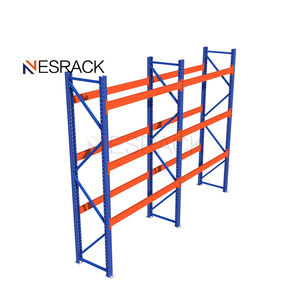
Customized Industrial Warehouse Pallet Rack Multi-Layer Adjustable Steel Shelves
- 100% Pallet Accessibility
- 50mm / 75mm Pitch Adjustable
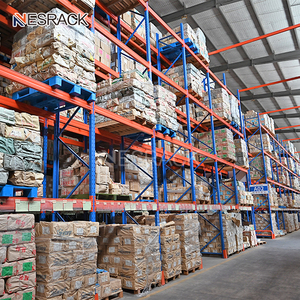
Pallet Multilevel Racking Heavy Duty Warehouse Storage Shelf System
- High Vertical Density Stacking
- Up to 5,000 kg / Tier Capacity
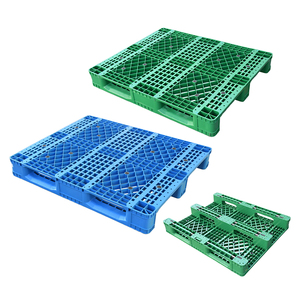
Multilevel Racking Euro Pallet Single Faced 4-Way Entry Storage System
- Precision 4-Way Entry Profile
- Cold-Rolled High-Tensile Steel
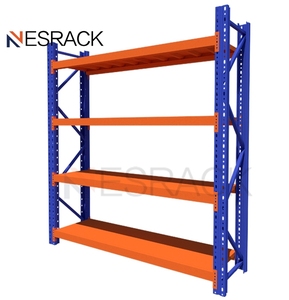
Long Span Boltless Steel Racking Adjustable Height Medium Duty 5-Layer
- Quick Bolt-Free Assembly
- Epoxy Powder Coated Anti-Rust
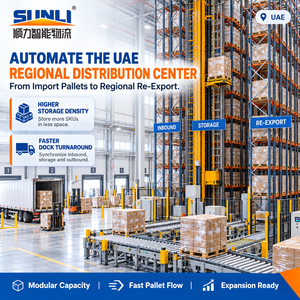
Cold Rolled Steel 5-Layer Heavy Duty Industrial Anti-Corrosion Bolt-Free Shelf
- Reinforced Stiffener Under-Ribs
- Pretreated Phosphated Finish
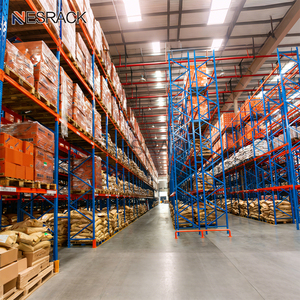
High Density Galvanized Steel Adjustable Double Deep Pallet Racking System
- Reduces Aisle Space by 50%
- Ideal for Pantograph Reach Trucks
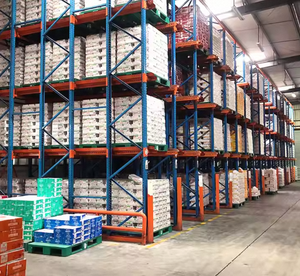
Heavy Duty Double Deep Drive-In Hot-Dip Galvanized Anti-Corrosion Rack
- Sub-Zero Freezer Operating Life
- ASTM A123 Galvanized Standard
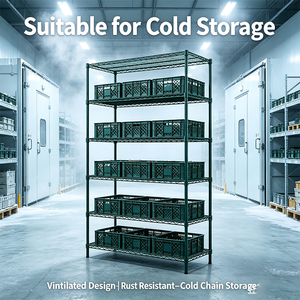
Rust Resistant 6-Tier Industrial Wire Shelving Rack for Cold Storage Logistics
- Open Wire Ventilation for Chillers
- NFPA Sprinkler Penetration Ready
Engineering Principles of OEM/ODM Warehouse Roller Racking Systems
An authoritative industrial guide on roller kinematics, gradient engineering, speed controller braking kinetics, and high-density gravity flow warehouse architecture.
1. Mechanics of Dynamic Roller Racking & Pallet Flow Physics
Warehouse roller racking systems—commonly designated in modern material handling terminology as gravity flow racks, pallet flow racking, or dynamic live storage—utilize engineered inclined roller beds mounted between structural upright frames. Operating strictly on controlled gravitational force, these systems move pallets or cartons automatically from the rear loading interface (charge face) to the front picking aisle (discharge face). This creates an uncompromised FIFO (First-In, First-Out) inventory cycle without consuming internal aisle travel power.
In high-density industrial logistics, calculating the exact pitch angle and dynamic friction coefficient is paramount. Standard pallet flow lanes are precision-sloped between 3.0% and 4.5% gradient (approximately 1.7 to 2.6 degrees). An insufficient incline leads to pallet hang-ups and stalled picking lines, while an excessive angle induces dangerous line pressure and terminal impact forces at the unloading pick face.
OEM Engineering Standard: As an original equipment manufacturer (OEM), every roller track bed is calibrated against pallet bottom deck configuration (skid, 2-way, 4-way GMA, or plastic slip-sheets), total payload mass variance (300 kg to 2,000 kg per pallet), and operating temperature ranges spanning -30°C blast freezers to ambient distribution centers.
Critical Roller Track Component Specifications
A reliable roller racking system relies on three fundamental electro-mechanical assemblies: high-tensile roller tracks, centrifugal speed controllers (brake rollers), and mechanical pallet separator safety gates.
Centrifugal Brake Rollers
Direct-drive or indirect geared centrifugal brake rollers govern descent velocities to a secure continuous speed of 0.2 to 0.3 m/s, preventing kinetic acceleration regardless of whether a lane contains 5 or 25 consecutive pallets.
Pallet Separator Locks
Automatic spring-return mechanical separators physically isolate the leading discharge pallet from trailing lane loads. This relieves backpressure during forklift extraction, eliminating load pinching and tip hazards.
Precision Sealed Bearings
Deep-groove 6002ZZ or cold-lubricated high-load bearings encased within galvanized or stainless steel roller sleeves (OD ø50mm to ø89mm) provide unyielding operational longevity across dusty or sub-zero environments.
System Comparison: Live Roller Racks vs. Static High-Density Storage
Selecting the optimal racking system requires comparing capital outlay against volumetric footprint recovery, operational staffing reduction, and pallet retrieval velocity.
| Parameters & Metrics | Pallet Roller Flow (Live) | Drive-In Racking | Double Deep Selective | Standard Selective Rack |
|---|---|---|---|---|
| Inventory Rotation | Strict FIFO (Automatic) | Strict LIFO (Last-In, First-Out) | LIFO (Modified) | 100% Random Access |
| Aisle Space Consumption | Extremely Low (2 Aisles Only) | Minimal (Integrated Forklift Entry) | Moderate (-30% vs Selective) | High (Aisle between each double rack) |
| Loading/Retrieval Speed | Ultra-Fast (Decoupled replenishment) | Slow (Careful maneuvering inside rack) | Moderate (Double pantograph reach) | Fast (Immediate open face) |
| Forklift Rack Impact Risk | Near Zero (Trucks never enter lanes) | High (Frequent mast collision risks) | Low (Standard mast access) | Low (Exterior aisle operations) |
| Footprint Utilization | Up to 85% Active Volume | Up to 75% Active Volume | Up to 60% Active Volume | 40% - 45% Active Volume |
Need Custom OEM/ODM Roller Racking Engineering for Your Warehouse?
Submit your warehouse CAD DWG layout, pallet dimensions, and operational load profile to receive structural calculations, flow track test reports, and factory-direct pricing within 24 hours.
Why Global Supply Chains Trust Our Production Infrastructure
Combining over two decades of metallurgical roll-forming expertise, automated manufacturing lines, and stringent international ISO 9001 and CE certifications.
Custom OEM/ODM Tooling
Bespoke upright roll-forming dies, heavy punch arrays (50mm/75mm/76.2mm pitch), and tailored roller track brackets built around proprietary client specifications.
Full Pretreatment Line
Continuous automated pickling, phosphating, electrostatic powder coating, and hot-dip galvanizing lines ensuring salt-spray resistance surpassing ASTM B117 standards.
Seismic & Code Compliance
Certified shop drawings and engineering load calculation packages prepared for RMI (Rack Manufacturers Institute), FEM 10.2.02, and North American IBC building codes.
Imperial & Metric Output
Full documentation supplied in lbs, inches, and feet alongside metric equivalents, complete with container-optimized bundling to minimize ocean freight overhead.
Our Proprietary 10-Step Quality-Controlled Production Flow
Raw Materials
Mill-certified high-tensile steel coil chemical composition verification.
Slitting & Cutting
CNC decoiling and micro-tolerance width longitudinal slitting.
Automated Punching
High-speed hydraulic punching for upright connection matrices.
Cold Roll Forming
Continuous multi-pass roll profiles eliminating residual steel stress.
Precision Forming
Interlocking box beams and reinforced roller track side channels.
Weld Deburring
Robotic edge polishing and seam cleaning for operator safety.
Robotic Welding
Argon-shielded automated seam welding of heavy beam connectors.
Chemical Pretreatment
Acid pickling and anti-corrosion zinc phosphating wash rinse.
Electrostatic Powder
GEMA automatic thermosetting powder cure at 200°C curing bake.
Assembly & Load QC
Dimensional laser calibration, bundle packaging, and container stowage.
Future Procurement Trends in Warehouse Roller & Dynamic Racking (2025–2035)
Anticipating supply chain transformations: How automated material handling, green steel procurement, and robotic vehicle interfacing are revolutionizing roller system requirements.
1. Autonomous Guided Vehicle (AGV) & AMR Live-Discharge Interfacing
Historically, roller flow racks were designed exclusively for manned counterbalanced or reach forklifts. By 2026 and accelerating toward 2035, logistics procurement is aggressively pivoting toward roller systems optimized for autonomous mobile robots (AMRs) and automated guided forklifts (AGVs). This shift demands unprecedented mechanical repeatability at the discharge pick face.
In automated environments, an off-center pallet deviation of merely ±10mm can cause optical sensor faults and emergency robot halts. Consequently, modern OEM roller rack specifications increasingly require integrated mechanical centering guide tracks, optical retroreflective target brackets, and ultra-smooth low-profile separator pedals that guarantee consistent pallet positioning within microscopic tolerances.
2. High-Density Cold Chain Resilience & Sub-Zero Roller Tribology
Global demand for temperature-controlled pharmaceutical storage and fresh frozen food distribution is forcing warehouse operators to densify cold rooms due to escalating per-cubic-meter refrigeration energy costs. Gravity roller flow racks provide superior thermal distribution compared to solid-deck shelving because the air moves freely between rollers and pallets.
However, extreme refrigeration (-25°C to -35°C) leads to roller bearing seizure, lubricant embrittlement, and steel brittle-fracture risks. Advanced procurement mandates specify:
- Specialized low-temperature silicone or synthetic hydrocarbon greases preventing viscous drag.
- Cold-temperature certified structural alloys (such as Q355ND or structural grades meeting Charpy V-notch impact toughness at sub-zero thresholds).
- Heavy hot-dip galvanizing exceeding 65 microns thickness to resist cyclic condensation corrosion during scheduled defrost cycles.
3. Modular Plug-and-Play Roller Retrofits & Hybrid Dynamic Storage
Rising commercial real estate leasing rates are curtailing warehouse expansion budgets. Enterprise procurement directors increasingly mandate "hybrid" racking systems—converting existing selective pallet racking or drive-in bays into roller beds through modular drop-in roller cassettes. OEM suppliers capable of fabricating universal clip-in roller frames that interface with universal teardrop, slotted, or hex hole patterns provide logistics operators with significant capital preservation.
4. Low-Carbon Steel & Life-Cycle Assessment (LCA) Transparency
Global 3PL enterprises and Fortune 500 manufacturers are incorporating strict Scope 3 decarbonization objectives into their vendor scoring matrix. Future tender requirements necessitate verified Environmental Product Declarations (EPDs), utilization of Electric Arc Furnace (EAF) recycled scrap steel coils, and heavy metals-free (RoHS compliant) electrostatic polyester coatings.
The Technological Evolution of Gravity Roller Racking
From unbraked skate-wheel chutes to sensor-embedded smart dynamic storage networks: Trace the engineering trajectory of warehouse roller logistics.
Phase 1: Mechanical Unbraked Lines
Early systems relied solely on rudimentary skate-wheel chutes or raw steel gravity tracks without integrated speed regulating brakes. These systems suffered from severe pallet velocity runaway, runaway load crushing, frequent product breakage, and heavy operator safety hazards on deeper lanes.
Phase 2: Regulated Hydraulic & Centrifugal Brakes
The introduction of self-contained centrifugal governor brake rollers and mechanical spring-release pallet separating clutches allowed lane depths to safely scale from 3 pallets to over 25 pallets deep. This technological leap established roller flow as the undisputed industry benchmark for dynamic FIFO beverage and food hubs.
Phase 3: Sensorized & Smart Dynamic Beds
The contemporary cutting edge integrates piezoelectric pressure sensors, ultrasonic lane occupancy trackers, and battery-free RFID checkpoints along the roller bed. These smart dynamic lanes relay real-time pallet tracking and lane bottleneck metrics directly into the enterprise Warehouse Management System (WMS).
Frequently Asked Questions for Roller Racking OEM/ODM Procurement
Engineered answers covering structural loads, pallet compatibility, seismic compliance, and international shipping logistics.
What are the key technical parameters required for custom roller racking CAD design?
- Building Envelope: Warehouse architectural plan (DWG/PDF), clear internal height under roof trusses, concrete floor slab thickness and reinforcement details.
- Pallet Specifications: Width × Depth × Maximum Height (including goods), tare weight, and bottom deck construction (e.g., standard 48" × 40" GMA 3-runner, Euro 1200 × 800 mm 9-block, or perimeter base plastic pallets).
- Throughput Metrics: Pallets per SKU, lane depth targets (e.g., 4-deep, 10-deep, or 20-deep), and hourly loading/unloading cycle demands.
- Environmental Conditions: Ambient warehouse (+15°C to +35°C), air-conditioned cool room (+2°C to +8°C), or sub-zero freezer (-18°C to -30°C).
Can weak, damaged, or plastic pallets operate smoothly on roller flow systems?
How does your factory engineer and certify seismic compliance for North American and European projects?
What anti-corrosion finishes do you provide for chemical and cold chain facilities?
- Electrostatic Powder Coating (Indoor Ambient): 60 to 80 μm high-adhesion epoxy-polyester finish cured at 200°C following 8-stage chemical degreasing, pickling, and phosphating.
- Pre-Galvanized Coil (Mild Moisture / Clean Rooms): Uprights and roller frames formed from pre-galvanized certified steel (Z275 coating class, 275 g/m² zinc).
- Hot-Dip Galvanizing (Blast Freezers & Outdoor Yards): Heavy immersion batch galvanizing compliant with ASTM A123 / ISO 1461, yielding 65 to 100 μm zinc layer thickness for uncompromised multi-decade rust immunity under severe sub-zero condensation.
What is your typical manufacturing lead time and ocean container loading protocol?
Can your engineering team support OEM branding and private labeling for racking distributors?
Ready to optimize storage density with custom engineered gravity roller racking?
Contact Us