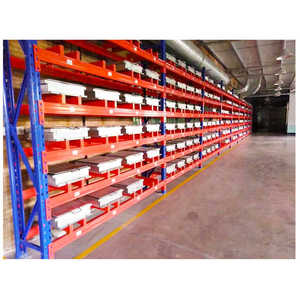
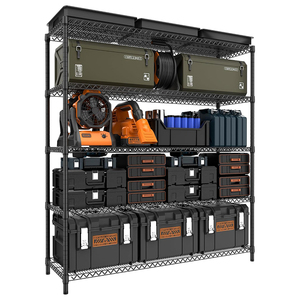
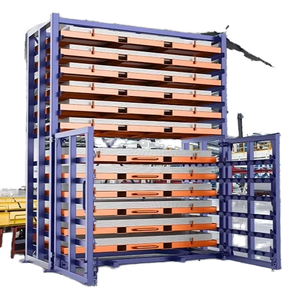
Customized Gravity Carton Flow Pallet Roller Rack System
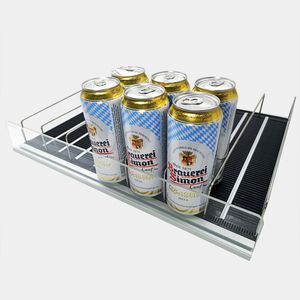
- Rotational Mode: Strictly First-In, First-Out (FIFO)
- Gradient Pitch: 2.5% – 3.5% engineered incline
- Braking: Centrifugal speed-damping brake rollers
Direct factory roll-forming, customized bay spans, and industrial-gauge structural configurations engineered for international distribution centers and contract logistics operators.
Analyzing structural yield points, cold-formed section geometries, and harmonic sway dissipation under dynamic material-handling cycles.
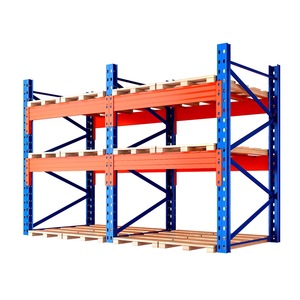
In high-volume logistics and modern multi-bay distribution networks, the selection of an OEM/ODM pallet shelving rack exporter requires an empirical assessment that extends beyond base price per kilogram. Pallet racking is fundamentally a specialized, high-aspect structural framework subjected to permanent static deadweight, cyclic dynamic live loads, and transient lateral shock impacts caused by material handling equipment (MHE) including counterbalanced forklifts, reach trucks, and Autonomous Mobile Robots (AMRs).
Our engineering team develops cold-rolled structural steel sections utilizing high-tensile Q235B and Q355B micro-alloyed carbon steel coils (equivalent to ASTM A36 and ASTM A572 Grade 50). By utilizing progressive cold-roll profiling lines with up to 26 forming roll stations, column profiles achieve precise corner radii without inducing micro-fractures along stress lines. These custom upright profiles, engineered with complex continuous omega or multi-fluted geometries, maximize the structural radius of gyration ($r$), effectively mitigating column buckling under extreme vertical axial loads.
Our OEM connections utilize precision-stamped 3-claw, 4-claw, and 5-claw interlocking beam end connectors. Engineered with negative taper geometry, our connection joints grip tighter under gravitational loading, eliminating joint rotational slippage and ensuring rotational spring stiffness ($K_\phi$) per EN 15512 testing protocols.
Designed for earthquake-prone regions spanning North America (IBC/RMI ANSI MH16.1) and Pacific zones. Engineered baseplates feature ductile multi-hole anchor patterns that redistribute shearing stresses across foundation concrete slabs while preventing localized slab punching shear.
Components undergo an automated 10-stage immersion or spray pretreatment comprising alkaline degreasing, ultrasonic acid pickling, zinc phosphating, and deionized water rinsing before thermoset electrostatic powder deposition. This eliminates blistering and sustains salt spray resistance exceeding 500 hours.
A quarter-century of manufacturing excellence, certified compliance under ISO 9001:2015 and CE marking, and container-optimized logistics engineered for global ports.
Our dedicated structural team of 30+ project engineers returns comprehensive 2D CAD layout designs, 3D parametric renderings, and itemized bills of materials within 24 hours of receiving site blueprints and inventory specs.
Calculations, engineering data sheets, and deflection load limits are calculated in both Imperial (lbs, inches, psf) and Metric systems. Seamlessly ready for stamp review by local Structural Engineers of Record (SEOR) across the USA, Canada, and Europe.
Operating under certified ISO 9001:2015 Quality Systems (Cert No. 18624Q00169R0M) and European Construction Products Regulation CE Marking (No. 2435-CPR-8605159). Complete traceability from mill coil heat certificates to final powder curing temperatures.
Specialized bundled export racking packages protected by protective edge-boards, heavy steel strapping, and custom dunnage systems. Engineered to fit standard 40ft High Cube containers without shifting, damage, or wasted cubic freight space.
A reference engineering matrix evaluating SKU accessibility, floor footprint utilization, material handling efficiency, and investment recovery cycles.
| Storage Architecture | Pallet Selectivity | Area Utilization | Rotational Protocol | Typical MHE Integration | Optimal Application Spectrum |
|---|---|---|---|---|---|
| Selective Pallet Racking | 100% Immediate | 40% – 50% | FIFO or LIFO | Standard Counterbalance, Reach Trucks | Fast-moving FMCG, multi-SKU retail fulfillment centers, 3PL facilities. |
| Drive-In / Drive-Through | Low (Lane Restricted) | 70% – 80% | LIFO (Drive-In) / FIFO (Through) | Specialized Narrow Counterbalance | Homogeneous bulk goods, cold-chain freezers, raw ingredient staging. |
| Pallet Flow (Gravity) | High (Face Restricted) | 75% – 85% | Strict FIFO Enforced | Standard Forklifts (Separate In/Out) | Date-sensitive food & beverage, pharmaceutical cold chains, buffer lines. |
| Radio Shuttle Automation | Moderate (By Lane) | 80% – 90% | Configurable FIFO / LIFO | Standard Forklifts + Autonomous Shuttle | High-throughput cold storage freezers, beverage bottling plants, bulk hubs. |
| Push-Back Racking | Moderate (Cart Restricted) | 65% – 75% | Strict LIFO | Counterbalanced or Reach Trucks | Medium SKU quantities with 2 to 6 pallets per product line; staging areas. |
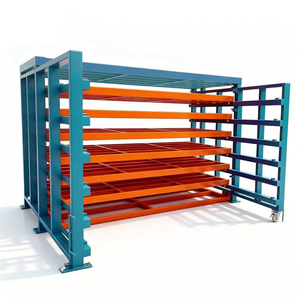
| Pull-Out Drawer Systems | 100% Overhead Access | 70% – 85% | Random / Direct | Overhead Hoist Cranes, Vacuum Lifters | Heavy sheet metal coils, tooling dies, stamping plates, engineering molds. |
Analyzing procurement transformations from capital equipment acquisition toward Total Cost of Ownership (TCO), resilience modeling, and carbon transparency.
Procurement managers across North America, Europe, and Australasia are navigating a paradigm shift. Supply chain disruptions, escalating industrial real estate lease rates ($/sq ft), and stringent ESG reporting criteria have fundamentally altered the evaluation criteria for heavy warehouse storage systems. Procurement is no longer focused exclusively on ex-factory purchase costs; modern buyers examine whole-life structural viability and operational agility.
With warehouse land acquisition costs reaching record levels in metropolitan freight zones, facility clear heights are routinely climbing from 32 feet to 45–50 feet. Procurement strategies prioritize high-bay rack structures engineered with tighter deflection thresholds ($L/200$ and $L/250$) to support higher vertical storage density without compromising rack stability.
Global supply chain diversification has driven regional assembly and distributor staging models. Importers require OEM manufacturers who provide modular, interchangeable beam and upright connections capable of boltless field reconfiguration as tenant inventory profiles transition across contract cycles.
International environmental mandates such as the EU Carbon Border Adjustment Mechanism (CBAM) require documented environmental product declarations. Tier-1 exporters must provide transparent metallurgical sourcing, verifying scrap-to-virgin ore ratios and electrical arc furnace (EAF) roll-forming efficiencies.
Direct integration with automated systems, sensorized infrastructure, and advanced metallurgy.
Pallet racking is rapidly shifting from passive static steel into an active, digitally integrated layer of automated warehouse operations. As facilities transition toward dark warehouses and lights-out automated guided operations, racking manufacturing tolerances are subjected to unprecedented micro-millimeter precision.
Automated Storage and Retrieval Systems (AS/RS) and picking robots require beam level tolerances under $\pm 1.5\text{ mm}$ across the entire aisle length. Exporters are shifting toward precision laser punching and continuous roll-forming lines that control profile curvature and cross-sectional twisting to strict tolerances.
High-capacity cold chain and hazardous chemical distribution centers are increasingly deploying wireless piezoelectric sensors and dynamic load cells within critical upright columns. These telemetry modules broadcast real-time impact alerts and structural fatigue warnings when an MHE impact exceeds safe yield limits.
Extreme sub-zero freezer installations (-25°C to -40°C) induce steel embrittlement and risk brittle shear failures. Advanced OEM engineering incorporates high-impact-toughness cold-rolled micro-alloys with elevated Charpy V-Notch test ratings at sub-zero temperatures, paired with anti-condensing thermal isolating base plates.
Authoritative answers addressing engineering verification, international codes, customization capabilities, and freight execution for global project stakeholders.
Our OEM/ODM engineering strictly complies with both the North American RMI (Rack Manufacturers Institute) Specification ANSI MH16.1 and European structural standards EN 15512 (Steel static storage systems – Adjustable pallet racking systems – Principles for structural design) and EN 15635 for operational maintenance.
For every major commercial project, we supply comprehensive structural calculation dossiers detailing section modulus ($S$), moment of inertia ($I$), design compressive stress, and allowable load calculations in imperial (lbs/ft) or metric units. These documentation packets allow our clients' licensed local Professional Engineers (PE) or Structural Engineers of Record (SEOR) to verify building permit packages.
Seismic zoning requires tailored engineering based on local peak ground acceleration ($S_s$ and $S_1$ spectral acceleration factors) and soil site classifications. Rather than utilizing generic standard components, our engineering office models rack structures using Finite Element Analysis (FEA) to ensure ductility and prevent second-order P-Delta collapse mechanisms.
Adjustments include expanding upright frame widths, upsizing footplate steel thickness (up to 12mm–16mm plate gauge), installing high-strength wedge or chemical anchor bolts, incorporating internal vertical bracing towers, and optimizing horizontal portal beam bracings across aisle intersections.
We provide comprehensive OEM (Original Equipment Manufacturing) and ODM (Original Design Manufacturing) capabilities tailored to distributor brands, integrator catalogs, and custom engineering projects. Key customization parameters include:
• Upright Frame Depths: 800mm to 1500mm (or standard 42″, 44″, 48″ North American footprints). Heights up to 15 meters in single continuous sections.
• Beam Sections: Box beams, step beams (for wire decking seating), and structural channel beams spanning from 1000mm up to 4500mm.
• Aesthetic & Branding: Precision electrostatic RAL powder coat color matching, custom-punched column connector slots (teardrop, keyhole, or diamond patterns), and private-label logo metal embossing.
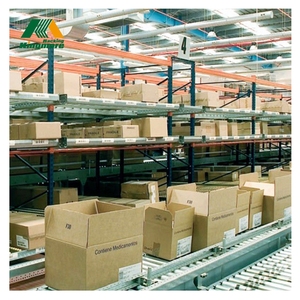
Surface finishing is tailored directly to the intended operational atmospheric classification (ISO 12944). For ambient internal warehousing, we apply continuous automated electrostatic thermoset polyester powder coating cured at 180°C–200°C, producing a resilient 60–90 micron dry film thickness (DFT).
For wet, outdoor, agricultural fertilizer, or corrosive cold-chain environments, we provide hot-dip galvanizing (HDG) conforming to ASTM A123 / ISO 1461, achieving a minimum zinc barrier thickness of 70–100 microns that delivers cathodic self-healing corrosion protection spanning decades.
With an active monthly output exceeding 30,000 metric tons and continuous roll-forming lines, standard containerized project orders (2 to 10 TEU containers) feature typical production lead times of 15 to 25 business days following drawing sign-off.
All upright frames and beams are nested and bundled with protective corner angles, heavy steel banding, and water-repellent poly-wrapping. We utilize custom loading cradles and heavy-duty forklift ramps at our Guangzhou factory loading bays, ensuring cargo arrives securely stowed without transit abrasion, maximizing freight volume efficiency to major ports worldwide (Los Angeles, Houston, New York, Vancouver, Rotterdam, Sydney, and Dubai).
Submit your warehouse CAD floor plan, building clear heights, and pallet specifications. Our structural engineers will return an optimized layout, capacity calculation, and factory-direct quotation within 24 hours.