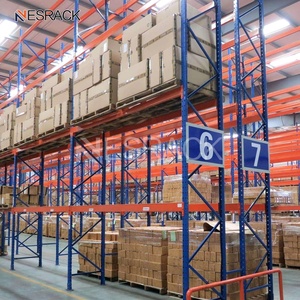
Custom OEM Span Track Flow Rack Suppliers & Exporters
High-Throughput Dynamic Carton & Pallet Flow Racking Systems Engineered for Global B2B Supply Chains, Heavy 3PL Consolidation, and Order Picking Velocity.
Factory-Direct Dynamic Storage
High-Efficiency Carton Flow & Heavy-Duty Warehouse Racks
Engineered to eliminate dead aisle space and accelerate pick rates, our OEM span tracks, gravity roller beds, and multi-tier systems offer robust cold-rolled steel design certified for ANSI MH16.1, CE, and ISO 9001:2015 environments.
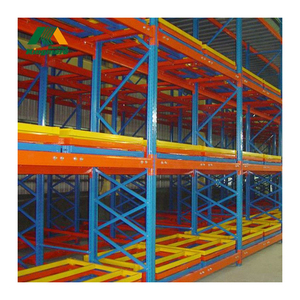
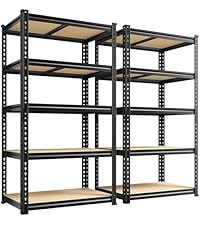
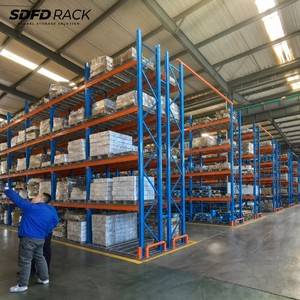
2001YR
Established Engineering Lineage
323,000SQ FT
Modern Heavy Fabrication Facility
30,000TONS
Monthly Structural Steel Output
10,000+
International Installations Delivered
Engineering Whitepaper
Optimizing Dynamic Gravity Flow: Technical Principles & Design Nuances
A deep dive into why modern omni-channel distribution centers and manufacturing plants are converting static selective racking bays into integrated OEM Span Track Flow systems.
⚙ Kinematic Flow Design & Roller Engineering
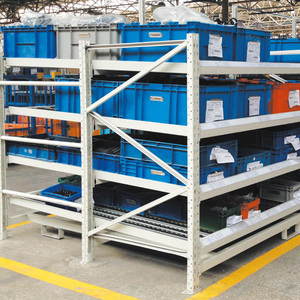
The operational core of any span track flow rack lies in the interaction between container contact friction and pitch geometry. Unlike conventional roller tracks that exhibit tracking drift, our custom OEM span tracks utilize hexagonal steel axles paired with heavy-duty polypropylene or zinc-coated steel skate wheels arranged in tight pitches.
By tailoring pitch intervals (from 1-inch to 3-inch centers), we prevent carton "sagging" or structural fatigue caused by moisture absorption in corrugated boxes. For pallet flow applications, integrated speed controllers (centrifugal brake rollers) maintain terminal velocity under 0.3 m/s, safeguarding fragile inventories from violent end-stop deceleration.
📐 Structural Metallurgy & Drop-In Compatibility
Structural reliability starts with raw alloy chemistry. HEDA flow beds are manufactured from high-yield cold-rolled steel coils, passing rigorous tension tests to guarantee minimum yield strengths exceeding 345 MPa (Q345B/SS400 equivalent). Every profile undergoes a precise 10-step cold-bending and automatic column-punching lifecycle.
Our OEM engineers design universal bracket assemblies compatible with major teardrop upright configurations, structural channel beams, and step beams common across North American and European logistics operations. This drop-in flexibility allows facility operators to retrofit existing racking structures without high capital civil investment.
Strategic Procurement Analysis
Emerging Procurement Trends in Flow Rack Storage (2025–2030)
Capital asset managers are no longer buying static metal; they are investing in agile, modular throughput engines. Discover how intelligent fulfillment shapes flow rack engineering.
1. Hybrid AMR & Gravity Flow Workstations
Fulfillment centers increasingly integrate flow racks as passive buffers feeding Autonomous Mobile Robots (AMRs). By stocking cartons via rear gravity lanes, human replenishers stay separated from high-velocity robot collection corridors, optimizing picker safety and eliminating bottleneck stops.
2. Micro-Fulfillment & Multi-Tier Mezzanine Infill
Urban warehouse lease rates have compelled companies to maximize vertical clearances. Integrating OEM span track shelves onto multi-tier rack-supported mezzanines provides dense split-case order picking capabilities directly within city-center logistics nodes.
3. Pick-to-Light (PTL) Native Integration
Modern procurement contracts mandate flow track frames pre-punched with concealed conduits and click-fit rail channels for rapid IoT sensor, barcode scanning, and LED digital pick-indicator deployment, reducing manual picking error rates to below 0.02%.
4. Extreme Environment Metallurgy for Cold Chain
With pharmaceutical cold chains and frozen food markets expanding, flow tracks require specialized low-temperature lubricants, stainless or hot-dip galvanized steel axles, and impact-resistant polymer rollers engineered to operate smoothly down to -30°C without plastic embrittlement.
Enterprise Manufacturing Capabilities
Why Enterprise Global Supply Chains Source Direct From HEDA
Combining 25+ years of factory-direct heavy production with end-to-end engineering rigor.
🛡 Certified Quality Control
Our facilities are accredited under ISO 9001:2015 (Cert No. 18624Q00169R0M) and CE Marking (No. 2435-CPR-8605159). Each production batch undergoes rigorous salt-spray corrosion tests, ultrasonic weld seam diagnostics, and dynamic load-deflection audits prior to release.
- Pickling & Phosphating Pre-treatment Line
- Electrostatic Powder Coating System (RoHS compliant)
- Fully traceable steel mill certifications on arrival
⚡ Turnkey Engineering & Fast CAD Turnaround
With an engineering team spanning structural, mechanical, and logistical disciplines, we deliver comprehensive free CAD drawings, 3D BIM models, and load tables within 24 hours of receiving site parameters, available in both imperial and metric systems.
- Calculations prepared for professional engineer (PE) seismic review
- Standardized designs configured for 48″ × 40″ GMA pallets
- Complete container loading plans ensuring zero transit deformation
Procurement Guidance
Frequently Asked Questions: Custom OEM Span Track & Flow Racks
Everything procurement heads and engineering consultants need to know about specs, shipping, and customization.
What parameters are critical when calculating the pitch slope for custom OEM span tracks?
Carton flow typically operates best at a gradient between 2.5% and 5% (approximately 5/16" to 1/2" pitch per foot of depth), depending on the total weight, rigidity, and base material of the box or container. Flexible plastic totes with ribbed bases often require lower slopes, while uneven corrugated cartons require steeper angles and narrower wheel spacing to prevent stalling. Pallet flow applications require precision testing with the exact wooden or plastic runner configuration.
Can custom span tracks be retrofitted onto existing third-party pallet rack frames?
Yes. As a dedicated OEM fabricator, HEDA designs custom universal drop-in hangers and structural cross-support channels that interface effortlessly with roll-formed teardrop beams, structural C-channels, rectangular tube beams, and slotted step beams. This eliminates the necessity of purchasing an entire rack structure when only throughput conversion is desired.
How do you package and protect flow beds and roller tracks for ocean container export?
All roller rails, side guides, and uprights are bundled with heavy-duty protective strapping, padded with protective foam wraps, and supported by specialized structural steel dunnage within 20-foot and 40-foot HQ containers. This prevents pressure deformation or damage to wheel axles across transoceanic shipping routes to ports like Los Angeles, Houston, Savannah, and Rotterdam.
What lead times are typical for high-volume custom OEM runs?
Standard OEM production schedules range from 15 to 25 business days for multiple container volumes. Engineering proofs, CAD floor plan approvals, and dynamic simulation layouts are delivered within 24–48 hours upon project intake.
Are your rack structures certified for seismic code requirements in North America?
Yes. We deliver fully documented structural calculations, section properties, and material test certificates aligned with ANSI/RMI MH16.1 guidelines, providing your regional engineer of record (EOR) the exact documentation required to stamp permit submittals in seismically active regions.
Accelerate Your Facility's Throughput With OEM Engineering
Consult with our structural engineering team today. Send us your clear height, carton/pallet specs, and floor plan to receive a certified CAD layout and full container-landed pricing.
Inquire Now