Featured OEM Pallet Racking & Industrial Storage Systems
Factory-direct engineering, CNC automated roll-forming, and modular storage configurations built to handle severe dynamic and static load profiles for global logistics hubs.
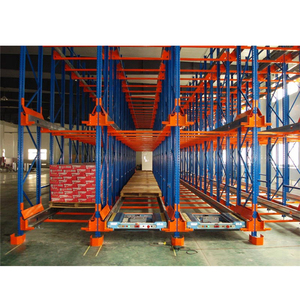
Automated Radio Shuttle Pallet Racking System
High-density deep-lane storage system utilizing motorized lithium-powered shuttles. Increases cubic volume utilization up to 80% with FIFO/LIFO flexibility.
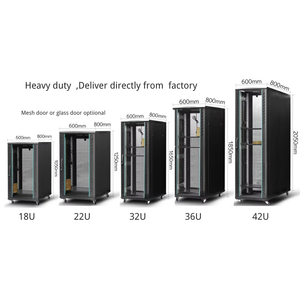
Lockable 19-Inch Cold-Rolled Server Rack Cabinet
Precision SPCC steel network enclosures (16U to 42U) designed for industrial SCADA controls, edge computing, and automated warehouse management infrastructure.
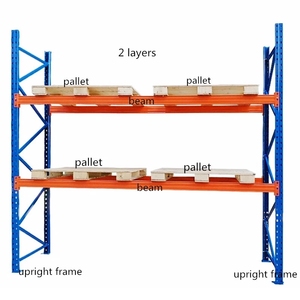
Textile & Carpet Sample Pallet Racking
Custom hanging framework with powder-coated uprights and high-tensile cantilever spindles engineered for roll storage, carpet displays, and retail distribution.
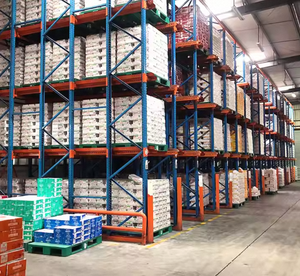
Hot-Dip Galvanized Double Deep & Drive-In Rack
Heavy-duty structural and cold-formed profile protected with hot-dip galvanization, engineered specifically for sub-zero freezer applications and humid environments.
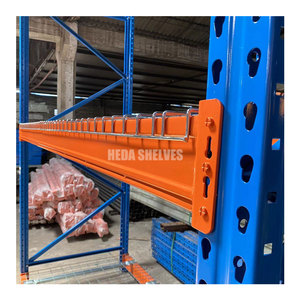
American Teardrop Pallet Rack Storage System
Universal standard teardrop beam punch pattern fully compatible with North American racking systems. High-yield Q235B/Q355B steel with automatic safety beam lock pins.
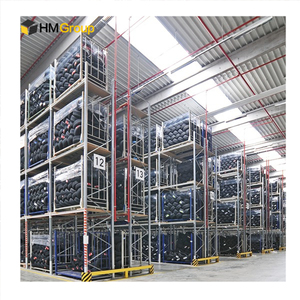
Stacking & Folding Heavy Duty Tire Racks
Modular post-pallet systems capable of stacking 4-5 units high when loaded and folding flat when empty to maximize freight return ratio and seasonal warehouse adaptability.
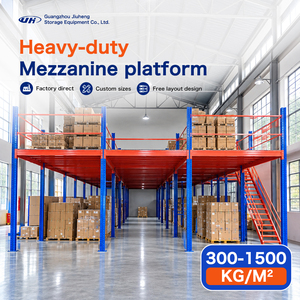
Rack-Supported Mezzanine Storage Platform
Transforms vertical cube height into usable floor space. Multi-tier mezzanine floor with integrated pallet racking base, staircases, OSHA-compliant handrails, and kickplates.
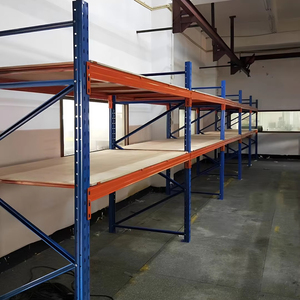
Heavy-Duty Multi-Layer Industrial Shelving
Boltless longspan storage framework with adjustable wire mesh or solid steel shelves. Engineered for 500kg-1500kg uniform distributed load (UDL) per beam level.
Engineering Integrity in Pallet Rack Manufacturing: Material Yield & FEA Design
Navigating global structural codes, seismic engineering considerations, and quality assurance workflows for heavy industrial applications.
Structural Steel Grade Selection & Cold-Roll Forming Dynamics
The operational integrity and load safety factors of heavy-duty industrial pallet racking systems originate in raw material specification. Racking failures are almost universally linked to inferior yield point limits, uneven roll-forming residual stresses, or weld micro-fissures. As an OEM manufacturer, our production strictly employs certified Q235B and high-strength Q355B structural steel coil stock (equivalent to ASTM A36 and ASTM A572 Grade 50 respectively). Each batch of incoming steel sheet is validated through chemical spectrometry and elongation tensile testing prior to uncoiling.
During cold-roll forming, continuous progressive roll tooling ensures precision punch tolerances along the upright profile pitch (typically 50mm, 75mm, or 76.2mm teardrop intervals). Consistent column gauge thickness—ranging from 1.5mm up to 2.5mm (16 gauge to 12 gauge)—is critical to prevent torsional buckling under full rated load capacity. Upright frames feature an engineered omega profile cross-section with multiple stiffening ribs, maximizing the radius of gyration (r) and structural moment of inertia (Ix, Iy) while maintaining minimal self-weight for container shipping efficiency.
Finite Element Analysis (FEA) and Seismic Dynamic Qualification
Global warehouse deployments across North America and seismically active zones require sophisticated structural modeling under ANSI MH16.1 (RMI standard), EN 15512, and AS 4084 specifications. Our structural engineering department utilizes finite element simulation software to evaluate:
- Second-Order P-Delta Elastic Effects: Simulating horizontal sway displacements and secondary bending moments induced by seismic ground acceleration or accidental lateral forklift impacts.
- Beam-to-Column Semi-Rigid Joint Deflection: Calculating rotational joint stiffness (K-value) across 3-claw, 4-claw, and 5-claw beam connector plates welded to step beams or box beams.
- Upright Base Plate Anchor Shear: Determining optimal floor anchor bolt patterns (wedge anchors or chemical capsule anchors) to counteract uplift, shear, and concrete slab punch shear.
Surface Pre-treatment & Electrostatic Polymer Coating
Surface coating failure leads to steel oxidation, structural de-rating, and contamination in pharmaceutical or food-grade storage operations. Our internal manufacturing line executes an automated 5-stage pre-treatment process: alkaline degreasing, ultrasonic water rinsing, acid pickling to strip mill scale, phosphating to form a micro-crystalline anti-corrosion barrier, and demineralized hot sealing. Powder application is managed through automated Gema electrostatic corona spray booths using epoxy-polyester hybrid powder, cured at precisely 200°C for 20 minutes to achieve standard coating thickness of 60-90 microns with 4H pencil hardness and salt spray corrosion resistance exceeding 500 hours.
Future Procurement Trends in Warehouse Storage Systems (2026–2030)
How automation compatibility, sustainability metrics, and rapid-deployment modular designs are reshaping global racking contracts.
ASRS & Shuttle-Ready Engineering
Procurement teams are shifting away from static selective racks toward semi-automated radio shuttle lanes and ASRS-ready structures. Racking profiles must now meet ultra-tight deflection limits (L/400 to L/600) to allow automated shuttles, autonomous mobile robots (AMRs), and stacker cranes to maneuver safely without track binding.
Standardized Global Teardrop Interoperability
Multi-facility 3PL operations and institutional landlords demand interchangeability. The American Teardrop profile has emerged as the universal standard for selective pallet racks, enabling logistics managers to reconfigure beam levels and source modular replacement components without changing entire systems.
Total Cost of Ownership (TCO) & Galvanization
With cold chain and high-humidity logistics growing worldwide, procurement calculations prioritize lifetime durability over initial material cost. Hot-dip galvanized uprights and zinc-flake fasteners eliminate maintenance re-painting cycles, lowering 10-year asset lifecycle operational expenditure by up to 34%.
Pallet Rack Architecture Comparison & Engineering Matrix
Comprehensive structural characteristics to assist warehouse architects and logistics procurement officers in selecting the optimal system.
| Storage System Type | Space Utilization | Pallet Accessibility | Inventory Rotation | Standard Load Capacity | Handling Equipment Required |
|---|---|---|---|---|---|
| Standard Selective Rack | 40% - 50% | 100% Direct Access | FIFO / LIFO Flexible | 1,000 - 4,500 kg / level | Standard Counterbalance, Reach Truck |
| Double Deep Pallet Rack | 60% - 65% | 50% Direct Access | LIFO | 1,000 - 3,500 kg / level | Pantograph Deep-Reach Truck |
| Automated Radio Shuttle | 75% - 85% | Lane-End Access | FIFO or LIFO | 500 - 2,000 kg / pallet | Lithium Radio Cart + Standard Forklift |
| Drive-In / Drive-Through | 65% - 75% | Low (Last Pallet Only) | LIFO (Drive-In) / FIFO (Through) | 800 - 1,500 kg / pallet | Counterbalance / Narrow Mast Reach |
| Gravity Pallet Flow | 70% - 80% | Pick-Face Dedicated | Strict FIFO Enforced | 500 - 1,500 kg / pallet | Standard Forklift (Separated In/Out) |
| Rack-Supported Mezzanine | 100% Vertical Doubling | Selective by Tier | Mixed Operational | 300 - 1,000 kg / m² deck | Stairs, Pallet Drop Gates, Vertical Lifts |
Why Global Buyers Partner with Our Manufacturing Facility
Combining heavy manufacturing muscle with in-depth engineering documentation and container-optimized logistics since 2001.
Full-Cycle OEM/ODM Customization
Every warehouse blueprint presents unique structural challenges. We produce custom upright heights up to 15 meters, non-standard beam lengths, specialized frame depths (such as 42", 44", or 48" to suit European and American GMA pallets), and custom branding color profiles.
Rapid Free CAD & 3D Modeling (24-Hour SLA)
Our project engineering department utilizes automated parametric drafting tools to provide complete warehouse floor plan CAD drawings, 3D architectural renderings, and bill of materials (BOM) load rating schedules within 24 hours of receiving facility parameters.
Certified ISO 9001:2015 & CE Quality Standard
Certified under Quality Management System Certificate No. 18624Q00169R0M and Construction Products CE Certificate No. 2435-CPR-8605159. Continuous third-party inspection ensures raw steel compliance, dimensional verification, and weld penetration testing across all production runs.
Metric & Imperial Dual-Unit Documentation
To support global project managers and North American engineers of record without unit conversion overhead, all load calculation reports, beam deflection tables, and anchor bolt pattern diagrams are issued in dual units (lbs, ft, in, and kg, mm).
Container-Optimized Ocean Freight Logistics
Racking components are bundled with steel strapping, corrugated corner protection, and non-slip moisture-barrier wraps. Every 40-foot high-cube (40HQ) container load plan is calculated using 3D loading software to ensure maximum metric tonnage while preventing in-transit friction damage during transit to ports including Los Angeles, Houston, Savannah, and Vancouver.
Frequently Asked Questions for Industrial Buyers & Integrators
Crucial engineering, commercial, and delivery questions answered by our export technical team.
What are the key technical parameters required to generate an accurate quotation and CAD layout?
To provide a production-ready proposal, our engineering team requires: (1) Facility architectural drawing showing clear building height, column spacing, and dock door locations; (2) Pallet dimensions (Width x Depth x Height including cargo overhang); (3) Maximum static load weight per pallet; (4) Material handling equipment specifications, specifically forklift minimum aisle turn radius, maximum mast elevation, and lift capacity; and (5) Local regulatory site requirements (e.g., specific seismic acceleration zone data or local code mandates).
How does your factory ensure compliance with North American RMI and European CE standards?
Our production strictly conforms to CE marking EN 15512 and ANSI MH16.1 (RMI) standards. We test steel tensile and yield stress, run weld macro-etching analyses, and verify beam-to-column connector rotational stiffness. Every export shipment includes raw material mill test certificates (MTC), dimensional QC reports, and full structural calculation packages that local Professional Engineers (PE) can review and stamp for building permits.
What is your typical production lead time and ocean shipping handling?
Standard OEM production lead times range between 15 to 25 calendar days depending on tonnage (we process up to 30,000 metric tons per month). We support Incoterms including FOB, CIF, CFR, and DDP upon project request. Containers are packed with steel dunnage and heavy-duty strapping to enable side-forklift or slip-sheet unloading at destination container yards or customer dock levellers.
Can you support custom powder-coating colors, corporate branding, and private labeling?
Yes. As an OEM manufacturer, we regularly provide custom RAL or Pantone color matching (common safety combinations include RAL 5015 Sky Blue uprights paired with RAL 2004 Pure Orange beams). We provide private label laser-punch branding on column profiles, custom serial number tracking tags, and English/Spanish bilingual safety capacity warning plaques affixed to every rack row.
How are beam deflection and safe working load (SWL) limits calculated?
Safe Working Load limits are designed with a safety factor of 1.65 to 1.95 against ultimate yield strength, adhering to the standard beam vertical deflection limit of L/200 (under ANSI MH16.1 and EN 15512), where L is clear beam span length. For sensitive automated robotics, tighter deflection standards down to L/400 or L/600 can be engineered into the section profile by incorporating heavier steel gauges and internal stiffener ribs.