2,000kg/Level
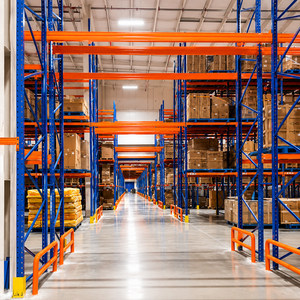
RMI, FEM, and CE-Compliant Bolted Structural Systems Engineered for Heavy-Duty High-Density Warehousing, 3PL Distribution, and Global Cold Logistics Networks.
Constructed from high-tensile structural steel (Q235B/Q355B equivalent to ASTM A36/A572 Gr 50), our bolted frame systems deliver certified seismic stability, minimal shipping volume, and turnkey adaptability.
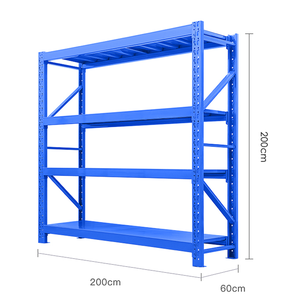
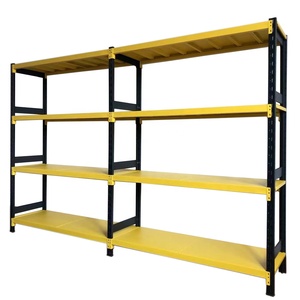
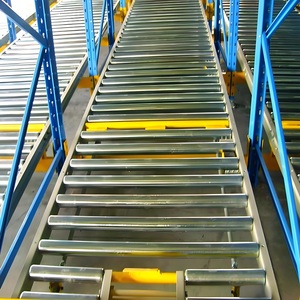
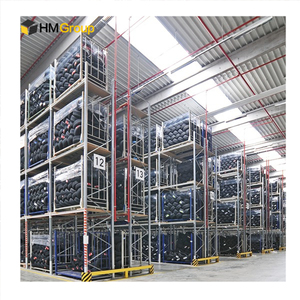
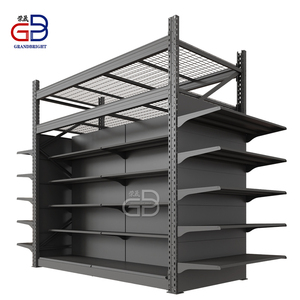
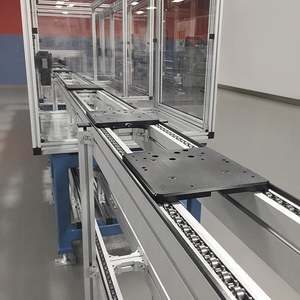
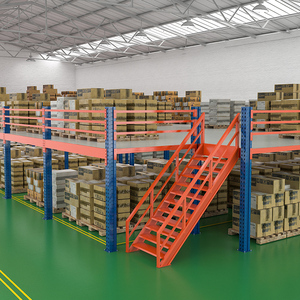
Why Tier-1 3PL operations, international EPC contractors, and multinational retail networks are shifting from all-welded frames to modular bolted structural upright designs.
In high-density industrial warehousing, the structural integrity of the racking network governs workplace safety, operational velocity, and capital expenditure over a 20-year asset life. Historically, welded frame racks were preferred in domestic installations due to basic manufacturing conventions. However, global supply chains, international ocean freight realities, and modern finite element analysis (FEA) have placed bolted pallet rack systems at the forefront of intralogistics design.
Bolted upright frames utilize high-yield cold-rolled steel columns connected by diagonal and horizontal bracing through precision-punched multi-point structural connections. High-tensile Grade 8.8 structural bolts (often with self-locking serrated flanged nuts) ensure the assembly accommodates natural seismic torsion and localized micro-deflections without micro-fracturing—an issue that commonly degrades rigid weld seams under cyclical dynamic forklift impacts.
Standard 40ft High Cube containers can accommodate up to 300% more volume of knocked-down (KD) bolted racking frames compared to pre-welded upright assemblies. Furthermore, if a forklift damages a lower horizontal brace on an all-welded frame, the entire vertical bay must be emptied and replaced at substantial downtime. In a bolted system, certified maintenance personnel can isolate the section and replace the damaged strut in under 30 minutes.
| Engineering Dimension | OEM Bolted Pallet Racks | Traditional Welded Pallet Racks |
|---|---|---|
| Freight Volumetric Density | High (Packaged flat in dense KD bundles; up to 26 Metric Tons per 40HQ) | Low (Transports immense amounts of dead air space; costly sea freight) |
| Field Repairability | Individual struts, bracing, and column sections replaced via fastener swap | Requires full bay de-racking, cutting, certified field welding, and repainting |
| Seismic Damping & Elasticity | Bolted joints absorb and dissipate kinetic energy during seismic acceleration | Rigid weld beads can suffer brittle shear failure under ground torque stresses |
| Surface Coating Uniformity | 100% automated dip-tank pickling/phosphating prior to electrostatic coating | Weld heat zones often cause powder coat flaking, accelerating oxidation |
| Galvanizing Compatibility | Ideal for continuous pre-galvanized or hot-dip post-galvanized lines | Complex weldments often retain acid trapped within hollow tubes |
Global supply chains are re-engineering their storage facilities. These are the major strategic paradigms shaping structural racking purchases over the next decade.
Standard manual racking is being superseded by high-tolerance automation interfaces. OEM manufacturing must conform to tighter deflection thresholds (<1/1000) to allow driverless AGVs, radio shuttles, and mini-load stacker cranes to operate without laser-beam distortion.
With food safety regulations tightening across the USA, EU, and Asia-Pacific, refrigerated warehouse space carries severe per-cubic-meter power overheads. Bolted high-density gravity flow and mobile rack bases maximize chilled air circulation while eliminating 60% of forklift aisles.
Procurement teams no longer accept arbitrary capacity claims. Global buyers require detailed PE (Professional Engineer) structural calculations, verified dynamic FEA simulations, and mill certificates proving conformance to ANSI MH16.1, EN 15512, and AS 4084-2023.
From raw coil slitting to precision punch lines and multi-stage powder coating, our end-to-end production scale guarantees cost leadership and rigorous quality conformance.
Our dedicated engineering department generates detailed AutoCAD layout designs, 3D structural renderings, and itemized bill-of-materials within 24 hours of receiving warehouse blueprints and forklift telemetry.
Every structural profile undergoes strict quality management under ISO 9001:2015, CE Marking (No. 2435-CPR-8605159), and RoHS raw material compliance, verified through continuous weld tensile and salt-spray testing.
Parts are packed in strapped, moisture-protected steel pallets configured to maximize container cube capacity for direct unloading at Los Angeles, Long Beach, Houston, Savannah, New York, and Vancouver ports.
Certified steel coil testing for chemical composition, yield strength, and thickness tolerance.
High-speed longitudinal slitting of steel coils to exact profile widths for beam and upright forming.
Precision multi-stage mechanical presses punch 50mm/75mm teardrop or butterfly pitches with zero offset.
Multi-stand continuous roll forming lines shape columns and interlocked box beams without residual stress.
Flying hydraulic saws shear finished profiles to sub-millimeter tolerances without burrs.
Automated multi-axis robotic welding cells attach beam connectors and heavy seismic baseplates.
Full-immersion hot alkaline degreasing, acid pickling, and iron phosphating to ensure 100% surface prep.
Automated powder spray booths apply durable epoxy-polyester powder baked at 200°C for wear protection.
Cross-hatch adhesion, coating thickness gauge (60-80 microns), and structural alignment audits.
High-density bundle strapping, waterproof wrap, and forklift-ready export skidding into sea containers.
Clear answers to your technical, operational, seismic, and ocean logistics questions regarding factory-direct pallet racking procurement.
Send our senior engineering team your warehouse architectural drawings, clear stack heights, pallet weights, and forklift specifications. We will deliver a comprehensive CAD plan, 3D visualization, and itemized factory-direct quote within 24 hours.