Featured Heavy-Duty Warehouse Shelving & Racking Units
Custom-fabricated from high-yield Q235B and Q355B structural steel. Fully compatible with North American 48×40″ GMA pallets, Euro pallets, and dynamic pick-and-pack distribution centers.
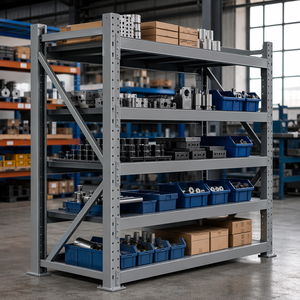
Custom OEM Storage Rack Frame | Heavy Duty Steel Welded Fabrication
- Yield Strength: Q235B / Q355B Steel
- Capacity: Up to 30,000 lbs/bay
- Finish: Electrostatic Epoxy-Polyester
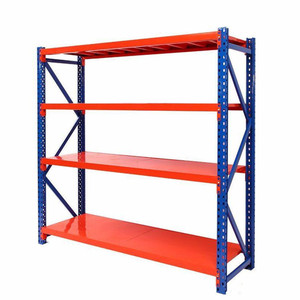
Custom Heavy-Duty Metal Rack Storage Shelf High Quality Iron Equipment
- Direct 100% Pallet Accessibility
- Beam Pitch: 50mm / 75mm Adjustable
- Rating: 1,000–4,500 kg/tier
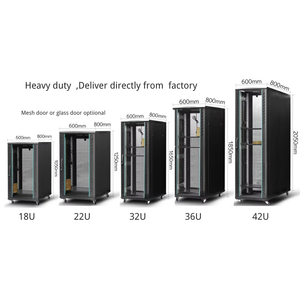
19-Inch Cold Rolled Steel Network Cabinet (16U–42U Server Rack)
- Standard: 19" Rack EIA-310-D
- Security: Lockable Tempered Glass
- Mobility: Heavy-Duty Castor Assembly
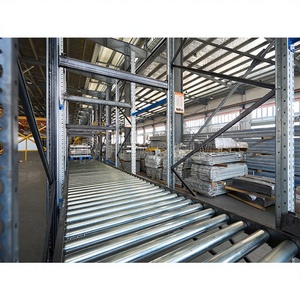
Hot Sale Gravity Flow Roller Racking Systems | Carton Flow Racks
- Principle: Strict First-In First-Out (FIFO)
- Roller Tracks: High-Impact Poly/Steel
- Optimal: High-Speed E-commerce Picking
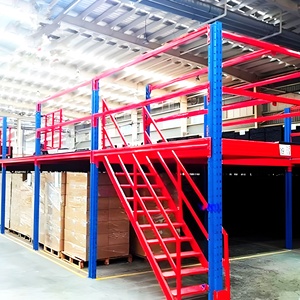
Steel Industrial Multi-Level Mezzanine Floor Racks Gangli HD-MR-22
- Certification: ISO 9001 / CE Certified
- Floor Loading: 300–1,000 kg/sqm
- Multiplies Floor Utilization by 200-300%
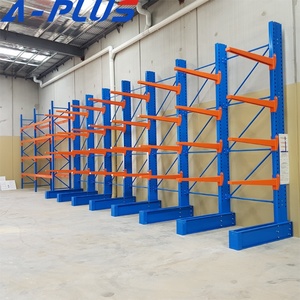
Heavy Duty 5-Layer Industrial Warehouse Steel Cantilever Rack
- Designed for Pipes, Timber, Long Stock
- Arm Load Capacity: 500–1,500 kg/arm
- Available in Single or Double Sided
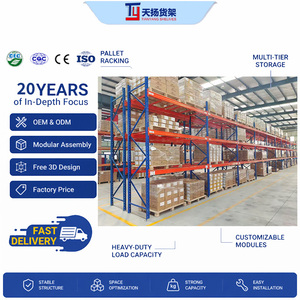
Industrial Warehouse Shelving Rack for Palletized Inventory
- Heavy Box Beams with 3/4-Hook Connectors
- Standard Wire Decking / Steel Drop-in
- Upright Depths: 800mm to 1,200mm
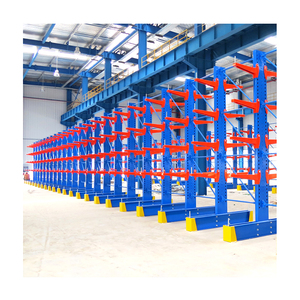
Heavy Duty Wire Storage Shelves Warehouse Cantilever Rack for Retail
- Dual Function: Bulk Stash + Hand Picking
- High-Visibility Galvanized Wire Decks
- High Corrosion Resistance Finish
Engineering Architecture, Structural Compliance & Metallurgical Integrity
Sourcing commercial and industrial warehouse shelving from certified Chinese manufacturing hubs requires an engineering-first evaluation framework. Global procurement executives at third-party logistics firms (3PLs), multinational retail fulfillment conglomerates, and cold-chain cold-storage operations require full material traceability, finite element calculation under cyclic seismic stresses, and strict international standard conformity including RMI (Rack Manufacturers Institute) ANSI MH16.1 in the United States, EN 15512 / EN 15620 across the European Union, and AS 4084 in Australia and New Zealand.
Engineering Comparison Matrix: Commercial & Industrial Storage Configurations
Use the data visualization matrix below to calibrate storage density, capital cost per pallet location, inventory rotation protocols (FIFO vs. LIFO), and mechanical handling compatibility prior to commissioning CAD floorplans.
| Racking Topology | Pallet Selectivity | Cubic Footprint Efficiency | Inventory Flow Strategy | Typical Beam Deflection Limit | Primary Application Focus |
|---|---|---|---|---|---|
| Selective Pallet Racking | 100% Direct | Medium (40–50%) | FIFO / LIFO (Flexible) | 1/200 of beam span | Fast-moving consumer goods (FMCG), 3PL DCs, retail hubs |
| Drive-In / Drive-Through | Low (15–25%) | Very High (75–85%) | Strict LIFO (Drive-In) / FIFO | Structural arm deflection ≤ 2mm | Seasonal produce, batch beverage lines, cold storage |
| Carton & Pallet Gravity Flow | High at Pick Face | High (70–80%) | Guaranteed Physical FIFO | Controlled speed brake descent | Date-coded pharmaceuticals, food processing, order assembly |
| Multi-Tier Mezzanine Platforms | 100% Manual Hand-Pick | Extreme (200–300% Floor Area) | SKU-Dense Pick Modules | L/250 to L/300 serviceability limit | Automotive aftermarket, footwear/apparel, e-commerce fulfillment |
| Heavy-Duty Cantilever Racks | 100% Frontal Access | Tailored for Bulk Lengths | Any Manual / Side-Loader | Arm tip deflection ≤ L/180 | Structural timber, PVC/steel conduit, drywall, metal sheeting |
Automated Surface Pre-Treatment and Electrostatic Thermosetting Chemistry
A frequent failure point in wholesale imported warehouse racks is premature oxidation and coating delamination initiated by mechanical contact with lift truck tines or environmental condensation. At our Guangzhou campus, steel components travel through an automated 10-stage immersion and spray tunnel including alkaline degreasing, hot water rinsing, micro-crystalline zinc phosphating, and deionized passivating rinses. This ensures optimal chemical anchoring prior to the electrostatic deposition of lead-free epoxy-polyester thermosetting powder coatings (applied at 60–90 μm film thickness, verified via electromagnetic dry-film gauges and ASTM D3359 cross-hatch adhesion testing).
Full-Cycle Engineering & BIM Delivery
Our licensed intralogistics design department generates comprehensive 2D CAD floor layouts, dynamic elevation schemas, and full 3D BIM (Building Information Modeling) objects within 24 hours. We customize upright pitch, diagonal lacing patterns, beam profiles, and concrete wedge anchor specifications directly matching your local municipal building codes and forklift mast clearances.
30,000 m² Intelligent CNC Roll-Forming
Equipped with 18 automated cold roll-forming lines, computerized continuous hydraulic punching presses, and robotic 6-axis seam welding arms. Continuous mechanical punching guarantees accurate pitch alignment across 12-meter continuous upright columns without cumulative punch drift, ensuring rapid, boltless beam engagement during installation.
Container-Optimized Export Packing
Decades of worldwide exporting allow us to engineer customized steel shipping cradles, anti-abrasive corrugated separation, and moisture-sealed shrink wrapping. Bundles are configured to achieve maximum cubic fill in 40ft High Cube (40HQ) containers without exceeding highway axle limits at discharge ports like Long Beach, Houston, Rotterdam, or Sydney.
Future Procurement Trends in Warehouse Storage Systems (2025–2030)
The global intralogistics landscape is experiencing a structural paradigm shift driven by urban land cost escalation, rapid e-commerce SKU diversification, and aggressive enterprise robotics integration. Forward-looking procurement directors are transitioning away from passive, static steel frameworks toward dynamic, modular, and sensor-ready storage infrastructures.
1. AS/RS & Shuttle-Ready Engineering Tolerances
Traditional manually operated reach-truck systems accommodate beam and frame deflection variances of 5mm to 10mm without issue. However, modern warehouses are increasingly commissioning autonomous mobile robots (AMRs), automated 4-way pallet shuttles, and stacker cranes. These systems mandate strict manufacturing tolerances down to ±0.5mm across beam levels and rail alignments.
Chinese tier-1 exporters are integrating laser alignment and automated robotic welding to guarantee ultra-tight track tolerances, enabling warehouses to scale from manual handling to complete dark-warehouse automation without replacing structural steel assets.
2. Decarbonization & Green Steel Sourcing
With the implementation of the European Union Carbon Border Adjustment Mechanism (CBAM) and corporate Scope 3 emissions reporting across North America, the carbon footprint of racking steel has become a critical procurement metric. Factories are increasingly shifting toward EAF (Electric Arc Furnace) recycled steel sources and zero-VOC heavy-duty powder coatings.
Optimized profile geometry allows for a 12% to 15% reduction in deadweight steel mass while retaining identical working load limits (WLL), directly slashing embodied carbon and container freight shipping costs simultaneously.
3. High-Density Micro-Fulfillment & Cold-Chain Integration
Grocery, biopharma, and perishable cold-chain logistics necessitate ultra-dense layouts to mitigate sky-high refrigerated operating costs per cubic meter. Multi-level picking mezzanines integrated over deep-lane radio shuttle racks have emerged as the fastest-growing design requirement.
Structural components engineered for low-temperature environments utilize impact-tested killed steels with certified Charpy V-notch energy values at -30°C, preventing catastrophic brittle shear fractures common in sub-standard imported metals.
4. Smart Racking: Structural Health Monitoring (SHM)
Forklift impacts remain the primary trigger of warehouse rack progressive collapse. The next generation of industrial shelving integrates embedded IoT strain sensors, laser impact monitors, and RFID-tagged load beams. These sensors provide real-time telemetry on overloading, rack plumbness displacement, and micro-cracks directly to the warehouse management system (WMS).
Forward-thinking factory partners are designing custom punched recesses and cable routing channels directly inside the roll-formed column void to protect internal sensor wiring from external mast impact.
Frequently Asked Questions on Direct Warehouse Racking Procurement
Actionable answers to help supply chain directors, facility engineers, and customs clearance teams streamline large-scale wholesale shelving imports.
What steel certifications and structural calculations are supplied for municipal building permits?
How do you ensure compatibility with standard 48×40 inch GMA pallets and custom containers?
What are the fire safety and NFPA 13 flue space considerations during layout design?
What is the typical manufacturing lead time and ocean container transit schedule?
How do you safeguard roll-formed uprights and beams against transit damage and corrosion?
What OEM / Private Label capabilities do you offer for racking distributors and systems integrators?
Request an Engineered CAD Layout & Factory-Direct Quotation
Send your warehouse dimensions, clear height, pallet dimensions, maximum weight, and forklift model. Our structural engineering team delivers a professional 2D/3D storage design and itemized FOB/CIF quotation within 24 hours.