High-Density Industrial Tire Storage & Logistics Racks
Precision-fabricated from Q235B structural cold-rolled steel. Our modular tire pallet racks, folding stillages, and rolling trolleys are designed for high-throughput passenger car radial (PCR), truck/bus radial (TBR), and heavy-duty off-the-road (OTR) tire handling.
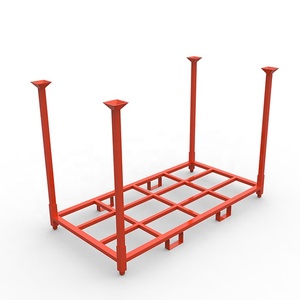
Logistics Foldable Stacking Rolling Steel Cage Trolley Rack
- Load Capacity: 800 - 1,200 kg
- Industrial Swivel PU Wheels
- Collapsible Wire Mesh Walls
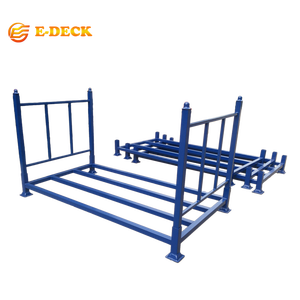
Auto Industry Detachable Heavy Truck Tire Pallet Stacking Rack
- Rated Load: 1,500 kg/Pallet
- Removable Corner Posts (4-High)
- 4-Way Forklift Entry Base
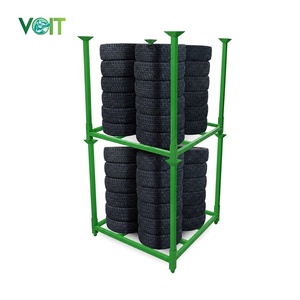
Warehouse Detachable Passenger Steel Tire Stacking Rack
- Holds 28-32 PCR Tires
- Heavy Cupped Stacking Feet
- Modular Dismountable Posts
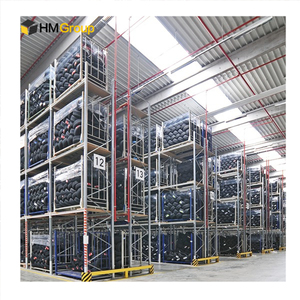
Heavy Duty Transport Warehouse Folding Metal Tire Rack
- 4:1 Empty Return Ratio
- Heavy-Duty Safety Locking Pins
- Optimized for Sea Freight
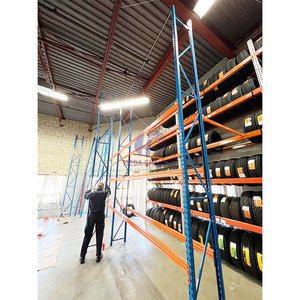
Warehouse Heavy Duty Beam Tire Pallet Shelving System
- Direct Selective Access
- Angle-Mounted Tire Beams
- Seismic Anchor Base Plates
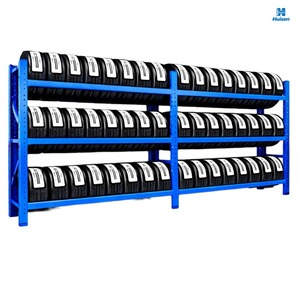
Automotive Multi-Tier Heavy Detachable Tire Storage Racks
- Up to 5 Stacking Tiers
- High Yield Tube Welds
- Zero Bolt Drop-In Assembly
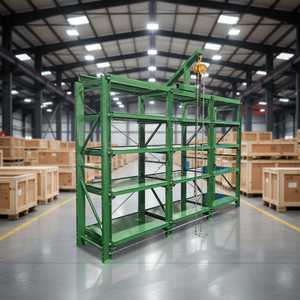
Q235 Selective 3-5 Layer Adjustable Heavy Duty Tire Rack
- 500 - 1,000 kg Tier Capacity
- 75mm Pitch Height Adjust
- Corrosion Resistant Powder Coat
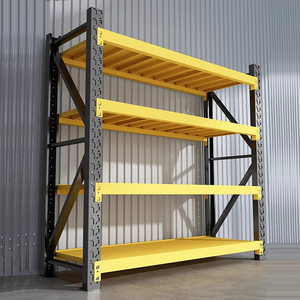
Stacking Movable Steel Tube Truck Tyre Stillage Post Pallet
- Accommodates 8-10 Truck Tires
- Conical Interlock Stacking Leg
- Hot-Dip Galvanized / Powder
Why International Tier-1 Distributors Source from HEDA Shelves
Operating since 2001 in Guangzhou, China, Guangzhou HEDA Shelves Co., Ltd. is an established global manufacturer of heavy-duty industrial storage systems. Backed by state-of-the-art roll forming and robotic welding lines, we deliver engineered structural reliability across North America, Europe, and Australia.
Free 24h 3D CAD & Engineering Calculations
Every commercial warehouse possesses unique slab limitations, sprinkler clearance guidelines (NFPA 13), and forklift turning radii. Our in-house structural engineers supply custom imperial-unit CAD schematics, 3D spatial layout renderings, and certified load calculation reports within 24 hours.
10-Step Controlled Anti-Corrosion Treatment
To withstand warehouse humidity and tire chemical off-gassing, steel members undergo shot-blasting, acid pickling, zinc phosphating, and automatic electrostatic polyester powder curing (80-120 microns). Components pass strict salt-spray tests without micro-fissuring or flaking.
Container Packing & Landed Freight Optimization
Our nesting and knockdown engineering enables high cubic utilization in 40ft High Cube (HQ) ocean shipping containers. Demountable and folding models collapse at an industry-leading 4:1 return ratio, minimizing international freight cost per unit and streamlining intermodal logistics.
Engineering Standards, Load Dynamics & Structural Integrity
A comprehensive examination of metallurgical criteria, horizontal seismic loads, tire bead preservation, and warehouse density mechanics for industrial tire storage facilities.
1. Material Selection: Cold-Rolled Q235B vs. Structural Tubing Mechanics
Industrial tire racking systems face distinct static and dynamic stress profiles compared to standard pallet storage. Rubber tires impose distributed circumferential loads rather than planar pallet contact. Our factory specifies certified Q235B high-tensile carbon structural steel (equivalent to ASTM A36 / European S235JR), exhibiting minimum yield strength $R_e \ge 235 \text{ MPa}$ and elongation $A \ge 26\%$.
For detachable post pallets and folding tire stillages, posts are cold-formed from high-frequency ERW circular or square hollow sections (SHS: $50 \times 50 \text{ mm}$ to $80 \times 80 \text{ mm}$ with wall thicknesses ranging from $2.5 \text{ mm}$ to $3.75 \text{ mm}$). Base perimeter frames feature robotic fillet welding with continuous penetration inspection to prevent weld-fatigue under heavy forklift impacts during high-density stacking.
2. Tire Storage Configuration: Tread-Laced (Herringbone) vs. Barrel-Stacked vs. Vertical On-Tread
Selecting the correct rack architecture directly impacts warehouse inventory capacity, tire degradation rates, and picking labor efficiency:
- Vertical On-Tread (Beam Supported): Recommended for retail tire distribution, dealership parts centers, and rapid-pick multi-SKU automotive operations. Tires rest parallel on dual horizontal beams. Beams are angled inward at 45° or fitted with tubular barrel cradles to prevent point-load pressure indentation along the rubber casing.
- Laced / Herringbone Stacking: Common in high-cube warehouse distribution centers. PCR tires are interwoven within post pallets or folding stillages. This orientation maximizes capacity by 35% to 45% compared to on-tread racking while retaining structural stability inside collapsible steel corner walls.
- Barrel / Chimney Stacking: Used primarily for commercial truck radial (TBR) tires and agricultural/OTR inventory. Tires are stacked flat on heavy structural stillages. Heavy-gauge square post stillages eliminate side wall bulging and safeguard tire beads from permanent deformation during multi-month bulk cycles.
3. Industrial Tire Rack Engineering Matrix
| Rack Classification | Target Tire Class | Nominal Load / Level | Stacking Capacity | Footprint Dimensions (mm) | Structural Profile |
|---|---|---|---|---|---|
| Foldable Transport Stillage | PCR / SUV / Light Truck | 1,000 - 1,200 kg | 4 High (Loaded) / 20 High (Folded) | W2,280 × D1,120 × H1,250 | Q235B Box Beam + Lock Pins |
| Detachable TBR Post Pallet | Heavy Commercial Truck (TBR) | 1,500 - 1,800 kg | 4 - 5 High (Loaded) | W2,200 × D1,200 × H1,600 | Round Tube Post Ø60 × 3.0mm |
| Selective Fixed Tire Rack | Passenger Cars / Motorbike | 500 - 800 kg / Tier | Floor Anchored (Up to 9m Height) | Custom Bay Pitch × D500 - 700 | Omega Upright + Step Beams |
| Rolling Cage Trolley | Intralogistics / Fitting Bays | 600 - 800 kg | Single Unit Rolling (Mobile) | W1,100 × D850 × H1,700 | Tubular Steel + 50×50 Mesh |
4. Safety Interlocking & Forklift Interface Engineering
Forklift impact is the leading cause of structural stillage collapse in high-density staging yards. HEDA engineering incorporates conical self-locating cup feet and target nesting heads. When dropping one tier atop another, the precision-stamped concave receiver automatically centers the top post into positive mechanical interlock, eliminating slip vectors caused by uneven concrete slabs.
Base channels feature flared 4-way entry guidance ribs that prevent fork tines from piercing bottom frame tubing. Welded skid runners distribute load over wide surface areas, preventing indentation on heavy warehouse asphalt or concrete topping slabs.
Future Procurement & Technology Trends in Tire Logistics
How supply chain executives, global distributors, and warehouse operators are shifting procurement strategies to navigate automated handling, carbon compliance, and omnichannel velocity.
ASRS & Automated Guided Vehicle (AGV) Compatibility
Modern tire mega-distribution centers are moving away from manual counterbalance forklifts toward narrow-aisle automated guided vehicles and automated storage/retrieval systems (ASRS). Procurement mandates precision manufacturing tolerances within ±1.5mm, integrated optical target plates, and laser-guided pick locating surfaces on every pallet base.
Ultra-High Collapse Ratio Reverse Logistics
With volatile maritime container rates, empty rack returns must achieve optimal volumetric density. Next-generation folding designs feature dual-axis scissor-hinged walls that collapse into a completely flush 180mm profile. This achieves a 4:1 to 5:1 return packing ratio, enabling up to 140 collapsed units per 40ft HQ container.
NFPA 13 Fire Sprinkler & Flue-Space Standards
Because rubber tires create severe high-heat release fires, insurance underwriters and building regulators enforce strict flue-space clearances. Modern tire rack specifications incorporate wire mesh base decks and fixed physical flue-space stops to ensure unobstructed water penetration throughout the vertical racking matrix.
Thermo-Cured Hybrid Polyester Surface Treatments
Liquid solvent painting has been phased out due to VOC restrictions and mechanical chipping. Modern procurement contracts require heavy zinc-iron phosphate pre-treatment followed by TGIC-free polyester thermoset powder coating. For harsh outdoor harbor yards or humid tropical distribution hubs, hot-dip galvanizing (ISO 1461) guarantees 15+ years of zero-rust service.
Frequently Asked Questions: Sourcing Industrial Tire Racks from China
Essential guidance regarding customs clearance, seismic compliance, steel grade verifications, and lead times for global purchasing managers.
What is the standard manufacturing lead time for full container orders?
For standard models (e.g., modular TBR post pallets or PCR folding stillages), lead time is typically 15 to 22 business days for 1 to 5 40ft HQ containers. Highly customized designs requiring specialized laser-cut tubing or custom robot welding jigs generally require 25 to 30 business days following shop drawing sign-off.
How do you verify structural safety and real load-bearing capacity?
Every production batch undergoes destructive testing, coupon tensile testing, and static load deflection verification up to 1.5 times the rated working load. Mill Test Certificates (MTCs) for raw steel coils, chemical composition breakdowns, and weld penetration test reports are cataloged and provided with pre-shipment quality dossiers.
Can you manufacture racks matching existing systems (Ceco, AR, etc.)?
Yes. As an OEM and ODM tier-1 manufacturer, we routinely reverse-engineer and match existing warehouse post palettes, teardrop patterns, slot-in locking ears, or corner cups. You can supply physical samples, technical blueprints, or on-site dimensions, and our engineering department will generate verified CAD cross-sections.
What container packing options protect goods from transit scratch and moisture?
Tire racks are bundled with high-strength PET strapping, corrugated protective corner sleeves, and multi-layer stretch wrap. Steel contact points are cushioned with high-density EPE foam spacers to eliminate friction scratches during ocean transit. Desiccant packs are placed in containers to prevent container rain condensation.
Do your engineering calculations satisfy US, Canadian, and European building codes?
Our systems comply with RMI (Rack Manufacturers Institute) MH16.1 specifications, FEM 10.2.02 European design codes, and Australian AS4084 standards. For permitted warehouse installations in high-seismic zones (such as California, British Columbia, or New Zealand), our calculation packages are prepared for local Engineer of Record (EOR) stamping.
What Incoterms do you support, and how are shipping ports handled?
We routinely execute FOB, CIF, CFR, and DDU/DDP shipments. Cargo is dispatched from major South China international ports including Guangzhou (Nansha) and Shenzhen (Yantian/Shekou). We coordinate ocean freight directly with global shipping lines (Maersk, MSC, COSCO) to ensure reliable carrier allocation and competitive sea freight rates.