Automated ASRS
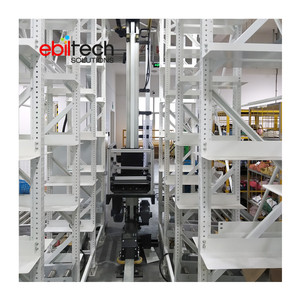
Automated Storage And Retrieval Racking System Miniload Asrs Storage
- Payload: High-speed totes & cartons
- Max Height: Up to 24 meters vertical
- Integration: WMS / WCS digital interface
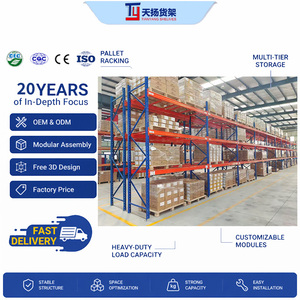
Explore our export-grade warehouse storage systems fabricated with certified Q235B/Q355B high-tensile structural steel, multi-tier safety factors, and anti-corrosion finishes.
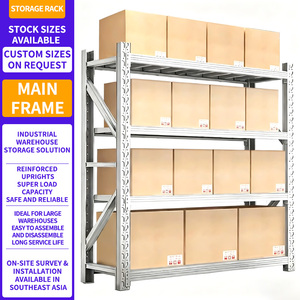
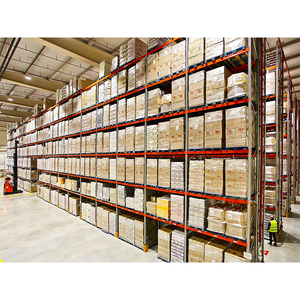
A rigorous examination of Chinese structural steel manufacturing, cold-roll forming kinematics, safety factor calculations, and global regulatory compliance.
As modern supply chains demand unprecedented pallet throughput, extreme vertical space utilization, and rapid inventory turnover, industrial storage equipment has evolved from static iron framework into highly engineered mechanical infrastructure. Sourcing commercial warehouse racking and industrial shelving from premier Chinese manufacturing hubs is no longer merely a unit-cost arbitrage play; it is an engineering decision governed by metallurgy, automated roll-forming accuracy, seismic dynamic modeling, and strict international standard adherence.
The foundation of commercial racking durability resides in coil steel metallurgy. Premier Chinese manufacturers utilize high-grade hot-rolled and cold-rolled carbon steel coils, predominantly Q235B (minimum yield strength 235 MPa, tensile strength 370–500 MPa) and high-load structural Q355B (minimum yield strength 355 MPa, tensile strength 470–630 MPa). These alloys exhibit an optimal balance between yield strength and elongation ductility, preventing sudden brittle fracture under unexpected seismic acceleration or forklift impact.
Upright profiles undergo precision cold roll-forming across 18 to 24 continuous forming stations. This gradual deformation prevents localized micro-fissuring along the bend radii, ensuring consistent cross-sectional geometry. Continuous CNC punching lines punch teardrop, diamond, or hex pitch patterns at 50mm, 75mm, or 76.2mm (3-inch standard) increments with tolerances within ±0.1mm. High-strength box beams are produced by interlocking twin C-profiles with continuous longitudinal automatic seam welding, delivering high torsional resistance and minimal vertical deflection (exceeding standard L/200 deflection criteria).
Every frame, connector bracket, and baseplate is modeled using ANSYS FEA software to verify stress concentration nodes under combined dead loads, live inventory loads, and lateral wind/seismic forces.
Pretreatment involves chemical degreasing, ultrasonic immersion, acid pickling, phosphating, and nano-ceramic passivation, followed by electrostatic thermosetting epoxy-polyester powder coating cured at 200°C.
Engineered thick-gauge footplates (6mm to 16mm thickness) distributed with multi-anchor bolt arrays ensure seismic energy dissipation and floor slab load diffusion in accordance with local building codes.
The global warehousing landscape is undergoing a structural paradigm shift driven by e-commerce fulfillment speeds, skyrocketing urban industrial real estate costs, and severe labor shortages. The modern commercial storage system is no longer a passive steel shelf—it is an active interface for automation, robotic material handling, and algorithmic inventory orchestration.
Automated cranes and shuttle rovers run continuously within micro-tolerance racking channels, achieving picking rates 500% higher than traditional manual forklift operations.
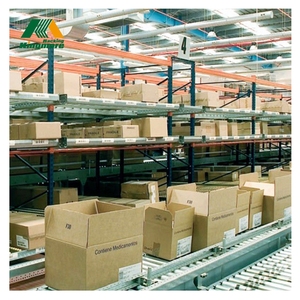
Utilizing controlled slope rollerbeds equipped with centrifugal brake drums, gravity carton and pallet flow systems enforce automated FIFO picking without electrical energy inputs.
Freezer-rated racking formulated to withstand prolonged -30°C cryogenic environments without thermal embrittlement, combined with radio-shuttle high-density automation.
Rack-supported and structural steel mezzanine architectures that convert excess warehouse vertical cubic clear height into productive floor area without real estate lease expansion.
Procurement directors and supply chain VPs across North America, Europe, Latin America, and Australasia are transitioning from third-party domestic distributors to integrated factory-direct partnerships with verified Chinese manufacturers. This procurement evolution is fueled by several macroeconomic imperatives:
Total Cost of Ownership (TCO) Optimization: Domestic brand markups in Western markets frequently range from 45% to 75% above ex-factory fabrication costs. Direct sourcing eliminates intermediary margins while unlocking direct communication with structural design engineers for rapid custom configurations.
Customization and Mixed-Batch Scalability: Unlike rigid localized catalog stockists, China's centralized supply ecosystem enables customized upright punching pitches, bespoke frame depths (for non-standard 48"x40" GMA, 1200x800 EUR, or heavy drum storage), tailored powder coat corporate color palettes, and hot-dip galvanized outdoor treatments within single container volumes.
Containerized Ocean Logistics Engineering: Sophisticated Chinese exporters utilize 3D container packing algorithms to optimize weight and cube capacity inside 40ft High Cube containers. High-load upright frames and beams are strapped in custom protective nesting bundles with anti-abrasive cushioning, eliminating transit scratching and lowering ocean freight cost per pallet position.
| Storage Architecture | Pallet Selectivity | Floor Space Utilization | Inventory Rotation | Load Rating (Max/Level) | Primary Industrial Use Case |
|---|---|---|---|---|---|
| Selective Pallet Racking | 100% Immediate | Moderate (35% - 40%) | FIFO / LIFO Flexible | 1,000 - 4,500 kg | High-SKU distribution, e-commerce, third-party logistics (3PL) |
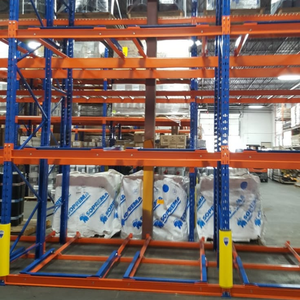
| Push Back Racking | Lane Face Accessible | High (65% - 75%) | LIFO Economy | 1,500 kg / cart | Food & beverage staging, cold storage, 2-6 pallet SKU batching |
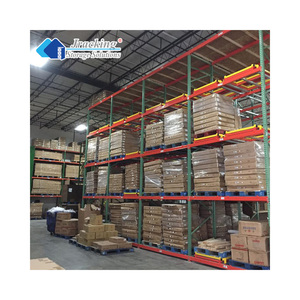
| Drive-In / Drive-Through | Lane End Access | Extremely High (75% - 85%) | LIFO or Strict FIFO | 2,000 kg / pallet | Seasonal products, bulk ingredients, low-SKU deep freezer storage |
| Carton & Pallet Flow | Automatic Front Face | High (70% - 80%) | Strict FIFO Gravity | 1,200 kg / roller level | Pharmaceuticals, perishables, fast-moving consumer goods (FMCG) |
| Miniload / Pallet ASRS | 100% Crane Accessible | Maximum (85% - 95%) | Algorithmic WMS Dynamic | 50 - 1,500 kg | Lights-out automated warehouses, electronics, spare parts fulfillment |
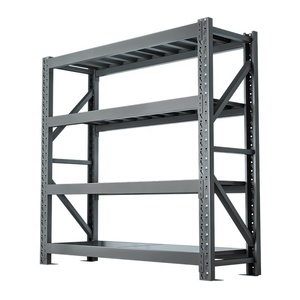
| Heavy-Duty Cantilever | Open Unobstructed Front | Custom Linear | Unrestricted Access | 1,000 - 3,000 kg / arm | Lumber, steel tubing, aluminum extrusions, drywall, bar stock |
Operating since 2001, Guangzhou Heda Shelves Co., Ltd. has established itself as an international benchmark for commercial warehouse racking, industrial shelving, and structural mezzanines. Our 30,000 square meter (approx. 323,000 square feet) production complex houses over 300 skilled technical personnel, structural calculation engineers, and dedicated quality assurance specialists producing over 30,000 metric tons of certified racking steel monthly.
From initial DWG site layout and 3D architectural rendering to final container departure, our end-to-end manufacturing protocol guarantees absolute structural compliance with international building and safety standards:
Mill test certificates (MTC) verified for chemical composition and yield tensile strength on all incoming steel coils.
High-speed CNC coil slitting lines shear master coils into exact longitudinal strip widths with zero edge burr.
Multi-die CNC press banks punch pitch hole matrices at uniform intervals under constant electronic laser gauge control.
Continuous progressive roll formers transform flat punched steel strips into complex omega and box upright profiles.
Robotic pulse MIG welding cells weld beam end-connectors, baseplates, and horizontal/diagonal frame bracing.
Mechanical surface scale and weld spatter removed via centrifugal shot-blast deburring for maximum surface adhesion.
Multi-stage immersion bath degreases and chemically etches the steel, applying a crystalline zinc-phosphate conversion layer.
Automated powder spray booths apply 60–100 micron high-durability epoxy-polyester coatings with uniform electrostatic wrap.
Baking at 180°C to 200°C thermal zones guarantees thorough cross-linking, impact resilience, and pencil hardness ≥ 2H.
Batch dimensional checks, beam load deflection deflection testing, barcoding, and container export banding.
Essential answers regarding international shipping, structural certifications, seismic calculations, pallet compatibility, and factory direct customization.
Submit your facility dimensions, clear ceiling heights, pallet load specifications, and forklift models. Our senior intralogistics engineers will return a complete CAD layout plan, 3D visual rendering, and transparent factory-direct quotation within 24 hours.
Contact Us