Direct Industrial Manufacturing Since 2001

China Top Industrial Warehouse Racking Systems Supplier & Exporters

Precision-Engineered Heavy-Duty Storage, High-Density Dynamic Systems, and Certified Structural Steel Platforms Built to ISO 9001:2015, CE, and International Seismic Safety Standards.

Enterprise Product Portfolio

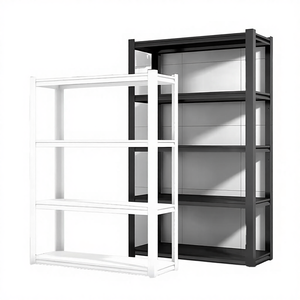
Standard & Custom Engineered Racking Systems

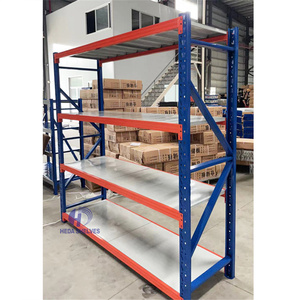
Manufactured from premium cold-rolled Q235B/Q355B structural steel. Each system is custom-configured for beam elevation tolerances, unit-load dynamics, and forklift handling clearances.

Technical Engineering Whitepaper

Structural Integrity, Metallurgy & Global Compliance Framework

A comprehensive technical evaluation for procurement directors, distribution facility architects, and supply chain project engineers sourcing heavy industrial racking systems from China.

Specifying warehouse storage systems on an international scale demands more than comparing simple cost-per-pallet position. The modern logistics infrastructure operates under intense mechanical cycles, demanding strict compliance with international structural codes, precise cold-forming metallurgy, and certified load-bearing dynamic tolerances. As global distribution centers consolidate SKU inventories into high-bay cubic architectures, the physical stress placed upon upright columns, connector pins, and baseplates multiplies exponentially.

Critical Metallurgical Consideration: Q235B vs. Q355B vs. ASTM Structural Equivalents

At HEDA Shelves, primary cold-formed components utilize high-yield certified steel coils. For standard ambient selective configurations, Q235B steel (minimum yield strength of 235 MPa, comparable to ASTM A36) provides optimal ductility and fracture toughness under cyclic impact loads. For ultra-tall automated uprights (>12 meters) or seismic zone installations, we utilize Q355B high-tensile structural steel (minimum yield strength of 355 MPa, comparable to ASTM A572 Grade 50), reducing component dead-weight by up to 18% while expanding seismic shear limits under RMI (ANSI MH16.1-2021) and EN 15512 guidelines.

Comprehensive Industrial Storage System Selection Matrix

Selecting the appropriate storage topology directly dictates warehouse footprint utilization, operational forklift travel time, and overall capital payback periods. Review the structural characteristics below:

Racking Topology Space Utilization Pallet Accessibility Inventory Flow Handling Equipment Required Seismic Resistance
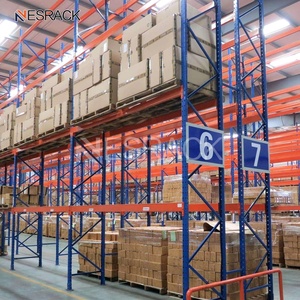
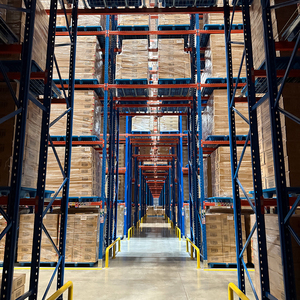
Selective Pallet Racking Base (~40% Floor) 100% Direct (Instant) FIFO / LIFO Flexible Standard Counterbalance / Reach High Ductility
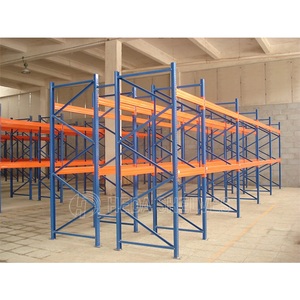
Double Deep Racking Moderate (~55% Floor) 50% Direct (Second Pallet) LIFO Operational Mode Deep-Reach Pantograph Truck Medium-High
Drive-In / Drive-Through High (~75% Floor) Low (Lane-Constrained) LIFO (Drive-In) / FIFO (Thru) Narrow Counterbalance Truck Rigid Braced
Push Back (Nested Cart) High (~70% Floor) Medium (1 Face per Lane) LIFO (Gravity Cart Flow) Standard Forklift (No Mast In) High Dynamic
Pallet Flow (Gravity Roller) Maximum (~85% Floor) High at Discharge Face Strict FIFO Enforced Standard Counterbalance / Reach Special Brake Specs
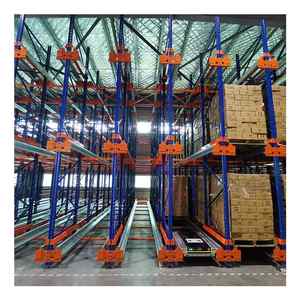
Radio Shuttle Automation Maximum (>85% Floor) High-Density Automated FIFO or LIFO Selectable Standard Truck + Shuttle Units Superior Safety
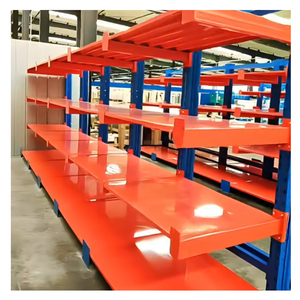
Heavy Cantilever Racking Open Arm Metric 100% Linear Clearance Continuous Run Selective Side Loader / Four-Way Forklift Taper Column Spec

Cold-Formed Section Geometry and Deflection Limits

A major cause of industrial racking failure stems from underestimating live-load dynamic deflection ($\Delta$) and seismic drift. Under European FEM 10.2.02 codes and American RMI specifications, horizontal box-beam deflection under fully factored design load must never exceed:

Deflection Metric ($\Delta \le L/200$)

Standard design deflection limit for pallet load support beams. For a 2,700mm beam spanning two standard 1,000×1,200mm GMA pallets, allowable vertical sag is constrained strictly to ≤13.5mm under maximum gross operating load.

Safety Factors (1.5 - 1.65)

Component yield strengths are factored with structural safety margins complying with ANSI MH16.1 and Australian AS 4084-2023, protecting facilities from sudden catastrophic shear failure caused by forklift mast acceleration.

Flue Space Integrity (NFPA 13)

Incorporating factory row spacers guarantees required 6-inch transverse and longitudinal flue spaces, ensuring in-rack ESFR sprinkler streams penetrate pallet levels uninterrupted during fire emergencies.
Enterprise Infrastructure

Guangzhou HEDA Shelves Co., Ltd. Manufacturing Authority

Delivering heavy industrial engineering from our world-class Guangzhou manufacturing facility since 2001. Direct exporter credibility backed by verifiable enterprise capacity.

2001.
Year Founded
25+ Years of Racking Innovation
30,000m²
Factory Footprint
323,000 sq ft Modern Campus
30,000t
Monthly Output
Metric Tons Steel Throughput
10,000+
Global Projects
Completed Across 130+ Countries

Precision 10-Stage Steel Production Lifecycle

Every beam, upright column, and brace undergoes an automated, rigorously monitored conversion process before containerized ocean dispatch.

STAGE 01 - 03

Raw Steel to High-Speed Punching

Certified steel coils from leading domestic mills undergo tensile verification, precision slitting, and computerized automated column punching to achieve flawless 50mm/75mm slot alignment without micro-cracking.

STAGE 04 - 06

Continuous Roll-Forming & Polishing

Multi-station cold roll-forming lines generate multi-bend Omega uprights and structural box beams. Edges, connection points, and weld joints undergo automated mechanical deburring and weld polishing.

STAGE 07 - 10

Pickling, Phosphating & Powder Coating

Full 4-step chemical immersion: alkaline degreasing, acid pickling to eliminate rust, and zinc phosphating pre-treatment. Finished with thermosetting electrostatic epoxy powder baked at 200°C for extreme salt-spray resistance.

01

Free CAD & 3D Modeling

Deliver full facility CAD drawings, warehouse elevation sections, and 3D architectural renders within 24 hours of receiving your pallet and lift-truck specifications.

02

Metric & Imperial Dual Stamping

Load calculation sheets, engineering drawings, and beam capacity plaques supplied in both pounds/feet (lbs/ft) and metric (kg/mm) for North American and global municipal approvals.

03

Certified Global Compliance

Manufacturing facility operates under ISO 9001:2015 Quality Management System (Cert No. 18624Q00169R0M) with structural CE Marking (2435-CPR-8605159) and RoHS material testing.

04

Container Freight Optimization

Pre-sorted bundling, rust-inhibiting plastic interleaving, and calculated nesting inside 20GP/40HQ shipping containers ensures zero damage transit to global ports.

Industry Horizon

Future Procurement & Technological Trends in Warehouse Racking

Anticipating structural, automated, and ESG demands reshaping logistics infrastructure sourcing over the next decade.

1. Convergence of Static Racking & AMR Automation

Conventional static pallet racks are rapidly evolving into hybrid automation ecosystems. Modern procurement contracts now mandate rack tolerances compatible with Autonomous Mobile Robots (AMRs) and Automated Guided Vehicles (AGVs). This includes integrated baseplate recessed track systems, QR-code navigational floor coatings, and precision beam deflection controls that avoid sensor interruption on robotic lift masts.

2. Cold Chain High-Density Explosion

With refrigerated square-footage carrying an operational energy surcharge up to 450% higher than ambient dry warehouses, dynamic high-density storage is superseding selective racking in food and pharmaceutical verticals. Sourcing is pivoting toward automated 4-way radio shuttle systems and deep-lane pallet flow matrices designed to conserve cubic energy footprints and isolate operator exposure to sub-zero temperatures.

3. Decarbonization & Circular Steel Sourcing

Global supply chain ESG reporting requires tier-one warehouse suppliers to quantify embodied carbon within structural steel components. HEDA Shelves is actively responding by optimizing electric arc furnace (EAF) steel sourcing, transitioning toward lead-free, zero-VOC solventless powder coats, and developing lightweight roll-formed profiles that reduce freight container requirements by up to 14%.

Digital Twin Structural Monitoring and Smart Storage Arrays

The next frontier in warehouse rack safety involves integrating Internet of Things (IoT) strain gauges and vibration monitors directly into critical upright baseplates and connector nodes. These sensors communicate real-time structural health telemetry back to Warehouse Management Systems (WMS). If an accidental reach truck collision occurs or seismic ground acceleration shifts weight beyond safe elastoplastic limits, the digital twin interface flags the compromised bay immediately, locking out robotic retrieval cycles and dispatching maintenance crews prior to structural collapse.

Procurement Knowledgebase

Frequently Asked Questions: Global Racking Procurement & Engineering

In-depth structural, logistical, and compliance answers addressing the primary concerns of international buyers, structural engineers, and facility planners.

1. How does Chinese Q235B steel compare directly with US ASTM A36 and European S235JR standards?

Chemically and mechanically, Chinese standard Q235B (GB/T 700) is equivalent to American ASTM A36 and European EN 10025 S235JR. Q235B exhibits a guaranteed minimum yield strength ($R_e$) of 235 MPa (approximately 34,000 psi) and ultimate tensile strength ($R_m$) of 370–500 MPa, with elongation at break ≥26%. It possesses high ductility, ensuring the cold-formed uprights and beams absorb forklift impacts through plastic deformation rather than brittle catastrophic failure. For extreme load designs or seismic uprights, HEDA Shelves also supplies Q355B (equivalent to ASTM A572 Grade 50) offering yield strengths ≥355 MPa (51,500 psi).

2. Can HEDA Shelves support localized seismic permitting, municipal engineering stamps, and calculation packages?

Yes. When exporting to high seismic zones such as California, Mexico City, Chile, Japan, or New Zealand, our engineering department calculates spectral acceleration coefficients ($S_s, S_1$), site soil class modifiers, and base plate moment distributions in conformance with ASCE 7 and RMI ANSI MH16.1. We supply complete structural calculation packages, finite element analysis (FEA) reports, and detailed connection drawings. These documents are directly handed over to your local licensed Professional Engineer (PE) or Structural Engineer (SE) of record for municipal permit stamping.

3. How do you package and protect structural racking during ocean container transport?

Maritime freight poses significant risks of condensation corrosion and bundle rubbing. Our export protocol mandates that upright frames and beams are nested with protective corrugated cardboard interleaving, bound with heavy-duty polyester strapping, and wrapped in industrial VCI (Vapor Corrosion Inhibitor) stretch film. Small components, such as connector brackets, bolts, base plates, row spacers, and safety pins, are bagged and palletized in heavy fumigated plywood or steel crates to ensure 100% component accounting on job-site delivery.

4. What specific information is required to receive a free, precise CAD layout and formal quotation?

To return a structural layout and bill of materials within 24 hours, our engineering team requires: (1) Architectural floor plan showing columns, dock doors, egress paths, and clear building ceiling height; (2) Pallet specifications (Width × Depth × Height including goods) and maximum gross pallet weight; (3) Forklift model, maximum lift height, and minimum right-angle stacking aisle width requirement; and (4) Environmental requirements such as cold-storage temperatures or seismic site class data.

5. What is the expected manufacturing lead time and FOB/CIF shipping turnaround?

Standard production cycle for a typical 2 to 10 container project (approximately 1,000 to 5,000 pallet positions) is 15 to 25 working days following CAD design approval. For customized radio shuttle channels, structural mezzanines, or specialized colors, lead times range from 20 to 30 days. Transit time via ocean freight from our nearby ports (Guangzhou / Shenzhen) ranges between 14 to 28 days depending on the destination port across North America, Europe, Australia, or the Middle East.

6. How does HEDA Shelves guarantee powder-coating adhesion and corrosion resistance in hostile climates?

Unlike budget workshops utilizing manual wipe-downs, HEDA Shelves runs an automated 4-stage continuous immersion pre-treatment pipeline consisting of acid wash, rust removal pickling, neutralizing rinse, and zinc phosphating. This chemically etches the steel surface, creating a micro-crystalline phosphate conversion coating. Components then receive an electrostatic thermosetting polyester powder coat cured at 200°C, delivering >500 hours of ASTM B117 salt spray resistance and cross-hatch adhesion tested to ISO 2409 Class 0.

Accelerate Your Warehouse Capacity with Direct Engineering

Partner directly with Guangzhou HEDA Shelves Co., Ltd. Eliminate middleman markups, receive engineer-certified CAD layouts, and optimize your global storage footprint. Connect with our senior project estimators right now.

Confidential Engineering Review • 24-Hour CAD Turnaround • ISO 9001:2015 & CE Certified