2001
Established Pioneer
30,000t
Monthly Steel Output
323,000sq ft
Advanced Factory Campus
10,000+
Global Projects Delivered
Precision Engineering
Heavy-Duty Deep Pallet Racking & Logistics Systems
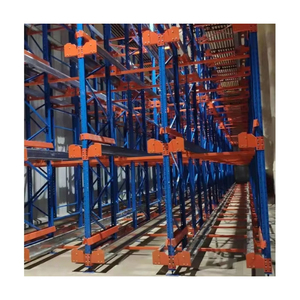
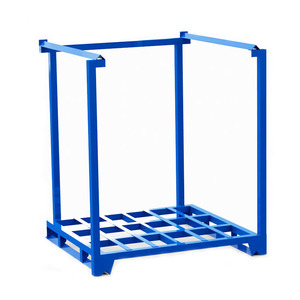
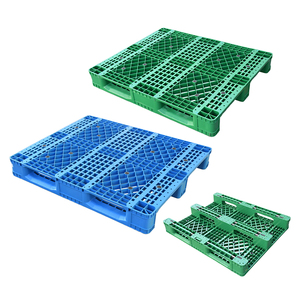
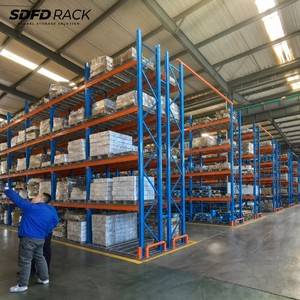
Explore our heavy-capacity industrial structural racking units, radio shuttle lane systems, and multi-tier picking configurations engineered for high throughput warehousing, cold-chain preservation, and intensive bulk storage.
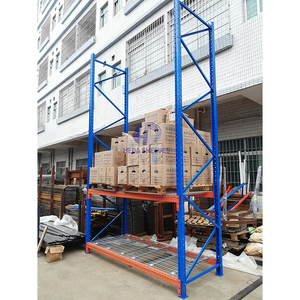
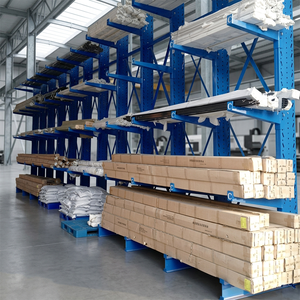
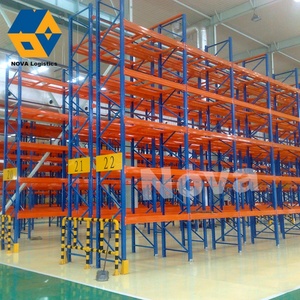
Industry Technical Review
Engineering Evaluation: High-Density Deep Pallet Racking Architecture
In modern industrial logistics, optimizing volumetric warehouse efficiency requires navigating trade-offs between aisle space conservation, SKU selectivity, stock turnover velocity, and dynamic mechanical loads.
Double Deep Selective Dynamics
Configured by positioning two rows of single-entry or four rows of back-to-back selective racks. Double Deep configurations reduce operating aisle ratios by up to 35% compared to conventional single-deep setups, requiring pantograph or telescopic deep-reach forklifts while preserving 50% immediate pallet accessibility for balanced SKU portfolios.
Radio Shuttle Deep-Lane Automation
Eliminating truck entry risks inherent to drive-in systems, automated radio shuttles transport standard 48x40 GMA and Euro pallets within continuous guide rails reaching up to 40+ pallets deep. This architecture achieves volumetric floor utilization rates surpassing 80%, substantially lowering refrigeration cost-per-pallet within cold storage freezers.
Push Back Nested Cart Engineering
Utilizing nested rolling carriers moving over structural inclined steel channel rails, push back systems accommodate 2 to 6 pallets deep per lane. Gravity feeds loads forward to the pick aisle, facilitating seamless Last-In, First-Out (LIFO) inventory control without forklift transit into racking lanes, cutting mechanical impact damage by over 60%.
| System Architecture | Volumetric Density | Direct Selectivity | Stock Handling Flow | Structural Deflection Standard | Typical Applications |
|---|---|---|---|---|---|
| Double Deep Racking | 65% – 70% | 50% Direct Pick | LIFO Strategy | Classified 1/200 Under EN 15512 | Fast-Moving Consumables, Dry Groceries |
| Drive-In Lane Racking | 70% – 75% | 15% – 20% Direct Pick | Strict LIFO / FILO | Heavy-Duty High-Stiffness Uprights | Seasonal Stash, Bulk Single-SKU Raw Goods |
| Automated Radio Shuttle | 80% – 85%+ | Batch Lane Selectivity | Configurable FIFO / LIFO | Precision Laser Tolerances ±1.5mm | Cold Storage Freezers, Beverage Distribution |
| Dynamic Pallet Flow | 75% – 80% | Lane-Front Selectivity | Guaranteed FIFO Gravity | Roller Track Braking Control Integration | Perishable Dairy, Pharmaceuticals, Date-Coded |
| Push Back Cart System | 68% – 75% | Face-Level Access (2-6 Deep) | LIFO Cycle | Precision Sloped Guide Rail Sections | 3PL Facilities, Automotive Sub-assembly |
Future-Proof Intralogistics
Global Procurement & Technical Evolution Trends
Enterprise procurement decisions are shifting beyond gross steel weight toward total lifecycle value, environmental compliance, seismic resilience, and native autonomous mobile robot (AMR) compatibility.
1. Convergence of Deep Racking & AMR Fleets
Modern distribution facilities are increasingly retrofitting deep storage channels to interface directly with Autonomous Mobile Robots (AMRs) and automated automated guided vehicles (AGVs). Procurement plans emphasize standardized guide tracks, optical sensor clearances, and floor-level docking stations to facilitate uninterrupted robotic pallet retrieval without structural reconfiguration.
2. High-Strength Low-Alloy (HSLA) Steels
To counteract escalating maritime freight rates and volatile container handling charges, manufacturers optimize profile geometries using premium Q355B and higher tensile micro-alloy steels. These cold-rolled cold-bent upright profiles achieve greater dynamic yield resistance and higher load-bearing capacity with up to 12% reduced structural weight.
3. Rigorous Seismic Certification (RMI & Eurocode)
Global warehouse operators demand site-specific seismic simulation data before final tender approval. Suppliers must deliver verified finite element analysis (FEA), stamped baseplate anchors, and nonlinear ductile beam-to-column connector testing conforming to ANSI MH16.1 (RMI standards) and European EN 15512 specifications.
Manufacturing Superiority
Enterprise Strengths: 25+ Years of Export Excellence
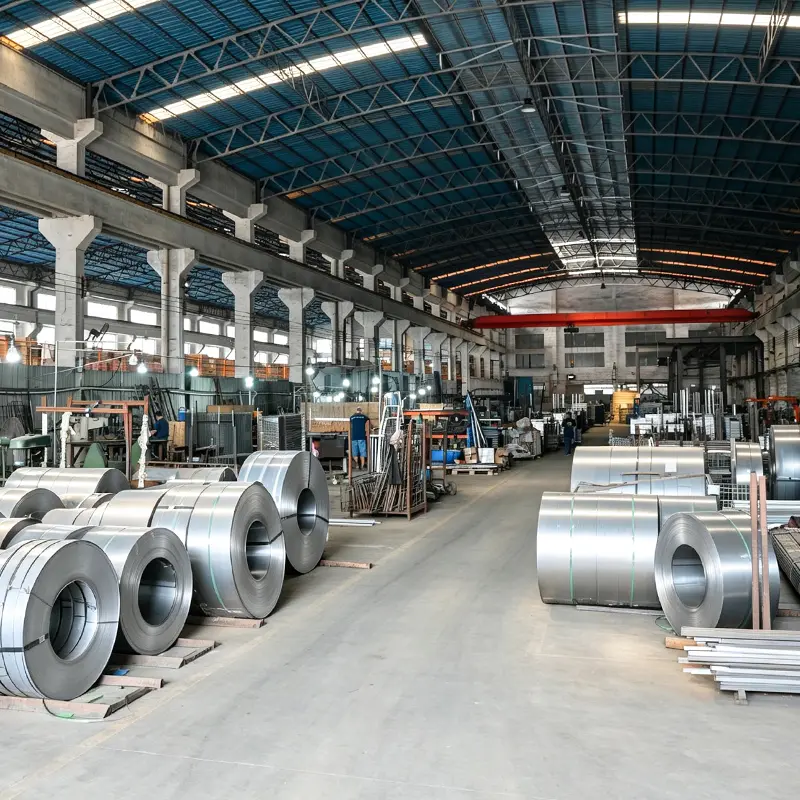
Operating as Guangzhou Heda Shelves Co., Ltd. since 2001, our 323,000 sq ft production campus unites automated fabrication, structural design, and strict global quality certifications to support tier-one importers across North America, Europe, and beyond.
 ADVANTAGE 01
25+ Years Industrial Expertise
Proven execution across 10,000+ completed installations worldwide. Our seasoned logistics engineers design beam connector locks, reinforced baseplates, and specialized bracing matrices to mitigate operational wear and severe accidental impacts.
 ADVANTAGE 02
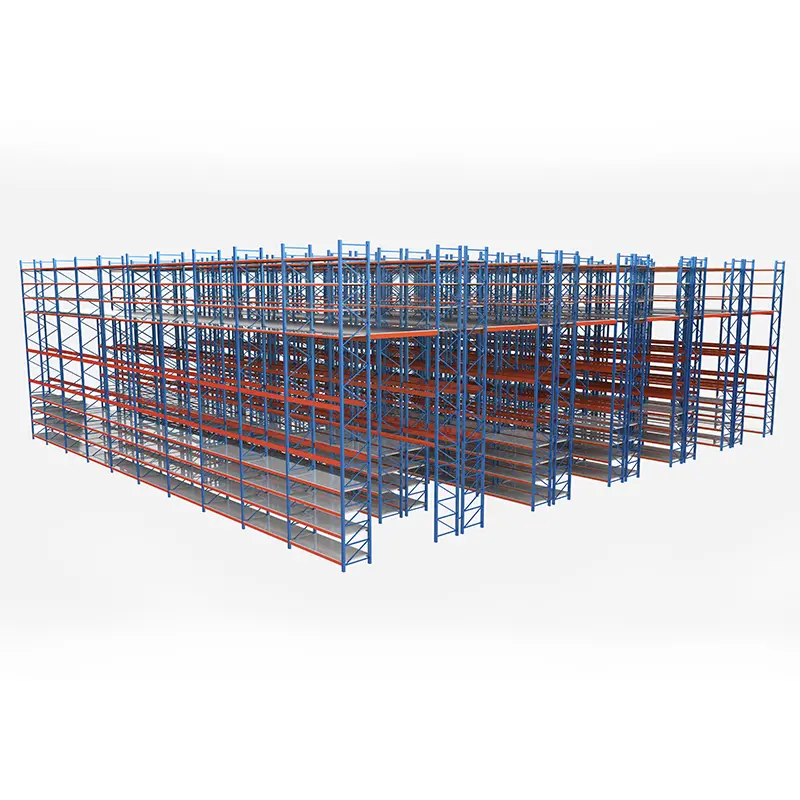
24-Hour CAD & 3D Engineering
Rapid architectural turnaround providing precise plan views, dynamic elevations, and 3D wireframe models in metric or imperial dimensions (ft/lbs), enabling your engineering team to approve capacity calculations before fabrication.
 ADVANTAGE 03
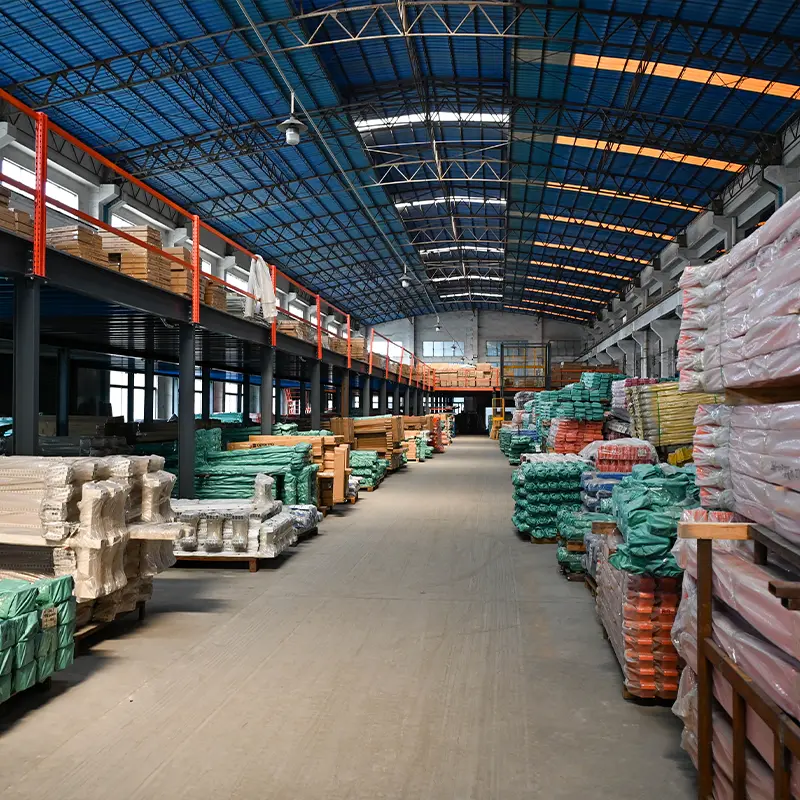
Automated Pretreatment & Coating
State-of-the-art continuous pickling, phosphating, and electrostatic powder coating lines provide 80-120 micron dry film thickness, resisting corrosion, industrial chemicals, and abrasion in sub-zero cold room environments.
 ADVANTAGE 04
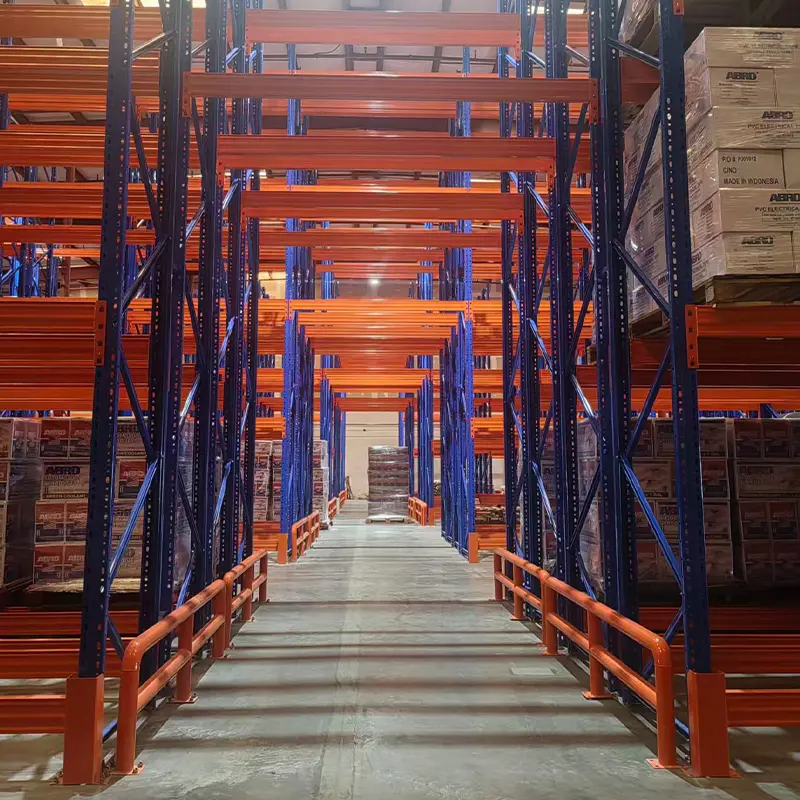
Tailored OEM/ODM Capability
Fully bespoke fabrication matching non-standard pallet geometries, variable column hole pitches (50mm, 75mm, 76.2mm teardrop styles), custom warehouse color coding, and tailored wire mesh container integrations.
Direct Answers
Frequently Asked Questions on Deep Pallet Racking Procurement
Essential guidance addressing engineering calculations, import logistics, seismic design parameters, and compliance standards for warehouse project procurement managers.
How does deep pallet racking compare to standard selective racking in terms of floor space utilization?
Deep pallet racking systems—such as Double Deep, Drive-In, Push Back, and Radio Shuttle systems—increase cubic storage density by 40% to 80% compared to standard selective racking. By consolidating pallet storage lanes and eliminating dedicated access aisles for every individual rack face, deep racking dramatically reduces overall footprint requirements. While single selective racking offers 100% immediate selectivity, deep racking is engineered for operations handling medium to high volume SKUs where maximizing warehouse pallet capacity takes precedence.
Can your structural engineers provide calculation sheets stamped for local North American permits?
Yes. We supply comprehensive structural engineering packets, including detailed cross-sectional component profiles, raw material yield test certificates, moment-rotation connection curves, and finite element analysis (FEA) reports in imperial units (pounds, inches, feet). These calculations are prepared in accordance with ANSI MH16.1 and international IBC standards, facilitating review and formal stamping by your local licensed Professional Engineer (PE) or Engineer of Record (EOR) during municipal permit filings.
What are the minimum warehouse clearance and forklift parameters required for Double Deep systems?
Double Deep racking requires specialized deep-reach pantograph trucks or forklifts equipped with telescopic fork attachments. Aisles typically span between 2.8 meters (approx. 9.2 ft) and 3.4 meters (approx. 11.2 ft), depending on your truck model and turning radius. We evaluate your truck mast deflection, operational lift heights, and pallet overhang dimensions (typically 3 inches front and back) during the CAD design phase to ensure safe beam elevation spacing and top-tie bracing clearances.
How do you optimize container packing to prevent transit damage and reduce ocean freight expenses?
Racking structural steel components are bundled using specialized protective cardboard cradles, heavy-duty edge corner guards, and high-tensile steel strapping. Box beams and upright frame columns are nested strategically to maximize weight and cube boundaries within 40ft High Cube containers. Small hardware, baseplates, shims, row spacers, and safety pins are sorted, bagged, and palletized in reinforced wooden crates with clear part-number labels to ensure smooth, damage-free field unstacking and staging on site.
What is the typical production and delivery lead time for custom high-density deep pallet projects?
Standard production runs for orders ranging from 1 to 5 forty-foot containers generally take 20 to 25 business days from final CAD approval and deposit confirmation. Ocean transit to major West Coast North American ports (such as Los Angeles/Long Beach) takes roughly 15 to 20 days, while East Coast destinations (such as Savannah, New York/New Jersey) require approximately 28 to 35 days. CIF and FOB terms are standard, and full door-to-door DDP arrangements can be quoted upon request.
Accelerate Your Storage Capacity with Factory-Direct Engineering
Connect directly with our engineering division for a complimentary CAD floor plan layout, accurate steel tonnage estimation, and comprehensive system catalog within 24 hours.
Get Catalog