High-Density Engineered Storage Systems
Manufactured under rigorous ISO 9001:2015 and CE quality standards. Explore our precision roll-formed and structural steel storage solutions built to maximize volumetric warehouse efficiency.
Technical Architecture of Cantilever Racking Systems
A comprehensive examination of structural mechanics, dynamic deflection tolerances, and seismic safety for linear, long-span, and non-standard product loads.
Column & Base Moment Connection
Unlike standard pallet racking where vertical loads transfer directly downward through concentric frame profiles, cantilever systems undergo substantial bending moment stresses. Our columns are manufactured using heavy-gauge Q235B or Q355B structural steel H-beams (or cold-formed profiles with custom return flanges). High-tensile grade 8.8 structural bolts fasten the column base securely to the foundation, preventing overturning under unilateral full-load operational states.
Arm Incline & Articulation Angles
Arm deflection is an absolute physical certainty under multi-ton lumber or tubing bundles. Our engineered cantilever arms are designed with an upward factory camber angle (typically 2° to 3.5°). As load increases, the arm naturally settles without ever dipping below horizontal, eliminating forward stock slippage. Pivoting pin-lock connections further safeguard the column uprights: should an operator accidentally snag an arm with a forklift mast, the arm lifts safely upward rather than tearing the column steel.
Longitudinal Bracing Matrix
Individual cantilever towers cannot withstand longitudinal thrust without systematic X-bracing. We engineer dynamic tension-compression bracing assemblies using cold-drawn structural angles and round steel tension rods. Calibrated to American RMI (Rack Manufacturers Institute) and European EN 15512 specifications, our bracing patterns provide unparalleled torsional rigidity against accidental forklift impacts and regional seismic excitations.
| Structural Element | Standard Duty Profile | Heavy-Duty (I-Beam Structural) | Design Deflection Limit |
|---|---|---|---|
| Upright Columns | Cold-formed C-Channel (200-300mm depth) | Hot-rolled H-Beams (HEA/HEB 160 to 400mm) | L / 350 under dynamic design capacity |
| Load Arms | Box section / Tapered C-profiles | IPE / Structural I-Beams (with retainers) | L / 250 measured at tip under static load |
| Bracing Towers | Crossed structural rods & horizontal tubes | Angle iron trusses with turnbuckle tensioners | Rigid node connection to resist 5% vertical load |
Why Tier-1 Global Procurement Managers Partner with HEDA Shelves
Combining over 25 years of specialized warehouse fabrication with massive scale: 30,000 square meters of certified production capacity delivering container-optimized systems to 100+ countries.
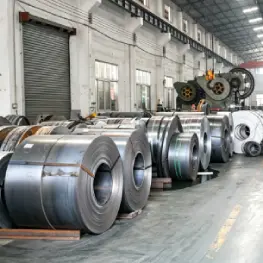
1. Mill-Certified Prime Steel
Every coil undergoes strict yield point, elongation, and chemical composition batch testing before slitting.
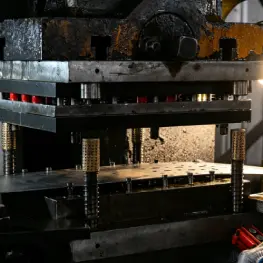
2. Automated CNC Punching
Continuous CNC-controlled multi-station punching delivers sub-millimeter pitch consistency across the entire column length.
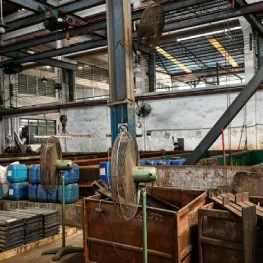
3. Surface Chemical Pretreatment
Multi-stage acid pickling, degreasing, and zinc phosphating remove mill scale and ensure permanent powder coat adhesion.
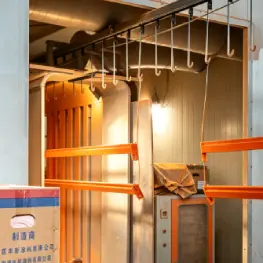
4. Electrostatic Powder Coating
Robotic electrostatic spray booths cure TGIC-free polyester epoxy resin powder at 200°C for superior scratch and salt-mist resistance.
Future Procurement & Engineering Trends (2026–2030)
How automation, smart telemetry, and volatile supply chain economics are transforming warehouse cantilever systems from passive steel framing into integrated logistics engines.
Integration with Mobile Guided Shuttles & AS/RS
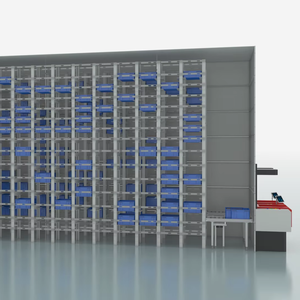
Traditional manual forklift operation in long-goods handling faces severe throughput ceilings and high risk of operator error. Modern facilities are rapidly migrating toward Automated Storage and Retrieval Systems (AS/RS) specialized for long materials. Forward-thinking procurement now demands cantilever structures with micron-level tolerances for crane mast guides, integrated laser-positioning reflectors, and conveyor drop stations for autonomous honeycomb cassette loading.
Extreme Corrosion Resistance: Hot-Dip Galvanizing
As industrial real estate costs soar, outdoor lumber yards, marine pipe distribution centers, and chemical processing plants are expanding external cantilever yards. Standard powder coating cannot withstand decades of UV degradation, freezing thaw cycles, and salt spray. The procurement trend is shifting towards structural hot-dip galvanizing per ISO 1461 / ASTM A123, providing self-healing sacrificial zinc coatings exceeding 80–100 microns that guarantee 25+ years of zero-maintenance outdoor operation.
Sensor-Equipped Structural Health Monitoring (SHM)
Heavy dynamic loading and accidental impacts often lead to hidden micro-fractures in welded cantilever joints. Next-generation cantilever systems are integrating IoT wireless strain gauges and tilt-sensors along high-stress column bases. These active sensors measure real-time arm deflection and notify warehouse management systems (WMS) the instant an arm is overloaded or an upright experiences an out-of-plumb forklift collision exceeding safety parameters.
Frequently Asked Questions: Sourcing Cantilever Racks from China
Critical considerations for industrial buyers, structural engineers, and logistics directors to streamline customs clearance, structural certification, and project execution.
How do we verify load calculation integrity and seismic compliance for US/EU installations?
Our engineering department utilizes finite element analysis (FEA) software modeling structural performance under ANSI MH16.1 (RMI standards in North America) and EN 15512 (European codes). We supply full engineering calculation packets—including dead load, live load, wind shear (for outdoor roofed cantilever racks), and seismic coefficient parameters—ready for submission to your local Professional Engineer (PE) for regional permitting approval.
What is the difference between Roll-Formed vs. Structural I-Beam Cantilever Racks?
Roll-formed cantilever racking uses cold-coiled steel shaped through roller dies, providing an economical, versatile solution for light to medium loads (500 to 1,500 lbs per arm) like PVC profiles, molding, and conduit. Structural cantilever racking is fabricated using hot-rolled structural steel I-beams and channels. It offers immense impact resistance and capacity (up to 6,000+ lbs per arm), making it essential for heavy steel bar, sheet packs, concrete forms, and rugged lumber yard environments.
How are oversized cantilever components packed to avoid container transit damage?
Cantilever columns (often exceeding 6 meters) and heavy bases present specialized maritime stowage challenges. We employ custom heavy-gauge steel dunnage, corrugated wrapping, and high-tensile steel strapping to bundle columns in nesting pairs. Arms are crated on heavy timber pallets with protective edge corners. All components are labeled with CAD mark numbers matching your erection drawings, allowing immediate offloading with standard reach trucks or overhead bridge cranes.
Can cantilever racks be designed for outdoor weather exposure?
Yes. Outdoor cantilever systems can be engineered as canopy-roofed structures that integrate pitched cantilever roof arms, drainage gutters, and wind bracing. For corrosion protection, we provide full hot-dip galvanizing conforming to ASTM A123 / EN ISO 1461. This metallurgically bonds zinc to the steel substrate, completely preventing interior tube oxidation and exterior surface peeling under extreme freeze-thaw or coastal climates.
What warehouse metrics are required to obtain a custom CAD layout and formal quotation?
To deliver an optimized CAD layout within 24 hours, our engineers require: (1) Total length, width, depth, and bundle weight of the products being stored; (2) Clear warehouse ceiling height and floor slab thickness/compressive strength (e.g., 6-inch 3,000 PSI concrete); (3) Forklift type, collapsed mast height, and turning radius (e.g., side loader, multidirectional truck, or counterbalance); (4) Seismic zone classification of your site.
Do you accommodate custom arm spacing, stop-pins, and continuous decking options?
Every system we manufacture is built to project specifications. We offer vertical column pitch adjustments in 75mm, 100mm, or 101.6mm (4-inch) increments. Available accessories include removable pipe end-stops, welded arm lips, axle saddles for coil/reel storage, drop-in steel channel decking, and heavy wire mesh decking to support variable length items across adjacent arms.
Request an Engineered Layout & Factory-Direct Quotation
Accelerate your project timeline. Connect directly with our structural engineering team to receive full CAD layouts, FEA stress analyses, and FOB/CIF landed cost breakdowns within 24 hours.