China Best Long Span Shelving Racks Manufacturer & Exporters
Precision Engineering, High-Density Storage Architectures, and Turnkey Logistics Infrastructure Designed to Exceed North American RMI and Global FEM Structural Safety Standards
2001Founded in Guangzhou
30,000 tMonthly Output Capacity
323,000 sq ftModern Plant Campus
ISO 9001 & CECertified Quality Systems
Catalog & Engineering Systems
Premier Long Span & Heavy-Duty Structural Storage Frameworks
Explore our export-certified storage models manufactured from cold-rolled Q235B/Q355B structural steel, tailored for bulk inventory, high-density warehousing, and automated distribution environments.
Industrial Platform
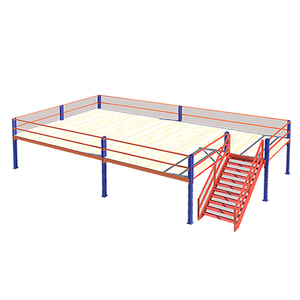
Heavy Duty Warehouse Pallet Racks Mezzanine Floor Platforms
Integrated multi-tier loft systems built upon heavy-duty upright frames to double operational footprint without civil reconstruction.
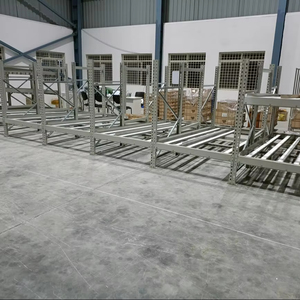
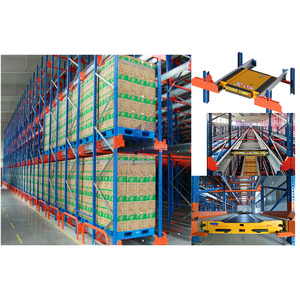
Heavy Duty Powder Coated FIFO Pallet Flow Racking System
Gravity-driven inclined roller tracks engineered with dynamic magnetic speed controllers for strict lot control and high-turnover food/pharma distribution.
Executive Engineering Brief: As international supply chains shift from reactive buffering to predictive velocity, selecting long span shelving and heavy structural racking transitions from a standard asset buy to a critical logistics calculation. Modern distribution hubs require steel profiles that combine high load-to-weight ratios, seismic resilience, and plug-and-play adaptability for automated systems.
Architectural Deep Dive: Structural Dynamics of High-Capacity Longspan Systems
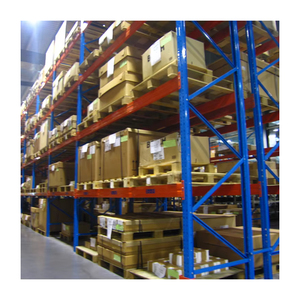
Industrial longspan shelving systems bridge the operational gap between light-duty boltless riveted angle shelving and heavy selective pallet racks. Specifically conceived for high-density, multi-tier hand-loaded applications, these systems allow warehouse operators to accommodate awkward, bulky, or heavy unit loads without the structural expense and wide aisle restrictions associated with forklift-reliant pallet rack bays.
From an engineering perspective, longspan racking relies on cold-formed Omega-profile vertical upright frames linked with precision C-profile or step-beam horizontal members. Beam connectors incorporate 3-point to 5-point tapered locking claws that leverage gravitational loading to increase connection rigidity. As weight is applied across the shelf levels, the mechanical interlock binds tighter, mitigating the dangerous frame sway and torsional deformation common in substandard racking systems.
The international warehousing landscape is experiencing profound structural transformations driven by rapid e-commerce SKU diversification, skyrocketing real estate costs per square foot, and the widespread adoption of Autonomous Mobile Robots (AMRs). Enterprise procurement leaders are actively reallocating capital away from static, monolithic racking systems toward dynamic, hybrid architectures capable of vertical and horizontal scaling.
Three primary engineering trends are transforming longspan shelving manufacturing and global export demands:
AMR & AGV Integration
Longspan shelving is increasingly adapted with high-clearance base structures, structural guide rails, and high-contrast navigational fiducial markers. This allows automated guided vehicles and mobile pick-assist robots to drive directly into bays for autonomous multi-level carton extraction.
Multi-Tier Mezzanine Conversion
Warehouse planners are avoiding the staggering capital costs of new facility construction by utilizing heavy-duty longspan shelving frames as the primary structural columns for 2-tier and 3-tier catwalk mezzanines, effectively doubling or tripling usable cubic pick volume.
Cold-Formed High-Yield Metallurgy
Modern Chinese manufacturing facilities leverage advanced CNC automated roll-forming lines that work with high-strength micro-alloyed steels. This produces ultra-rigid, lightweight profiles that slash overseas container shipping weights while preserving extreme load-bearing ratings.
Navigating Import Risk: The Technical Evaluation Playbook
Procuring industrial steel shelving overseas requires strict engineering oversight to avoid structural failure, port customs holdups, or fire safety code non-compliance. International sourcing agents and warehouse operations managers must evaluate prospective manufacturing partners through three critical parameters:
1. Metallurgical Traceability and Yield Verification: Substandard steel profiles crafted from recycled scrap coil often exhibit irregular thickness tolerances and microscopic stress fractures along formed radiuses. Insist on mill test certificates verifying chemical composition (carbon, manganese, silicon, phosphorus) and yield strength thresholds conforming to ASTM A1011 or European standard EN 10025.
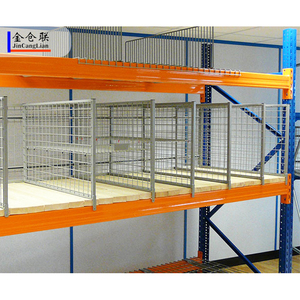
2. Fire Suppression & Open-Deck Compliance (NFPA 13): In western logistics markets—especially throughout the United States and Canada—solid wood or sheet steel shelving decks frequently violate warehouse fire sprinkler penetration regulations. Suppliers must provide wire mesh decking options with minimum 50% open grid apertures or perforated steel decking panels that allow downward sprinkler water flow to reach underlying fires.
3. Seismic Factor Calculations: Racking frames must not simply support dead static loads; they must withstand seismic ground accelerations specific to the installation facility's geographic coordinates (e.g., IBC Zone 4 seismic engineering). Qualified exporters must supply base plates engineered with high-strength concrete expansion anchors and validated load calculation packages stamped for building code approvals.
Enterprise Strengths
Why Tier-1 Importers Partner With HEDA Shelves
Combining 25+ years of production heritage with precision manufacturing lines to deliver uncompromised structural reliability across US, Canadian, and global supply hubs.
Free CAD & 3D Engineering
Receive comprehensive structural calculations, floor plan drawings, and clearance elevations within 24 hours of inquiry.
Dual Metric / Imperial Design
Full engineering specifications formatted in pounds (lbs), feet (ft), and inches to match North American standard installations directly.
Export-Optimized Logistics
Container-density bundle packing with heavy edge protectors, moisture barrier wrapping, and organized labeling for direct site offloading.
Over 10,000 Global Projects
Extensive field-proven deployments across automotive, manufacturing, retail fulfillment, cold storage, and 3PL enterprises worldwide.
Technical FAQ
Frequently Asked Questions on Long Span Shelving Procurement
Direct technical answers addressing structural ratings, shipping freight dimensions, and installation procedures for procurement executives.
What structural safety factor is engineered into your long span shelving and pallet racking systems?
Our long span shelving and heavy-duty industrial storage systems are engineered with a minimum structural safety coefficient factor of 1.5 to 1.65, adhering strictly to ANSI/RMI MH16.1 specifications and European FEM 10.2.02 codes. This ensures that quoted maximum beam and shelf load ratings accommodate dynamic placement variations and point-load stresses without structural deflection exceeding 1/200th of the span length (L/200).
How do you ensure surface finish durability and prevent corrosion during ocean freight and multi-climate transit?
All carbon steel components undergo a multi-stage pre-treatment wash including chemical acid pickling, ultrasonic degreasing, and zinc phosphating prior to electrostatic powder deposition. We apply high-performance epoxy-polyester thermosetting powder cured at 180°C–200°C to achieve a uniform dry film thickness of 60 to 90 microns. Bundles destined for ocean containers receive moisture-barrier polyethylene wrap, desiccant packs, and heavy corner edge protectors to eliminate transit oxidation and abrasions.
Can your engineering team provide stamped calculation packages for local municipal building permits?
Yes. Our in-house technical department provides detailed AutoCAD floor plans, component load charts, base plate anchoring diagrams, and comprehensive finite element analysis (FEA) calculation models. These packages are engineered to supply all requisite stress data, moment capacities, and dead/live load distributions required by third-party local Professional Engineers (PE) of record to sign and stamp municipal permit filings.
What are the typical manufacturing lead times and ocean transit container staging options?
Standard catalog configurations and standard colors (RAL 5015 Blue, RAL 2004 Orange, etc.) typically ship within 15 to 20 working days following final shop drawing confirmation. Customized frame punches, non-standard heights, or structural mezzanines require approximately 25 to 30 days. We operate full-container-load (FCL) packing in 20GP, 40GP, and 40HQ high-cube ocean containers, loading directly from our Guangzhou manufacturing campus to optimize freight volume and minimize pallet handling damages.
Can longspan shelving be converted or upgraded into a multi-tier mezzanine floor in the future?
Yes, provided this expansion requirement is specified during preliminary CAD layout planning. In these scenarios, we engineer the ground-level upright frames with heavier wall thicknesses (typically 1.8mm to 2.5mm cold-rolled profiles) and pre-punch vertical splice connection points. When your facility is ready to expand vertically, primary bearer beams, floor joists, steel grating, safety handrails, and industrial staircases can be integrated directly onto the existing frame grid without decommissioning the initial storage infrastructure.
Ready to Maximize Your Warehouse Cubic Footprint?
Consult directly with our logistics structural design engineers today. Submit your warehouse floor plan dimensions and SKU storage weights to receive an itemized proposal, load calculation table, and 3D CAD layout within 24 hours.