Core Industrial Racking & High-Density Storage Lineup
Manufactured from premium cold-rolled Q235B and high-yield Q355B structural steel, every system undergoes rigorous finite-element modeling, roll-profile stamping, and batch load tests compliant with ISO 9001:2015 and European EN 1090/15512 parameters.
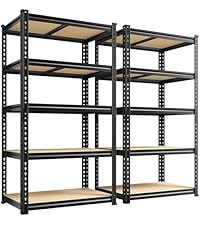
5 Layer Industrial Storage Shelving Racks Boltless Rivet Rack
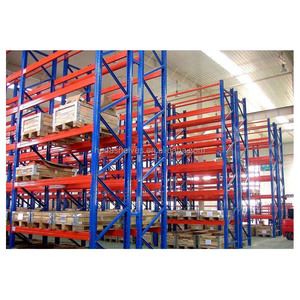
Heavy Duty Pallet Storage Racking Industrial Shelf System
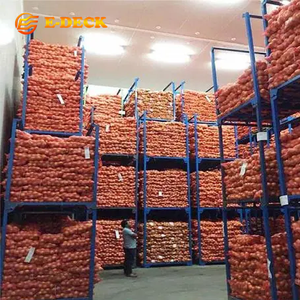
Warehouse Durable Steel Stacking Metal Frame Pallet
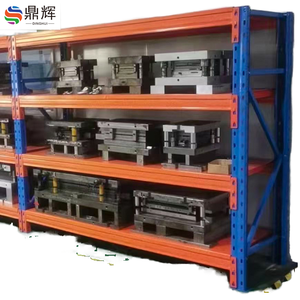
Selective Medium-Duty Upright Column Frame System
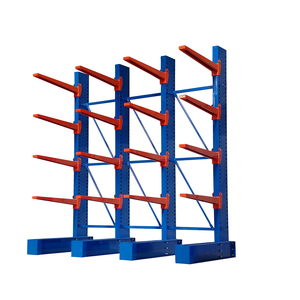
Structural Steel Cantilever Rack for Pipe & Lumber Storage
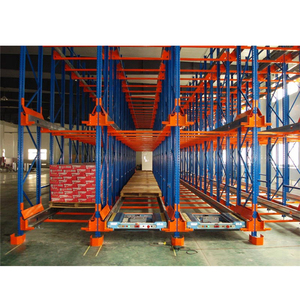
Automated Radio Shuttle High-Density Pallet Racking
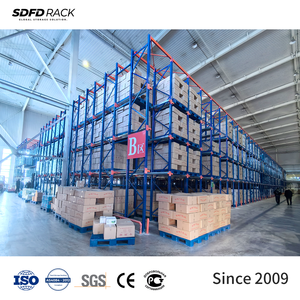
High-Density Drive-In & Drive-Through Pallet Racking
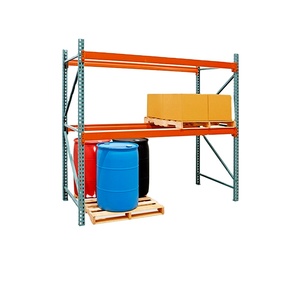
Selective Industrial Teardrop Pallet Racking System
Engineering Demands for CE-Certified Industrial Rack Systems
The CE mark in warehouse static storage (specifically EN 15512 and EN 1090-1/2 Execution Class EXC2) serves as independent verification that steel storage frames withstand severe static stresses, seismic ground accelerations, and live operating impacts without progressive structural collapse.
Limit State Design & Second-Order Analysis
Unlike standard generic metal fabricators who rely on basic elastic permissible stress approaches, high-compliance European and North American exporters must execute rigorous Limit State Design (LSD). In our finite element protocols, upright columns are calculated according to EN 15512 and ANSI/RMI MH16.1 specifications. This incorporates critical member imperfections, rotational joint stiffness (semi-rigid end-plate connectors), and $P-\Delta$ (sway) along with $P-\delta$ (member) second-order effects.
Every beam-to-column locking connection undergoes proprietary mechanical cyclic load testing to verify moment-rotation characteristic curves ($M-\phi$), ensuring that the system possesses documented damping factors and rotational stiffness ($k_b$) during sudden fork truck impact shocks or seismic accelerations.
Material Traceability & Metallurgical Integrity
A CE-compliant supply chain begins with certified raw steel coils from high-tier mills. The metallurgical yield strength ($R_{eH} \ge 235\text{–}355\text{ MPa}$) and ultimate tensile strength ($R_m$) are systematically tracked via 3.1 Mill Test Certificates (MTC). Column profiles utilize multi-bend omega shapes engineered to arrest local torsional buckling under extreme axial down-loads.
Surface finishing incorporates automated continuous roll deburring, immersion alkaline degreasing, zinc phosphating or nano-ceramic pre-treatments, followed by electrostatic epoxy-polyester powder polymerisation baked at 200°C. This delivers an impact-resistant, peel-free finish rated for severe C2/C3 industrial atmospheric exposures and sub-zero cold-storage freezer operations (-30°C).
| Evaluation Parameter | EN 15512 (CE Standard) | ANSI/RMI MH16.1 (USA Standard) | HEDA Shelves Manufacturing Benchmark |
|---|---|---|---|
| Primary Steel Grades | EN 10025 S235JR / S355JR | ASTM A1011 / A653 Gr. 50 | Certified Q235B / Q355B (Full MTC) |
| Safety Factor (Dead / Live) | $\gamma_G = 1.35$, $\gamma_Q = 1.50$ | LRFD: $\phi = 0.90$ / ASD: $\Omega = 1.67$ | Exceeds both via multi-tier yield testing |
| Beam Deflection Limit | $L/200$ (Elastically measured) | $L/180$ Maximum allowable | Guaranteed $L/250$ for automated integration |
| Factory Production Control | EN 1090-1 / FPC Audit | ISO 9001 / Third-Party QA | CE No. 2435-CPR-8605159 & ISO 9001:2015 |
| Engineering Units & Calc | Metric (kN, mm, MPa) | Imperial (lbs, ft, in, psi) | Dual Metric & Imperial with PE Stamp support |
Future Sourcing & Procurement Trends for Global Warehouses
As omnichannel distribution, industrial real-estate rents, and automated labor integration reshape global logistics, procurement directors are shifting how racking infrastructure is specified, evaluated, and capitalized.
1. Convergence of Static Racking & AMR Automation
Traditional selective racking is increasingly being replaced by high-density automation interfaces. Pallet shuttle systems, autonomous mobile robot (AMR) under-chassis flow, and vertical reciprocating conveyors (VRC) demand sub-millimeter beam punching precision and tighter deflection standards than manual forklift operations.
2. TCO Assessment Over Upfront Equipment Cost
Enterprise supply chains have transitioned from evaluating raw initial quotation values ($/kg of steel) to Total Cost of Ownership (TCO). Critical components include standardized seismic certification reducing local structural permitting delays, modular upright hole configurations that facilitate bay expansion without custom retrofits, and zero-downtime container packaging.
3. Rigorous Seismic Permitting Readiness
Seismic zoning (such as IBC Seismic Design Categories D, E, and F in western North America or Eurocode 8 across Southern Europe) dictates baseplate thickness, anchor bolt embedment depths, and flue space bracing. Procurement teams now require manufacturers to supply calculation packages that seamlessly integrate with local Engineer of Record (EOR) reviews.
Engineering Evolution in Racking Systems
Continuous metallurgy innovation and lean manufacturing have accelerated component strength-to-weight ratios while reducing supply chain carbon footprints.
High-Strength Cold-Formed Steels
Advancements in micro-alloyed, cold-rolled coils provide higher yield limits (Q355B and above), allowing lighter structural deadweight with elevated live load resistance and enhanced fracture toughness in sub-zero freezers.
VOC-Free Electrostatic Nano-Coatings
Traditional hazardous solvent primers have been phased out for automated 10-stage immersion silane/nano-ceramic surface conversion lines, providing superior corrosion protection with zero VOC output and optimal environmental compliance.
IoT Impact & Overload Monitoring
Modern mega-fulfillment centers are testing passive and active wireless RFID strain-gauge sensors directly embedded on critical lower-tier uprights, warning safety officers of forklift impacts and overload conditions in real time.
BIM / Revit Dynamic Integration
Engineering deliverables now routinely include complete 3D BIM (Building Information Modeling) objects and IFC formats, eliminating spatial conflicts with overhead HVAC, fire sprinkler networks, and structural roof trusses prior to fabrication.
Guangzhou Heda Shelves Co., Ltd. Enterprise Competence
Established in 2001, Guangzhou Heda Shelves Co., Ltd. operates a premier 30,000 m² (approx. 323,000 sq ft) heavy fabrication facility. Powered by 300+ technical engineers, robotic welding stations, automated cold-roll forming mills, and precision punching lines, we produce up to 30,000 metric tons of structural-grade warehouse racking and industrial mezzanines monthly.
Direct Factory Engineering
Eliminate broker markups and communication gaps. Our in-house structural engineers evaluate clear building height, slab load ratings, reach-truck turning radii, and SKU dimensions to deliver complete CAD floor plans and 3D renderings within 24 hours.
Certified Production Integrity
Every manufacturing run strictly complies with ISO 9001:2015 (Certificate No. 18624Q00169R0M) and European Construction Products CE Marking (No. 2435-CPR-8605159). Component safety, weld penetration, and coating adhesion are verified prior to container loading.
Container-Optimized Logistics
We pack uprights and beams into steel-banded, foam-cushioned modules optimized for 20GP and 40HQ ocean containers. Every bundle is tagged with part numbers and erection marks for frictionless customs clearance at Los Angeles, Houston, New York, Vancouver, or Rotterdam.
Frequently Asked Questions on CE Racking Procurement
Direct technical answers to the most common inquiries from warehouse operators, 3PL logistics managers, and supply chain project leads.
Q How does CE marking under EN 15512 protect commercial rack buyers?
The CE marking under the European Construction Products Regulation (CPR 305/2011/EU) ensures that storage racks meet standardized load safety factors, structural calculations, and mechanical performance under limit state conditions. It confirms that the supplier undergoes regular factory audits, maintains 3.1 steel traceability, and verifies beam-to-column connector moment rotations through standardized physical testing.
Q Can you provide engineering load tables in imperial units (lbs, ft, in)?
Yes. Although we are an international exporter certified under ISO and CE, we routinely engineer warehouse systems for the United States, Canada, and Mexico. All CAD layouts, component bills of materials (BOM), and certified beam load capacity plaques can be delivered in imperial units (pounds per shelf tier, frame height in feet and inches) or dual units for installer and engineer of record convenience.
Q How do your structural calculations support local seismic and building permits?
We supply complete engineering calculation packages, component yield specifications, baseplate anchoring dimensions, and detailed shop drawings. These packages are pre-formatted for smooth submittal to your local Professional Engineer (PE) or Engineer of Record (EOR), who verifies concrete slab anchor pull-out ratings and applies local municipal stampings required for municipal permits.
Q What information is required to get a CAD layout and quotation within 24 hours?
To produce an exact 24-hour CAD layout and itemized price breakdown, our engineering team requires: (1) Warehouse building CAD drawing or dimensioned sketch with clear under-beam height; (2) Location of building columns, loading docks, and pedestrian pathways; (3) Pallet dimensions (W x D x H) including goods overhang and maximum weight per pallet; (4) Forklift model, maximum lift height, and minimum aisle turning radius.
Q Are your racking beams and frames compatible with 48" x 40" GMA pallets?
Absolutely. While we produce racking for Euro pallets (1200 x 800 mm) and Asian standards (1100 x 1100 mm), our standard export lines feature 96", 108", and 144" beam lengths paired with 42" or 48" frame depths specifically tailored for standard North American 48" x 40" GMA wooden or plastic pallets and wire mesh decking.
Q What surface treatment is applied for cold-storage freezers or corrosive facilities?
For standard temperature facilities, we utilize heavy-duty electrostatic powder coating with a thermoset polyester resin baked at 200°C (60–90 µm DFT). For sub-zero cold-storage (-30°C) where moisture condensation is high, or for chemical and outdoor fertilizer storage, we offer continuous pre-galvanized cold-formed steel or heavy hot-dip galvanizing according to ASTM A123 / ISO 1461 standards.
Q What are the standard delivery lead times and shipping terms available?
Standard manufacturing lead times range from 15 to 25 business days depending on overall steel tonnage and custom beam profiles. We ship under Incoterms including FOB (Guangzhou/Shenzhen), CIF, and CFR to major global destinations such as Long Beach, Oakland, Houston, Savannah, New York, Vancouver, Montreal, Hamburg, and Felixstowe.
Q Do you provide installation guidance and technical assembly drawings?
Every project shipment includes comprehensive 3D erection drawings, structural anchor layout blueprints, torque specifications for expansion bolts, and step-by-step assembly guides. For large-scale mezzanine platforms or complex automated radio shuttle installations, video technical support and on-site engineering supervisors can be arranged upon project scope agreement.
Plan Your High-Density Storage Facility With HEDA Engineers
Submit your facility dimensions, pallet parameters, or existing competitor blueprints for an immediate capacity optimization review. Receive a complete 2D/3D CAD layout, structural load tables, and factory-direct export quote within 24 hours.