Commercial Heavy Duty
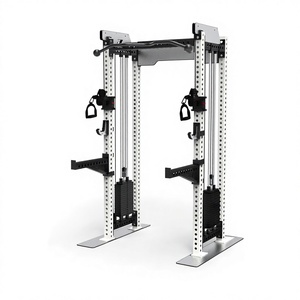
Liva Commercial Use Metal Heavy-Duty Framing System
- High-Yield Steel
- Modular Gantry
- CE Certified
Explore our heavy-duty cold-rolled steel racking configurations, designed for extreme vertical clearance, maximum floor-space utilization, and integrated automated material handling.
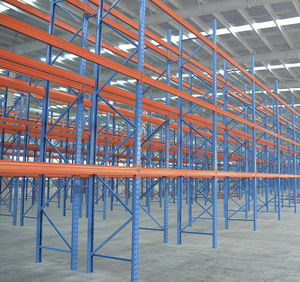
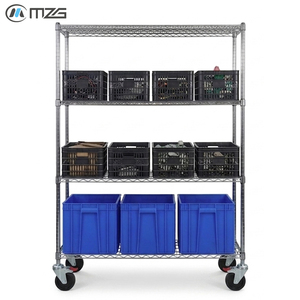
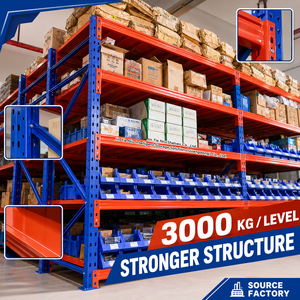
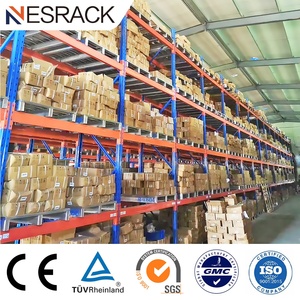
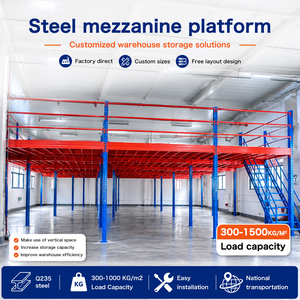
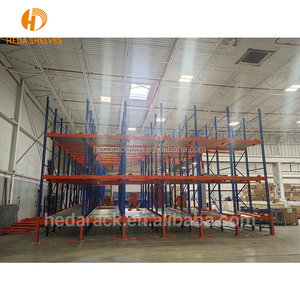
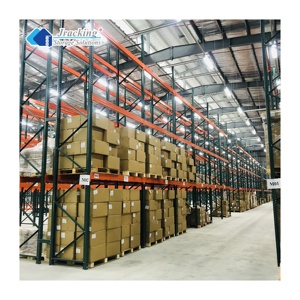
A technical overview of high-tolerance vertical intralogistics: navigating European Standard EN 15512:2020, automated ASRS clearances under EN 15620, and Factory Production Control according to CE CPR 305/2011.
| Classification Parameter | Standard Pallet Racking (<12m) | High Bay VNA System (12m – 18m) | Automated High Bay Clad-Rack (18m – 45m) |
|---|---|---|---|
| Governing Standard | EN 15512 / ANSI MH16.1 | EN 15512 / EN 15620 (Class 300) | EN 15512 / EN 15620 (Class 100/200) / EN 1090-2 |
| Vertical Sway Tolerance | H / 350 to H / 500 | H / 750 (Strict limits for turret trucks) | H / 1000 to H / 1200 (Crane mast clearance) |
| Horizontal Beam Deflection | L / 200 (Max 10mm-15mm) | L / 250 (Sensor positioning limit) | L / 300 or absolute ±3mm maximum |
| Concrete Slab Requirement | DIN 18202 Table 3, Line 3 | DIN 18202 Line 4 / TR34 DM2 | TR34 DM1 / VDMA 26641 / F-Min 100+ |
| CE Certification Route | EN 15512 / ISO 9001:2015 | CPR 305/2011 / CE Declared DoP | EN 1090-1 Execution Class EXC3 (Building envelope) |
Unlike conventional static shelving, high-bay pallet racking functions as a complex semi-rigid space frame. Structural analysis requires non-linear second-order (P-Delta) calculation models incorporating joint rotational stiffness derived from physical stub-column and beam-to-column connector testing. This eliminates structural collapse hazards stemming from localized buckling and cumulative sway in extreme vertical bays up to 45 meters.
Under the Construction Products Regulation, high-bay racking systems—specifically clad-rack buildings where racking supports building walls and roofs—must carry authenticated CE declarations of performance. Our factory holds CE Certification (No. 2435-CPR-8605159) alongside ISO 9001:2015, ensuring complete traceability of mill steel chemical composition, yield strengths (Q355B / S355MC), certified robotic welding, and automated powder coating integrity.
Operating since 2001, Guangzhou Heda Shelves Co., Ltd. operates an advanced manufacturing facility providing turnkey CAD layout engineering, seismic structural validation, and container-optimized sea freight.
Our in-house design engineering department generates comprehensive 2D CAD floor plans, elevation profiles, and 3D architectural renders within 24 hours. Drawings are supplied in both imperial (ft/in/lbs) and metric (mm/kg) formats, pre-configured for rapid review by your project engineer of record and local permitting authorities.
Every steel batch undergoes mechanical yield testing, dimensional tolerance checking, automated multi-head roll-punch verification, and 10-stage pre-treatment (shot-blasting, pickling, and phosphating). Electrostatic epoxy powder coating is cured in computerized baking ovens to guarantee superior resistance against scratching, impact, and chemical oxidation.
We provide bundled packing and custom steel-cradle palletization engineered specifically to maximize internal cubic utilization of 40ft High Cube containers. All components feature color-coded part tagging corresponding with on-site assembly blueprints, reducing container demount delays and accelerating erection schedules across European and North American ports.
How the convergence of automated retrieval systems (ASRS), digital structural twins, cold chain expansion, and ESG-driven decarbonization is reshaping the procurement lifecycle of high-bay steel structures.
Traditional manually operated high-bay narrow aisle (VNA) racking is rapidly transitioning toward automated storage and retrieval systems (ASRS). Modern procurement specifications mandate millimeter-precise beam punch spacing, specialized bottom-guide rails, and anti-tipping crane mast anchorages compliant with VDMA 26641. High bay racking now acts as the rigid robotic chassis for shuttle fleets that navigate multi-deep pallet runs.
High-bay installations exceeding 20 meters are increasingly integrated with strain-gauge IoT sensors and optical laser deflection monitors mounted on critical uprights. By streaming structural strain, localized dynamic impact data, and base-plate settlement variables directly to warehouse management software (WMS) digital twins, facility directors can forecast preventive maintenance, verify real-time load thresholds, and preempt accidental rack failures.
European and multinational buyers now evaluate high-bay racking systems based on Scope 3 embodied carbon metrics and Environmental Product Declarations (EPDs). Forward-looking manufacturing embraces scrap-based Electric Arc Furnace (EAF) steel coils, reducing carbon emissions by up to 60% compared to blast furnace lines. Powder coating facilities are switching to heavy-metal-free, low-bake thermosetting polyesters that satisfy stringent RoHS and REACH criteria.
Direct technical answers addressing structural calculation, international seismic compliance, floor flatness standards, and CE verification for global procurement teams.
For standalone industrial racking erected within a warehouse, structural integrity must adhere to EN 15512 (Steel static storage systems - Adjustable pallet racking systems - Principles for structural design) and EN 15635 for inspection protocols. When the racking acts as a rack-supported building (clad-rack envelope), it falls under the EU Construction Products Regulation (CPR 305/2011) and EN 1090-1/EN 1090-2 (Execution of steel structures), requiring CE Marking (DoP) verified by an accredited Notified Body.
High-bay systems operating Very Narrow Aisle (VNA) turret trucks or ASRS cranes require strict floor flatness specifications to avoid mast sway and collision. Floor tolerances must meet VDMA 26641, DIN 18202 Table 3 (Group 4), or the British Concrete Society TR34 (DM1 or DM2 classification). For automated cranes, F-Min numbers exceeding 100 on transverse and longitudinal pitch are typically specified during civil engineering slab casting.
Our engineering team performs response spectrum modal analysis under EN 16681 (Pallet Racking - Seismic Design) and US FEMA 460 / RMI MH16.1 specifications. In seismic regions, we utilize oversized baseplates with dual concrete mechanical/chemical anchor bolts, heavier gauge cold-formed upright profiles (up to 2.5mm or 3.0mm wall thickness), and high-ductility vertical cross-bracing bays to dissipate lateral seismic energy without permanent frame distortion.
Standard custom high-bay racking manufacturing cycles range from 20 to 35 working days depending on tonnage (up to multi-hundred ton projects). Packaging includes heavy steel chocks, plastic wrap, and edge protectors loaded directly into 40ft HC shipping containers for export to primary ports in the United States, Canada, Europe, and Latin America. Itemized Bill of Materials (BOM) and erection sequence plans are provided prior to vessel dispatch.
Yes. We custom engineer clear beam spans and frame depths around specific unit loads. European EPAL/EUR pallets (800mm x 1200mm) typically utilize 1100mm frame depths for longitudinal storage, while North American GMA pallets (48" x 40" / 1016mm x 1219mm) utilize 42" or 44" frame depths. Drop-in front-to-back pallet support bars or wire mesh decking can be added to support varied container formats and uneven skids.
For high-bay storage exceeding 9 meters (30 feet), NFPA 13 and EN 12845 guidelines frequently mandate multi-level in-rack fire sprinkler pipe networks. Our design engineers accommodate longitudinal and transverse flue spaces (typically 6 inches / 150mm minimum) with custom pipe hanger mounting brackets that bolt directly into upright slots without reducing structural load-bearing capacity.
Connect directly with our senior structural racking engineers. Provide your warehouse dimensions, clear height, pallet dimensions, and crane or forklift specifications for a comprehensive CAD layout and structural quote within 24 hours.