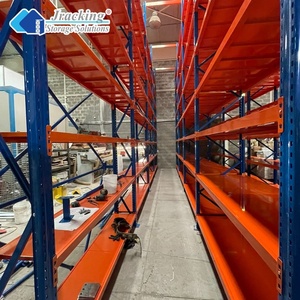
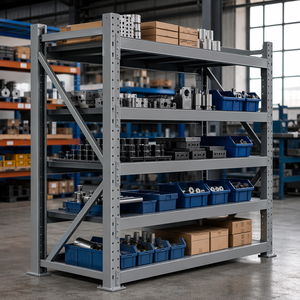
EN 15512 & CE Certified Racking Compliance

CE Certified Gravity Feed Pallet Racking Exporter & Exporters

Engineered high-density FIFO pallet flow solutions, structural yield calculations according to European Standards, and factory-direct export logistics for scalable international distribution hubs.

Certified Industrial Racking & Component Series

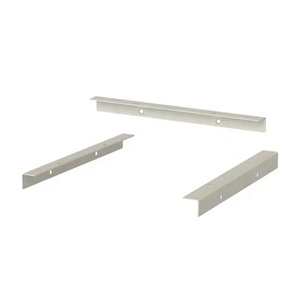
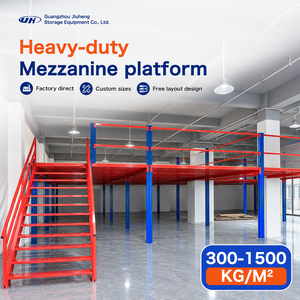
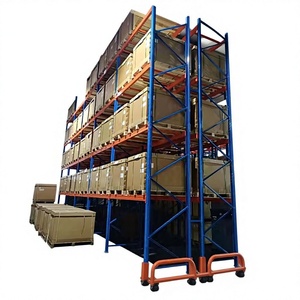
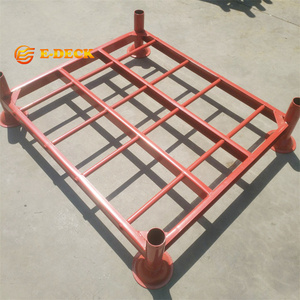
Direct manufacturer configurations verified under rigorous quality control standards. Review our primary industrial storage units, pallet support frameworks, and custom precision sheet stamping assemblies designed for high-density warehouse infrastructures.

Engineering Principles of CE-Certified Gravity Feed Pallet Flow Systems

Gravity feed pallet racking—frequently designated in logistics engineering as Pallet Flow Racking—constitutes a high-density, dynamic storage structure that leverages gravitational kinetics to achieve automatic First-In, First-Out (FIFO) pallet rotation. Unlike static drive-in or selective racking, gravity feed architectures minimize interior forklift travel aisles by up to 60%, channeling operational throughput through dedicated loading and retrieval interfaces.

Dynamic Kinematic Mechanics: Declination Gradients & Braking

The operational efficacy of a gravity feed bed relies on an engineered gradient, calibrated precisely between 3.0% and 4.0% (1.72° to 2.29°) depending on bottom pallet deck deflection, total payload mass (typically spanning 500 kg to 1,500 kg per pallet), and packaging runner characteristics. Insufficient slope causes pallet stall within deep lanes (exceeding 15 pallets deep), while excessive pitch generates catastrophic kinetic acceleration at the discharge face.

To counteract uncontrolled gravitational acceleration, certified exporters install indirect or direct-contact centrifugal speed controllers. These magnetic or mechanical internal governor rollers restrict terminal transit velocity to a steady 0.25 to 0.30 meters per second across the entire lane profile, ensuring smooth deceleration regardless of whether the pallet is loaded at maximum capacity or partial net tare.

Critical Safety Component: Pallet Separator Mechanisms

At the retrieval exit, accumulated backpressure from consecutive pallets poses severe pinch risks and causes forklift extraction friction. CE-compliant gravity racking integrates a mechanical or hydraulic foot-operated separation brake. The system isolates the lead pallet from upstream line pressure by arresting the second pallet until the front unit is entirely cleared by forklift tines.

CE Marking & Structural Verification under EN 15512 & EN 15620

Exporting gravity pallet racking into the European Union and quality-conscious global markets demands adherence to the Construction Products Regulation (CPR 305/2011) and harmonized standards EN 1090-1 and EN 15512:2020 (Steel static storage systems – Specification of beam-and-upright structures). CE certification verifies structural integrity through limit state finite element analysis (FEA), calculating elastic global frame buckling, second-order (P-Delta) sway displacements, and connection node rotational stiffness.

Upright frames are cold-formed from certified high-tensile hot-rolled or pickled coil steel conforming to EN 10025-2 (S235JR / S355JR) or equivalent Q235B/Q355B structural steel grades. Surface protection requires an automated pre-treatment line encompassing alkaline degreasing, zinc-phosphate conversion coating, and electrostatic thermo-hardened epoxy-polyester powder application cured at 180°C to 200°C, guaranteeing scratch resistance and corrosion deterrence exceeding 500 hours in neutral salt spray testing (ASTM B117).
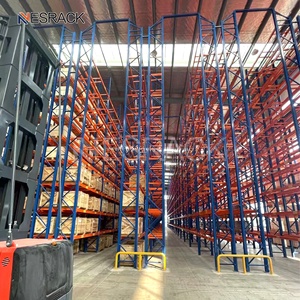
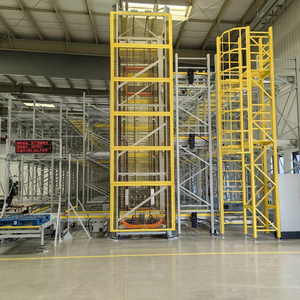
Engineering & Operational Comparison Matrix

Storage System Type Space Utilization Rotation Principle Kinematic Energy Source Forklift Cycle Time Structural CE Directives
Gravity Feed (Pallet Flow) 85% - 90% (Maximum) FIFO (True Date Rotation) Passive Gravitational Gradient Fastest (Decoupled Loading/Picking) EN 15512 / EN 15620 / CPR 305/2011
Selective Pallet Racking 35% - 45% (Aisle Heavy) Any (100% Immediate Access) None (Manual Handling) Moderate (High Travel Travel Distance) EN 15512 / FEM 10.2.02
Drive-In Racking 65% - 75% (Dense) LIFO (Last-In, First-Out) None (Internal Truck Transit) Slow (High Collision Risk Inside Lane) EN 15512 / EN 15629
Push-Back Racking 70% - 75% (Mid-Depth) LIFO (2 to 6 Pallets Deep) Counter-Gravitational Push Force Moderate (Single Aisle In/Out) EN 15512 / RMI MH16.1
Radio Shuttle System 85% - 92% (High-Density) FIFO or LIFO Switchable Active Lithium-Ion Battery Shuttle Automated Fast Transit EN 15512 / Machinery Dir. 2006/42/EC

Future Procurement & Technological Trends in Gravity Flow Logistics

Procurement directors and warehouse supply chain planners are shifting capital expenditures toward passive dynamic systems that insulate operating budgets from soaring kilowatt-hour electricity costs, labor scarcity, and rigorous ESG carbon disclosure regulations.

Zero-Carbon Operational Efficiency

Unlike electrified automated storage and retrieval systems (ASRS) that draw steady industrial power grids, gravity flow racking functions with zero kilowatt energy consumption. Warehouses handling perishables, dairy, and cold-chain frozen goods utilize gravity systems to condense freezer footprints by 60%, drastically cutting cooling volume and compressor load requirements.

AMR & AGV Guided Discharge Interfacing

Modern distribution engineering pairs gravity feed retrieval pick-faces with Autonomous Mobile Robots (AMRs) and automated counterbalanced forklifts. The separation separators hold incoming pallets in exact spatial coordinate tolerances (±3 mm), enabling automated optical sensors to locate forklift pockets cleanly without manual human steering interventions.

Smart Roller Dynamic Telemetry

Next-generation flow beds integrate embedded self-powered rotational sensors inside selected braking rollers. These IoT transceivers broadcast telemetry regarding pallet velocity, track-lane dwell time, vibration abnormalities, and pallet stagnation alerts directly to warehouse management software (WMS) without hardwired cabling.

Strategic Procurement Advisory: Evaluating Exporter Quality vs. Landed Cost

Procuring gravity flow systems internationally requires scrutiny beyond raw steel tonnage prices. Exporters must provide verifiable EN 10204 3.1 Material Test Certificates, certified load deflection test protocols for roller axles under dynamic impact, and pre-machined mounting brackets. Factory-aligned roller beds that arrive pre-assembled within dedicated modular cassette channels reduce on-site mechanical installation labor costs by up to 45%.

Enterprise Production Authority: Guangzhou HEDA Shelves

Operating as a specialized international exporter since 2001, Guangzhou Heda Shelves Co., Ltd. provides factory-direct fabrication, structural calculation stamping, and turnkey ocean freight logistics for heavy-duty industrial storage infrastructures across 130+ nations.

2001
Founded In
25+ Years Industrial Racking
30,000t
Monthly Output
High-Volume Steel Rolling
323,000sq ft
Manufacturing Campus
30,000 m² Advanced Facilities
10,000+
Delivered Projects
Cold Chain, 3PL, FMCG & OEM
01

Certified ISO & CE Quality

Maintains certified ISO 9001:2015 Quality Management Systems (Cert No. 18624Q00169R0M) and Factory Production Control CE Marking (No. 2435-CPR-8605159) conforming to European Construction Products Regulations.

02

Free 24h Engineering CAD

Our structural engineers deliver complete 2D plan CAD designs, structural load calculation sheets (in both imperial lbs/ft and metric kN/mm), and 3D architectural rendering models within 24 business hours.

03

Full In-House Fabrication

Equipped with 12 automatic continuous cold-roll forming lines, multi-station CNC punching presses, robotic CO2 shielded welding cells, and an automated continuous electrostatic powder coating conveyor tunnel.

04

Export Loading Logistics

Pre-bundled upright frames, steel dunnage reinforcement, protective wrapping, and container space-optimization protocols guarantee damage-free transit to key ports across North America, Europe, Australia, and ASEAN.

Frequently Asked Questions for Global Procurement Teams

Essential technical, compliance, and logistical clarifications for engineering contractors, system integrators, and industrial procurement officers specifying gravity feed pallet flow racking.

What mandatory certificates verify that gravity feed pallet racking complies with CE requirements?
CE compliance for industrial steel storage racking falls under the scope of Regulation (EU) No 305/2011 (Construction Products Regulation - CPR) and the harmonized standard EN 1090-1 (Execution of steel structures). A certified exporter must supply a formal Declaration of Performance (DoP), factory production control (FPC) audit certificate issued by an accredited European Notified Body (e.g., CE mark number 2435-CPR-8605159), and structural calculation dossiers executed according to EN 15512:2020. Furthermore, raw steel mill test certificates (EN 10204 3.1) verify tensile yield strength, elongation properties, and chemical compositions matching the engineering load design sheets.
How do engineers calculate the precise slope gradient for varied pallet load weights?
Calculating track declination is governed by the coefficient of rolling friction between the bottom surface of the pallet and the roller cylinders, the deflection of the pallet wood or plastic under payload mass, and ambient temperature. Standard industrial configurations operate with a slope between 3.0% and 4.0% (approximately 1.7° to 2.3°). For lighter payloads (300 kg - 500 kg), a slightly steeper 3.8% to 4.0% inclination prevents inertia stall. Conversely, for dense payloads exceeding 1,200 kg, a 3.0% to 3.2% pitch combined with centrifugal speed governors mitigates terminal velocity. High-end exporters operate testing ramps in their facilities to trial-run client-specific pallets before mass manufacturing.
Can gravity flow pallet racking operate reliably in sub-zero cold storage facilities (-30°C)?
Yes. Gravity feed systems are extraordinarily effective in refrigerated warehouses and blast freezers because they dramatically maximize usable storage density per cubic meter, conserving energy. However, sub-zero installations demand specific engineering adaptations: roller bearings must be lubricated with synthetic low-temperature aviation greases rated to -40°C or equipped with non-freezing sealed ball races; centrifugal brake shoes require cold-stabilized polymer compounds that resist embrittlement; and steel structural components should utilize fine-grain structural steels exhibiting verified Charpy V-notch impact energy absorption toughness at negative temperatures to mitigate brittle failure risks.
What pallet deck configurations are suitable for gravity flow roller tracks?
Optimal flow requires consistent bottom surface contact. Standard Euro pallets (800 x 1200 mm) and GMA pallets (48 x 40 inch) featuring three bottom runners oriented longitudinally along the travel direction run reliably on 2-track or 3-track roller lanes. For pallets with irregular bottom boards, perimeter-base skids, or plastic pallets with grooved cross-members, exporters utilize full-width galvanized roller beds or install multi-ribbed heavy-duty steel skate wheels. Pallets exhibiting cracked runners, loose nails, or deflection exceeding L/100 should be rejected by automated entry check stations to avoid roller jamming midway down deep lanes.
What is the expected maintenance cycle for brake rollers and pallet separators?
Because gravity flow systems rely on passive mechanics rather than electric motors, routine preventive maintenance is minimal and straightforward. Mechanical centrifugal speed controllers typically have an operational lifespan of 100,000 pallet passes. Exporters recommend quarterly visual inspections of roller axles, removal of debris or plastic pallet wrap strands wrapped around bearings, and verification of the spring-return action on discharge separation mechanisms. Roller surfaces are coated with zinc galvanic plating, eliminating recurring paint maintenance or corrosion issues in standard dry warehouse humidity conditions.
How are structural load drawings and calculations approved for local building permits?
Guangzhou HEDA Shelves provides a comprehensive export documentation package alongside every production consignment. This includes fully dimensioned CAD architectural shop drawings, detailed anchor bolt placement maps, upright baseplate shear calculations, and structural design calculation printouts per EN 15512 or regional seismic codes (such as US RMI MH16.1 / IBC regulations). These engineering dossiers provide all necessary load data, seismic spectrum acceleration parameters, and steel stress-ratio figures required by your regional licensed Professional Engineer (PE) or consulting structural authority to issue local municipal building and fire safety permits.
What are standard export packaging practices to prevent transit distortion in shipping containers?
Upright frames are assembled or shipped knock-down (bolted on site) bundled with heavy-duty polyester strap bands and protected by corrugated buffer cushions at critical punch-slot nodes. Roller track beds are secured into pre-nested metal cassette channels strapped atop solid structural skids to prevent longitudinal warping. All fasteners, speed controllers, and pallet separators are crated in seaworthy fumigated plywood boxes. Container stuffing incorporates wood dunnage bracing and air bags to absorb ocean roll and pitch during multi-week marine voyages.

Request an Engineered Gravity Feed Warehouse Layout

Transfer your warehouse building blueprint, pallet footprint dimensions, and throughput goals directly to our structural design department. Receive a comprehensive CAD layout, 3D render, and landed quotation within 24 hours.

Zero-Obligation 3D Modeling
Metric & Imperial Calculations
FOB, CIF & DDU Terms Available
Third-Party CE & ISO Stamped
Get a Quote

Direct communication with senior warehouse applications engineers. Confidentiality guaranteed under NDA.