High-Density Engineered Storage Systems
Explore our certified heavy-duty warehouse storage systems, roll-formed with certified structural steel coil, high-precision automated column punching, and anti-corrosive powder coating designed for Australian supply chain demands.
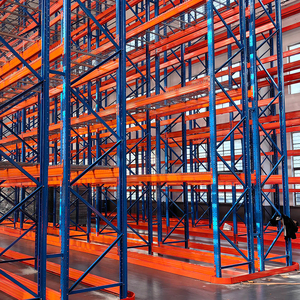
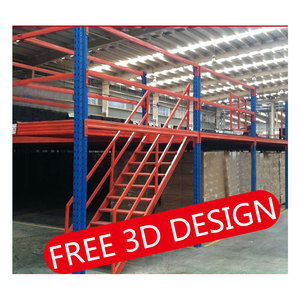
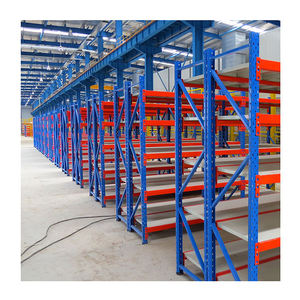
Overcoming Greater Sydney's Industrial Real Estate Squeeze with VNA Racking
An in-depth analysis of warehousing cost per square metre, aisle compaction, and high-bay capacity maximization across Eastern Creek, Kemps Creek, Erskine Park, and Port Botany corridors.
The industrial property market in Greater Sydney has cemented its position as one of the tightest and most competitive logistics environments across the Asia-Pacific region. Driven by relentless e-commerce fulfillment growth, localized supply chain resilience measures, and third-party logistics (3PL) expansion, warehouse vacancy rates in key precincts like Eastern Creek, Erskine Park, Moorebank, and the emerging Western Sydney Aerotropolis have consistently hovered near record lows below 1.5%. Concurrently, prime net effective industrial rents have surged past AU$220 to AU$280 per square metre per annum, with severe escalation observed in proximity to arterial freight connections along the M7, M4, and Port Botany freight line.
For operations directors, procurement managers, and logistics engineers across New South Wales, the economic calculation is straightforward: expanding a physical footprint through secondary site acquisition or building new distribution centers involves prohibitive capital expenditure, prolonged development approval processes through local councils, and astronomical land acquisition costs. Consequently, the strategic imperative shifts entirely toward maximizing cubic storage density within existing or newly leased facility footprints.
The Mathematical Reality of VNA Densification
Standard counterbalanced or reach-truck selective racking layouts dedicate 60% to 65% of warehouse floor space to working aisles (typically 3,200mm to 3,800mm clear aisle widths). In contrast, a precision-engineered Very Narrow Aisle (VNA) system contracts operating aisles down to 1,600mm to 1,850mm. This transformation instantly recaptures 40% to 60% of previously wasted floor space, converting dead transit space into active, revenue-generating pallet locations while retaining 100% individual pallet selectivity.
Why Sydney Supply Chains Prefer Direct Factory Exporters
While local Australian distributors maintain stocked racking components, large-scale distribution projects requiring 2,000 to 25,000 pallet positions often experience crippling domestic supply chain friction. Markups from layered local middlemen can inflate capital racking budgets by 35% to 50%, while backorders on specialized tall upright profiles (up to 16,000mm continuous roll-formed columns) lead to extensive project schedule slippages.
Partnering directly with an established high-capacity manufacturer like Guangzhou HEDA Shelves Co., Ltd. resolves these systemic bottlenecks. Leveraging over 25 years of engineering heritage, an advanced 30,000 m² (323,000 sq ft) production facility, and a dedicated monthly output of 30,000 metric tons of steel systems, we operate as a direct factory source and seasoned exporter for major logistics operations in Sydney and throughout Australia. Every batch of cold-formed structural uprights and box beams is engineered specifically to withstand rigorous duty cycles and fabricated with exact adherence to Australian Standard AS 4084:2023.
AS 4084:2023 Compliance & VNA Mechanical Tolerances
Understanding the strict Australian structural mandate, seismic safety provisions under AS 1170.4, and precision floor flatness requirements for high-reach turret truck operations.
In Australian warehouse engineering, racking cannot be treated simply as generic steel shelving. The implementation of AS 4084:2023 (Steel Storage Racking) establishes mandatory structural principles separated into Part 1 (Design) and Part 2 (Operation and Maintenance). When deploying Very Narrow Aisle systems reaching heights of 10 to 16 metres, engineering margins become exponentially tighter due to the severe rotational moments and dynamic sway induced by elevated heavy turret trucks (Man-Up or Man-Down) operating at maximum mast extensions.
Core Structural Parameters of HEDA Shelves VNA Systems
- High-Tensile Cold-Rolled Steel: Columns are roll-formed using structural coil grade Q355B (equivalent to AS/NZS certified steel grades) with an optimal yield strength resisting localized torsional buckling. Precision column perforation patterns guarantee interlocking beam connection rigidity without structural metal fatigue.
- Heavy-Duty Bolted Baseplates and Concrete Anchoring: Massive 8mm to 12mm thick floor plates anchored with dual high-shear M16 mechanical or chemical epoxy anchors into slabs engineered to withstand high point-load concentrations (often exceeding 80 to 150 kN per upright column).
- Deflection Ratios & Beam Engineering: Box-beam members conform strictly to the vertical deflection criterion of Span/200 under full design load. Patented multi-claw beam connector brackets incorporate safety pins that eliminate accidental dislodgement from high-speed vertical pick cycles.
- Seismic Load Engineering (AS 1170.4): Greater Sydney is situated in a zone requiring seismic verification for long, tall structures. Our finite element analysis (FEA) models account for horizontal ground acceleration, building ductility factors, and dynamic rack-pallet mass interaction to prevent progressive collapse in earthquake scenarios.
Crucial Interaction: Concrete Floor Flatness (TR34 Class DM2 / Superflat)
A frequent blindspot during Australian racking installations is concrete slab tolerance. At a lift height of 15 metres, an imperceptible 2mm elevation variance between truck wheel paths translates into a dangerous 30mm mast deflection at the top shelf level. HEDA Shelves engineers review floor survey reports against the Concrete Society's Technical Report 34 (TR34) Class DM1/DM2 or DIN 18202 specifications, ensuring your guidance rails, wire frequencies, and frame uprights are positioned with sub-millimetre accuracy to avoid catastrophic mast-to-beam contact.
Engineering Comparison: Warehouse Systems in Sydney Logistics
Assess spatial volumetric efficiency, operational throughput, capital expense profiles, and forklift dynamics across key configurations.
| Storage Racking System | Required Aisle Width | Floor Utilization (%) | Cubic Height Potential | Pallet Access Selectivity | Typical Sydney Sector Fit |
|---|---|---|---|---|---|
| Very Narrow Aisle (VNA) | 1,600mm – 1,850mm | 80% – 88% | Up to 16.5 Metres | 100% Immediate Direct | High-Rent 3PL, FMCG, Pharma DCs |
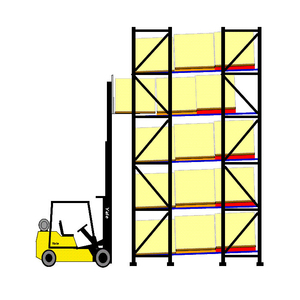
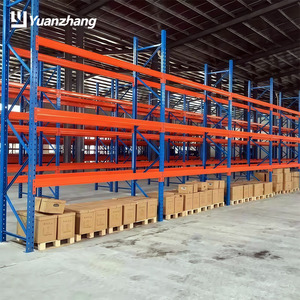
| Selective Pallet Racking | 3,200mm – 3,800mm | 38% – 45% | Up to 10.5 Metres | 100% Immediate Direct | Low-Bay Retail, General Distribution |
| Double Deep Racking | 2,800mm – 3,100mm | 55% – 65% | Up to 11.0 Metres | 50% (Requires 2-Deep Pantograph) | Multi-SKU Manufacturing, Wholesale |
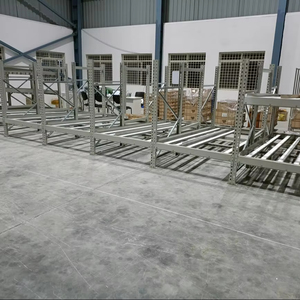
| Drive-In Racking | Specialized Entry Lanes | 70% – 78% | Up to 9.5 Metres | LIFO Last-In, First-Out Only | Cold Storage Freezers, Raw Bulk |
| Pallet Flow (Gravity) | Dedicated Load/Pick Aisles | 75% – 85% | Up to 12.0 Metres | Strict FIFO by Lane | Short Shelf-Life Perishables, Beverage |
Sydney Application Scenarios & Operating Precincts
Targeted solutions developed for specific operational, environmental, and thermal requirements across New South Wales industrial corridors.
Western Sydney 3PL Mega-Hubs
High-bay facilities across Eastern Creek and Kemps Creek handling high-velocity consumer goods, cross-docking, and multi-client e-commerce sorting. Maximizes tier levels up to 15 metres with guide-rail VNA turret trucks for rapid picking cycles.
Port Botany Refrigerated Storage
Refrigerated and blast freezer facilities facing immense electricity expenses per cubic metre. Compact VNA configurations in cold chain distribution slash operational refrigeration costs per pallet while preserving strict batch control.
Pharma & Healthcare Warehousing
GMP-regulated distribution centers in North Ryde and Bella Vista. Dust-resistant epoxy powder finishes, wire decking, and 100% individual pallet selectivity ensure full regulatory compliance, sterile lot segregation, and zero picking errors.
Wetherill Park Heavy Engineering
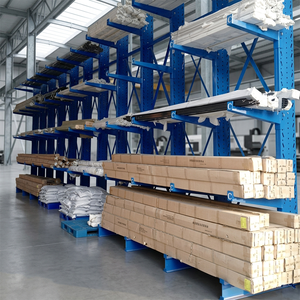
Automotive parts manufacturers, heavy mechanical distributors, and industrial fabricators requiring combined heavy pallet racking and open cantilever racking for long pipes, extruded bars, profiles, and bulky crates.
Turret Truck Guidance: Inductive Wire vs. Low-Profile Steel Rails
Selecting the optimal path tracking architecture for Linde, Crown, Toyota-BT, Jungheinrich, and articulated Bendi/Aisle-Master machines.
A Very Narrow Aisle system operates as a single unified machine composed of two distinct halves: the static steel racking structure and the dynamic material handling equipment (turret truck or stacker crane). Because aisle clearances between the pallet edge and the upright frame can be as narrow as 75mm to 100mm, manual steering inside the aisle is structurally impermissible. System planners must choose between two proven guidance architectures:
Mechanical Guide Rails
Heavy structural steel angles (typically 100mm × 50mm × 6mm or 125mm × 75mm × 8mm) anchored to the concrete along both sides of the aisle. The truck's low guide rollers engage mechanically with the rails, ensuring physical tracking, base protection for bottom pallets, and zero electronic drift.
Inductive Wire Guidance
A specialized low-frequency antenna wire embedded into a shallow continuous saw-cut (3mm wide × 15mm deep) along the center of each aisle. The turret truck locks onto the electromagnetic signal. Keeps the floor flush, facilitates unobstructed order picking at ground levels, and eliminates trip hazards.
Pick & Deposit (P&D) Stations
Cantilevered or heavy beam P&D stations located at aisle entry points. Standard counterbalanced reach trucks drop pallets onto outer transfer bays, allowing specialized VNA turret trucks to stay continuously active inside working aisles without wasting cycle time exiting the system.
Why Australian Buyers Partner with HEDA Shelves
Direct from our 30,000 m² modern manufacturing plant to Port Botany: ISO 9001 certified consistency, rigorous QC, and full container load optimization.
25+ Years Industrial Heritage
Founded in 2001, Guangzhou HEDA Shelves Co., Ltd. has engineered and exported high-load warehouse systems for more than 10,000 distribution hubs globally. Our certified technical engineering department provides fast, stamped-ready design calculations tailored to regional Australian building standards.
State-of-the-Art Surface Finishing
Every profile undergoes a complete 10-step surface treatment line: automated precision slitting, continuous multi-head roll-punching, ultrasonic degreasing, pickling, phosphating, and electrostatic powder coating baked at 200°C for exceptional resistance to scratches and humidity.
Container Packing & Ocean Logistics
Exporting structural steel beams and columns requires specialized container stowage. We bundle and label every upright frame, shelf beam, and accessory pallet using specialized dunnage, protective corner guards, and corrosion inhibitors for safe transit across Pacific ocean lanes directly into Sydney.
Frequently Asked Questions: Sydney VNA Procurement
Key technical, regulatory, and logistics answers for operations managers planning racking imports and installations across New South Wales.
Are HEDA Shelves VNA racking systems certified to Australian Standard AS 4084:2023?
Yes. All structural members, cold-formed upright profiles, connector brackets, and beam sections are designed and manufactured strictly in accordance with AS 4084.1:2023 (Steel Storage Racking - Design). We supply comprehensive structural load calculations, component yield certificates, and DWG layout drawings ready for third-party review and certification by your local Australian structural engineer of record or SafeWork NSW compliance auditor.
How do VNA systems accommodate standard Australian CHEP and Loscam pallets?
The Australian domestic standard pallet is 1,165mm × 1,165mm (CHEP / Loscam), which differs significantly from European (1,200mm × 800mm) and North American GMA (48″ × 40″) footprints. We engineer frame depths (typically 1,000mm to 1,050mm) and clear beam spans (typically 2,750mm for 2-pallet bays or 3,900mm for 3-pallet bays) to provide the exact 75mm to 100mm clearances required between pallets and upright frames under AS 4084 guidelines.
What are the typical lead times for containerized delivery directly to Port Botany (Sydney)?
Following final approval of engineering CAD drawings and load specifications, factory fabrication spans approximately 20 to 25 business days at our Guangzhou facility. Direct ocean freight shipping from the Pearl River Delta to Port Botany (Sydney) typically takes 14 to 20 days on the water. Customs clearance, quarantine processing, and road transport to your Western Sydney site take an additional 3 to 5 business days, establishing an end-to-end delivery timeline of approximately 6 to 8 weeks.
Can our facility use articulated forklifts (Bendi / Aisle-Master) instead of turret trucks?
Yes. Articulated forklifts operate smoothly in slightly wider VNA aisles (typically 1,800mm to 2,000mm) without requiring floor-mounted guide rails or inductive wire guidance. While turret trucks reach taller heights (up to 16 metres) and provide faster pure pick rates, articulated forklifts offer versatility by traveling directly from the racking aisle straight into shipping containers on the loading dock, eliminating the need for dedicated staging trucks.
What concrete slab thickness and floor flatness are required for high-bay VNA installations?
For installations under 10 metres, a standard 150mm to 175mm reinforced slab capable of carrying 40 to 60 kN point loads is generally acceptable. For tall systems reaching 12 to 16 metres, a 200mm to 250mm reinforced concrete slab engineered to TR34 Class DM1/DM2 (or DIN 18202 Superflat) is required to handle high column point loads and avoid truck mast wobble. We provide exact dynamic and static column base loading calculations so your local civil engineer can verify slab capacity prior to anchoring.
Does HEDA provide Safe Working Load (SWL) signage conforming to SafeWork NSW rules?
Yes. Every installation includes verified Safe Working Load (SWL) load sign plaques for every aisle. These signs clearly state maximum permissible load per beam level, maximum total bay load, first beam elevation height, and inspection intervals. These signs are formatted to satisfy SafeWork NSW and AS 4084.2:2023 operational auditing protocols.
How does HEDA handle custom seismic engineering for Sydney's geological profile?
Greater Sydney is classified as a low-to-moderate seismic hazard zone according to AS 1170.4. However, tall narrow racking structures experience amplified seismic forces at higher beam elevations. Our structural engineering team incorporates site-specific hazard factors (kp × Z) into our computer finite element modeling, specifying heavy gauge diagonal frame bracing, heavy baseplates, and high-tensile safety pins to ensure total structural compliance.
Can HEDA supply wire mesh decking, column protectors, and frame end guards?
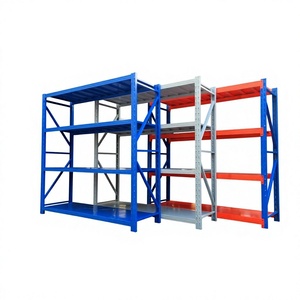
Absolutely. We produce full warehouse accessory ecosystems: heavy galvanized flare or step wire mesh decks with welded structural channels, heavy-gauge steel wraparound post protectors, solid floor-anchored bullnose end-of-row barrier protections, backstop pallet stops, and fork entry guide rails. Everything ships inside the same containers, ensuring a fully integrated, turnkey installation on site.
Ready to Maximize Your Sydney Warehouse Capacity?
Submit your facility dimensions, ceiling clear heights, and pallet specifications. Our senior racking design engineers will return a complete 2D CAD floor plan layout, 3D visual rendering, structural load calculation sheet, and container-delivered quotation within 24 hours.