Direct-From-Factory Storage Systems Ready for Bangkok Distribution Centers
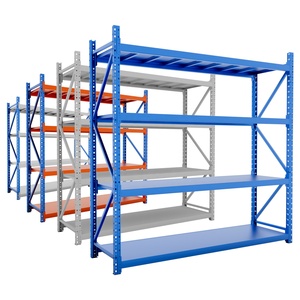
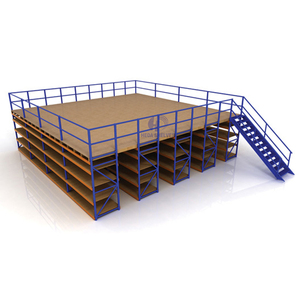
Engineered to international standards (RMI & FEM 10.2.02), our manufacturing facilities deliver custom roll-formed profiles, heavy-duty box beams, and integrated mezzanine platforms designed to handle high-density industrial cargo.
1. Engineering Fundamentals: Why Double Deep Pallet Racking Outperforms Standard Selective Systems in Bangkok
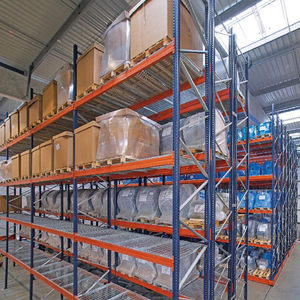
As the industrial logistics real estate landscape in the Greater Bangkok Metropolitan Region (BMR) tightens, facilities located along the critical Bangna-Trad corridor (Km 18 through Km 54) and Samut Prakan encounter unprecedented rental escalations per square meter. In response, modern logistics directors are turning away from classic 100% selective racking in favor of Double Deep Pallet Racking configurations. By positioning two pallet rows deep instead of one per aisle face, Double Deep architecture immediately slashes total warehouse aisle counts by 30% to 45%, converting dead transit lanes into revenue-generating storage cube volume.
Double Deep racking operates on a Last-In, First-Out (LIFO) inventory sequence per individual bay, striking an optimal middle ground between the full selectivity of single-selective racking and the hyper-dense, yet SKU-restrictive nature of Drive-In or Gravity Flow racking systems. By deploying specialized pantograph double-reach forklifts or deep-reach mast attachments, operations can access two pallets deep from a single aisleway. When paired with high-precision bottom pallet guidance rails, throughput cycles remain brisk while overall building floor-space footprint utilization rises from typical 40% benchmarks to over 60–65%.
From a structural calculation standpoint, Double Deep frames endure unique dynamic eccentricities. When reach trucks extend their pantograph mechanism to place a 1,200 kg pallet into the second depth level, horizontal cantilever forces transmit through the interlocking beam connectors and impose localized torsional moments on the vertical upright profiles. HEDA Shelves addresses these specific stresses by deploying closed-profile welded box beams and Ω-omega cold-formed uprights fabricated exclusively from certified high-tensile structural steel (Q235B and Q355B), backed by multi-point beam connector hooks secured with hardened spring steel lock pins.
| Storage System Type | Pallet Accessibility | Floor Footprint Utilization | Required Forklift Fleet | Inventory Rotation | CAPEX per Pallet Position |
|---|---|---|---|---|---|
| Standard Selective | 100% Immediate | 40% – 45% (Aisle Intensive) | Standard Counterbalance / Reach | FIFO / LIFO Flexible | Lowest Base CAPEX |
| Double Deep (Recommended) | 50% Immediate (2-Deep) | 60% – 68% (High Density) | Pantograph Double-Reach Truck | Batched LIFO / SKU Pairs | Optimal ROI Threshold |
| Drive-In Storage | < 15% (Lane End Only) | 70% – 75% (Maximum Static) | Standard Reach (Drives In) | Strict LIFO (High Bottlenecks) | Moderate (Prone to Impact) |
| Radio Shuttle Automation | Automated Lane Retrieval | 78% – 85% (Ultra Dense) | Standard Forklift + Shuttles | FIFO or LIFO Configurable | High (Electronic Capital) |
2. Localized Industrial Application Scenarios: Greater Bangkok & Eastern Economic Corridor (EEC)
Logistics requirements within Thailand are geographically partitioned into distinct operational clusters. A generic, off-the-shelf racking system designed for dry continental climates fails to perform reliably when subjected to the operational rhythms, cargo characteristics, and environmental stresses of Thailand’s primary industrial economic arteries.
Bangna-Trad (Km 18–54) & Samut Prakan 3PL Hubs
The central distribution artery for Thailand's FMCG, e-commerce, and general retail mega-warehouses. Operations here handle tens of thousands of pallets daily with continuous inbound shipping container destuffing and cross-docking.
- Ideal for paired-pallet fast-moving retail SKUs
- Floor guidance angles speed up pantograph reach navigation
- Maximizes expensive Bangna-Trad warehouse floor rentals
Samut Sakhon (Mahachai) Cold Chain Logistics
Thailand’s seafood and agro-processing capital demands temperature-controlled storage environments (-25°C to -18°C). In sub-zero facilities, every cubic meter of conditioned air incurs immense electrical chiller overhead.
- Drastically decreases refrigerated refrigeration energy per pallet
- Low-temperature resilient epoxy powder coatings resist peeling
- Eliminates slow-lane defrost icing common to drive-in racks
Chonburi & Rayong (EEC) Automotive Hubs
The "Detroit of the East" houses massive tier-1 and tier-2 automotive component manufacturers feeding assembly plants in Amata City, Eastern Seaboard, and WHA Chonburi industrial estates.
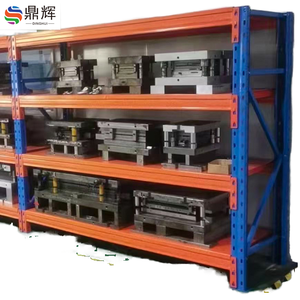
- Engineered for heavy metal stamping dies and engine parts
- Integrated wire mesh decking prevents small-part drops
- Supports standard JIS 1100×1100 mm & Euro pallet dimensions
3. Critical Thai Geotechnical & Environmental Factors: Soft Soil & Tropical Humidity
Industrial structural failures in Thailand rarely stem from steel fatigue alone; rather, they are provoked by local geotechnical anomalies and tropical climate hazards that standard overseas catalogs overlook. Designing double deep racking for Bangkok demands acute consideration of the Chao Phraya River basin geology and coastal monsoon weather patterns:
4. Macro Logistics Trends: Why Thai Warehouses are Shifting from Selective to Double Deep
Thailand’s national economic blueprint—Thailand 4.0—along with substantial cross-border supply chain investments across the Eastern Economic Corridor (EEC), has sparked intense demand for Grade-A modern logistics properties (MLP). Data published by industrial real estate specialists reveals three macro trends driving the Double Deep transition across Bangkok:
1. Soaring Land Acquisition Costs in Bangkok Peripheries: Prime industrial land parcels in Samut Prakan (near Bang Phli and Suvarnabhumi Airport) have experienced significant double-digit price increases per Rai. Developers and owner-operators can no longer afford the spatial waste inherent to 3.5-meter forklift aisles in single-selective configurations. Double deep racking allows operators to store 30% to 40% more pallet positions within the identical building footprint, deferring or eliminating the need to lease secondary overflow facilities.
2. The Surge of SKU Rationalization in FMCG & E-Commerce Fulfillment: Modern Thai retail giants (such as CP All, Central Group, and Lotus's) and global e-commerce supply chains operate around fast-velocity inventory where pallets naturally arrive in pairs or multiples of four. Double Deep represents the sweet spot: the front pallet is picked, immediately exposing the rear replenishment pallet without requiring costly multi-depth clearing runs.
3. The Pragmatic Stepping Stone Toward AGV Automation: Fully automated high-bay ASRS systems require substantial capital outlays with payback periods often exceeding 8 to 10 years in Southeast Asia. Double deep pallet racking delivers immediate density gains using standard reach truck upgrades (pantographs), preserving capital flexibility while creating standardized lane depths fully compatible with future laser-guided reach AGVs.
5. Enterprise Manufacturing Authority: Direct-from-Factory Advantage
Guangzhou Heda Shelves Co., Ltd. brings more than 25 years of structural steel fabrication prowess directly to the Thai industrial market. By bypassing multi-tier brokerages and domestic trading intermediaries, Bangkok warehouse operators access direct engineering, millimeter-accurate custom roll forming, and verified material certificates.
30,000 m² Modern Facility
Over 323,000 sq ft of dedicated manufacturing floor equipped with continuous automated roll-forming mills, automated punch presses, and robotic welding stations.
30,000 Tons Monthly Output
High-volume manufacturing capacity guarantees rapid fabrication turnaround times, completing multi-thousand pallet position projects within 15–20 production days.
ISO 9001 & CE Certified
Fully compliant with ISO 9001:2015 (Cert: 18624Q00169R0M) and European CE Marking (Cert: 2435-CPR-8605159), ensuring every upright frame and beam connector satisfies global safety codes.
Turnkey CAD / BIM in 24h
Our dedicated engineering department drafts full 2D architectural warehouse layouts, 3D spatial elevations, and column structural calculation packages within 24 hours.
Port-to-Door Logistics Optimization: Orders destined for Greater Bangkok are packed into container-optimized bundles with protective edge wraps, shipped via ocean freight directly into Bangkok Modern Port (Khlong Toei / PAT) or Laem Chabang Deep Sea Port. Our documentation package includes Form E Certificates of Origin (under the ASEAN-China Free Trade Area), enabling zero or preferential import tariff clearance for qualified Thai corporate entities.
6. Bangkok Warehouse Procurement FAQ: Practical Engineering & Import Guide
Here are authoritative answers to the most critical technical, commercial, and regulatory questions raised by warehouse operators, facilities managers, and procurement directors in Thailand.
What specialized forklift equipment is required for Double Deep racking in Bangkok warehouses? +
How does the Form E certificate benefit Thai companies importing racking from your factory? +
How do you compensate for soft foundation settling commonly seen in Samut Prakan and Bangna warehouses? +
Can your double deep racking accommodate standard Thai and Asian pallet specifications? +
What is the typical shipping lead time from your factory to warehouse delivery in Bangkok? +
Do you provide structural engineering calculations and installation guidance in Thailand? +
Request Your Tailored Double Deep Warehouse Layout & Landed Quote
Send your building dimensions, clear roof height, floor slab load capacity, and forklift model. Our storage engineering specialists will generate a complete 2D/3D CAD layout, pallet capacity optimization study, and itemized direct-factory quotation for your Bangkok facility within 24 hours.
Contact Us