High-Density Industrial Storage & Pallet Racking Systems
Custom roll-formed profiles manufactured from certified Q235B/Q355B structural steel, tailored for standard JIS T11 pallets (1,100 × 1,100 mm) and heavy industrial inventories across Nagoya, Toyota City, and Komaki distribution facilities.
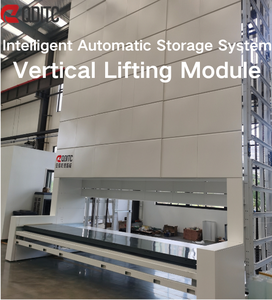
Vertical Lift Automated Storage Retrieval System | 500kg Capacity
Enclosed automated vertical carousel system designed to consolidate high-density electronic and small mechanical parts into a small footprint, addressing Japan's 2024 warehouse labor bottlenecks.
View System Specs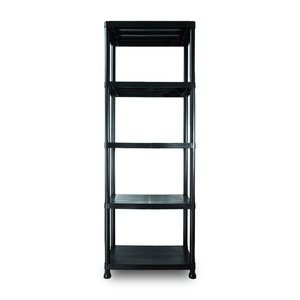
24" x 12" x 53" Solid Light-Duty 4-Tier Shelving Unit
Modular light-duty shelf units engineered for picking stations, aftermarket workshops, and sub-assembly kitting buffers across Aichi industrial parks.
View System Specs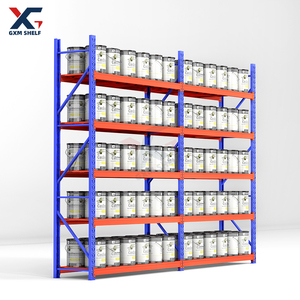
Heavy-Duty Metal Shelving Industrial Storage Rack System
Heavy structural box-beam pallet racking equipped with seismic safety lock pins and reinforced footings, built for heavy automotive die and steel component staging.
View System Specs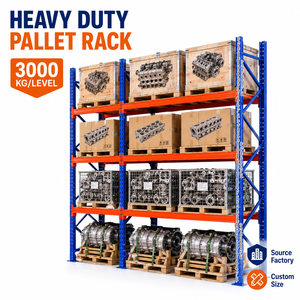
3,000kg Heavy-Duty 4-Level Pallet & Carton Storage Rack
Multi-tier selective configuration accommodating double JIS T11 standard pallets side-by-side with wire decking inserts for loose carton containment.
View System Specs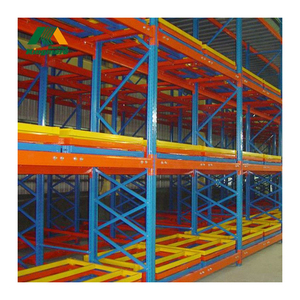
Industrial Heavy-Duty Push Back Racking Stacking System
Inclined nested trolley rail layout enabling multi-pallet deep storage per lane, eliminating dedicated forklift aisles and maximizing Port of Nagoya warehouse footprints.
View System Specs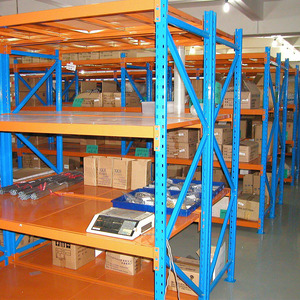
Wall-Mounted Heavy Adjustable Structural Shelving
Reinforced cantilever wall uprights for perimeter tool cribs, maintenance utility bays, and factory peripheral storage where floor clearing is mandated for AGV routes.
View System Specs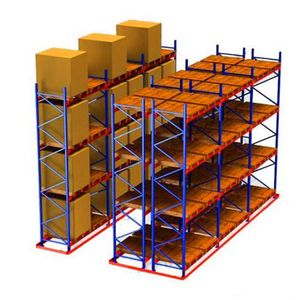
High-Density Very Narrow Aisle (VNA) Pallet Racking
Engineered for 12m+ vertical clear heights with floor guidance rail integration, providing 100% selectivity while cutting floor footprint requirements by up to 48%.
View System Specs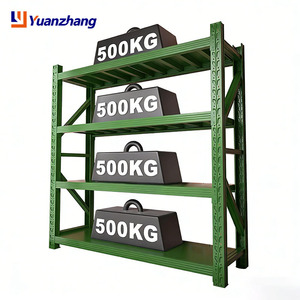
Boltless Adjustable 300kg/Tier Industrial Steel Shelving
Precision butterfly-punched column frame shelving providing rapid reconfigurability for retail e-commerce logistics centers situated along the Isewangan Expressway.
View System SpecsNavigating Greater Nagoya's Manufacturing Density & Seismic Demands
The Greater Nagoya metropolitan area (spanning Aichi, Gifu, and Mie prefectures) represents the undisputed industrial engine of Japan, contributing roughly 1% of the entire global manufacturing output. With heavy concentrations of Tier-1 and Tier-2 automotive suppliers supporting the Toyota Production System (TPS), alongside world-class aerospace production clusters around Komaki and Chubu Centrair International Airport, warehouse racking in this region operates under distinct operational parameters.
Unlike standard regional distribution centers that store static consumer goods, logistics hubs surrounding the Port of Nagoya (including the massive container terminals of Tobishima and Minato Pier) require heavy-duty storage infrastructure capable of supporting extreme dynamic cycling, strict Just-In-Time (JIT) sequence picking, and rapid crane/forklift turnovers.
Furthermore, because the Tokai region faces heightened risks associated with anticipated Nankai Trough subduction zone seismic events, warehouse racking cannot merely be assembled as generic static metal frames. Uprights, baseplates, and row spacers must be rigorously calculated to satisfy the dynamic force parameters of the Building Standards Act of Japan (Kenbiku) and JIS B 8951 standards.
Chubu Logistics Dynamics at a Glance
- Port of Nagoya Throughput: Japan's largest seaport by volume, handling over 11 million international freight tons annually.
- High Ground-Rent Valuations: Premium industrial land lease rates along the Isewangan and Tomei Expressways driving vertical cubic density over horizontal footprint.
- The 2024 Overtime Threshold: Strict 960-hour annual limits on truck drivers demanding rapid bay turnarounds, zero-downtime selective pallet flows, and automated staging racks.
Seismic Engineering According to Japanese JIS B 8951 Protocols
Racking installations in Aichi prefecture require advanced structural damping, high-yield metallurgical properties, and ductile base anchors capable of dissipating lateral seismic acceleration vectors.
Ductile Q355B Structural Steel
We utilize certified high-tensile hot-rolled micro-alloyed structural steel coil (equivalent to Japanese JIS SS490 / SM490). The balanced tensile strength (470-630 MPa) and high elongation percentage protect upright frames from brittle fracture under horizontal shear forces during seismic vibrations.
Cold-Formed Multi-Omega Columns
Our upright profiles feature an intricate 11-fold to 13-fold omega (Ω) cross-section. This cold-formed geometry moves material to the outer perimeter of the section, radically boosting torsional resistance and moment of inertia without adding dead structural weight to slab floors.
Seismic Baseplates & Heavy Anchors
Footings are fitted with high-gauge laser-cut baseplates distributing point loads evenly onto concrete slabs. Dual M12-M16 chemical or mechanical wedge anchors guarantee exceptional pull-out resistance (tensile shear capacity) compliant with Kenbiku safety margins.
| Racking System Type | Pallet Compatibility | Aisle Clear Width | Cubic Volumetric Utilization | Seismic Lateral Stiffness | Ideal Nagoya Application |
|---|---|---|---|---|---|
| Selective Pallet Racking | JIS T11 (1100×1100), Euro, GMA | 3.0m – 3.6m | 40% – 50% | High (K-Braced) | General 3PL facilities, e-commerce, multi-SKU parts |
| Very Narrow Aisle (VNA) | JIS T11 (1100×1100) | 1.6m – 1.9m | 75% – 85% | Reinforced Structural Uprights | High-clear-height logistics centers in Tobishima / Minato |
| Push-Back Racking | Standard Wooden/Plastic Pallets | 2.8m – 3.2m | 70% – 80% | Heavy Nested Rail Frame | Automotive tier-suppliers, fast-moving cold storage buffer |
| Drive-In Racking | JIS T11 Uniform Sizes | Forklift Truck Envelope | 80% – 88% | Requires Top Tie Bracing | Seasonal manufacturing runs, raw material bulk stockpiling |
| Vertical Lift Module (VLM) | Internal Spec Trays (Up to 500kg) | Self-Contained Station | 85% – 92% | Fully Enclosed Steel Skeleton | High-value tooling, electronic components, precision aerospace |
Why Nagoya Warehouses Source Direct from HEDA Shelves
Since 2001, Guangzhou HEDA Shelves Co., Ltd. has served as a primary original equipment manufacturer (OEM/ODM) of heavy storage systems, delivering factory-direct cost efficiencies and rapid maritime delivery to Japan.
The 10-Step Controlled Racking Production Sequence
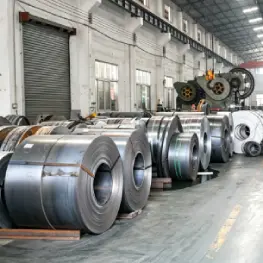 01. INTAKE
Mill-certified Q235B & Q355B coils verified via spectroscopic lab tests.
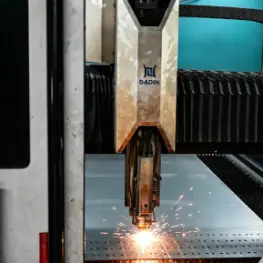 02. SLITTING
High-speed rotary shear slitting within ±0.1 mm edge tolerances.
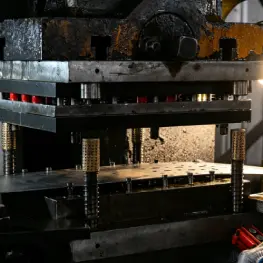 03. PUNCHING
Continuous 50mm / 75mm pitch punching ensuring uniform connector locks.
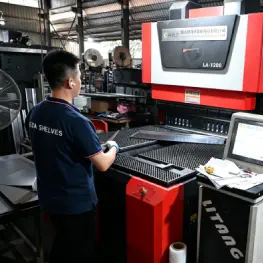 04. FORMING
Multi-station progressive rollers form high-rigidity structural angles.
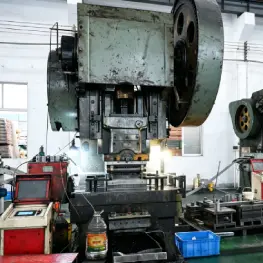 05. PROFILES
Proprietary roll-forming of interlocked box beams and multi-flange uprights.
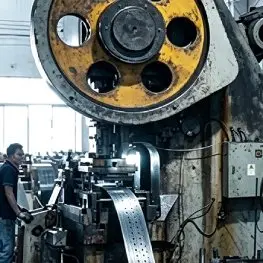 06. DEBURRING
Smooth edge radiuses eliminate micro-cracking and prevent warehouse hazard cuts.
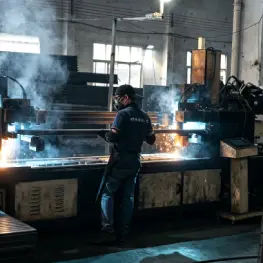 07. WELDING
Automated CO2/MIG robotic arms secure beam claws and heavy baseplates.
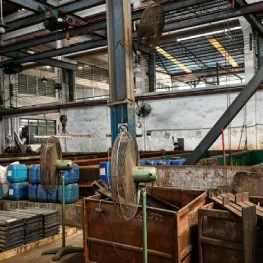 08. PRE-TREAT
Chemical immersion removes mill scale and establishes an anti-corrosion barrier.
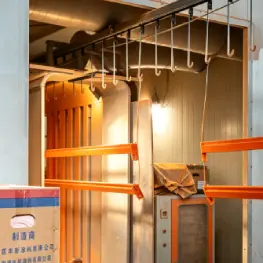 09. COATING
Thermoset epoxy polyester finish cured at 200°C for coastal humidity resilience.
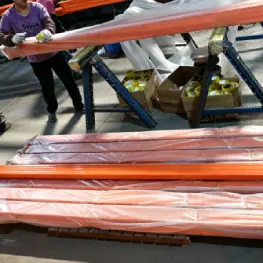 10. DISPATCH
Batch dimension calipers, load deflection checks, and ocean container banding.
Independently Audited Quality Systems
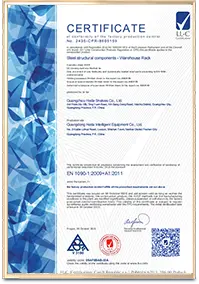
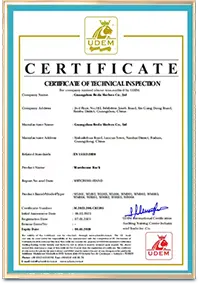
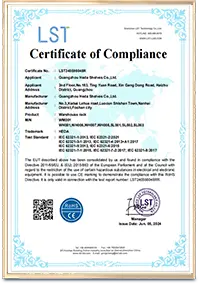
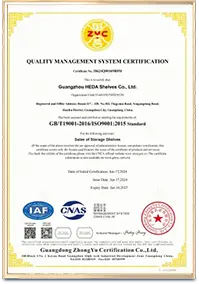
Procuring warehouse racking from overseas demands zero-defect metallurgical reliability. Our factories operate under strict ISO 9001:2015 frameworks, CE standards (EN 15512 execution for steel structures), and full RoHS compliance.
- ISO 9001:2015: Certificate No. 18624Q00169R0M
- CE Factory Production Control: No. 2435-CPR-8605159
- Full Metric & Japanese Engineering Drawings: CAD/BIM supported
Nagoya Procurement & Logistics FAQ
Essential technical and customs information for warehouse developers, general contractors, and logistics directors importing industrial racking into Central Japan.
Q1: How are ocean shipments coordinated directly to the Port of Nagoya?
We pack components in specialized 40-foot High-Cube (40HQ) containers, banding upright frames and nesting pallet beams with protective corner cushions to prevent finish scuffing during maritime transport. Direct liner services sail from Guangzhou/Shenzhen/Nansha ports directly to the Port of Nagoya (Tobishima or Minato container yards) with an ocean transit time of roughly 4 to 6 days. We provide comprehensive export documentation, including Bills of Lading, Commercial Invoices, Packing Lists, and Certificate of Origin (COO) to facilitate smooth customs clearance through Japanese Customs.
Q2: Are your beam lengths tailored to Japanese JIS T11 standard pallets?
Yes. While North American suppliers design around 48" × 40" GMA pallets and European manufacturers size beams for 1,200 × 800 mm Euro pallets, our roll-forming lines punch and weld beam lengths configured precisely for two (2,300 mm – 2,500 mm clear bay) or three (3,400 mm – 3,600 mm clear bay) JIS T11 (1,100 × 1,100 mm) pallets. This guarantees optimal 75 mm to 100 mm safety clearance between pallet edges and vertical uprights, maximizing usable bay width.
Q3: Can you supply structural calculations for seismic review under Japanese codes?
Yes. We supply comprehensive structural calculation dossiers, finite element analysis (FEA) data, and component load tables. These documents specify sectional modulus, moment of inertia, dynamic shear limits, and anchor pull-out ratings. These engineering submittals are prepared to support your Japanese Kenchikushi (first-class registered architect/structural engineer) in validating compliance with local municipal fire and seismic building regulations.
Q4: How does HEDA support installation and assembly across Aichi prefecture?
Every system is delivered with sequenced numbered bundles, 3D exploded layout drawings, and detailed step-by-step structural erection schematics. For major installations across Nagoya, Toyohashi, Komaki, or Toyota City, we can coordinate with your licensed local Japanese installation contractors or dispatch bilingual field technicians to provide on-site technical supervision, plumb-and-level alignment checks, and anchor torque validation.
Q5: What protective coatings are used against coastal humidity in Ise Bay?
Warehouses near Nagoya Port and the coastal Ise Bay region experience elevated salt-air humidity. All our steel components undergo multi-stage automatic acid pickling and zinc-phosphating conversion pre-treatment before electrostatic powder deposition. We apply high-durability epoxy-polyester architectural-grade powders cured in continuous heating tunnels at 200°C. This process delivers superior adhesion, impact resistance against forklift tines, and salt-spray resistance exceeding 500 hours.
Q6: How quickly can we receive custom CAD warehouse layouts and price quotes?
Upon receiving your facility floor plan (architectural DWG or PDF), column grids, ceiling clear height, forklift turning radii, and pallet inventory profiles, our engineering department delivers a 2D CAD layout, 3D isometric view, and itemized factory-direct quotation within 24 to 48 hours.
Ready to Optimize Your Nagoya Warehouse Facility?
Connect directly with our structural engineering team. Whether you are designing a greenfield distribution center in Tobishima or retrofitting an automotive parts warehouse in Toyota City, we supply factory-direct CAD layouts, structural calculations, and competitive FOB/CIF quotation schedules.
- Free 24-Hour CAD & 3D Layout
- JIS T11 Pallet Specific Spans
- Seismic Dynamic Load Ratings
- Direct Liner to Port of Nagoya
Request Engineering Consultation
Get in touch with an industrial racking specialist right now to review your building dimensions and load parameters.
Contact Us