High Throughput
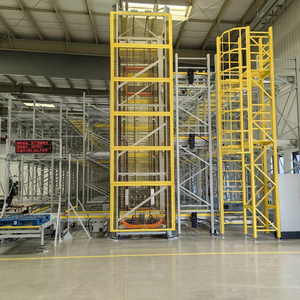
From multi-storey ramp-up distribution facilities in Tuas and Jurong to high-throughput air freight terminals in Changi, our modular automated storage and retrieval systems maximize cubic utilization while slashing cycle times.
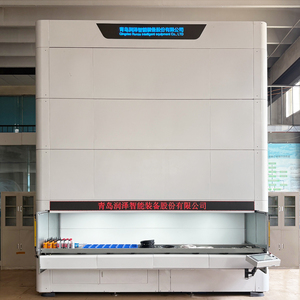
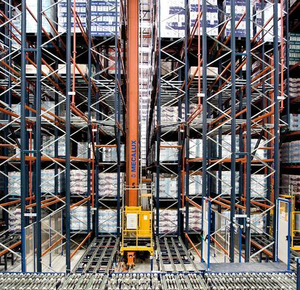
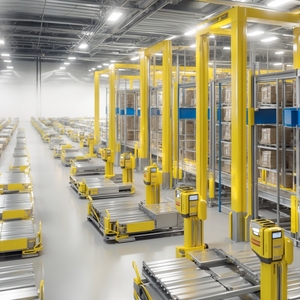
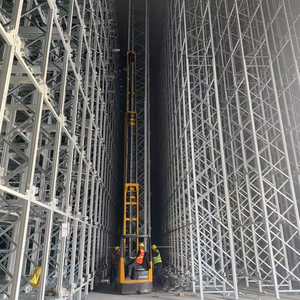
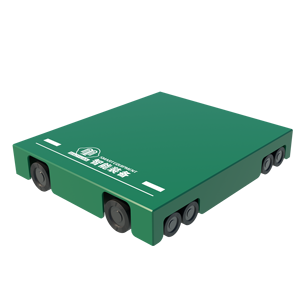
Singapore occupies a preeminent position as Southeast Asia's principal transshipment hub, aviation repair epicenter, and biomedical gateway. However, warehouse developers and 3PL enterprises face unmatched operational challenges: extreme industrial land scarcity, premium rental valuations across JTC (Jurong Town Corporation) developments, and rising labor costs. In industrial hubs spanning Tuas Mega Port, Jurong Innovation District, Pioneer, Changi North, and Tampines LogisPark, horizontal floor expansion is rarely economically feasible.
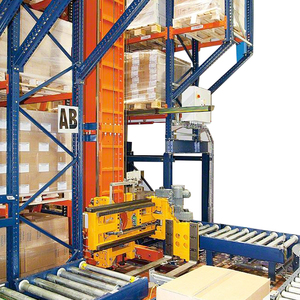
Consequently, forward-thinking logistics operations are pivoting toward vertical land intensification. High-bay automated warehousing—scaling between 15 and 30 meters clear height—converts underutilized airspace into dense, automated storage locations. Standard conventional selective racking, which requires 3.2 to 3.8-meter aisles for standard reach trucks or counterbalanced forklifts, yields an effective floor utilization rate of merely 35% to 42%. By upgrading to smart automated systems such as 4-Way Radio Shuttle Matrices and Unit-Load Automated Storage and Retrieval Systems (AS/RS), Singaporean facility operators routinely achieve an astounding 80% to 88% cubic storage density.
Singapore Regulatory Engineering Standard: All industrial racking designs delivered by our factory strictly comply with SS 584 (Specification for Multi-Tier and Selective Pallet Racking), incorporate structural deflection tolerances in compliance with BCA (Building and Construction Authority) mandates, and adhere to SCDF (Singapore Civil Defence Force) Chapter 6 Fire Code standards for transverse and longitudinal flue clearances.
Different industrial zones across the Lion City impose vastly disparate mechanical, thermal, and regulatory demands on warehouse racking infrastructure. Our custom-engineered systems are deployed across critical market verticals:
Rapid container turnaround demands dense, flexible storage. 4-Way Shuttles and high-throughput dynamic pallet flow systems handle fluctuating containerized import/export volumes with minimal human labor intervention.
Cold chain facilities run at staggering energy costs per cubic meter. Dense Pallet Shuttle systems operating down to -25°C eliminate redundant chilled aisles, curtailing thermal loss and slashing power overheads by over 35%.
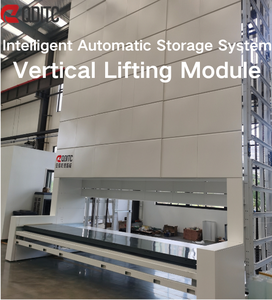
Pharmaceutical cleanrooms and distribution hubs mandate strict batch isolation, 100% FIFO trackability, and GMP-compliant finishes. Our enclosed Vertical Lift Modules (VLM) deliver dust-free, tamper-proof storage with automated audit trails.
Aviation maintenance facilities require secure, high-density access to tens of thousands of flight-certified parts. Vertical Lift Modules and narrow-aisle picking platforms optimize storage density for irregular high-value components.
Urban multi-storey warehouses in Tampines and Woodlands leverage hybrid mezzanine floors coupled with autonomous carton-handling mobile robots to satisfy same-day delivery expectations across the island.
Heavy-duty reinforced structural uprights with specialized containment drip trays, zinc-galvanized finishes, and seismic tie-backs designed explicitly for Jurong Island petrochemical and chemical blending facilities.
Singapore’s warehousing sector is undergoing a profound structural evolution guided by the Logistics Industry Transformation Map (ITM 2025). The focus has decisively shifted from static steel racking to fully dynamic, autonomous intralogistics ecosystems:
Unlike legacy 2-way shuttle carts that remain restricted to a single lane without manual forklift relocation, 4-way shuttles roam across lateral and longitudinal rails independently. Paired with integrated vertical reciprocating lifts, an intelligent fleet of 4-way shuttles navigates multiple racking elevations, automatically balancing workloads during peak throughput cycles. This system eliminates the single point of failure inherent in traditional stacker cranes and fits seamlessly into multi-storey ramp-up buildings with modest vertical ceilings (7m to 12m).
With manpower quotas tightly controlled under Ministry of Manpower (MOM) regulations, Singaporean warehouses are prioritizing the complete automation of floor-level pallet transit. Modern smart racking interfaces directly with Autonomous Mobile Robots (AMRs) and automated guided forklifts via standardized pick-and-delivery (P&D) stations, optical barcode arrays, and synchronized PLC controllers, enabling true "lights-out" 24/7 dark warehouse operation.
In high-density racking facilities exceeding 15 meters, minor forklift impacts or floor slab settlements can jeopardize structural equilibrium. Smart racking now integrates IoT strain gauges, tilt sensors, and laser telemetry along critical upright columns. Facility engineers receive real-time alerts if dynamic load vibration exceeds FEM 9.831 tolerances, mitigating catastrophic collapse risks before they manifest.
Selecting the optimal intralogistics structure requires a rigorous balance of land cost, pallet turnover velocity, ceiling height, and ROI timelines. The following matrix illustrates key performance metrics for Singapore logistics projects:
| Storage System Type | Cubic Density | Throughput Rate | Pallet Selectivity | Clear Height Suitability | Estimated Payback (SG Market) |
|---|---|---|---|---|---|
| Automated AS/RS (Stacker Crane) | Very High (85%+) | 120–180 pallets/hr/aisle | 100% (Single/Double Deep) | 15m to 35m | 3.0 – 4.5 Years |
| 4-Way Radio Shuttle Matrix | Ultra High (88%+) | High (Scalable Fleet) | Configurable (FIFO/LIFO) | 6m to 24m | 2.5 – 3.8 Years |
| Semi-Automated Pallet Shuttle | High (75%–80%) | Moderate (Forklift Dependent) | Batch / Deep Lane LIFO | 4m to 15m | 1.8 – 2.5 Years |
| Vertical Lift Module (VLM) | Maximum (Carton/Tray) | Up to 350 picks/hr | 100% Individual Part | 3m to 16m | 1.5 – 2.2 Years |
| Conventional VNA (Very Narrow Aisle) | Moderate (55%–60%) | Moderate (Man-Up Truck) | 100% Pallet | 8m to 15m | 1.2 – 2.0 Years |
Guangzhou Heda Shelves Co., Ltd., founded in 2001, stands as one of Asia's preeminent warehouse racking manufacturers. Our expansive 30,000 square meter (approx. 323,000 sq ft) manufacturing plant, staffed by over 300 experienced fabrication engineers, machinists, and project managers, produces up to 30,000 metric tons of precision cold-formed steel racking components monthly.
We roll-form high-tensile Q235B and Q355B structural coil certified under ISO 9001:2015 and European CE Marking (EN 15512). Our upright profiles exhibit superior torsional rigidity and exceptional buckling safety factors.
Our engineering division delivers preliminary 2D AutoCAD equipment layouts, 3D structural visual models, and accurate floor slab loading data within 24 hours of receiving your Singapore site architectural drawings.
High-humidity maritime conditions in Singapore accelerate corrosion in unsealed steel. Our automated 10-stage pretreatment (pickling, phosphating, de-greasing) and electrostatic powder coating ensure long-term, scratch-resistant durability.
Positioned near major Pearl River Delta ports, our factory ships directly to PSA Singapore or Jurong Port in optimized 20GP/40HQ shipping containers, cleanly packed and tagged for immediate site assembly.
We supply full structural calculation packages, steel tensile certificates, weld NDT inspections, and deflection modeling ready for submission to your Singapore Registered Professional Engineer (PE) and BCA approval.
With over two decades of global execution across North America, Europe, Southeast Asia, and the Middle East, our team possesses the technical acumen required to resolve complex industrial storage requirements.
Submit your warehouse clear height, building footprint dimensions, and pallet SKU specifications. Our structural engineering team will deliver a customized CAD layout, capacity optimization report, and competitive factory-direct quote within 24 hours.