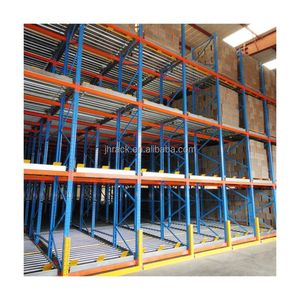
Galvanized FIFO Heavy Duty Pallet Flow Racking Foundation Bases
Galvanized structural base assemblies configured for dynamic gravity flow beds, distributing dynamic kinetic impact into slab subgrades.
Explore our heavy-duty upright baseplates, leveling assemblies, and structural stacking feet configured for Mexico City distribution hubs and severe seismic load transfers.
Galvanized structural base assemblies configured for dynamic gravity flow beds, distributing dynamic kinetic impact into slab subgrades.
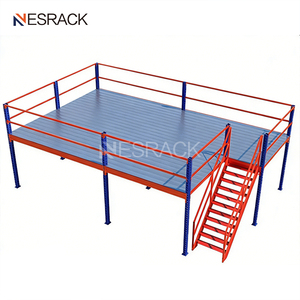
Heavy structural Q235B steel post baseplates engineered for 500–3000kg/sqm mezzanine loads with multi-bolt seismic anchor patterns.
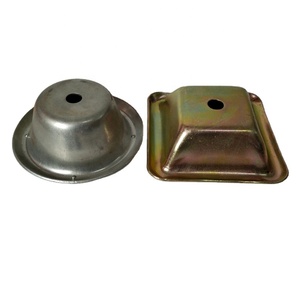
Precision-stamped anti-corrosive stainless steel nesting feet designed for multi-tier stacking stillages and hygienic cleanroom racks.
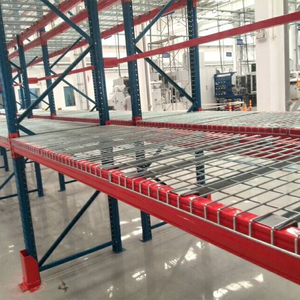
Standard and oversized floor contact plates engineered for 2000kg+ pallet bays, offering high ductile displacement during lateral shears.
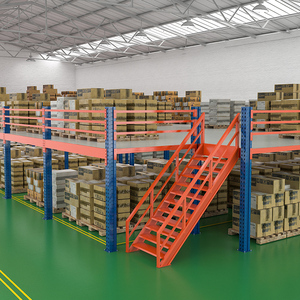
Threaded micro-adjustable baseplate mechanisms providing leveling precision across uneven slabs in older Mexico City central warehouses.
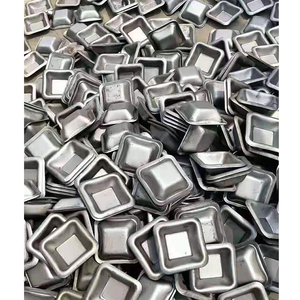
Deep-drawn carbon steel conical feet ensuring positive alignment locking for 4-high and 6-high portable stillage modular racking.
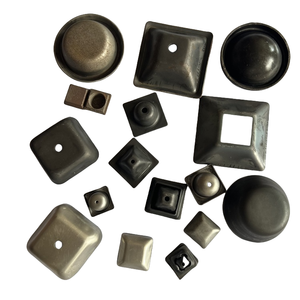
Ultra-durable cupped bottom feet tailored for post-to-cup secure locking in tier-one automotive stamping parts warehouses.
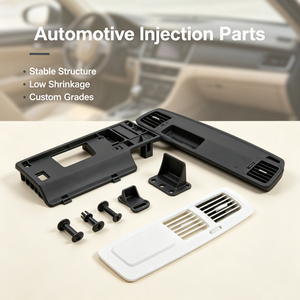
High-impact engineering resin feet for internal logistics skids, automated conveyor shuttles, and non-marking floor environments.
In logistics engineering, the upright frame column of a pallet racking structure absorbs vertical gravity loads, but the pallet racking foot (baseplate or footplate) acts as the critical structural interface transferring dynamic bending moments, axial compression, and base shear forces into the reinforced concrete slab. Within the Valley of Mexico (Valle de México), designing this foundation element requires calculating far beyond static dead weight.
Mexico City sits on a complex tectonic basin characterized by paleolake clay deposits (Zone III Lacustrine Subsoil) known for extreme wave amplification during seismic events originating from the Cocos-North American subduction zone. Standard uncalculated footplates risk punch-through shear failure, anchor bolt shearing, or premature base buckling under cyclic lateral displacement.
As nearshoring transforms Mexico City and the surrounding Estado de México (Edomex) into the premier logistics nexus of Central America, warehouse operators, logistics REITs (FIBRAs), and global 3PLs must procure baseplates certified under strict seismic design standards, including the Normas Técnicas Complementarias del Reglamento de Construcciones para el Distrito Federal (NTC-RCDF) and RMI MH16.1 specifications.
Our engineering team fabricates high-ductility baseplates using ASTM A36 and Q235B/Q355B structural steel, ranging from 6mm to 16mm thickness. Pre-punched anchor configurations accommodate dual or quadruple M12/M16 chemical adhesive anchors or high-performance mechanical wedge anchors designed to resist concrete cone breakout.
From the mega-fulfillment centers of the northern CTT corridor to urban consolidation facilities in Azcapotzalco, racking base hardware must adapt to specific soil profiles and operating loads.
The CTT region concentrates over 65% of Greater Mexico City's Class-A logistics square footage, housing tier-one e-commerce (Mercado Libre, Amazon) and retail distribution. Floor slabs here endure extreme throughput. Our heavy-duty seismic footplates with dual M16 anchors distribute axial column loads exceeding 18,000 kg while isolating uplift forces caused by high-bay narrow aisle (VNA) reach trucks operating at 14+ meters.
CDMX's central industrial districts feature brownfield reconversions where century-old concrete slabs present variable compressive strengths (f'c < 200 kg/cm²). In these facilities, standard expansion anchors can shatter subsurfaces. We configure custom oversized spreading footplates (250 x 250 x 12 mm) paired with epoxy chemical anchors to safely dissipate concentrated point loads without compromising the vintage floor slab.
Supporting automotive Tier-1 assembly, plastic injection, and pharmaceutical manufacturing, facilities along the Toluca corridor experience significant thermal shifts and continuous forklift dynamic impacts. Here, we supply heavy wrap-around column protector shoes and welded post stillage stacking feet that resist mechanical shearing during high-speed container staging.
Cold chain facilities in Iztapalapa and Tlalnepantla face frost heave and concrete crystallization. Our hot-dip galvanized footplates (minimum 85 µm zinc layer) prevent electrolytic sub-floor corrosion and brittle low-temperature fatigue failure down to -30°C.
Hot-Dip Galvanized / Q355BAutomotive clusters in Toluca require round cup-type stillage feet capable of nested dynamic stacking up to 5-high, preventing lateral slip when transporting motor blocks, chassis parts, and wiring harnesses across rugged industrial docks.
Conical & Round Stacking ShoesAutomated storage and retrieval systems demand extreme vertical tolerances (< 1:1000 plumbness). Our heavy-duty threaded leveling base assemblies enable precision mechanical shimming, eliminating post-installation column settling over soft soils.
Threaded Leveling AssembliesThe reconfiguration of North American supply chains under the USMCA / T-MEC framework has unleashed an unprecedented demand for modern logistics infrastructure across Central Mexico.
1. Escalation of Clear Heights: Modern speculative builds in Tepotzotlán and Huehuetoca feature clear heights of 12 to 15 meters, compared to legacy 8-meter specs. Every meter added increases the overturning moment at the baseplate exponentially during seismic ground accelerations.
2. Post-Tensioned Concrete Slab Protection: Modern logistics floors increasingly use post-tensioned (PT) tendons. Accidental tendon strikes during anchor drilling can lead to catastrophic slab failure. Racking baseplates must therefore feature flexible multi-hole punching arrays to allow anchor offset adjustments while maintaining full load ratings.
3. Institutional Institutionalization: Institutional capital funds and real estate investment trusts (FIBRAs such as Prologis, Uno, Terrafina) mandate that all installed storage systems feature stamped structural calculations verifying footplate yield stress under combined axial compression and lateral shear.
While demand for warehouse storage components has surged over 40% year-over-year in the Mexico City metropolitan zone, domestic structural component fabricators frequently struggle with long lead times, local steel price volatility, and limited automated stamping capacity for heavy-gauge seismic hardware.
Tier-1 contractors and system integrators operating in CDMX are bypassing secondary middleman channels to partner directly with high-volume, ISO-certified manufacturing facilities. Direct factory procurement offers three clear operational advantages:
Selecting the correct baseplate geometry requires balancing column axial capacity, anchorage edge distance, concrete slab compressive rating, and anticipated seismic spectral acceleration (Sa).
| Footplate Profile Type | Material Specification | Dimensions (L x W x T) | Anchor Hole Configuration | Max Axial Load (kN) | Seismic Zone Suitability | Primary Industrial Use Case |
|---|---|---|---|---|---|---|
| Standard Light-Duty Shoe | ASTM A36 / Q235B Cold-Formed | 120 x 100 x 4.0 mm | 2x Ø13mm (In-Line Center) | 45 kN | Zone I (Firm Volcanic Bedrock) | Light hand-loaded shelving, spare parts bins |
| Standard Heavy Selective | Q235B / Pickled & Oiled | 160 x 130 x 6.0 mm | 2x Ø18mm (Offset Staggered) | 110 kN | Zone I & Zone II (Transition) | Standard 1-ton GMA pallet bays, retail backrooms |
| Seismic High-Ductility Base | ASTM A572 Gr 50 / Q355B | 200 x 160 x 10.0 mm | 4x Ø18mm (Four-Corner Flange) | 185 kN | Zone III (Lacustrine Clay - CDMX) | Heavy e-commerce distribution, automated VNA racks |
| Super-Duty AS/RS Leveling Shoe | Structural Carbon Steel + Gussets | 260 x 220 x 16.0 mm | 4x Ø22mm (Dual Axis Slotted) | 280 kN | Zone III (Extreme Spectral Amplification) | Automated clad-rack buildings, high-bay mezzanines |
| Conical Stillage Nesting Cup | Deep-Drawn Stamping Steel | 150 x 150 x 5.0 mm (Cup) | Interlocking Pocket Weldment | 60 kN Dynamic | Universal Warehouse Mobility | Foldable automotive cages, transport stillages |
| Reinforced Polymer Foot Insert | High-Density Polypropylene + Glass | 100 x 80 x 25 mm | Friction Fit / Blind Rivet | 15 kN | Cleanroom / Non-Anchored | Food processing floor protection, mobile racking |
Proper baseplate selection is useless if the anchor attachment to concrete fails. Due to the high cyclic flexural strain experienced by warehouse slabs in Mexico City during earthquakes, anchor design must adhere to ACI 318 Chapter 17 (Anchoring to Cracked Concrete).
While mechanical wedge anchors remain the standard for budget installations, high-bay installations in Tultitlán and Tepotzotlán increasingly mandate pure vinyl ester or epoxy chemical injection anchors. Chemical adhesives achieve complete perimeter bond along the drilled concrete hole, eliminating lateral expansion stress rings and delivering 40% higher tensile uplift resistance in lower-strength or cracked concrete slabs.
When presenting warehouse layout plans for municipal building licensing in Cuauhtémoc, Miguel Hidalgo, or Cuautitlán Izcalli, the structural engineer of record (Director Responsable de Obra / Corresponsable en Seguridad Estructural) verifies three core baseplate formulas:
We supply CAD shop drawings, finite element stress analysis reports, and dual-unit (metric/imperial) mechanical properties to facilitate swift municipal approvals.
Guangzhou Heda Shelves Co., Ltd. operates a premier 30,000 m² (323,000 sq ft) manufacturing campus with 300+ dedicated engineers, automated stamping presses, and robotic welding lines. We deliver complete warehouse storage ecosystems, with a dedicated specialized division for upright baseplates, heavy post shoes, and custom structural stillage components.
We provide full container optimization (FCL) packaged specifically for maritime export to the Port of Manzanillo or Veracruz, complete with bilingual bill of lading (BOL), mill material test reports (MTR), and pallet banding engineered to survive transit without coating damage.
Direct answers for industrial purchasing managers, supply chain directors, and structural project leaders operating within the Mexican market.
Under the Mexico City Building Code (Reglamento de Construcciones para el Distrito Federal and its Normas Técnicas Complementarias de Diseño por Sismo), racking structures must be categorized by geotechnical zone: Zone I (Lomas/firm volcanic rock), Zone II (Transición), or Zone III (Lacustre/soft clay). For Zone III warehouses (e.g., Central de Abasto, Vallejo, parts of Tultitlán), spectral acceleration factors can exceed 0.45g to 0.60g. Racking feet must possess high rotational ductility with a seismic behavior factor of Q=2.0 or Q=3.0, demanding thicker steel baseplates (≥8mm to 12mm) and multi-anchor configurations designed to avoid brittle weld shearing during cyclic ground vibration.
We routinely export complete racking systems and modular baseplate components to Mexico under standard Incoterms (FOB, CIF, or DDP through authorized Mexican customs broker partners). Ocean shipments depart directly from major ports (Guangzhou/Shenzhen/Ningbo) to the Port of Manzanillo (Colima) on the Pacific coast, with typical sailing times of 20 to 24 days. From Manzanillo, cargo proceeds via bonded rail (Ferromex) directly to the Pantaco Intermodal Terminal in northern CDMX or by dedicated freight carrier directly to industrial parks in Cuautitlán, Tepotzotlán, or Toluca.
Yes. We provide complete 2D/3D CAD shop drawings, component structural properties, material mill test certificates (showing yield strength Fy, ultimate tensile strength Fu, and elongation percentage), and Finite Element Analysis (FEA) baseplate stress reports. These technical calculation packages are structured in accordance with RMI MH16.1 and international AISC standards, allowing your local Mexican Structural Corresponsible Engineer (Corresponsable en Seguridad Estructural) or Director Responsable de Obra (DRO) to review, validate, and stamp the submittals for local municipal operating licenses.
Pallet racking steel components and structural feet typically fall under Mexican TIGIE tariff classification (Fracción Arancelaria) 7308.90.99 ("Estructuras y sus partes de fundición, hierro o acero") or 7326.90.99 for specialized stamped stillage feet. Depending on current Mexican Ministry of Economy (Secretaría de Economía) trade updates and company IMMEX status, applicable duties or countervailing provisions can be verified prior to dispatch. We supply complete commercial invoices, packing lists with net/gross weights, and Certificate of Origin documentation to facilitate compliant customs entry through the SAT/Aduanas portal.
We deploy a two-tiered defense: First, metallurgical surface finishing consists of pickling, phosphating, and heavy electrostatic thermosetting epoxy-polyester powder coating (60–80 µm) cured at 180°C to 200°C, or hot-dip galvanization (≥85 µm) for cold-storage and high-humidity facilities. Second, for mechanical impact protection, we manufacture structural wrap-around upright column protectors and end-of-aisle heavy bullnose guards that bolt independently into the concrete floor, absorbing forklift collisions before impact forces reach the structural post-to-footplate weld.
Yes. Our automated CNC punching and laser cutting lines can reproduce baseplates and feet matching all major international upright profiles used in Mexico, including teardrop configurations, roll-formed Omega post shapes (55, 90, 100, 120mm profiles), and heavy European structural upright configurations. Simply send us a physical sample, CAD drawing, or column cross-section dimensions, and we will engineer a direct-fit replacement footplate maintaining full structural parity.
Send your warehouse floor plans, clear heights, pallet loads, and slab specifications. Our engineering team will deliver a comprehensive CAD baseplate schedule, structural calculations, and itemized landed quotation within 24 hours.