Lab & Cleanroom

Heavy-duty steel systems manufactured under ISO 9001:2015 and CE standards. Formed from certified Q235B cold-rolled steel with electrostatic thermosetting powder coating to handle Egypt's industrial and climactic conditions.
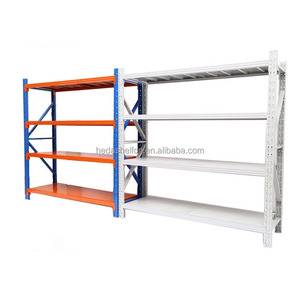
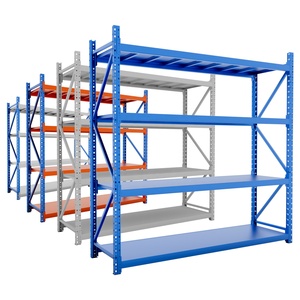
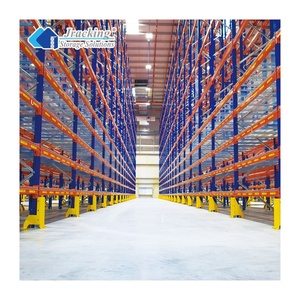
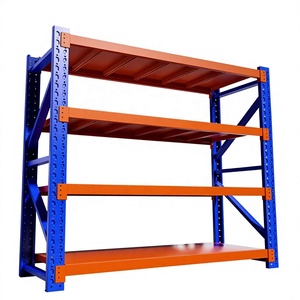
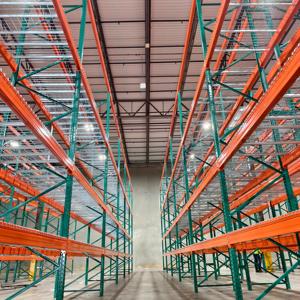
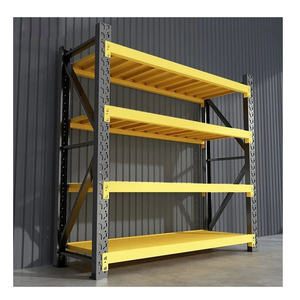
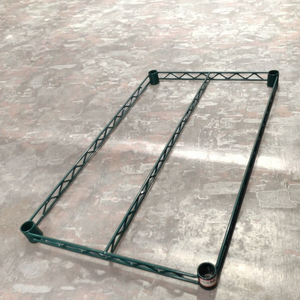
Egypt stands as the vital crossroad connecting Africa, the Mediterranean, and the Middle East. With government megaprojects, new dry ports, and designated economic zones, modern logistics facilities require high-performance pallet storage engineered specifically for local soil conditions, temperature fluctuations, and operational profiles.
Procuring metal pallet racks for operations across Cairo, Alexandria, the Delta, and the Suez Canal requires more than standard off-the-shelf specifications. Industrial zones like 10th of Ramadan City and 6th of October City face intense summer heat loads where facility temperatures regularly exceed 42°C, necessitating heat-cured polyester electrostatic powder coatings that will not embrittle or off-gas. In maritime environments such as Alexandria Port, Dekheila, and East Port Said, airborne chlorides and ambient humidity require rigorous anti-corrosion pretreatments (zinc phosphating followed by minimum 70-micron powder deposition) to prevent internal oxidation of closed-box roll-formed beams and omega upright columns.
For transshipment hubs, bonded warehouses, and dry ports in the Suez Canal Economic Zone (SCZone) and Ain Sokhna. Facilities manage high turnover volumes with varied pallet dimensions (Euro 1200x800mm, Standard 1200x1000mm, and industrial IBC totes). We configure high-bay Selective Pallet Racking and Very Narrow Aisle (VNA) systems reaching up to 15 meters clear height, yielding maximum volumetric storage efficiency per square meter of bonded footprint.
Egypt's primary consumer goods and pharmaceutical manufacturing belts experience high pallet turnover with rapid truck staging requirements. Our heavy-duty Drive-In and Push-Back racking systems compress storage corridors, converting up to 75% of wasted aisle area into dense pallet positions for bulk raw materials, bottle preforms, and packaged food products waiting for retail distribution.
Refrigerated warehouse cubic meters carry premium cooling energy costs in Egypt's agricultural export belt. We engineer semi-automated Radio Shuttle Racking systems that run inside deep channels at temperatures down to -30°C. By eliminating forklift transit within chilled lanes, thermal loss is restricted, pallet handling damage drops significantly, and worker exposure to extreme sub-zero temperatures is minimized.
Selecting the optimal structural profile requires evaluating pallet throughput speed, SKU variety, building clear height, and forklift handling constraints under the Egyptian Code of Practice (ECP 201) and international standards (EN 15512).
| Racking System | Pallet Selectivity | Space Utilization | Inventory Rotation | Handling Equipment Required | Optimal Egyptian Application |
|---|---|---|---|---|---|
| Selective Pallet Racking | 100% Direct Access | 40% – 50% | FIFO or LIFO | Standard Counterbalance, Reach Truck | 3PL Logistics, General Retail, Multi-SKU Spare Parts |
| Double Deep Racking | 50% Immediate Access | 60% – 65% | LIFO | Deep-Reach Pantograph Forklift | Dry Food Ingredients, Packaging Material Hubs |
| Drive-In Racking | Lane-Dependent Access | 70% – 80% | Strictly LIFO | Counterbalanced or Reach (Lane Entry) | Seasonal Agricultural Packhouses, Heavy Beverage Bulk |
| Radio Shuttle System | High Channel Selectivity | 85% – 90% | Flexible FIFO & LIFO | Standard Forklift (Loads lane mouth only) | Refrigerated Cold Stores, Egyptian Frozen Poultry/Meat |
| Heavy Cantilever Racks | Continuous Front Access | 55% – 70% | Open Storage | Side Loaders, Standard Forklifts | Steel Pipe, Aluminum Extrusions, Timber in Helwan & Borg El Arab |
*All upright frames and load beams are calculated under finite element analysis (FEA) to confirm safety factors greater than 1.5 against structural deflection limits (L/200).
Egypt's logistics modernization strategy is creating decisive shifts in how commercial warehousing assets are constructed, equipped, and automated.
Projects such as the 6th of October Dry Port (ODP) and 10th of Ramadan Dry Port divert shipping containers straight from seaports to inland terminals. This has triggered an urgent demand for standardized, modular pallet racks that can be scaled rapidly as container stripping and stuffing velocity escalates.
Industrial land lease prices in Greater Cairo and Giza have surged. Warehouses are maximizing clear heights from traditional 6-meter sheds to 12-to-16-meter modern logistics facilities. High-bay selective and narrow-aisle systems allow operators to double pallet storage capacity on the exact same building footprint.
Egypt remains the world’s leading exporter of citrus and a major supplier of potatoes, onions, and frozen strawberries. International supermarkets require strict traceability and temperature integrity. Exporters in Sadat City and Nubaria are transitioning to high-density radio shuttle racks that prevent box-crushing and thermal deterioration.
Booming online retail in Cairo, Alexandria, and Mansoura has spurred demand for multi-tier mezzanine floors and longspan shelving. Warehouses integrate rack-supported catwalks that multiply active pick faces for apparel, consumer electronics, and fast-moving grocery items without requiring external building permits.
With more than two decades of dedicated racking production, our integrated manufacturing campus guarantees structural precision, load compliance, and container freight optimization.
Equipped with continuous automated roll-forming lines, computerized multi-head punching systems, and robotic welding stations producing up to 30,000 metric tons of steel storage systems every month.
Full compliance with ISO 9001:2015 Quality Management System (Cert. 18624Q00169R0M) and European CE Marking (EN 1090-1 / 2435-CPR-8605159). Tensile testing and weld penetration verification accompany every mill order.
Our senior structural engineering team prepares comprehensive AutoCAD floor layouts, 3D clearance simulations, and seismic static calculations within 24 hours of receiving building plans and pallet dimensions.
Racking components are nested, bundled, and wrapped with protective corner guards to maximize cube utilization in 40ft High Cube (40HQ) containers, reducing ocean transit freight cost per pallet position to Alexandria or Sokhna.
Clear, direct answers regarding Egyptian customs procedures (Nafeza & ACI), foreign currency documentation, container shipping ports, and structural compliance.
We are fully registered and experienced with Egypt's Nafeza platform and CargoX blockchain documentation. Once you issue our proforma invoice and obtain your 19-digit ACID (Advance Cargo Information Declaration) number, our export team inputs the ACID number on all shipping manifests, commercial invoices, and bills of lading. All digital certificates, mill test sheets, and packing lists are uploaded to CargoX at least 48 hours before vessel departure, ensuring zero customs demurrage penalties at Egyptian ports.
We regularly accommodate Central Bank of Egypt (CBE) compliant trade financing tools, including confirmed, irrevocable Letters of Credit (L/C at sight) and Document Against Payment (D/P) through designated Egyptian commercial banks (such as CIB, NBE, or Banque Misr). We also accommodate standard telegraphic transfer (T/T deposit balance) structures, supported by transparent proforma documentation suitable for local foreign currency bank release.
For warehouses situated in 10th of Ramadan, Badr City, Suez, or the New Administrative Capital, routing containers to Ain Sokhna Port or East Port Said provides substantial road freight savings and faster gate-out turnaround. For facilities located in 6th of October, Sadat City, Alexandria, or Borg El Arab, Alexandria Port / Dekheila remains the optimal discharge port. We offer CFR, CIF, and FOB terms tailored to your local logistics preferences.
Yes. Our engineering designs comply with European EN 15512 standards and American RMI specifications, which fully align with the structural load and seismic lateral force calculations required under the Egyptian Code of Practice for Steel Construction and Bridges (ECP 205) and Loads and Forces (ECP 201). We supply complete structural calculation packages, steel grade certificates (Q235B / Q355B equivalent to S235JR / S355JR), anchor bolt shear data, and shop drawings ready for review by your Egyptian registered consulting engineer (Mohandess El-Istishary).
Our steel components undergo a thorough automated 9-stage surface treatment sequence consisting of chemical degreasing, ultrasonic rust removal, acid pickling, and hot zinc phosphating. This is sealed by an electrostatic polyester epoxy powder coating cured in infrared baking ovens at 180°C–200°C. The resulting 70–90 micron dry film thickness provides remarkable surface hardness that resists mechanical abrasion from desert airborne quartz sand while passing standard 500-hour ASTM B117 salt-spray tests for coastal facilities.
Every shipment includes numbered piece tags, color-coded bay elevation drawings, floor anchor torque tables, and step-by-step installation manuals. For major warehouse installations exceeding 2,000 pallet positions, we deploy senior bilingual site erection engineers to Egypt to supervise local assembly crews, oversee laser column plumbness alignment, and execute final dynamic load commissioning sign-offs.
Collaborate directly with our engineering department. Submit your warehouse dimensions, clear heights, pallet specifications, and target city in Egypt to receive an itemized factory-direct proposal within 24 hours.
Connect with a dedicated storage systems specialist right now.
Send an Inquiry