Supermarket Display Shelf Rack with Stackable Bins
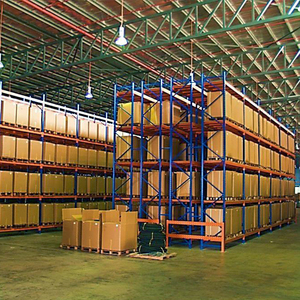
Customizable iron shelving systems configured for grocery wholesalers, retail staging, and bulk commercial distribution with heavy-gauge uprights.
Manufactured in our 30,000 m² campus with state-of-the-art cold-bending and electrostatic powder lines. Every system is customized to fulfill rigorous structural integrity criteria for distribution centers, manufacturing facilities, and automated transit hubs.
Customizable iron shelving systems configured for grocery wholesalers, retail staging, and bulk commercial distribution with heavy-gauge uprights.
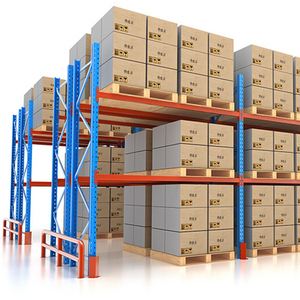
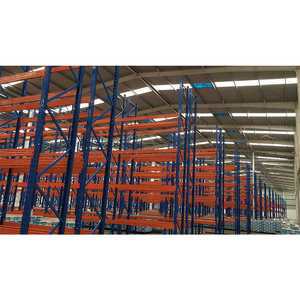
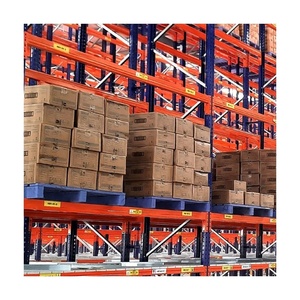
Multi-tier modular warehouse shelving engineered for high payload capacity, fast picking accessibility, and long-span durability under continuous duty.
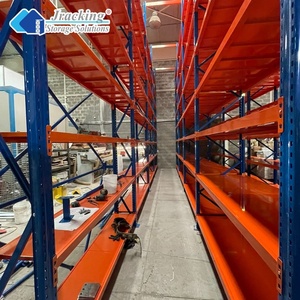
Industry-standard structural beam selective racking delivering 100% immediate selectivity with certified anti-corrosion electrostatic protective finishes.
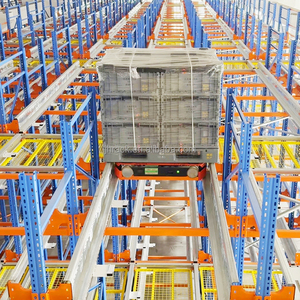
Deep-lane automated warehouse robotic shuttle storage system maximizing volumetric footprint while operating seamlessly in ambient and cold-store setups.
Reinforced upright columns and interlocking beam connectors calibrated for international distribution centers handling mixed pallet specifications.
High torsional rigidity boxed beam profiles designed for heavy bulk pallet storage, severe cycle rates, and enhanced forklift impact protection.
Versatile hybrid structural storage solutions accommodating high-rack warehouse layouts and interchangeable portable steel stacking frames.
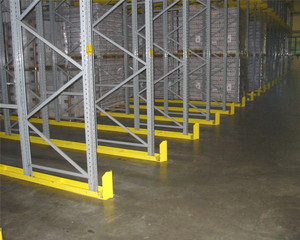
Continuous lane high-density structural frame racking minimizing aisle space, engineered specifically for homogenous bulk pallet warehousing.
Push back pallet racking is fundamentally transforming Japanese warehouse floor economics. By utilizing low-profile inclined structural rails and nested rolling carts, push back racking achieves 75% higher pallet density than selective racking without requiring reach truck operators to drive into the rack structure.
In a custom OEM push back configuration, steel carts ride on heavy-duty structural steel channel rails angled at an engineered 1.5% to 2.2% slope. When loading, the first pallet is deposited on the top nesting cart. As the second pallet arrives, the forklift mast gently pushes the first cart backward, exposing the next sub-level cart. Systems engineered for the Japanese market are typically configured 2, 3, 4, 5, or 6 pallets deep.
Because gravity brings trailing pallets forward to the picking aisle face whenever a lead pallet is retrieved (LIFO - Last-In, First-Out), retrieval cycle times are dramatically accelerated compared to traditional drive-in racking. Furthermore, rack upright collisions are minimized because the forklift remains strictly in the wide operating aisle, providing critical safety margins mandated under Japanese occupational safety rules.
| Engineering Attribute | Standard Push Back Specification | Custom Japanese OEM Requirement (JIS Compliant) |
|---|---|---|
| Pallet Standard Compatibility | 1200×1000mm (US/GMA) / 1200×800mm (EUR) | JIS T11 Standard (1100×1100mm) + Plastic/Steel Hybrid |
| Cart Nesting Profile | Standard fabricated plate with plain bearings | Multi-tiered heavy gauge box carts with shielded precision bearings |
| Rail Grade & Incline | 1.5° fixed slope (3–4 mm/m fall) | Seismic-damped, continuous weld slope with integrated end-stops |
| Steel Specification | Q235B / Structural Cold Formed | Q355B (equivalent to SS400/SM490) high-tensile structural steel |
| Earthquake Verification | RMI / ANSI MH16.1 seismic rating | JIS B 8941 & Building Standard Law of Japan (BSLJ) |
| Surface Protection | Standard industrial powder coat | Pickling + phosphating + 80-120μm anti-scratch electrostatic powder |
Japan presents unique logistics challenges: extremely high metropolitan industrial land costs, strict building height restrictions, and stringent earthquake safety codes. OEM custom push back pallet racking delivers the optimal balance of storage density and pick efficiency.
With warehouse rental costs soaring in Koto, Shinagawa, and Kanagawa Prefecture (Yokohama, Kawasaki), 3PL facilities cannot afford dead aisle volume. Our 3-to-5 deep push back designs unlock up to 60% more storage slots per bay, handling intermediate SKU turnover without requiring long travel aisles.
In major cold chain hubs such as Kobe and Osaka Port, energy consumption per cubic meter of refrigerated space is exorbitant. Push back racking concentrates frozen seafood, meat, and processed foods into ultra-dense blocks, using low-temperature steel carts and freeze-rated sealed bearings down to -30°C.
Supplying automotive assembly corridors across Aichi (Toyota/Nagoya) requires exact handling of standardized returnable plastic containers and steel crates. OEM custom-designed push back carts eliminate carton pinching, preventing part damage during rapid line replenishment sequences.
The enforceability of statutory overtime caps on commercial truck drivers (known as the "2024 Problem" in Japan) has sparked unprecedented demand for rapid truck loading cycles, shorter turnaround intervals, and streamlined cross-dock buffer storage.
Under revised Japanese labor laws, freight dispatchers face severe penalties if vehicle turnaround exceeds targeted staging windows. Traditional drive-in racking forces forklift drivers to navigate deep into dark rack bays, which slows cycle rates and risks structural bumps. In contrast, push back racking concentrates picking and loading into a single exterior aisle. Pallets glide forward automatically, shaving up to 45 seconds off every single pallet retrieval move and accelerating total truck staging by over 30%.
Japan is situated in one of the world's most active seismic regions. Racking engineers cannot merely calculate static floor loads; they must rigorously simulate dynamic horizontal shear acceleration. In our OEM manufacturing lines, upright columns for Japanese projects feature thicker steel gauges, oversized footprint baseplates with dual concrete chemical anchoring holes, and high-ductility cart retaining clips. In an earthquake event, our cart retention lips prevent nested carts from dislodging and cascading into work aisles.
While American warehouses standardize on 48×40 inch wooden GMA pallets and European hubs utilize 1200×800mm EUR pallets, Japan overwhelmingly employs 1100×1100mm square pallets (JIS T11). Western-made push back systems frequently fail when deployed in Japan because the cart width-to-depth aspect ratio does not properly seat JIS pallets, leading to cart jams. Our factory engineers manufacture OEM carts with bespoke wheel-base dimensions explicitly molded around JIS T11 plastic bottom runners and center-block reinforcements.
Operating since 2001, Guangzhou Heda Shelves Co., Ltd. controls the full vertical chain: from certified hot-rolled steel slitting to precision roll-forming, robotic welding, and automated powder coating.
Mill-certified Q355B structural steel coils inspected for chemical yield and tensile consistency before slitting.
Fully automated multi-station punch presses ensure pitch accuracy down to ±0.1mm for seamless beam hook locking.
Multi-roller cold-bending machines shape high-inertia column uprights and boxed step beams with zero micro-fracturing.
Automated robotic arms execute CO₂ shielded fillet welds on beam connectors and nested cart structural joints.
Nine-stage surface pre-treatment tank dip removes mill scale and establishes an anti-corrosion chemical adhesion bed.
Swiss Gema automated powder spray booths apply 80-120μm uniform thermoset polyester powder cure at 200°C.
Every batch of nested push back carts undergoes test track assembly to verify frictionless incline glide and braking.
Custom wooden cradles, corner guards, and steel strapped bundling optimized for direct container discharge at Japanese ports.
Direct answers for Japanese plant managers, procurement directors, 3PL developers, and material handling engineering consultants.
Japanese distribution centers predominantly rely on 1100×1100mm (JIS T11) injection-molded plastic pallets or steel skids. Unlike wooden GMA pallets which feature continuous bottom deckboards, JIS plastic pallets often incorporate multi-directional window openings and lower rib profiles. Our factory customizes the cart cradle geometry with transverse cross-supports, integrated centering guides, and low-deflection cart lips. This prevents the plastic runners from catching on the cart frame during loading and push-back cycles, guaranteeing smooth, stall-free operation.
Yes. Our engineering division utilizes finite element analysis (FEA) software to model vertical, lateral, and seismic loads. For installations across Tokyo, Osaka, and high-seismic zones, we provide comprehensive stress diagrams, column slenderness verification, and floor anchor shear calculations in full alignment with JIS B 8941 standards. These calculation packages are structured to facilitate smooth review and stamping by your local Japanese Architect / Kenchikushi (1級建築士) or structural engineering consultant.
Our main manufacturing facility in Guangzhou is strategically adjacent to major southern deepwater maritime ports (Nansha, Yantian, Shekou). Direct vessel transit from our dock to Tokyo, Yokohama, Nagoya, or Kobe ports takes just 4 to 7 days. We provide complete Japanese customs documentation packages, including Bill of Lading, Packing Lists with designated bundle IDs, Commercial Invoices, and RCEP Certificates of Origin, which allow our Japanese partners to benefit from preferential tariff rates under the Regional Comprehensive Economic Partnership agreement.
For storage depths of 2 to 5 pallets deep per lane, push back racking provides a substantially lower Total Cost of Ownership (TCO). Radio shuttle racking requires significant capital investment for robotic shuttle carriers, high-capacity lithium batteries, wireless RF transceivers, and specialized maintenance contracts. Push back racking operates entirely on gravity and mechanical nested carts. With no electronic motors, sensors, or charging stations, push back systems have virtually zero routine electronics maintenance, zero downtime from dead batteries, and an operational lifespan exceeding 15–20 years.
Absolutely. We build specialized cold-chain push back systems engineered specifically for severe sub-zero environments. For freezer applications, we specify low-temperature certified steel that resists cold embrittlement, stainless steel flanged cart wheels, sealed cryogenic low-temperature grease bearings (operating down to -40°C), and corrosion-resistant powder coatings or hot-dip galvanized structural rails. This guarantees that condensed humidity will not freeze cart wheel bearings or cause binding in high-throughput frozen distribution warehouses.
Yes. Guangzhou Heda Shelves Co., Ltd. serves as an experienced OEM/ODM manufacturing partner for global racking suppliers, material handling integrators, and system dealers. We can manufacture push back assemblies, carts, and upright frames in your designated corporate RAL colors, attach your private-label branding tags, and supply standardized imperial or metric installation manuals tailored to your brand's specifications.
Send our senior engineering team your warehouse architectural layout, clear ceiling heights, pallet load dimensions, and forklift specifications. We will generate a complimentary 2D CAD plan, 3D spatial rendering, and itemized factory-direct quotation within 24 hours.