Industrial Storage Systems & Material Handling Racks
Explore our factory-engineered storage systems designed to maximize vertical cubic volume, withstand high seismic base shear, and streamline freight logistics into the Puget Sound industrial corridor.
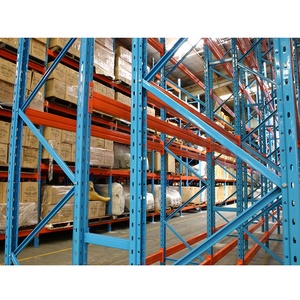
Factory Supply AS 4084 Pallet Racking System Australian Standard Steel Storage Pallet Racking for Garages and Warehouses
- Standard: AS 4084 & EN 15512
- Load: 1,000–4,500 kg/level
- Material: Q235B / Q355B Steel
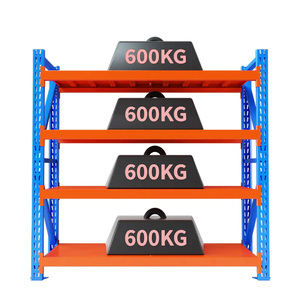
High Quality 500kg Steel Storage Racks 5-Layer Adjustable Pallet Racking Heavy Duty Warehouse Shelf System Factory Hot Sale
- Layer Capacity: 500 kg / tier
- Adjustability: 50 mm / 75 mm pitch
- Finish: Electrostatic Powder Coat
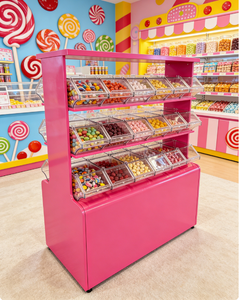
Factory Customizable Pink Iron Shelving Supermarket Display Shelf Rack with Stackable Bins for Bulk Grocery and Candy Stores
- Configuration: Modular Bin Stacking
- Application: Front-End Fulfillment
- Custom Color: RAL Matched
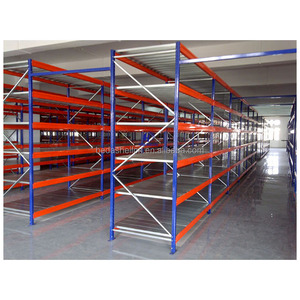
Heda Manufacture Storage Shelves Metal Boltless Warehouse Shelves System Medium Duty Racks for Sale
- Type: Boltless Fast-Lock Rivet
- Shelf Capacity: 200–800 kg/shelf
- Assembly: Fast Knock-Down
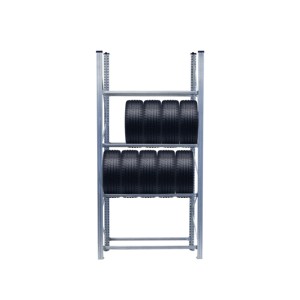
Hot Sale Heavy-Duty Adjustable Galvanized Steel 2-Layer Stacking Rack for Tire Storage & Warehouse
- Anti-Corrosion: Hot-Dip Galvanized
- Stacking: 4 to 5 high dynamic
- Load: 1,200 kg per pallet unit
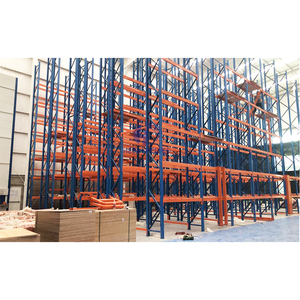
Industrial Adjustable Beam Shelving Heavy Duty Steel Selective Pallet Rack Display Rack Epoxy Coating for 2000/3000/4000Kg
- Beam Load: 2,000–4,000 kg/pair
- Upright Frame: 90/100/120 profile
- GMA Pallet: 48″ × 40″ Optimized
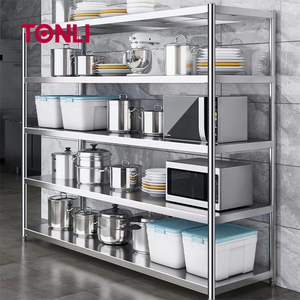
Commercial Heavy Duty Stainless Steel Display Shelves Adjustable Height Legs 300kg/m Load Capacity for Restaurant Kitchens
- Alloy: AISI 304 / 316 Food Grade
- Capacity: 300 kg/meter
- Standards: NSF Sanitary Cleanroom
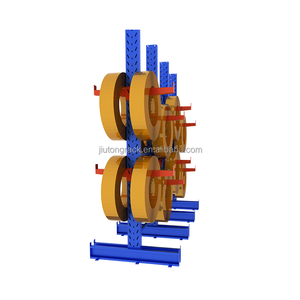
High Quality Warehouse Cheap Price Cable Drum Storage Rack For Wire Spool Storage
- Design: Axle Support Spindle
- Spool Capacity: Up to 3,500 kg/reel
- Integration: Direct Unwinding Reel
Localized Application Scenarios Across the Greater Seattle Industrial Basin
The logistics geography of Western Washington is defined by severe topographical constraints, tight industrial real estate zoning, and strategic convergence around the Northwest Seaport Alliance (NWSA) container terminals in Seattle and Tacoma. Single pallet racking systems deployed in this market must address complex material handling demands across distinct regional sub-clusters:
Kent Valley E-Commerce & 3PL Fulfillment
Stretching through Kent, Auburn, and Sumner, Kent Valley is the Pacific Northwest's primary distribution powerhouse. Facilities operating clear heights from 32 to 40 feet require single-selective, high-bay configurations supporting high SKU churn and continuous reach-truck access for 48″ × 40″ GMA pallets, optimizing throughput for third-party logistics and omni-channel retail distribution.
Aerospace & Precision Tooling (Everett & Renton)
Surrounding Boeing assembly plants and Tier-1 sub-assembly corridors, aerospace storage requires heavy-duty single pallet racking with custom load levels up to 8,800 lbs per beam pair. These bays house heavy composite tooling, specialized sheet metal jigs, aluminum extrusion cassettes, and high-value flight hardware under rigid AS9100 material traceability protocols.
Cold Chain & Maritime Seafood (Seattle/Tacoma Docks)
Servicing the North Pacific fishing fleets and blast-freezer facilities near Terminal 91 and the Port of Tacoma, single pallet racking must withstand sub-zero operating environments down to -25°F (-31°C). Structural steel profiles and specialized anti-embrittlement powder formulations prevent structural fatigue while resisting salt-mist maritime atmospheric corrosion.
Given Seattle's urban density and the physical barriers of Puget Sound to the west and the Cascade Range to the east, land availability is at an extreme premium. Single pallet racking engineered by HEDA Shelves addresses this density bottleneck by utilizing high-rigidity upright column geometry, enabling warehouses in Tukwila, SeaTac, and Fife to build vertically without exceeding floor slab load-bearing capacities.
Seismic Engineering & Regulatory Mandates in the Puget Sound Basin
Warehouse racking procurement in the Greater Seattle area cannot treat structural racking as mere furniture; by statutory law under the Seattle Building Code (SBC), International Building Code (IBC 2021/2024), and ASCE 7-22, industrial pallet racks are classified as architectural steel structures subject to life-safety building permit issuance.
Seattle sits within one of the highest seismic hazard zones in North America, dominated by the Cascadia Subduction Zone and the active Seattle Fault Zone. Pallet rack systems regularly fall into Seismic Design Category (SDC) D, E, or F. Designing single pallet racking for this territory necessitates advanced finite element engineering calculations to resist dynamic lateral and torsional forces:
| Engineering Dimension | CE Standard (EN 15512 / EN 15620) | US / Seattle Standard (RMI ANSI MH16.1 / ASCE 7-22) | HEDA Shelves Manufacturing Alignment |
|---|---|---|---|
| Steel Yield Strength ($F_y$) | EN 10025 S355JR / S235JR certified | ASTM A1011 / A572 Grade 50 equivalent | Dual Mill Certified Q355B high-tensile hot/cold coiled steel |
| Seismic Base Shear ($V$) | Eurocode 8 spectral response parameters | $V = C_s W$ (Mapped spectral response $S_s, S_1$) | Customized spectral acceleration design matching Seattle Site Class C/D |
| Base Plate & Anchor Bolts | ETAG 001 / EAD bonded chemical anchors | ACI 318 Chapter 17 cracked concrete seismic anchors | Enlarged seismic footplates (8″×8″ to 10″×10″) with dual Hilti bolt pattern |
| Beam-to-Column Connectors | 5-claw hooks with safety lock pins | RMI beam locking mechanism with 1,000 lbs uplift | Patented 4-pin/5-pin ductile moment connectors resisting seismic upward kick |
| Permit Documentation | CE Declaration of Performance (DoP) | SDCI stamped structural calculation package by WA PE | Comprehensive component specs & 3D models delivered for immediate local PE seal |
Under the City of Seattle Department of Construction and Inspections (SDCI) plan review guidelines, pallet racks taller than 8 feet require dedicated structural permits and high-piled combustible storage review (International Fire Code Chapter 32). Inadequate baseplate thickness or standard anchor embedment depths will fail municipal structural inspection. HEDA Shelves engineers structural footings, column frame depths (standard 42″ to 48″ for single racks), and horizontal/diagonal frame bracing nodes to ensure zero permanent plastic deformation under dynamic spectral acceleration shocks.
Emerging Trends Shaping Seattle Material Handling Logistics
The Pacific Northwest warehousing sector is evolving rapidly under macroeconomic, environmental, and technological pressures. Buyers and warehouse operations executives must incorporate four decisive industry vectors when designing new rack storage systems:
Very Narrow Aisle (VNA) & Vertical Stacking
With Seattle triple-net (NNN) warehouse lease rates hovering near record highs ($14.00 to $18.50/sq ft across Kent and Tukwila), logistics operators are compressing aisle widths from 12-foot standard counterbalance lanes down to 5.5-foot VNA lanes. Single pallet racking systems are being manufactured up to 40 feet in vertical elevation to capture maximum clear height.
Sprinkler & Flue Space Mandates (NFPA 13)
Seattle and King County fire marshals enforce strict adherence to NFPA 13 and IFC Chapter 32 fire codes. Modern single pallet racks must integrate mandatory 6-inch longitudinal flue spaces and transverse flue space maintainers, alongside beam clearances optimized for Early Suppression Fast Response (ESFR) ceiling sprinkler head water cone dispersal.
Low-VOC & Decarbonized Steel Fabrication
Washington State's Clean Buildings Act and stringent ESG procurement guidelines adopted by major Seattle technology and retail giants prioritize eco-conscious manufacturing. HEDA Shelves employs heavy-metal-free electrostatic powder coating curing processes, generating zero volatile organic compound (VOC) emissions while exceeding 500-hour salt spray ASTM testing.
Seattle Warehouse Manager FAQ
Direct, technical answers addressing municipal building codes, seismic engineering certifications, shipping transit lines, and container logistics into Puget Sound ports.
How do HEDA Shelves rack systems pass City of Seattle (SDCI) seismic reviews?
Our engineering office generates full CAD elevation plans, steel section modulus tables, and connection moment-capacity data strictly aligned with ASCE 7-22 and RMI MH16.1 specifications. When local Seattle plan examiners require a Washington State Professional Engineer (PE) stamp, our calculation packages integrate seamlessly into local engineering firms' finite element analysis models, ensuring fast permit approval without structural re-engineering.
What shipping ocean routes are utilized for freight delivered to Seattle/Tacoma?
Shipments are packed into containerized 40ft HQ ocean containers at our factory and routed through direct Pacific trans-ocean shipping lines calling directly at the Northwest Seaport Alliance (NWSA) terminals in Seattle (Terminal 5, Terminal 18) and Tacoma (Husky Terminal, Pierce County Terminal). Standard ocean transit averages 14 to 18 days, significantly faster than East Coast port entries.
Are your beam lengths and frame depths configured for North American GMA pallets?
Yes. While we are CE certified under European EN standards, all racking manufactured for the North American market is dimensioned around imperial GMA pallets (48″ deep × 40″ wide). Standard frame depths are 42″ (providing standard 3″ pallet overhang front and back) and standard beam lengths are 96″ (two pallets per level) or 144″ (three pallets per level), with wire mesh decks engineered in inches.
What is the structural difference between single-selective and double-deep racking?
Single-selective racking maintains one pallet depth per aisle face, providing 100% direct accessibility (selectivity) to every pallet position—crucial for high-turnover SKUs. Double-deep racking stores pallets two-deep using pantograph reach trucks, boosting storage density by up to 30% while reducing aisles, though it converts storage logic to Last-In, First-Out (LIFO). We engineer both systems to order.
How does CE Certification (EN 15512) verify quality for US building inspectors?
CE Marking under the Construction Products Regulation (CPR 305/2011, Certificate No. 2435-CPR-8605159) validates that our factory production control, raw steel metallurgical testing, automated welding, and dimensional tolerance checks are audited by accredited third-party notified bodies. This documented traceability gives US building departments verified empirical yield data exceeding standard domestic assumptions.
What floor slab concrete specifications are required for heavy single pallet bays?
For standard high-bay single pallet racking (up to 28 feet), an industrial reinforced concrete slab thickness of 6 to 8 inches with minimum 3,000 to 4,000 PSI compressive strength is typically required. During layout development, our engineers calculate maximum point loads per post to ensure column baseplates and wedge anchor embedment depths remain safely within the concrete punching shear limit.
Guangzhou HEDA Shelves: Engineering Behind the Steel
Founded in 2001, Guangzhou Heda Shelves Co., Ltd. has grown over 25+ years into one of the world's most sophisticated racking manufacturing campuses, delivering factory-direct pricing, structural precision, and turnkey design to North American commercial enterprises.
Engineer Your Seattle Facility with High-Performance Single Pallet Racking
Contact our technical engineering team today. Provide your clear building dimensions, pallet weight specifications, and forklift models to receive a free 2D/3D CAD layout, load capacity calculation sheet, and container-landed quotation within 24 hours.