High-Density Warehouse Racking Systems & Industrial Storage Units
Explore our certified range of high-bay upright frames, heavy-duty load beams, structural cantilever arms, and dynamic roller tracks manufactured strictly to EN 15512, RMI ANSI MH16.1, and ISO 9001 quality controls.
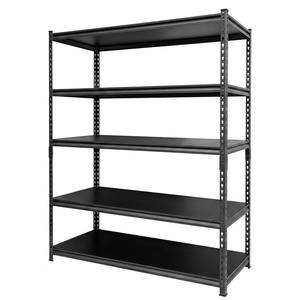 Medium Duty
Burst Silver Finish 5 Shelf Steel Display Storage Rack 200kg Capacity MDF Shelving Unit
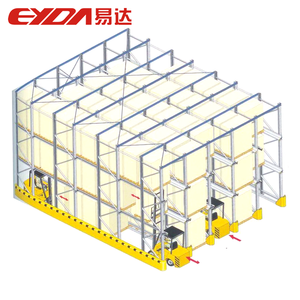 High Density
Heavy Duty 5 Layer Drive in Pallet Storage Racking System Drive-Thru LIFO/FIFO Rails
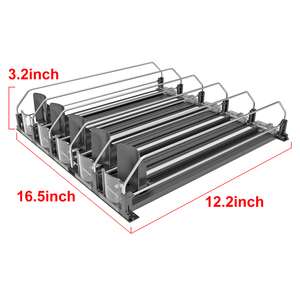 Retail & Picking
Automatic Spring Loaded Slow Motion Adjustable Multi-functional Beverage Pusher Shelf
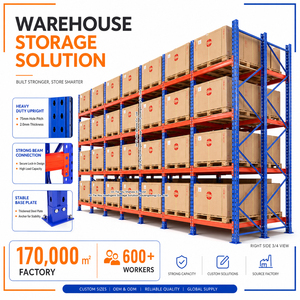 Heavy Pallet
4-Level Heavy Duty Warehouse Storage Rack Heavy Duty Pallet Shelving Factory Supply
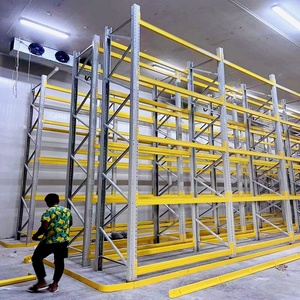 VNA System
Storage Shelf Warehouse Heavy Duty Industrial Pallet Racking Narrow Aisle Selective Rack
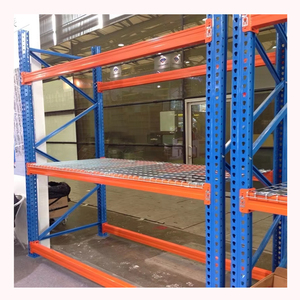 Industrial Deck
Heavy Duty Warehouse Storage Industrial Shelf Rack Metal Shelving with Galvanized Steel Deck
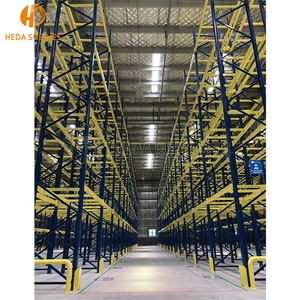 Medium Longspan
Factory 4-Layer Medium Duty Rack Corrosion Protected Warehouse Industrial Shelving Units
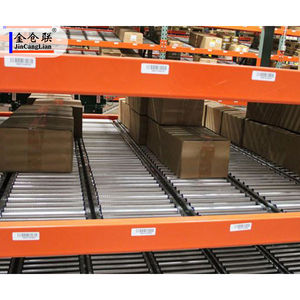 Gravity Flow
Warehouse Gravity Storage Racking Live Gravity Pallet Flow Rack Cooler Shelving and Racks
The Engineering Fundamentals of Very Narrow Aisle (VNA) Storage
In modern high-throughput supply chain hubs, industrial square footage costs have escalated rapidly, driving distribution centers, third-party logistics providers (3PLs), and FMCG enterprises to utilize full vertical cubic airspace. Standard wide-aisle counterbalance forklift systems demand generous operating aisle widths between 3.5 and 4.2 meters (11.5 to 13.8 feet). By contrast, Very Narrow Aisle (VNA) racking systems compress operating corridors down to an ultra-compact 1.5 to 1.8 meters (5.0 to 5.9 feet), yielding immediate floor-space savings of up to 45% while liberating up to 50% more pallet locations within an identical footprint.
Crucially, unlike deep-lane high-density storage methods such as Drive-In, Push-Back, or Radio Shuttle systems, a VNA configuration retains uncompromised 100% individual pallet selectivity. Every stored unit load remains instantaneously pickable without double-handling adjacent inventory. However, operating heavy pallet loads (typically 1,000 kg to 1,500 kg per position) at elevated lift heights spanning 10 to 18 meters introduces extreme physical and mechanical demands upon the racking framework, anchoring metallurgy, beam-to-column connector assemblies, and concrete slab specifications.
Critical Structural Prerequisite: Deflection Ratios & Sway Dynamics
Under European EN 15512 and North American RMI (Rack Manufacturers Institute) MH16.1 design standards, tall VNA upright profiles must be calculated with stringent lateral displacement thresholds. As man-up or man-down turret trucks travel and hoist loads simultaneously, dynamic horizontal impact forces (braking, acceleration, mast tilt) exert substantial shear torque onto the beam end connectors. Guangzhou Heda Shelves applies specialized cold-formed Q355B multi-flanged columns paired with heavy-gauge welded baseplates and seismic cross-aisle portal ties to maintain sway deflection below L/500 under fully loaded operational cycles.
Mechanical Rail Guidance vs. Inductive Wire Guidance
Because the operating clearance between the turret truck chassis/load profile and the racking framework is frequently as narrow as 75 mm to 100 mm on either side, human manual steering inside the aisle is eliminated. Two industrial guidance systems prevail:
1. Mechanical Guide Rails: Robust hot-rolled unequal structural steel angles (typically L100×75×8mm or L125×75×10mm) are anchored directly to the finished concrete slab along the full length of the run, featuring heavy tapered entry horns at aisle mouths. Guide rollers mounted to the turret truck chassis interface directly with the vertical face of the angle. While mechanically indestructible, structural steel guide rails can hinder low-level case-picking or floor-level pallet drops and require precise floor anchoring using high-shear chemical anchors.
2. Inductive Wire Guidance: A continuous high-frequency copper conductor cable (transmitting frequencies between 4.5 kHz and 9.0 kHz) is embedded into a shallow 4 mm wide × 15 mm deep laser-sawn slot in the center of the aisle, backfilled with industrial-grade polyurethane resin. Antenna sensors mounted front and rear beneath the specialized VNA vehicle track the electromagnetic field and execute continuous micro-steering adjustments with sub-millimeter precision. Wire guidance creates entirely flush floor corridors, enabling seamless cross-aisle foot traffic, multi-aisle entry without physical deflection bumps, and streamlined cleaning operations.
High-Density Storage Systems: Comparative Technical Matrix
A rigorous engineering comparison between Very Narrow Aisle (VNA) racking and alternative industrial warehousing systems across density, capital outlay, selectivity, and operational efficiency.
| Storage System Type | Typical Aisle Width | Floor Space Utilization | SKU Selectivity | Storage Rotation | Slab Flatness Spec | MHE Investment Index |
|---|---|---|---|---|---|---|
| Very Narrow Aisle (VNA) | 1.5m – 1.8m (5.0 – 5.9 ft) | 85% – 90% (High) | 100% Direct Access | FIFO or LIFO | VDMA / TR34 DM1-DM2 | High (Specialized Turret) |
| Standard Selective Racking | 3.2m – 3.8m (10.5 – 12.5 ft) | 40% – 50% (Standard) | 100% Direct Access | FIFO or LIFO | Standard Class FM2 / FM3 | Low (Standard Counterbalance) |
| Double-Deep Pallet Rack | 3.0m – 3.4m (9.8 – 11.2 ft) | 60% – 65% (Moderate) | 50% Immediate Access | LIFO Priority | Standard Industrial Flatness | Moderate (Pantograph Reach) |
| Drive-In / Drive-Thru | Lane Entry Only (No Aisles) | 75% – 85% (High) | Low (Bulk SKU Batches) | Strict LIFO (FIFO in Drive-Thru) | Standard Industrial Flatness | Low to Moderate |
| Radio Shuttle Cart Racking | Cart Automated in Lanes | 85% – 92% (Very High) | Moderate (By Lane Depth) | Programmable FIFO / LIFO | Standard Industrial Flatness | High (Automated Carriers) |
| Pallet Flow (Gravity Roller) | Charge / Discharge Faces | 80% – 88% (High) | Lane-Dependent | Enforced Strict FIFO | Standard Industrial Flatness | Moderate (Gravity Driven) |
Note: Data compiled based on standard GMA 48×40 inch (1219×1016 mm) and Euro 1200×800 mm load profiles with clear ceiling heights between 10.0m and 14.5m.
Future Procurement Trends in Very Narrow Aisle Racking (2026–2032)
Strategic analysis of macroeconomic shifts, intralogistics robotics, automated material handling convergence, and sustainability criteria reshaping international racking tenders.
Convergence of Autonomous VNA-AGVs & AMRs
The manual operator in a man-up turret truck represents an escalating operational cost and labor safety risk at heights above 12 meters. Forward-thinking enterprise supply chains are aggressively commissioning Driverless Automated Guided VNA Trucks (VNA-AGVs) and Autonomous Mobile Reach Masts. These robotic platforms rely on hybrid SLAM navigation, optical safety LiDARs, and 3D time-of-flight cameras, demanding factory tolerances of ±1.0mm in racking beam-to-column connector seating to eliminate false-positive obstacle detection stops.
Ultra-Stringent Slab Flatness & Laser Grinding Specifications
Because vertical mast amplification transforms microscopic floor irregularities into severe lateral mast oscillations (sway) at 15 meters, the procurement process now mandates tight floor coordination prior to installation. Compliance with VDMA 15251 guidelines and Concrete Society TR34 (Defined Movement Class DM1) is now routinely stipulated in contracts. Facilities unable to cast Superflat slabs from the outset are deploying computer-controlled laser-grinding robotics across the VNA wheel tracks to guarantee high-speed operation without vehicle interlock trips.
Green Steel Metallurgy & Zero-VOC Powder Finishing
Global logistics REITs and multinational corporations enforce Scope 3 carbon emission disclosures across all capital expenditure goods. Racking procurement tenders now prioritize manufacturers utilizing certified low-emission electric arc furnace (EAF) coiled steel, complete with verified Environmental Product Declarations (EPDs). Furthermore, chemical pretreatment has transitioned from toxic hexavalent chromium to zirconium-based nano-ceramic pickling and phosphating, paired with 100% recyclable, TGIC-free thermoset powder coatings that yield near-zero VOC emissions.
Guangzhou Heda Shelves Co., Ltd. — Engineering Precision Since 2001
For more than two decades, Guangzhou Heda Shelves Co., Ltd. has stood at the forefront of heavy-duty industrial storage manufacturing. Operating from our state-of-the-art 30,000 m² (approx. 323,000 sq ft) manufacturing campus staffed by 300+ certified structural engineers, robotic welding technicians, and quality assurance inspectors, we command an integrated monthly processing volume of over 30,000 metric tons of structural and high-tensile cold-rolled steel.
Unlike commercial trading intermediaries, Heda Shelves operates as a vertically integrated engineering manufacturer. We execute every production milestone under rigid ISO 9001:2015 quality management systems: from continuous automated roll-profiling of specialized omega-shaped upright columns to high-frequency robotic seam welding of box and step beams, through multi-stage automated electrostatic powder coating lines. We supply turnkey OEM and ODM storage programs for top-tier supply chain distributors, system integrators, and Fortune 500 distribution operations across the USA, Canada, Europe, Latin America, Southeast Asia, and Australia.
International Code Compliance & Engineering Deliverables
Every VNA pallet racking system exported by Heda Shelves is custom-engineered to meet the strict building codes and seismic zones of the client's destination:
- North American Compliance: Calculations structured according to RMI ANSI MH16.1 specifications, AISI S100 cold-formed design criteria, and ASCE 7 seismic parameters, supplied in imperial units (lbs, ft, in) for seamless local Registered Professional Engineer (EOR) stamping.
- European Harmonization: Comprehensive structural limit-state validation under EN 15512 (Steel static storage systems), EN 15620 (Tolerances, deformations and clearances), and Eurocode 3 (EN 1993-1-3), accompanied by CE Certification (2435-CPR-8605159).
- Rapid Turnaround Engineering: Comprehensive 2D CAD floorplans, 3D structural elevation models, and accurate bills of materials (BOM) issued within 24 hours of warehouse data submission.
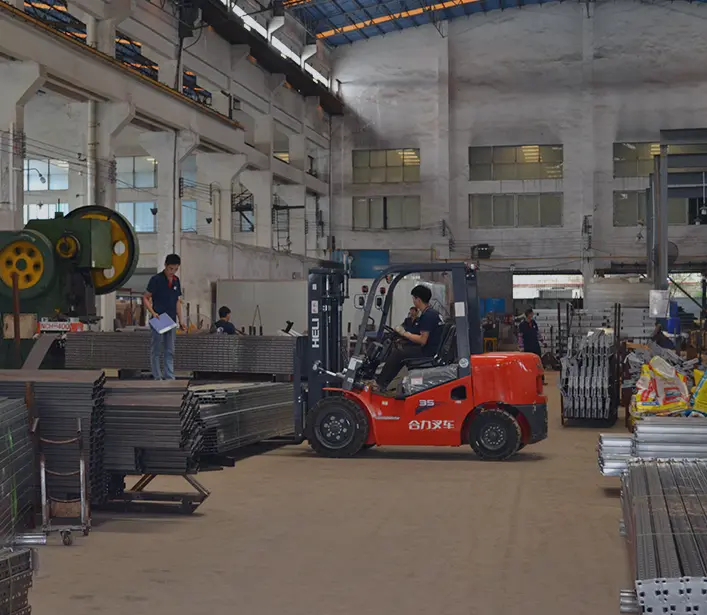


Precision Manufacturing & Testing Sequence
Every cold-formed upright frame, beam connector, and guide rail component passes through our rigorous 10-step quality control lifecycle before export container dispatch.
 Step 01
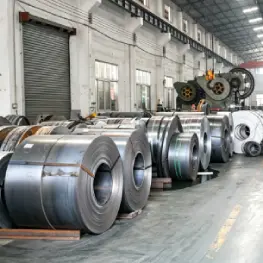
Raw Material Metallurgy
Certified prime Q235B & Q355B hot-rolled coil steel verified for tensile yield, elongation, and chemical composition.
 Step 02
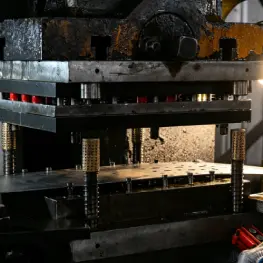
CNC Column Punching
High-speed continuous hydraulic punching ensures pitch spacing tolerance within ±0.1mm for 50mm/75mm/76.2mm intervals.
 Step 03
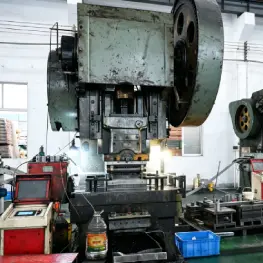
Continuous Roll Forming
Multi-stand CNC progressive roll formers produce stiffened omega upright sections and interlocking box beam profiles.
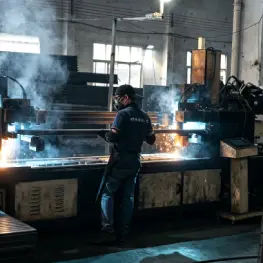 Step 04
Robotic Seam Welding
Dual-torch robotic MIG welding systems fuse heavy 3-claw and 4-claw stamped beam end-connectors with zero weld spatters.
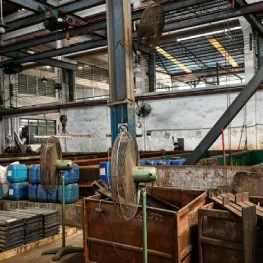 Step 05
Pickling & Phosphating
9-stage chemical wash line strips mill scale and applies a nano-ceramic phosphate conversion coat for maximum adhesion.
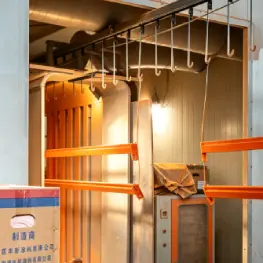 Step 06
Electrostatic Coating
Automated reciprocators apply uniform 60–90μm thermoset polyester powder coat, cured at 200°C for high impact durability.
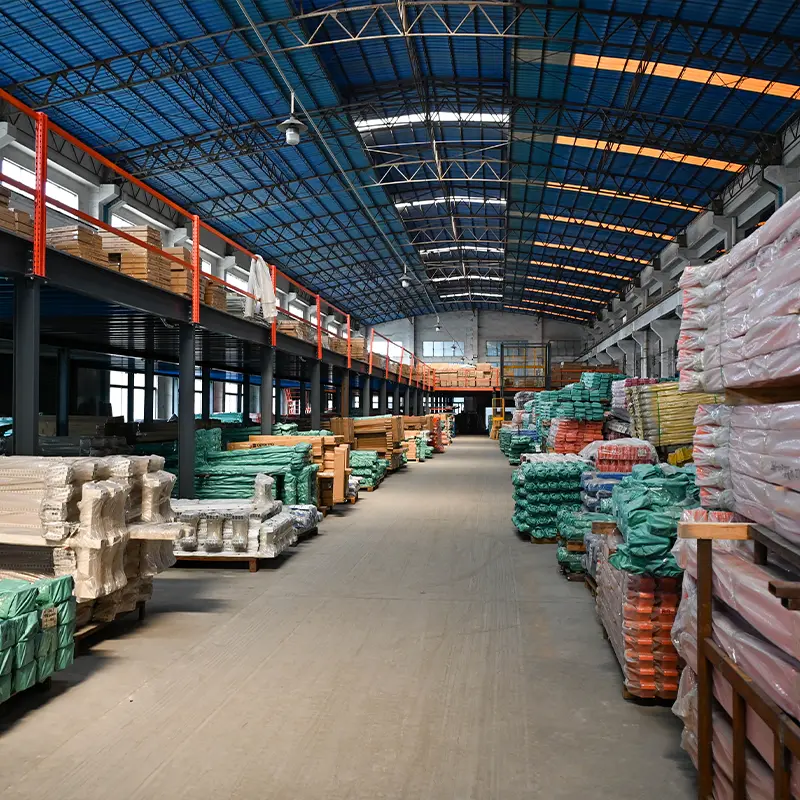 Step 07
Quality Assurance Testing
Batch test verification: cross-hatch paint adhesion (ISO 2409), salt spray corrosion test, and ultrasonic weld penetration.
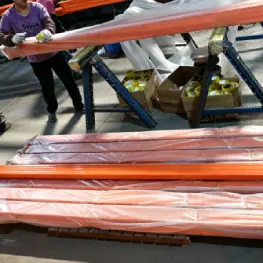 Step 08
Export Container Packing
Components bundled with corrugated edge-protectors, plastic wrap, and heavy timber dunnage to avoid ocean freight rubbing.
Frequently Asked Questions: VNA Racking Specification & Import
Authoritative technical guidance compiled by senior structural engineers for supply chain directors, warehouse operations leads, and procurement teams worldwide.
What floor flatness standards are mandatory for Very Narrow Aisle (VNA) systems?
Because minor floor imperfections at ground level amplify dramatically at elevated lift heights (an angular pitch of 2mm across a 1.2m turret wheelbase causes a horizontal mast lean of over 30mm at 15 meters), VNA facilities require Defined Movement (DM) floor tolerances. Standard specifications include Concrete Society TR34 Category DM1 (for heights >13m) or DM2 (for heights ≤13m), German VDMA 15251 guidelines, or American ACI F-min numbers ($F_{min} \ge 75$ to $100$). In existing non-compliant slabs, robotic laser grinding along the defined wheel paths is typically performed before vehicle commissioning.
How do wire guidance and structural floor guide rails compare in cost and operation?
Structural guide rails (typically L100×75mm angles) carry lower upfront technology costs and require zero electronic sensor calibration, but they incur higher installation labor, necessitate floor drilling for chemical anchors, and physically obstruct low-level manual picking and cleaning. Inductive wire guidance involves saw-cutting a 15mm slot down the aisle center to bury an active guidance wire; while it requires vehicle-mounted sensor antennae and a frequency transmitter, it creates a completely smooth, barrier-free floor. This facilitates easier aisle cross-traffic, eliminates trip hazards, and protects bottom beam level inventory from forklift wheel strikes.
Can Heda Shelves supply calculations stamped by local Registered Engineers (PE / EOR)?
Yes. For North American and Canadian projects, we generate exhaustive structural calculation packages based on RMI ANSI MH16.1 and local building codes (IBC / NBC). Our calculation documents incorporate section properties, moment capacity diagrams, beam deflection tables, anchor pull-out shear demands, and seismic base shear values. These engineering packages are prepared specifically to allow your local Engineer of Record (EOR) or consulting structural engineer to review, stamp, and submit for municipal permit issuance without costly delays.
How does VNA racking integrate with fire protection and NFPA 13 sprinkler codes?
Due to the tall vertical heights (frequently 12m to 16m) and narrow flue spaces inherent to VNA systems, standard ceiling-level Early Suppression Fast Response (ESFR) sprinklers may be insufficient under NFPA 13 guidelines. In high-density VNA configurations, we engineer custom internal vertical and horizontal flue clearances (typically 150mm ± 25mm) and incorporate structural bracket weldments to support in-rack sprinkler pipework at designated tier levels. This safeguards flammable commodity storage while satisfying fire marshal and insurance underwriting approvals.
What is the typical production and overseas logistics lead time for 40ft HQ containers?
Standard manufacturing production schedules at Heda Shelves span 15 to 25 business days following final approval of shop CAD approval drawings. Ocean transit from Guangzhou/Shenzhen port to US West Coast ports (Los Angeles/Long Beach) requires 14–18 days; US East Coast and Gulf ports (Houston, Savannah, NY/NJ) take approximately 28–35 days; and major European ports (Rotterdam, Hamburg, Felixstowe) span 28–32 days. All bundles are packed with protective steel-strapped timber dunnage to maximize container volumetric cube fill rates up to 95%.
How does VNA racking accommodate both 48×40 inch GMA and 1200×800 Euro pallets?
Our structural beam calculations and frame depths are custom-configured around your exact inventory profile. For US operations handling 48×40 inch GMA pallets, we specify standard 42-inch or 44-inch deep upright frames with 96-inch or 108-inch beam lengths, supplemented by welded wire mesh decking or heavy drop-in pallet support bars. For European operations handling 1200×800mm pallets, frame depths of 1100mm with 2700mm clear beam spans are utilized, providing optimal support under both EN 15620 lateral deflection and NFPA transverse flue clearance guidelines.
Optimize Your Warehouse Cubic Capacity by Up to 50% Today
Send our engineering team your facility floor plan, clear building height, forklift specifications, and pallet load criteria. Within 24 hours, Guangzhou Heda Shelves will deliver a comprehensive 2D CAD layout, 3D structural elevation model, and an itemized factory-direct export quotation.
Complimentary Consultation Package
- Custom AutoCAD (.DWG) Layout & Aisles Planning
- Structural Upright & Beam Load Deflection Calculations
- Full Landed CIF/FOB Shipping Cost Estimation
- Seismic Zone Factor & Baseplate Anchor Sizing