Verified Industrial Storage Racking & Material Handling Equipment
Precision-manufactured with premium high-yield cold-rolled steel (Q235B & Q355B). Built to meet international RMI, ANSI MH16.1, and FEM 10.2.02 racking standards, each unit delivers structural durability and turnkey integration with automated guided shuttles.
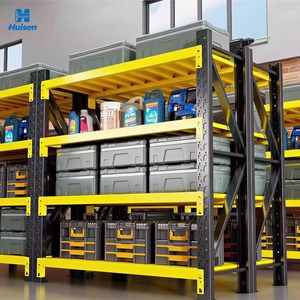
Knock Down Boltless Shelving Light Duty Steel Adjustable Storage Rack Easy Assembly System
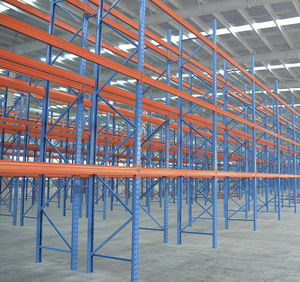
Warehouse Racking System Factory Shelf Heavy Duty Steel Cold Rolled Steel Adjustable Powder Coated Strong Load Capacity
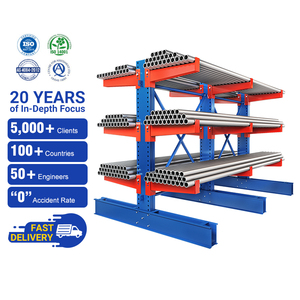
Durable Heavy-Duty Industrial Shelving Unit Durable Adjustable Cantilever Arm Racks Racking System for Warehouse Storage
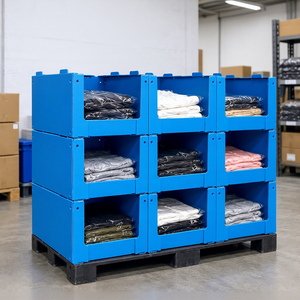
800x600mm Corflute Industrial Grade Stackable Picking Bin Warehouse Shelf Storage Box For Bulk Items
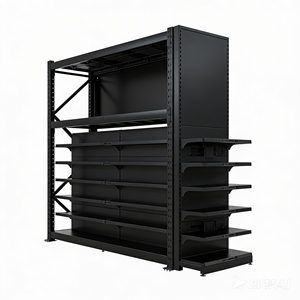
Multi-Layer Adjustable Light Duty Double-sided Warehouse Storage Shelving System 150kg/layer Capacity Customizable Layers
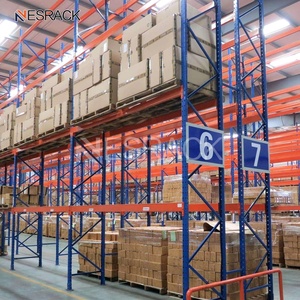
Industrial Steel Storage Racks 5-Layer Pallet Racking with Storage Racks & Shelving Units for Warehouse Shelving
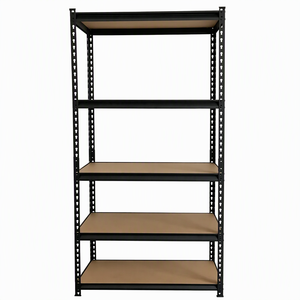
5 Layer 150kg Capacity Per Shelf Adjustable Powder Coated Steel ODM Boltless Rivet Medium Duty Rack Supermarket Storage Shelving
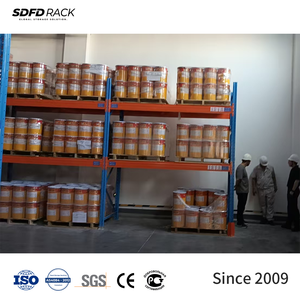
SDFD Industrial Heavy Duty Steel Pallet Rack Warehouse Shelving System for Storage Goods
The Mechanics of High-Density Radio Shuttle Pallet Racking (RSP)
In modern logistics infrastructure, land acquisition costs and cold-chain energy expenditures dictate extreme volumetric storage efficiency. Radio Shuttle Pallet Racking represents the gold standard in deep-lane, semi-automated storage, delivering unprecedented cubic density without subjecting structural steel to forklift collisions.
Cold-Formed High-Tensile Guide Rails
Unlike conventional pallet runners, our shuttle rails are roll-formed from 3.0mm–3.5mm galvanized structural steel with dual-flange geometry. This design functions simultaneously as a low-friction rolling track for the shuttle vehicle and a rigid horizontal support platform for GMA, EUR, and custom pallets up to 1,500kg (3,300 lbs).
Mechatronic Optical & Laser Sensing
Equipped with dual German optical sensors, ultrasonic obstacle detectors, and end-of-rail limiters, the robotic shuttle automatically calculates travel deceleration profiles. Pallets are nested precisely with uniform 50mm clearance intervals, eradicating pallet-to-pallet impact and eliminating crush damage on sensitive freight.
LiFePO4 Quick-Swap Lithium Power
Engineered for non-stop industrial cycles, our shuttle units feature 48V Lithium Iron Phosphate (LiFePO4) battery packs delivering 8–10 hours of continuous transit per charge. With 3-hour rapid recharging and low internal resistance, the power cells thrive in extreme sub-zero freezer environments down to -30°C (-22°F) without thermal degradation.
Comparative Analysis: Radio Shuttle vs. Alternative Storage Architectures
Selecting the appropriate pallet racking system requires balancing storage density, selectivity, pallet throughput speed, equipment capital expenditure, and ongoing maintenance. This matrix provides an empirical, engineer-verified breakdown for warehouse planners.
| Storage Architecture | Space Utilization | Pallet Selectivity | Throughput Velocity | Forklift Rack Intrusion | Cold Store Efficiency | Operating Strategy |
|---|---|---|---|---|---|---|
| Radio Shuttle Racking | Lane Dependent | Zero (External Pick Face) | FIFO or LIFO Configurable | |||
| Drive-In Racking | Very Low (By Lane) | Slow (15-22 Pallets/hr) | Severe Risk (Mast Enters Bay) | Moderate (High Rack Damage) | Strict LIFO Only | |
| Selective Pallet Racking | 100% Direct Access | Fast (Single Lift) | None (Aisle Operation) | Poor (High Heating/Cooling Vol) | Any (High SKU Mix) | |
| Pallet Flow (Gravity) | Lane Dependent | Continuous Flow | Zero (Dedicated Faces) | Good (Roller Maintenance Req.) | Strict FIFO Only | |
| Push-Back Racking | 2–6 Deep per Lane | Moderate (20-30 Pallets/hr) | Low (Face Loading Only) | Moderate (Cart Jam Potential) | Strict LIFO Only |
*Note: Data derived from 10,000+ completed warehouse installations. Volumetric utilization reflects actual pallet count within gross building envelope including mandatory egress and clear-height clearances.
Future Procurement Trends in Shuttle Pallet Racking (2025–2035)
Global supply chain disruptions, rising labor rates, and corporate ESG mandates are fundamentally altering how industrial procurement directors evaluate intralogistics capital projects. Key shifts driving the next decade of racking procurement include:
1. Total Cost of Ownership (TCO) Over Steel Weight
Procurement directors are shifting from evaluating raw metric ton steel pricing to 30-year lifecycle TCO models. In drive-in systems, structural damage repair and forklift impact costs frequently surpass the initial system price within 7 years. Shuttle racking eliminates forklift entry, driving rack replacement budgets down by over 82% across a 10-year facility horizon.
2. Decarbonization & Low-Carbon Steel Tracing
North American and European enterprise buyers now mandate documented Environmental Product Declarations (EPD). Forward-looking procurement strategies prioritize manufacturers utilizing Electric Arc Furnace (EAF) processing, closed-loop water treatment in phosphating, and VOC-free electrostatic polyester powder curing to meet Science-Based Targets (SBTi).
3. Turnkey WMS/WCS API Interoperability
Procurement contracts no longer isolate racking hardware from digital warehouse execution. RF shuttle systems must now offer open REST API and CAN-bus industrial protocols to interface seamlessly with SAP S/4HANA, Manhattan Associates, and blue-chip Warehouse Control Systems (WCS) for automated SKU slotting, FIFO expiration sequencing, and autonomous task dispatch.
4. Thermal Optimization in Cold-Chain Freezers
With cold storage power rates soaring, maximizing thermal density in blast freezers is mission-critical. Shuttle systems consolidate deep storage lanes up to 40 pallets deep, decreasing the refrigerated cubic footprint per pallet position by up to 45% compared to selective designs, drastically compressing the operational refrigeration load.
5. Hybrid Autonomous Mobile Robot (AMR) Interfacing
Racking engineering is evolving to support robotic front-ends. Shuttle rack pickup bays are now standardized with precision AGV/AMR centering jigs and optical alignment reflectors, allowing driverless reach trucks and floor AMRs to deliver and collect pallets without human forklift operators.
Technological Advancements in Modern Pallet Shuttle Racking
Continuous mechanical and electrical engineering innovations are transforming shuttle racking from passive steel structures into responsive, intelligent intralogistics nodes.
4-Way Multi-Directional Shuttles (4D Shuttle)
While traditional radio shuttles operate along a single horizontal lane axis, cutting-edge 4-way multi-directional shuttles utilize dual-wheel sets to change directions perpendicular to rack aisles. Combined with integrated vertical reciprocating lifts (VRC), a single 4D shuttle can traverse entire warehouse levels and rows, creating fully autonomous, high-bay AS/RS systems without expensive stacker cranes.
Ultra-Capacitor & Super-Fast Charging
Next-generation carriers are integrating hybrid super-capacitor modules paired with high-rate lithium cells. Positioned at pickup stations, opportunity-charging contact pads supply a 30-second boost during standard forklift pallet drop-offs. This automated top-up cycle achieves true 24/7 continuous duty cycles without requiring battery pack extraction.
IoT Structural Strain & Vibration Telemetry
Modern shuttle rails feature embeddable piezoelectric strain gauges and tri-axial vibration accelerometers. Connected via low-power wireless mesh networks, these micro-sensors continuously log live deflection loads, seismic shifts, and rare accidental mast impacts, notifying warehouse safety directors via automated dashboard alerts before structural fatigue can occur.
Why Global Supply Chains Rely on HEDA Shelves
Established in 2001, Guangzhou Heda Shelves Co., Ltd. operates as a vertically integrated tier-one manufacturer of industrial storage racking and automated warehouse systems, serving multi-national 3PLs, cold-storage operators, and retail titans across 130+ countries.
Over 25 years of structural racking engineering and automated intralogistics mastery.
30,000 m² state-of-the-art campus with automated cold-roll lines and powder coat tunnels.
Massive raw steel processing capacity ensuring rapid delivery and scalable project supply.
Proven engineering across agricultural, automotive, chemical, and sub-zero cold chain sectors.
Our Proprietary 10-Stage Precision Manufacturing Protocol
Every upright frame, box beam, and shuttle guide rail follows a certified zero-defect protocol from raw coil to final container export.
Raw Steel Inspection
Certified high-grade Q235B & Q355B hot-rolled steel coils spectrally tested for tensile yield.
Precision Slitting
High-speed CNC slitting lines cut wide master coils into exact dimensional strip tolerances.
Automated Punching
Continuous servo punch presses stamp 50mm/75mm upright pitch patterns with ±0.1mm accuracy.
Cold Roll Forming
Multi-station rolling lines cold-form custom profiles, ensuring maximum structural section modulus.
Box Beam Profiling
Twin C-channel interlock seams welded continuously for high torsional and buckling resistance.
Robotic Welding
Multi-axis robotic arms weld beam connectors and base plates under controlled shielding gas.
Pickling Pretreatment
Acid bath descaling and rust removal strip micro-impurities for superior surface bonding.
Zinc Phosphating
Micro-crystalline phosphate conversion coating applied for lasting corrosion immunity.
Powder Coating
Automated Swiss electrostatic guns spray TGIC-free polyester powder, cured at 200°C.
QC & Palletizing
Dimensional verification, mil-thickness coating audits, and steel-banded container strapping.
Frequently Asked Questions: Technical, Structural & Logistics
Engineered answers to the most rigorous technical questions posed by logistics planners, warehouse operations directors, and purchasing committees.
What are the exact slab flatness and floor tolerance requirements for shuttle racking?
How does the radio shuttle system perform in sub-zero cold storage down to -30°C?
Can the shuttle handle mixed pallet types (GMA, EUR, CHEP, Plastic, Metal Skids)?
What structural engineering and seismic codes govern HEDA shuttle racking systems?
What is the expected ROI payback period when replacing drive-in racking with shuttle racking?
- Labor Productivity: Pallet cycling speeds increase by 200–300%, cutting forklift operator hours.
- Space Gain: Eliminating drive-in honeycomb inefficiency yields 15–25% more pallets per facility.
- Zero Upright Collisions: Forklifts never enter the storage lanes, dropping maintenance expenses to near zero.
- Damaged Inventory Reduction: Automated, optical-guided travel eliminates crushed freight caused by driver misjudgment.
How fast can I receive CAD layouts, structural calculations, and quotation deliverables?
What export packing standards are utilized to prevent in-transit maritime damage?
What are the battery maintenance and cycle life specs for the radio shuttle vehicles?
Ready to Maximize Your Cubic Storage Volume?
Consult with our structural racking engineers today. Get a customized 2D/3D warehouse layout, bay load calculation data, and a factory-direct container quotation—delivered within 24 hours with zero obligation.