Featured Heavy-Duty Racking & Industrial Shelving Units
Explore heavy-load storage configurations designed for palletized distribution, long-stock materials, and multi-tier floor fulfillment hubs. Fully customizable cold-rolled profiles with factory-direct supply integrity.
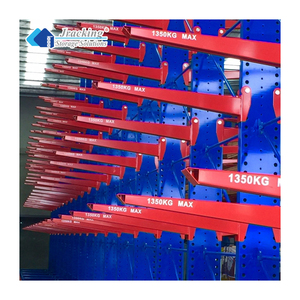
Jracking Industrial Warehouse Storage Cantilever Rack for Pipe and Lumber
Unobstructed frontal access designed for structural tubing, lumber packs, and steel extrusions. Features adjustable arm pivots to prevent stock crushing.
- Load: 1,000–6,600 lbs/arm
- Single/Double Sided
- Heavy Q235B Steel
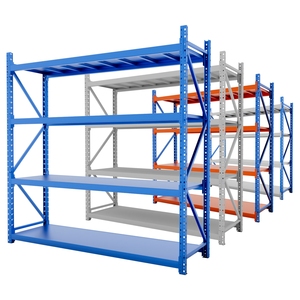
Factory Direct Steel 4Layer/500kg Load Heavy Duty Pallet Rack Long Span Shelving
Versatile step-beam integration accommodating 48x40 GMA pallets and dense steel decking. Ideal for direct-to-case multi-SKU distribution hubs.
- 500kg–1500kg/Beam Level
- 50mm Pitch Adjustment
- Epoxy Coating
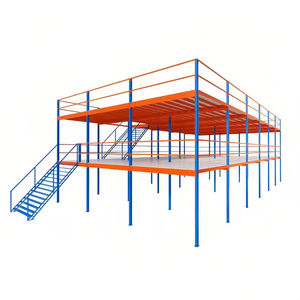
Customized Mezzanine Floor Racking Industrial Steel Platform Double Shelf Loft
Rack-supported high-bay mezzanine system multiplying overhead footprint without building modification. Integrated with steel grating floors and pallet safety gates.
- 60–250 psf Floor Rating
- 2–3 Tier Formats
- IBC Compliant
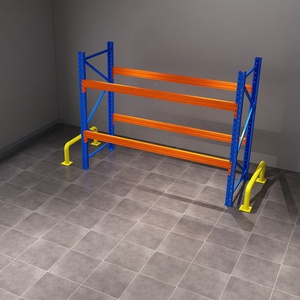
Heavy Duty CE Certified Pallet Rack with Row Spacers & Load Sign Safety Racks
Engineered for volatile or hazardous payload storage requiring rigid row bracing, anchor-bolted seismic baseplates, and load warning plaque conformity.
- CE & OSHA Compliant
- Seismic Baseplates
- Impact Upright Guards
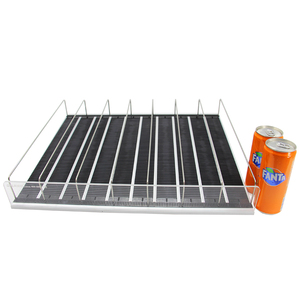
Heavy Duty Single-Sided Freestanding Supermarket Rack 8 Shelves Gravity Roller
Gravity-feed roller system designed for high-velocity carton picking, commercial front-facing grocery distribution, and automated restocking queues.
- Gravity Roller Incline
- Modular Dividing Lanes
- Fast FIFO Cycling
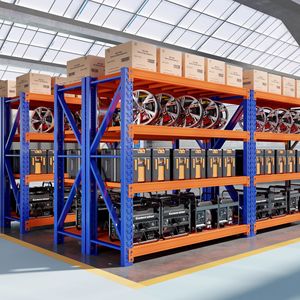
Boltless Adjustable Industrial Heavy Duty Steel Racking 5 CE Corrosion Shield
Rapid-assembly snap-in keyhole locking design with multi-stage chemical pretreatment, providing heavy rust and humidity resistance in unconditioned facilities.
- Phosphated & Powdered
- No Bolts Required
- Quick Level Reposition
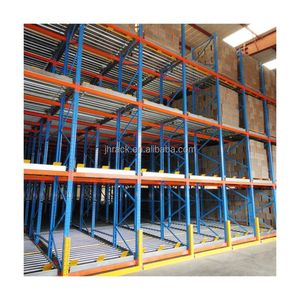
Jinhui Brand Wholesale Galvanized FIFO Pallet Racking Pallet Flow Track Matrix
Dynamic gravity-fed roller beds featuring integrated centrifugal brake rollers and entry separators for fail-safe FIFO fulfillment of perishable food and pharmaceuticals.
- True FIFO Rotation
- Galvanized Track Rollers
- Up to 20 Pallets Deep
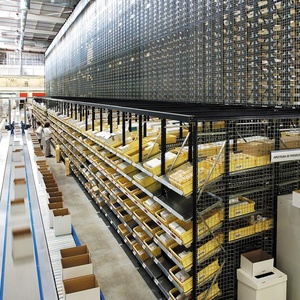
High Efficiency Heavy Duty Adjustable 5-Layer Carton Gravity Flow Distribution Rack
Dense split-case picking rack utilizing precision aluminum roller tracks to feed order consolidation lines. Accelerates picker travel efficiency by over 45%.
- 5-Layer Flow Trays
- Smooth Skate Wheels
- Ergonomic Tilt Trays
Structural Engineering Excellence in Modern Industrial Material Handling
In high-throughput distribution hubs, warehouse storage systems are no longer passive steel fixtures; they serve as dynamic structural foundations directly interfacing with Automated Guided Vehicles (AGVs), Autonomous Mobile Robots (AMRs), and high-reach turret mast fork trucks. Selecting an accredited racking and shelving systems manufacturer requires verifying compliance with stringent engineering frameworks such as the American National Standards Institute (ANSI MH16.1), the Rack Manufacturers Institute (RMI) Specification for Industrial Steel Storage Racks, and European Standard EN 15512.
Structural reliability starts with raw metallurgical discipline. Low-cost market alternatives frequently rely on non-certified secondary scrap steel displaying inconsistent elongation indices. Conversely, leading tier-1 manufacturers utilize certified prime structural carbon steel grades (such as Q235B and Q355B, equivalent to ASTM A36 and ASTM A572 Grade 50), characterized by documented yield strengths exceeding 235 MPa to 355 MPa. The cold roll-forming process introduces progressive work hardening across beam and column cross-sections, optimizing strength-to-weight ratios and ensuring structural deflection indices remain safely under L/200 (span length divided by 200) under full design dead and live loads.
Additionally, modern facilities face complex dynamic vibrations caused by high-speed counterbalanced forklifts and continuous mechanical loading. Advanced Finite Element Analysis (FEA) is utilized during initial design phases to evaluate stress concentrations across column perforations (e.g., teardrop, diamond, or proprietary hexagonal pitch layouts). This granular analysis safeguards that connector tabs, safety locking pins, and row spacers maintain equilibrium under asymmetric pallet placements and localized impact stresses, eliminating the catastrophic chain reaction known as progressive collapse.
Warehouse Racking Architecture & Density Evaluation
Compare fundamental system mechanics across spatial density, rotational compliance, and material handling equipment (MHE) compatibility before finalizing procurement specifications.
| Storage Racking System | Pallet Accessibility | Floor Space Utilization | Inventory Rotation | Ideal Payload Applications | MHE / Forklift Compatibility |
|---|---|---|---|---|---|
| Selective Pallet Racking | 100% Immediate Direct Access | Moderate (35-40%) | FIFO / LIFO Dynamic | High SKU count, FMCG, retail e-commerce | Standard Counterbalance, Reach Trucks |
| Drive-In / Drive-Through | Last-In, First-Out (LIFO) | High (60-70%) | Strict LIFO (FIFO Drive-Thru) | Cold storage, homogenous seasonal stock | Narrow-Chassis Forklifts |
| Pallet Flow (Gravity Roller) | Automatic Pick-Face Feed | Ultra-High (75%) | Strict True FIFO | Perishables, pharmaceuticals, dairy | Counterbalance, Reach Trucks |
| Push Back Racking (2-6 Deep) | First-In, Last-Out (FILO) | High (65-70%) | LIFO Lane System | Bulk shipping, medium batch counts | Standard Reach Trucks |
| Radio Shuttle Automation | Automated Deep Lane Cart | Maximum (80-85%) | Programmable FIFO / LIFO | Deep freezer chambers, large batch 3PL | Shuttle Cart + Standard Fleet |
| Rack-Supported Mezzanine | Multi-Level Manual Access | Vertical Cubing (200-300%) | SKU Dependent | Small-parts picking, garment hanging, archive | Stairs, Vertical Reciprocating Conveyors |
| Cantilever Racking Systems | 100% Unobstructed Length | Linear Dense | Universal Access | Pipes, lumber, drywall, structural steel | Side loaders, Multi-directional forklifts |
Key Technological Innovations Transforming Industrial Racking
Strategic advancements in material science, automated picking integration, and digital twin monitoring are reshaping warehouse capital asset planning.
1. Autonomous ASRS & Shuttle-Ready Engineering
The acceleration of labor shortages and micro-fulfillment demands has elevated the integration of Automated Storage and Retrieval Systems (ASRS). Modern upright columns feature ultra-precise punching tolerances (±0.2mm) to interface directly with high-speed radio shuttles, cranes, and telescopic transfer forks. Deflection parameters under high-acceleration dynamic travel require reinforced lateral tie bracing and custom floor expansion anchor profiles.
2. Sub-Zero Metallurgy & Nano-Ceramic Coatings
Cold chain logistics, driven by biologics and frozen food e-commerce, operate in severe environments down to -30°C (-22°F). Standard carbon steel undergoes ductile-to-brittle transition under extreme refrigeration. Top manufacturers now implement high-toughness, silicon-killed steel formulations paired with automated zirconium and zinc-phosphate chemical pretreatments, ensuring electrostatic powder coating adherence without micro-cracking or sub-film corrosion.
3. Structural Health Monitoring (IoT Smart Racks)
Industrial racking systems endure thousands of forklift operational interactions weekly. The emerging frontier of warehouse safety integrates optical fiber strain sensors, multi-axis wireless impact accelerometers, and acoustic emission transducers directly within column upright cavities. When an MHE collision occurs, the telemetry module flags the specific frame location to the Warehouse Management System (WMS) before catastrophic buckle initiation.
4. High-Performance Cold-Formed Steel Formats
Advancements in roll-forming software enable multi-stage complex profiles featuring intermediate stiffeners along beam flanges and column webs. This geometric innovation delivers 18% higher torsional rigidity using less steel mass, directly reducing raw freight shipping weight, carbon footprint during intermodal transit, and structural slab bearing pressures in older warehouse infrastructures.
Future Procurement Trends: 2026–2030 Strategic Sourcing Directives
Procurement directors and supply chain executives are pivoting from transactional spot purchasing to long-term architectural partnerships with fully integrated manufacturing suppliers. The modern purchasing decision is defined by four macro trends:
1. Shift from Initial CapEx to Total Cost of Ownership (TCO): Traditional procurement strategies evaluated bids purely on steel metric ton cost. However, hidden lifecycle expenses—such as structural beam repairs, installation labor downtime, non-standard component replacement delays, and premature paint delamination—have shifted the model. Buyers now prioritize automated roll-forming consistency, universal teardrop beam interchangeable profiles, and modularity that allows reconfiguration as business models evolve.
2. Rapid 3D BIM/CAD Digital Turnkey Validation: Procurement cycles that previously took months for conceptual sign-off are now condensed into 24-to-48-hour sprints. Global buyers require manufacturers to provide clash-detection-verified Building Information Modeling (BIM) files and Revit families. This ensures early detection of conflicts between overhead ESFR fire sprinkler pipes, HVAC ducting, structural building columns, and high-bay racking systems before steel coils are even loaded onto slitting lines.
3. Intermodal Ocean Freight Optimization: With maritime shipping volatility, enterprise buyers demand containerization engineering. Standard racking columns and beams, when poorly packaged, result in dead volume and transport surface abrasions. Strategic manufacturers design bundle nesting configurations that maximize payload weight limits inside 40-foot High Cube (40HQ) ocean containers, minimizing the landed cost per pallet position to ports across North America, Europe, and Australasia.
4. Verification of Standardized Code Compliance: Municipal building departments in high seismic zones (such as California, the Pacific Northwest, and New Zealand) require formal calculations stamped by licensed Professional Engineers (PE). Trusted suppliers must furnish comprehensive component structural engineering test data books detailing baseplate anchor shear values, weld throat penetration ultrasonic checks, and load beam cycle deflection records.
Why Leading Global Enterprises Rely on HEDA Shelves
Established in 2001, Guangzhou Heda Shelves Co., Ltd. has developed into a premier tier-one manufacturer of industrial storage systems, selective pallet racking, structural steel platforms, and warehouse shelving units. Spanning an expansive 30,000 square meter (approx. 323,000 sq. ft.) automated production base, HEDA combines heavy industrial capacity with bespoke structural engineering.
We serve as a true single-source turnkey partner for 3PL providers, industrial distributors, and multinational retailers across the United States, Canada, Australia, and Western Europe, guaranteeing direct factory pricing with uncompromised engineering verification.
- 25+ Years Industrial Expertise: Over 10,000 completed warehouse racking installations globally.
- High-Yield Steel & Monthly Capacity: 30,000 metric tons output powered by automated roll-forming and welding lines.
- Imperial & Metric Dual Engineering: Layout plans, 3D renderings, and load tables rendered in pounds/feet and kilograms/meters.
- Rigorous Global Certifications: Fully audited ISO 9001:2015 Quality System, CE Construction Products Certification, and RoHS compliance.
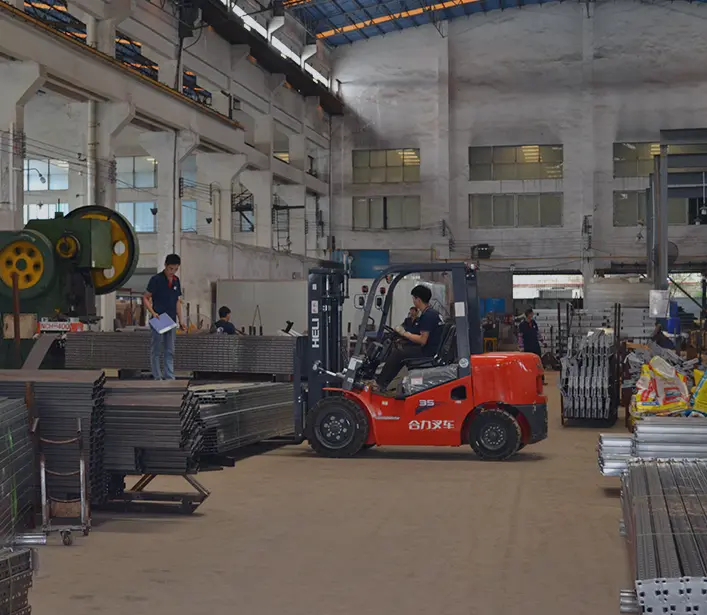
10-Phase Precision Manufacturing Architecture
Every beam, upright column, and safety accessory undergoes a continuous sequence of automated mechanical roll-forming, chemical preparation, and powder polymer finishing.
Frequently Asked Questions: Technical Specifications & Sourcing
Clear, authoritative answers to critical engineering, permitting, unit load capacity, and international delivery queries.
What structural data is required to engineer a code-compliant warehouse racking system?
How do you manage seismic compliance and permitting for projects in the USA and Canada?
What are the maximum vertical deflection limits allowed for industrial load beams?
Can your pallet racks accommodate non-standard pallets or specialized chemical containers?
How are shipping bundles configured to prevent transit damage during ocean freight?
What are the key fire safety and flue space considerations when planning racking layouts?
Accelerate Your Facility Storage ROI
Connect with our senior storage application engineers today. Submit your architectural floor plan or pallet requirements to receive a complimentary 3D CAD layout, comprehensive load calculation report, and factory-direct quotation within 24 hours.