Engineered Push Back & High-Density Pallet Systems
Compare factory-direct dynamic push back racks, gravity flow configurations, teardrop selective platforms, and automated sheet metal storage built with premium high-tensile steel.
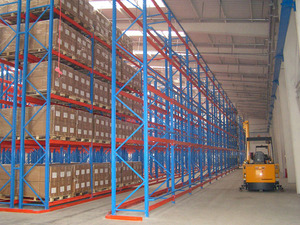
Low Price Steel Adjustable Foldable Durable Heavy Duty 3-Layer Push-Back Pallet Rack Galvanized Warehouse Racking Rack Shelves
- 3-Tier Nested Cart Configuration
- Anti-Corrosive Galvanized Coating
- Up to 1,500 kg / Pallet Position
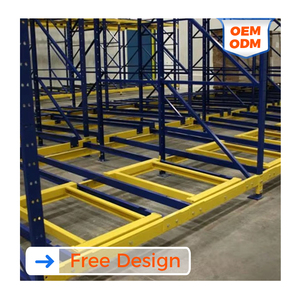
DJ Gravity Steel Push Back Rack For Warehouse Storage Racking System Cargo & Storage Equipment
- Low-Slope Precision Gravity Rails
- Sealed Bearing Flanged Wheels
- Eliminates Honeycomb Space Waste
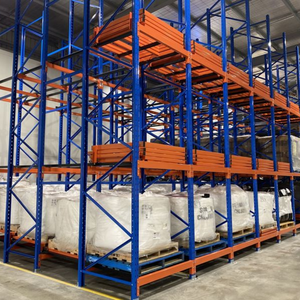
Forklift Friendly Steel Push Back Pallet Racking CE/ISO Certified 1000-2000kg Capacity 2-5 Pallet Deep Bulk Carton Goods Factory
- 2 to 5 Pallets Deep per Lane
- Forklift Collision Protective Guides
- Certified 1000–2000kg Load / Level
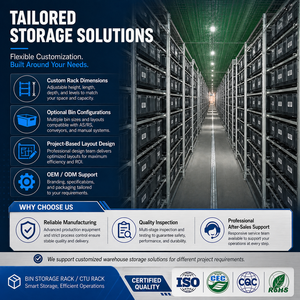
Mini Load ASRS Tote Storage Rack Automated Bin Warehouse Racking System For Small Parts
- High-Speed Micro-Load Automation
- Integration Ready for WMS / ERP
- Dense Bin & Tote Organization
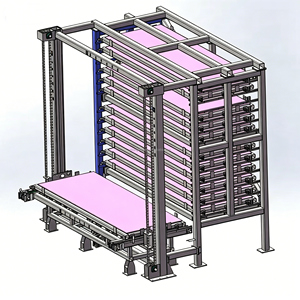
Durable Anti-Rust Heavy Duty Steel Electric Sheet Metal Rack Drawer Type Storage System Automated Retrieval Warehouse Shelving
- Motorized Roll-Out Steel Drawers
- 100% Overhead Crane Accessibility
- Safe Handling of Steel Plate Bundles
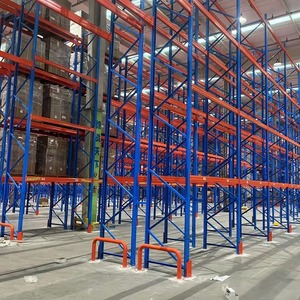
High Factory Warehouse Rack Thickened Steel Multi-Layer Durable Powder Coated Heavy Duty Display Rack Super Load-Bearing
- Heavy Section Upright Posts
- Multi-Tier Industrial Load Bearing
- Thermal Setting Powder Coat Finish
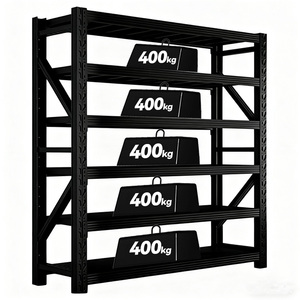
5/6 Layer Heavy Light Duty Steel Warehouse Rack Adjustable Industrial Shop Storage 400kg Garage Metal Workshop Shelf
- Boltless Fast Assembly Design
- 400kg - 800kg Uniform Level Load
- Flexible Tier Height Customization
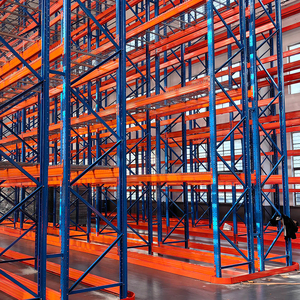
Heavy Duty Industrial Warehouse Storage Selective Teardrop Pallet Racking System Price
- Universal Teardrop Compatibility
- High-Yield Structural Box Beams
- 100% Immediate Pallet Selectivity
Principles of Push Back Kinematics: Maximizing Cube Utilization Without Lane Compromise
In modern industrial facilities handling medium-to-high velocity rotation, floor space economy is dictated by aisle ratios. Standard selective rack configurations commit 60% of total footprint to forklift access aisles. Drive-in systems reclaim this space but suffer from catastrophic cycle time degradation and severe "honeycombing" (vacant storage positions stranded behind partially filled lanes). A top-tier push back racking supplier overcomes this operational bottleneck by presenting an independent pick face for each storage level and lane.
The core mechanical assembly utilizes a series of nested rolling carts traveling along inclined structural steel rails pitched at an exact gradient of 2.5% to 3.5%. When loading the first pallet, the forklift operator places the unit directly on the top telescoping cart. The second pallet is then used by the forklift mast to push the first pallet back, exposing the sub-tier nested cart below. This process repeats up to six pallets deep. During retrieval, the operator slowly backs out with the front pallet; the natural gravitational force pushes the trailing carts forward smoothly to the pick aisle, controlled by precision flanged wheels and integrated mechanical brake stops.
Structural Integrity & RMI / ANSI MH16.1
Uprights roll-formed from certified high-strength cold-rolled steel coils with heavy-gauge footplates and bolted K-bracing engineered to absorb static seismic loads and mast acceleration stresses.
Low-Friction Telescoping Carts
Low-profile nested welded cart chassis fitted with heavy-duty flanged steel or polyurethane-coated shielded ball bearings, preventing tracking misalignment and wheel binding even under heavy deflection.
Honeycombing & Labor Elimination
Unlike drive-in lanes that must be cleared completely before restocking different SKUs, each push back tier operates autonomously, eliminating up to 40% of forklift travel time and reducing structural truck strikes by 85%.
Push Back Racking vs. Alternative High-Density Systems
Logistics directors evaluate capital expenditure (CapEx), footprint optimization, and cycle times across five standard industrial racking architectures.
| Storage System | Space Utilization | Pallet Selectivity | Rotation Principle | Forklift Exposure | CapEx / Pallet Position | Best Warehouse Application |
|---|---|---|---|---|---|---|
| Push Back Racking | 85% – 90% | Lane-Level (High) | FILO / LIFO | Aisle-Only (Zero Rack Entry) | Moderate | 2-6 Pallets per SKU, Cold Freezers, Fast Buffer |
| Drive-In Racking | 80% – 85% | Bay-Level (Very Low) | Strict LIFO | High (Trucks Drive Inside Rack) | Low | Massive Single-SKU Batches, Seasonal Hold |
| Pallet Flow (Gravity) | 90% – 95% | Face-Level (High) | Strict FIFO | Aisle-Only (Dedicated Loading) | High | Short Shelf-Life Perishables, Pharma, High Output |
| Radio Shuttle System | 92% – 96% | Automated Lane-Level | FIFO or LIFO | Aisle-Only (AGV / Lift Truck) | High - Automated | Deep Lanes (10-30 pallets), Automated Blast Freezers |
| Standard Selective | 55% – 65% | 100% Individual Pallet | Any (Unrestricted) | Aisle-Only (Standard Mast) | Lowest | Massive SKU Variety, Low Pallet Count per SKU |
*Note: Data derived from warehouse layout benchmarks compliant with ANSI MH16.1 standards assuming standard 48" × 40" GMA pallets with 2,500 lbs nominal unit loads.
Selecting the Optimal Push Back Configuration (2 to 6 Pallet Depths)
Configuring a dynamic push back installation requires balancing vertical clear height, building column spacing, forklift mast capacities, and inventory SKU turnover rates. HEDA Shelves engineers specify cart geometries based on finite element analysis (FEA) to verify that structural deflection remains well within permissible safety limits ($\Delta \le L/240$). Below are recommended operational deployments based on pallet lane depth:
2-Deep Push Back
Best for: Replacing double-deep selective racks without needing specialized pantograph reach trucks. Standard counterbalance forklifts access both pallets from the aisle, boosting picking speeds by 30%.
3-4 Deep Push Back
Best for: The industrial "sweet spot" across wholesale food distribution, consumer goods, and 3PL buffering. Increases pallet position count by 65% over selective layouts while maintaining rapid SKU accessibility.
5-6 Deep Push Back
Best for: High-density cold storage freezers where cooling costs per cubic foot are astronomical. Replaces fragile drive-in rails with rigid inclined multi-tier carts capable of handling 2,000 kg loads.
Hybrid Pick Modules
Best for: Push back lanes installed on upper beam elevations with case-flow or carton-picking shelving on ground levels, seamlessly merging active carton fulfillment with high-density overhead reserve replenishment.
The Future of Push Back Storage: 2026–2035 Industry Evolution
As supply chains pivot toward localized distribution hubs, rising urban real estate costs and escalating warehouse labor shortages have transformed pallet rack procurement from a commodity steel purchase into a strategic capital expenditure. Procurement managers, industrial engineers, and 3PL developers are now prioritizing future-ready mechanical specifications that deliver lower total cost of ownership (TCO) and seamless automation compatibility.
AGV & AMR Mast Harmonization
Push back front pallet interfaces are being re-engineered with optical target locators and laser-guided cart stops, enabling vision-guided Autonomous Counterbalance Forklifts to push and retrieve nested pallets without human operator drift.
Cold-Formed High-Yield Metallurgies
Transitioning to ultra-high-strength steel grades (such as Q355B and ASTM A572 Grade 50) allows for thinner gauge structural profiles with 25% higher yield strengths, substantially cutting ocean container freight weights and project carbon footprints.
Cryogenic Low-Viscosity Wheel Hubs
Cold chain facilities operating down to -30°C are phasing out standard greased bearings in favor of specialized sealed synthetic polyurea lubricated rollers with polyurethane tread coats, eliminating brittle cracking and cart freezing in blast freezers.
Modular Bolt-Together Conversion
Modern buyers demand flexibility. HEDA's modular push back rail assemblies can be bolted directly onto existing selective teardrop or structural upright frames, allowing facilities to convert selective aisles to high-density push back within 48 hours.
Why Global Supply Chains Trust Guangzhou HEDA Shelves
Over 25 years of specialized warehouse storage fabrication, backed by massive production scale, rigorous quality certifications, and complete engineering documentation for North American municipal permitting.
Rapid 24h Engineering
Submit your warehouse CAD DWG or building dimensions and clear heights. Our certified racking engineers generate 2D structural plans, 3D renderings, and load tables in imperial pounds and feet within 24 hours.
Full North American Compliance
We manufacture according to RMI (Rack Manufacturers Institute) and ANSI MH16.1 specifications, providing structural calculations and shop drawings ready for local Professional Engineer (PE) seismic review.
10-Step Finishing Rigor
Raw steel undergoes precision slitting, automatic column punching, cold-roll profile forming, robotic welding, chemical pickling, phosphating, and electrostatic epoxy-polyester powder coating for high scratch and rust resistance.
Containerized Direct Freight
Shipments are packaged using steel dunnage, corrugated protective wrapping, and banded bundles optimized for 20ft and 40ft high-cube ocean containers, delivering intact to Long Beach, Houston, Savannah, New York, and Vancouver.
Frequently Asked Questions by Warehouse Engineers & Buyers
Direct answers to complex technical, seismic, pallet dimension, and logistics queries for industrial warehouse projects.