Top Trusted Pallet Warehouse Racking Supplier & Suppliers

Enterprise White Paper & Specification Guide: High-Density Industrial Storage Engineering, Direct-Factory Procurement Frameworks, and Scalable Logistics Architectures.

Factory-Engineered Systems

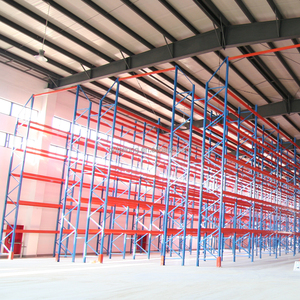
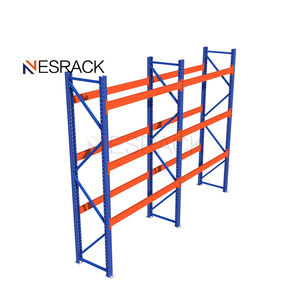
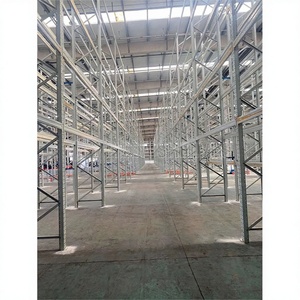
Precision Heavy-Duty Racking Architectures

Tested under rigorous ISO 9001:2015 and CE standards, our industrial structures provide optimized cube utilization, dynamic load equilibrium, and guaranteed compliance for global high-throughput distribution hubs.

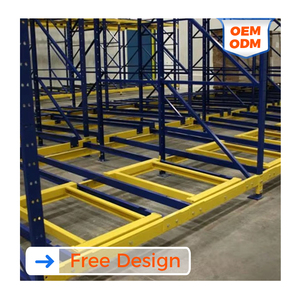
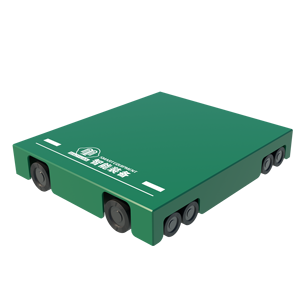
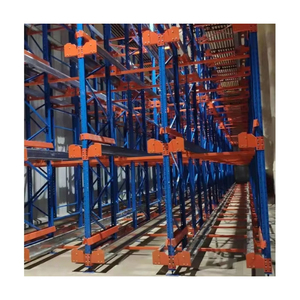
Pallet Shuttle Semi-Automated Racking System

High-Efficiency Auto Pallet Radio Shuttle Storage Racks

Semi-automated deep lane channel system driven by ruggedized pallet shuttles. Minimizes forklift travel distances, protects racking uprights from impact, and handles cold-chain temperatures.

  • FIFO & LIFO Capable
  • Sub-Zero Freezer Ready (-25°C)
  • Rapid Radio Terminal Control
Factory Authority

Integrated Racking Manufacturing Excellence

Serving global industrial distributors, 3PL logistics networks, and cold chain operators through end-to-end metallurgical engineering and certified fabrication control.

2001

Year Established

300+

Technical & Production Staff

30,000t

Monthly Steel Output

323,000sq ft

Production Facility

Automated Cold Roll-Forming

Utilizing advanced multi-station roll-forming lines to manufacture continuous-profile uprights and step beams with zero micro-fracturing along bend lines, guaranteeing nominal structural yield strength.

Automated Pre-Treatment & Powder Coating

Continuous immersion pickling and phosphating lines remove mill scale and oil before applying thermosetting electrostatic polyester powder coat, ensuring superior adhesion, scratch resistance, and corrosion defense.

Turnkey Engineering & PE Calculations

Our engineering department provides complete 3D BIM/CAD architectural layouts, static structural calculations, and imperial/metric documentation sets ready for review by your structural engineer of record.

Strategic White Paper

Engineering Insights: The Next Decade in Warehouse Racking Procurement

A technical guide for Supply Chain Directors, Industrial Engineers, and Procurement Executives managing facility modernization, floor density, and dynamic payload limits.

1. Total Cost of Ownership (TCO) vs. Initial Steel Tonnage

In high-throughput distribution environments, selecting a pallet warehouse racking supplier strictly based on the spot price of cold-rolled steel frequently introduces long-term operational friction. Enterprise procurement requires an exhaustive balance between structural elasticity, beam deflection tolerance (governed by ANSI MH16.1 or EN 15512 specifications), and post-impact resilience. A structure engineered with optimal moment-resisting connections and certified column base dampeners eliminates unbudgeted maintenance closures and provides an extended operational life cycle.

2. The Shift Toward Hybrid High-Density & Automated Micro-Fulfillment

Urban real estate acquisition costs have driven distribution hubs to prioritize vertical clearance over horizontal expansion. As clear heights cross 12 to 18 meters, legacy selective racking gives way to high-density semi-automated shuttles and four-way robotic matrices. Modern supply chains are rapidly transitioning from static pallets to active pallet channels where automatic shuttles interface with automated reach trucks and conveyor discharge stations, reducing cycle times by up to 40% while quadrupling cube efficiency.

Racking Topology Pallet Access Type Aisle Floor Usage Stock Rotation Best-Fit Industry Segment
Selective Pallet Racking 100% Immediate Selectivity High (Aisle: 3.0m - 3.5m) FIFO / LIFO Multi-SKU 3PL, FMCG, Retail Fulfillment
Push-Back Cart Racking Single Face per Lane (2-6 Deep) Medium (Eliminates interior aisles) LIFO Food, Beverage, Raw Material Staging
Four-Way / Radio Shuttle Dense Automated Channel Extremely Low (Continuous block) FIFO or LIFO Cold Chain, High-Volume Manufacturing, Pharma
Rack-Supported Mezzanine Vertical Multi-Tier Access Zero Added Footprint Variable E-commerce Split Case, Spare Parts, Garment Sortation

3. Structural Traceability & Environmental Resilience

Modern distribution engineering demands certified traceability from the initial raw coil casting through finished electrostatic coating. With seismic safety requirements tightening under international building codes (IBC/UBC), structural base plates, floor anchor embeds, and cross-bracing diagonals must be calculated precisely against local seismic zone factors. Furthermore, sub-zero cold chain deployments mandate specialized low-temperature alloy formulations to eliminate notch sensitivity and embrittlement failures down to -30°C.

Market Forecast 2026-2035

Emerging Technologies Transforming Warehouse Racking Design

How automation readiness, green metallurgical standards, and digital twin monitoring are reshaping industrial warehouse layouts.

AMR & Shuttle-Ready Upright Geometries

Future-proof layouts increasingly require structural uprights fabricated to accommodate both standard counterbalanced forklifts today and autonomous mobile robot (AMR) rail guides tomorrow, avoiding costly structural retrofits.

Structural Health Monitoring (IoT Sensors)

Real-time beam deflection sensors and base plate collision accelerometers transmit immediate alerts when uprights suffer severe forklift impacts, transitioning structural maintenance from annual audits to live preventive monitoring.

Decarbonized Metallurgy & Circular Lifecycles

Scope 3 supply chain decarbonization is pushing enterprise buyers toward zero-VOC electrostatic powder applications and high-strength, low-alloy (HSLA) steels that provide equal or greater load resistance with reduced net steel weight.

Procurement Knowledge Base

Frequently Asked Questions on Global Racking Supply & Importation

Essential guidance addressing engineering compliance, freight optimization, and on-site implementation standards.

What international engineering and structural standards do your pallet racking systems conform to?
Our racking profiles are engineered in alignment with ISO 9001:2015 quality frameworks, European CE execution standards (EN 15512, EN 15620, EN 15629), and RMI (Rack Manufacturers Institute) design fundamentals standard across North America. Comprehensive static calculation packets, section modulus documentation, and seismic design verification are provided for review and stamping by your local Professional Engineer (PE).
How do you manage ocean freight packaging to prevent component distortion and abrasion during transit?
Components are packaged in engineered container bundles with nested nesting blocks, corrugated surface separators, and heavy-duty steel strapping. High-touch corners, base plates, and beam connector ears receive custom protective caps. Shipments are packed for full cube optimization in 40-foot high-cube (40HQ) containers with internal desiccant bags to prevent salt air condensation.
Can your engineering team support custom dimensions for non-standard pallets or automation machinery?
Yes. Beyond standard 48"x40" GMA or 1200x800 Euro pallets, we regularly custom-engineer upright frame depths, beam step profiles, wire mesh decks, and channel guides for specialized intermediate bulk containers (IBCs), automotive skids, steel coil racks, and dynamic AS/RS interfaces. Complete 2D CAD floor plans and 3D elevations are finalized prior to production sign-off.
What is the standard turnaround time for engineering reviews, production, and port delivery?
Initial architectural CAD layouts and complete itemized quotations are generated within 24 to 48 hours of receiving your clear height and pallet data. Standard fabrication lead times range from 15 to 25 calendar days, supported by our 30,000-ton monthly capacity. Ocean freight schedules to major North American or European deep-water ports run between 18 to 32 days depending on destination logistics.
How do we verify load ratings and safe operating capacities after installation?
Every project includes formal load capacity plaques clearly stating uniformly distributed load (UDL) capacities per beam level, maximum total bay capacities, and allowable clearance tolerances. We supply complete installation blueprints, torque tensioning tables for anchor bolts, and step-by-step guidance to ensure your site team completes local building department and OSHA/HSE inspections smoothly.
Direct Factory Engineering

Optimize Your Warehouse Cube Utilization Today

Send us your building dimensions, clear roof height, forklift parameters, and pallet load profiles. Our senior application engineers will configure a compliant CAD layout, structural calculation summary, and landed-cost quotation within 24 hours.

Contact Us