Top Trusted Pallet Storage System Suppliers & Exporter

Engineered Industrial Racking, High-Density Logistics Automation, and Heavy-Duty Structural Solutions for Global Logistics & Distribution Facilities.

Enterprise Inventory Systems

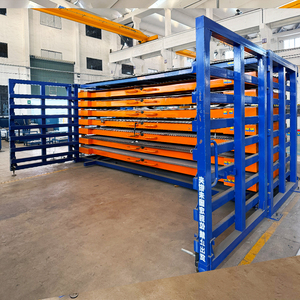
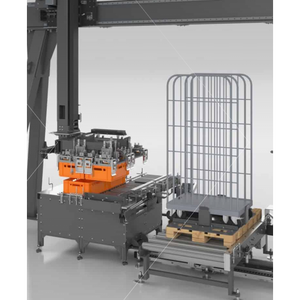
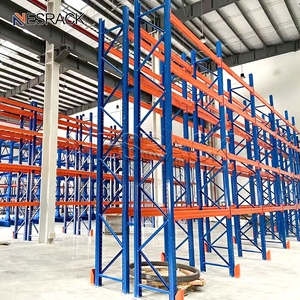
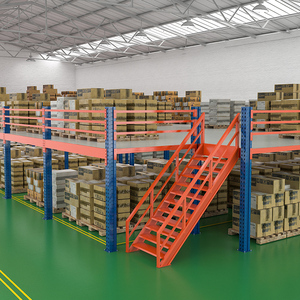
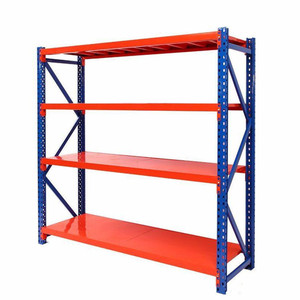
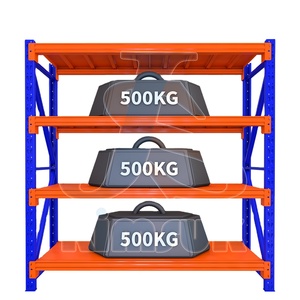
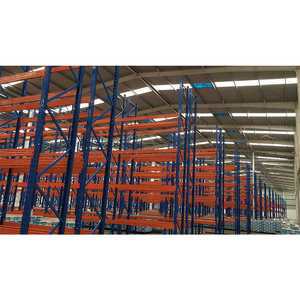
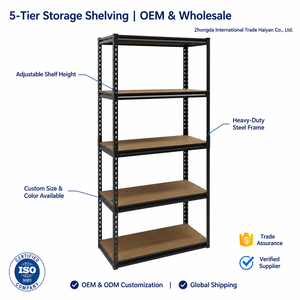
Engineered Pallet Storage Systems Portfolio

Precision-manufactured with high-tensile structural steel (Q235B/Q355B), standardized against stringent international load limits, seismic criteria, and warehouse spatial configurations.
2001
Founded & Manufacturing Since
300+
Certified Engineers & Technicians
30,000t
Monthly Structural Steel Throughput
323,000sq ft
Fabrication & Coating Campus

Engineering Whitepaper: Pallet Storage Architecture & Procurement Analysis

In modern supply chain infrastructures, pallet storage optimization goes far beyond steel fabrication. Industrial warehouse planners, 3PL providers, and cold-chain logistics directors encounter soaring urban land prices, heightened seismic building mandates, and high-frequency automated throughput demands. Selecting the correct pallet storage system directly governs capital expenditure (CapEx), return on investment (ROI), cubic utilization, inventory retrieval speed, and operational warehouse safety.

Comparative Performance Matrix: Structural Pallet Configurations

To resolve conflicting storage objectives—namely accessibility versus volumetric density—engineers utilize standard system classifications according to rotational models (FIFO vs. LIFO), floor footprint efficiency, and material handling vehicle requirements:

Racking Typology Space Utilization Pallet Selectivity Rotation Principle Material Handling Unit Optimum Logistics Profile
Selective Pallet Racking 40% – 50% 100% Immediate FIFO / LIFO Flexible Standard Counterbalance, Reach Truck High SKU variety, rapid single-pallet picking, 3PL staging
Double Deep Racking 55% – 65% 50% Accessible LIFO Pantograph / Deep Reach Mast Forklift Medium SKU density, identical batch lots, balanced buffering
Drive-In / Drive-Through 65% – 75% Low (Per Lane) LIFO (Drive-In) / FIFO (Drive-Thru) Specialized Narrow-Chassis Counterbalance Homogeneous bulk inventory, raw materials, freezer cold storage
Push Back Racking 70% – 78% 1 Face per Lane (2–6 Deep) LIFO Standard Forklifts (Gravity Trolley Feed) Fast product staging, high-density distribution with SKU sorting
Pallet Flow (Gravity) 80% – 85% Strict Lane-End Selectivity Strict FIFO Separate Infeed & Pick Face Forklifts Perishables, date-coded pharmaceuticals, fast FMCG cross-docking
Radio Shuttle Automation 85% – 90% Channel Automated Access FIFO / LIFO Switchable AGV / Manual Staging + Self-Propelled Shuttles High-throughput deep channels, expensive sub-zero cold facilities

Future Procurement Trends: The Next Horizon in Warehouse Logistics

Warehouse procurement strategies are systematically transitioning toward hybridized operations. As modern enterprises reconcile labor shortages and vertical construction parameters, storage procurement shifts are governed by three primary pillars:

  • High-Bay Density & Hybridized AGV/AMR Co-Existence: Rather than replacing traditional racking, warehouses adapt structural frames to interface seamlessly with Autonomous Mobile Robots (AMRs) and automated side-loaders. Procurement engineers specify tighter beam-deflection metrics (L/200 down to L/300) to ensure laser-guided automated reach mechanisms clear load edges without sensor tripping.
  • Sub-Zero Cold Chain Infrastructure Upgrades: Operating cost per cubic foot inside refrigerated distribution hubs is up to four times greater than ambient warehouses. Consequently, semi-automated Radio Shuttle Systems and compact mobile base racking have dominated cold-storage procurement tenders worldwide, slashing thermal loss overheads by condensing air volumes.
  • Regulatory Traceability & Structural Seismic Compliance: North American and European municipal codes mandate rigorous compliance (such as RMI ANSI MH16.1, EN 15512, and AS4084). Procurement teams prioritize tier-1 exporters capable of supplying certified engineering packages, dynamic Finite Element Analysis (FEA), and independent PE stamping for local permitting.

Technological Innovations in Structural Racking Engineering

Advancements in metallurgical processing have transformed cold-formed steel manufacturing. By deploying micro-alloyed structural sheets (such as titanium/boron-treated Q355 steel), manufacturers manufacture upright columns that withstand greater torsional loading and shear stress with reduced profile gauges. Precision continuous CNC roll-forming lines execute tight-pitch punchings without inducing micro-fractures in high-stress cold bends.

Corrosion protection has simultaneously modernized: continuous electrostatic thermoset polyester powder coating, preceded by multi-stage pickling, zinc phosphate conversion, and high-purity water rinses, delivers a coating thickness greater than 60–80 microns. This ensures structural endurance against alkaline cleanings, humidity, and constant sub-zero condensation cycles.

Direct Manufacturing Authority

Why Enterprise Warehouses Partner With HEDA Shelves

Combining over two decades of global logistics engineering, comprehensive in-house fabrication, and strict international standard certifications.

25+ Years Industrial Heritage

Serving warehouse operators since 2001 with over 10,000 commercial logistics projects delivered across North America, Europe, Oceania, and Latin America.

Rapid CAD & 3D Engineering

Dedicated structural engineering departments delivering full building space layout, imperial/metric load tables, and 3D renderings within 24 hours.

Third-Party Certified Quality

Accredited with ISO 9001:2015 Quality Management (No. 18624Q00169R0M), CE Marking (No. 2435-CPR-8605159), and strict RoHS material safety compliances.

Massive Scalability & Output

Operating across 323,000 sq ft of high-capacity production space with 30,000 metric tons monthly steel throughput to satisfy rapid project deadlines.

Customized OEM/ODM Programs

End-to-end custom roll forming, bespoke connection accessories, specific powder-coating RAL matches, and private label support for regional distributors.

Global Export & Container Packing

Specialized container stuffing protocols, high-strength ocean packaging, steel dunnage, and CIF/FOB delivery to Los Angeles, Houston, Savannah, and Vancouver.

Knowledge Center

Frequently Asked Questions for Project Procurement

Crucial engineering, customs, freight, and structural parameters answered by our senior logistics application team.

How do you engineer structural pallet racking for local seismic and building permit requirements?
Every facility location features unique geotechnical site classifications and seismic coefficients (Ss, S1 parameters). We supply full engineering calculation reports, material test mill certificates, and finite-element structural analysis in both imperial (lbs/ft) and metric standards. These comprehensive packages allow your local structural engineer of record (EOR) to verify deflection limitations, anchor bolt shear forces, and secure prompt municipal building approvals.
What are the precise differences between cold-formed roll steel and structural channel steel?
Cold-formed roll steel (such as high-tensile Q235B/Q355B coil) is shaped through continuous cold roll-forming rollers, resulting in an exceptional strength-to-weight ratio, high dimensional precision, and lower material/shipping expense. Structural steel (hot-rolled C-channels) offers superior impact resistance against heavy forklift collisions, making it favored in punishing drive-in configurations or heavy manufacturing plants. We manufacture both configurations to optimize budgetary performance.
How are containers protected against maritime transit damage and corrosion?
Ocean freight requires specialized packing: upright frames are strapped with heavy-duty structural polyester and steel bands, supported by wood saddles and protective edge protectors. Beams are palletized in uniform bundles, separated by corrugated pads to prevent powder-coat abrasion. In addition, moisture-absorbing desiccant bags are sealed within container chambers to eradicate condensation hazards across oceanic climate zones.
Can your beams and frames integrate with 48" x 40" GMA standard wooden and plastic pallets?
Yes. Our standard selective and dynamic storage frames are configured with standard 42-inch upright depths and 96-inch, 108-inch, or 144-inch beam spans designed specifically to provide optimal 3-inch clearance around standard 48" x 40" Grocery Manufacturers Association (GMA) pallets. Custom frames are easily configured for Euro pallets (1200 x 800mm), industrial skids, or steel storage tubs.
What documentation is necessary to begin a warehouse CAD layout and price quotation?
To receive an optimized CAD layout within 24 hours, our engineering staff requires: (1) Architectural floor plan showing column locations, exit doors, and clear building eaves height; (2) Pallet specifications (width, depth, height including product, and gross weight); (3) Material handling equipment specs (forklift minimum aisle turning radius, maximum mast height); and (4) Desired inventory handling philosophy (FIFO versus LIFO).

Optimize Your Warehouse Footprint Today

Connect directly with our senior racking design engineers. We review warehouse drawings, evaluate structural loading criteria, and furnish full itemized export proposals with CAD plans in 24 hours.

Contact Us