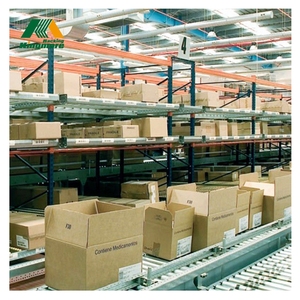
Factory-Engineered Catalog
Engineered Industrial Storage & Dynamic Pallet Rack Systems
Discover our high-performance warehousing solutions—from precision-crafted radio shuttle lanes to heavy-duty selective frameworks, carton flow rails, and modular load systems built to international ISO 9001:2015 and CE standards.
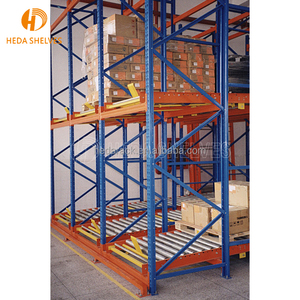

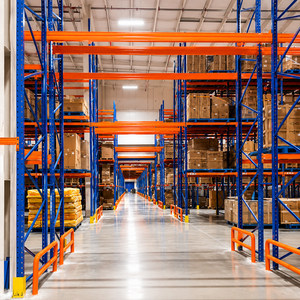
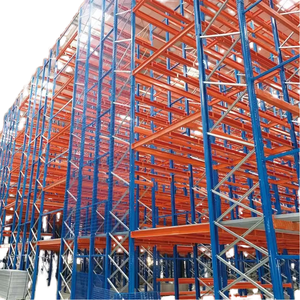
2001#
Established Year
323,000SQ FT
Advanced Production Campus
30,000TONS
Monthly Steel Capacity
10,000+
Global Warehousing Projects
Executive Whitepaper
The Evolution of Pallet Shuttle Racking: 2026-2030 Market Architecture
In modern high-velocity fulfillment centers and cold chain terminals, floor space has evolved from a passive storage metric into an active capital cost asset. Traditional static racking architectures—such as wide-aisle selective frames—often sacrifice up to 60% of internal building volume entirely to forklift maneuvering lanes. As industrial real estate acquisition rates continue upward across North America and Europe, global supply chain directors are systematically transitioning from static setups to semi-automated deep-lane radio pallet shuttle racking systems.
A high-density pallet shuttle matrix utilizes autonomous, remote-guided or WMS-integrated battery-powered shuttles that ride on internal structural guiding tracks within deep storage tunnels. Forklifts no longer enter the rack structure; they simply place pallets at the aisle entry face. The robotic shuttle mechanically raises the cargo, glides down the lane at speeds exceeding 1.2 m/s, and indexes pallets precisely at predetermined coordinates. This mechanical segregation of human-operated heavy equipment from interior storage lanes slashes frame impact collisions by up to 88%, drastically improving structural lifespan and worker safety.
Engineering Insights
Emerging Technology Trends in Radio Shuttle Systems
Understanding where automated material handling is heading ensures your facility design prevents operational obsolescence over a 15-year lifecycle.
⚡
LiFePO4 Power & Supercapacitor Synergy
Next-generation shuttle carriers are phasing out traditional lead-acid systems in favor of Lithium Iron Phosphate (LiFePO4) chemistry and supercapacitors, achieving 8-hour shift endurance with ultra-fast 25-minute opportunity recharge cycles.
❄
Ultra-Low Sub-Zero Temperature Resilience
Thermal condensation protection, automated track de-icing profiles, and cold-rated electronic enclosures now empower continuous shuttle operation in blast freezers down to -30°C (-22°F) without fluid viscosity loss.
🔀
Dynamic Dual-Mode FIFO / LIFO Switching
Smart multi-tier software integration allows distribution managers to flip operational lanes dynamically between First-In, First-Out (for date-sensitive food/pharma batches) and Last-In, First-Out (for high-volume SKU consolidation).
📡
WCS & WMS Bi-Directional IoT Telemetry
Industrial shuttles communicate directly via industrial Wi-Fi or 5G private bands to enterprise WMS engines, offering live pallet coordinates, cycle velocity logging, sensor telemetry, and predictive maintenance diagnostics.
🛡
Integrated 3D Optical & LiDAR Arrays
Precision time-of-flight (ToF) sensors and obstacle detection scanners continuously monitor overhang clearances and structural abnormalities, eliminating misaligned drops, pallet overhang jams, and chassis stalls.
🏗
Seismic Dissipation & High-Tensile Metallurgy
Employing high-strength Q235B and Q355B cold-rolled structural steel, uprights feature cold-bent multi-flange profiles engineered specifically to disperse lateral seismic shear forces compliant with RMI (MH16.1) standards.
Procurement Methodology
High-Density System Comparison Matrix
Evaluating automated shuttle racks against legacy alternatives: balance your capital investment (CapEx) against throughput metrics, SKU profile variety, and long-term operating costs (OpEx).
| Storage Topology | Space Utilization | Operational Throughput | Forklift Impact Risk | SKU Flexibility | Optimal Application |
|---|---|---|---|---|---|
| Radio Pallet Shuttle | 85% – 92% (Maximum) | Very High (Automated Lane Travel) | Extremely Low (Lift Stays in Aisle) | Moderate to High (Per Lane SKU) | Cold Storage, FMCG, High-Volume 3PL Hubs |
| Drive-In Racking | 70% – 80% (High) | Low (Slow Forklift In-Rack Driving) | Extremely High (Frequent Upright Hits) | Low (Uniform SKU per Block) | Seasonal Bulk Buffers, Low-Turnover Batches |
| Push-Back Racking | 70% – 75% (Medium-High) | Moderate (Gravity Push/Catch) | Low to Moderate | Moderate (2–6 Pallets Deep) | Medium SKU Variety, Staged Dispatch Lanes |
| Selective Racking | 40% – 50% (Baseline) | Moderate to High (100% Direct Access) | Moderate (Tight Aisle Navigation) | Maximum (Every Pallet Unique) | High-SKU E-Commerce, Retail Pick Modules |
| Pallet Flow (Gravity) | 80% – 85% (High) | High (Automatic Roll to Pick Face) | Low (Fixed Load/Unload Faces) | Moderate (FIFO Dedicated Lanes) | Perishable Goods, Rapid Cross-Dock Terminals |
Strategic Procurement Blueprint: Vetting Factory Partners
Procuring a multi-tier pallet shuttle installation requires an engineering audit that extends far beyond baseline pricing per metric ton. Sourcing teams must evaluate factories across three critical dimensions:
1. Cold-Roll Forming Tolerances: Because autonomous shuttle carriers navigate on internal horizontal steel rails over spans of 40 meters or more, any dimensional deviation in profile camber or guide rail flange alignment will cause shuttle drag or system faults. True tier-one manufacturers deploy continuous 24-station automated roll-forming lines with laser-calibrated tolerances under ±0.5mm.
2. Pre-Treatment and Electrostatic Finish: Surface pre-treatment must incorporate a 7-stage acid pickling and phosphating process before high-adhesion polyester epoxy powder coating. In cold-chain environments, micro-fissures in finish coatings invite moisture condensation, leading to subcutaneous corrosion and structural failure under load.
3. Comprehensive Engineering Documentation: Avoid vendors that only deliver basic fabrication layouts. Reliable manufacturers deliver complete finite element analysis (FEA), stamped load capacity certifications in both metric (kg) and imperial (lbs) units, and clear aisle deflection calculations ready for municipal building permits and professional engineer (PE) approvals.
The HEDA Shelves Advantage
Why Tier-One Logistics Integrators Partner With Us
Two decades of precision roll forming, international project compliance, and factory-direct export capabilities.
🖊
Free 24-Hour CAD & 3D Modeling
Our in-house engineering team converts your architectural layout into optimized CAD floor plans, elevation profiles, and realistic 3D renderings within 24 hours to accelerate design validation.
⚒
30,000 m² In-House Manufacturing
Operating out of our 323,000 sq ft campus with 300+ trained specialists, our automated punching, cold-bending, robot welding, and powder coating lines output 30,000 metric tons of steel each month.
📝
ISO 9001:2015 & CE Certified
We maintain full certification compliance (ISO 9001:2015 Cert #18624Q00169R0M, CE Factory Production Control #2435-CPR-8605159, and RoHS reports) ensuring dependable structural safety.
🚢
Container-Optimized Export Packing
Custom steel packaging cradles and strapping protocols protect components against ocean voyage humidity and handling impact, while maximizing 40HQ container cube utilization to lower ocean freight costs.
📏
Dual Imperial & Metric Engineering
We prepare all structural load documentation, beam pitch calculations, and layout drawings in metric (mm/kg) or imperial (ft/in/lbs) units to support prompt review by your local engineer of record.
🤝
Turnkey OEM / ODM Global Integration
Serving integrators, regional distributors, and Fortune 500 warehouse facilities across the USA, Canada, Europe, and Latin America with dedicated OEM fabrication and private labeling programs.
Direct Factory Q&A
Frequently Asked Questions About Pallet Shuttle Procurement
Practical answers to the technical, operational, and commercial questions most often asked by warehouse buyers.
Q1: How does a radio pallet shuttle racking system compare to drive-in racking?
While both provide deep-lane density, radio shuttle systems keep the forklift operator in the main aisle. The automated carrier moves pallets through the lane, doubling handling speeds, removing lane depth limits (up to 40m+ deep), and eliminating forklift mast collisions against upright frames.
Q2: Can your shuttle racking accommodate standard North American 48"x40" GMA pallets alongside Euro pallets?
Yes. Our guide rail brackets, beam depths, and shuttle chassis are custom-machined to accommodate GMA 48"x40", Euro 1200x800mm, 1200x1000mm, or specialized steel bins. We can also engineer dual-dimension rail assemblies that support mixed pallet profiles safely within the same aisle.
Q3: What parameters are required to receive a complete CAD layout and itemized quote?
Please share your building CAD drawing (or internal clear height and column grid dimensions), pallet dimensions including cargo overhang, maximum pallet weight, forklift model/lift height, and your preferred rotation logic (FIFO or LIFO). Our engineers typically deliver a full plan within 24 hours.
Q4: How do your shuttle systems handle deep-freeze cold storage facilities?
We supply cold-rated lithium battery arrays, condensation-resistant electrical components, and cryogenic lubricant oils certified down to -30°C (-22°F). Steel components receive shot-blast surface preparation followed by specialized powder coats formulated to resist thermal shock and spalling.
Q5: What safety and anti-drop mechanisms are integrated into the shuttle carriers?
Each shuttle is equipped with dual optical proximity sensors, laser obstacle detection arrays, dynamic pallet position switches, track-end mechanical stops, and rail-locking safety tabs that prevent the carrier from jumping the tracks during rapid acceleration or abrupt stops.
Q6: Do you provide installation guidance and third-party engineering support?
Yes. Every project includes detailed 3D exploded assembly diagrams, component marking tags, step-by-step installation manuals, and anchor bolt torque specifications. We also provide full structural calculation packages to support review and stamping by your local engineer of record.
Upgrade Your Warehouse Density with Custom-Engineered Shuttle Racks
Consult with our engineering team today to review your storage requirements. We will analyze your warehouse floor plan and provide a comprehensive 3D layout, load calculation, and itemized factory-direct quote.