Heavy Duty
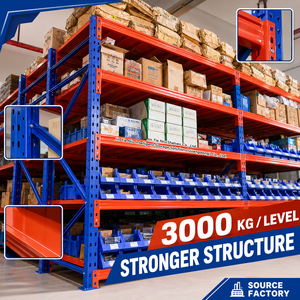
3000KG Heavy Load Steel Panel Storage Shelving
Configured with 5 robust layers supporting solid steel decks for bulk carton storage and heavy industrial component staging.
Explore our certified structural storage configurations designed for 3PL facilities, heavy manufacturing, cold storage, and rapid-fulfillment hubs across North America and international supply chains.
Configured with 5 robust layers supporting solid steel decks for bulk carton storage and heavy industrial component staging.
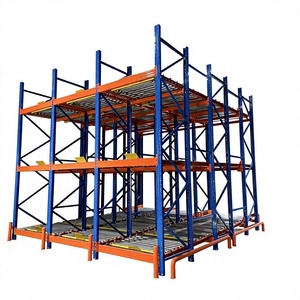
Dynamic gravity-fed roller beds engineered with anti-rust steel profiles, dedicated centrifugal speed controllers, and pallet separators.
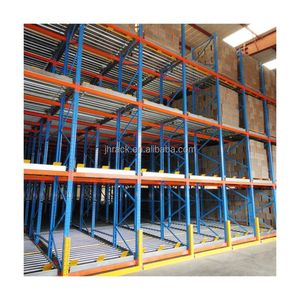
Hot-dip galvanized surface protection designed for cold chains, exterior loading bays, and chemical-intensive environments.

Engineered multi-functional wooden/MDF board shelf systems for administrative storage, small-parts bin picking, and tool rooms.
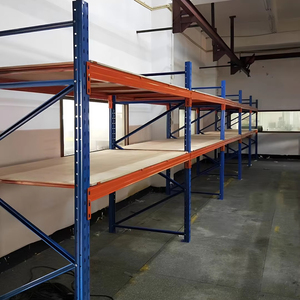
Boltless precision-formed upright pitch for rapid 50mm vertical reconfiguration across workshops, spare parts rooms, and retail backrooms.
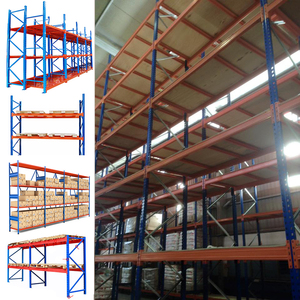
Tailored gradient channel tracks built with impact brake rollers for smooth deceleration of non-standard pallet units.
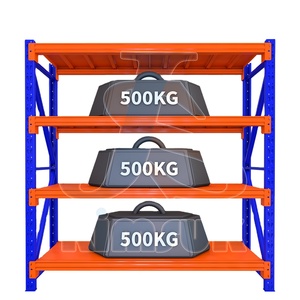
Fabricated with dual reinforced anti-collision crash beams, engineered floor anchors, and 24/7 direct factory technical support.
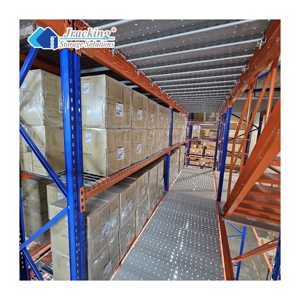
Standardized structural racking compatible with European DIN 15155 and North American 48"x40" GMA shipping pallets.
Since 2001, Guangzhou Heda Shelves Co., Ltd. has operated as a leading direct-mill pallet shelving manufacturer, integrating automated cold roll-forming, computerized punching, and electrostatic powder coating.
Procuring warehouse pallet racking requires balance between floor space utilization, equipment turn rates, and SKU throughput. When choosing an industrial storage configuration, engineering teams must evaluate structural steel properties (Q235B vs. structural cold-rolled steel), seismic site classifications, and load deflection limits (typically L/200 under RMI and FEM specifications).
| Racking Topology | Pallet Access Rate | Footprint Efficiency | Standard Rotation | Primary Use Case & Industry |
|---|---|---|---|---|
| Selective Pallet Racking | 100% Direct Access | 40% – 50% Floor Utilized | FIFO / LIFO Flexible | High-SKU distribution, e-commerce, 3PL logistics facilities |
| Pallet Flow (Gravity) | Lane Front / Pick Face | 70% – 85% Density | Strict FIFO Flow | Perishable cold store, date-sensitive pharmaceuticals, FMCG |
| Drive-In / Drive-Through | Lane Entry Restricted | 65% – 80% Density | LIFO (Drive-In) / FIFO | Bulk seasonal stock, raw materials, few high-volume SKUs |
| Rack-Supported Mezzanine | Multi-Level Access | Doubles / Triples Floor | Manual Batch Pick | Automotive spare parts, bin-location parcel fulfilment |
| Heavy-Duty Cantilever | Full Frontal Clearing | Variable Open Span | Continuous Access | Lumber, piping, steel bar stock, oversized building products |
All HEDA structural components undergo automated pickling, phosphating, and multi-stage powder curing to prevent oxidation even within sub-zero freezer applications down to -30°C.
Strict QA/QC batch controls compliant with ISO 9001:2015, CE Marking 2435-CPR, and RoHS environmental directives.
Our licensed structural engineers deliver custom CAD configurations, load calculations, and imperial 3D models within 24 hours.
Containerized modular strapping optimized for direct ocean freight to Long Beach, Houston, Savannah, New York, and Vancouver.
Complete customization on steel thickness, custom hole patterns, safety locks, column drop guards, and branded durable coatings.
As micro-fulfillment, automation, and supply chain volatility increase, enterprise warehouse procurement is evolving past static storage toward adaptive, automated structural frameworks.
Modern pallet shelving procurement increasingly demands tight fabrication tolerances (±1.0mm) to accommodate Autonomous Mobile Robots (AMR), automatic shuttle cars, and Automated Storage and Retrieval Systems (AS/RS). Future facilities require racking structures that can transition from manual reach trucks to automated guided vehicle picking without costly civil floor alterations or structural refitting.
Municipal building code enforcement (IBC / NFPA 13) across North America and Europe requires stamped structural engineering calculations accommodating severe seismic zone classifications (Categories D through F). Procurement directors prioritize high-yield cold-formed steel sections designed with heavier column bases and engineered anchor bolt patterns that maintain structural redundancy under seismic dynamic load waves.
With industrial land leasing prices escalating across tier-one logistics corridors, the procurement trend has shifted radically toward vertical utilization. Facilities are deploying multi-tier rack-supported mezzanines and narrow-aisle pallet flow setups to push clear working heights beyond 12 meters, substantially lowering the total operational expenditure and cost per stored cubic unit.
Critical engineering considerations, code compliances, and container shipping logistics answered by our senior racking engineers.
To produce an exact CAD plan and load certification within 24 hours, our engineering department requires: building architectural floor plans with column locations, clear building height to the lowest obstruction/sprinkler head, pallet dimensions (width, depth, overall height including cargo), maximum gross weight per pallet, and forklift mast specifications.
All upright columns and heavy beams are bundled using high-tensile steel banding, fitted with corner edge protectors, and separated by wooden spacers. Small hardware components, base plates, and safety beam clips are secured in labeled, heat-treated wooden crates to ensure zero transit movement inside 20GP or 40HQ ocean containers.
Yes. We engineer beam lengths and frame depths matched specifically to standard GMA 48"×40" pallets, European 800×1200mm Euro pallets, Australian 1165×1165mm footprints, or customized industrial steel bins with front and rear overhang margins engineered according to safety standards.
HEDA provides full shop drawings, structural section properties, finite element analysis (FEA) reports, and raw material chemical/yield mill certificates. These documents allow your local structural engineer of record (EOR) to verify calculations and submit them seamlessly for municipal warehouse construction permits.