Featured Industrial FIFO & Dynamic Storage Racking Systems
Manufactured to exact EN 15512, RMI, and ISO 9001:2015 structural standards. Engineered to maximize cubic volume, eliminate inventory expiration, and optimize warehouse throughput speeds.
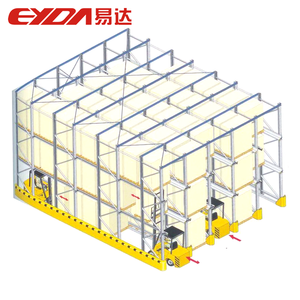
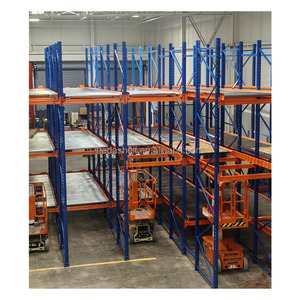
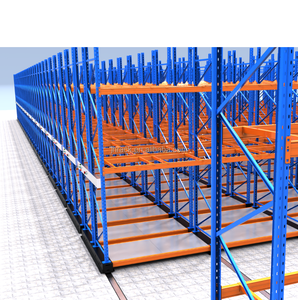
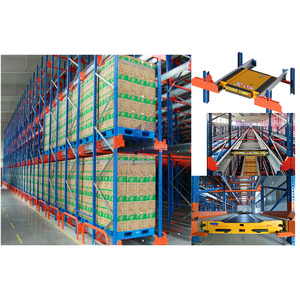
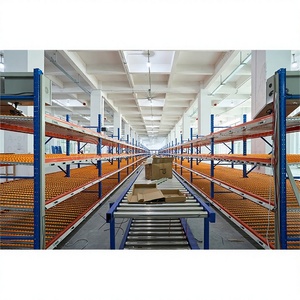
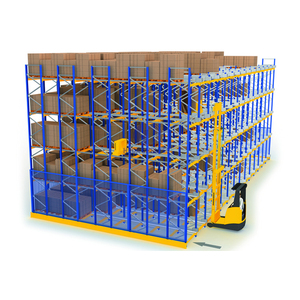
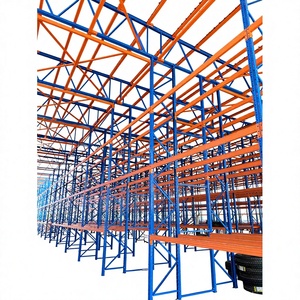
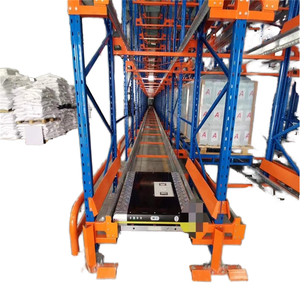
Guangzhou HEDA Shelves: A Global Leader in FIFO Engineering & Export
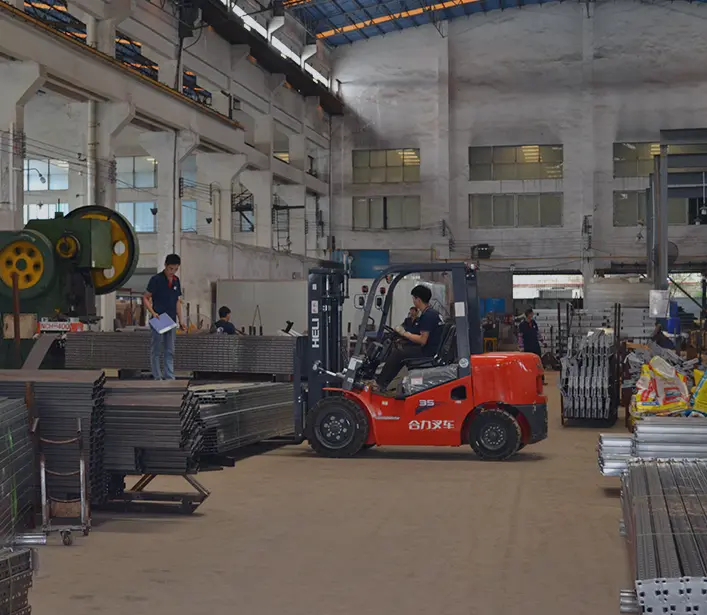
Founded in 2001 in Guangzhou, China, Guangzhou HEDA Shelves Co., Ltd. has established itself as an authoritative manufacturer and tier-one exporter of heavy-duty material handling and warehouse racking infrastructure. Operating from an expansive 30,000 m² (approx. 323,000 sq ft) manufacturing facility with over 300 experienced fabrication engineers, certified welders, and logistics architects, HEDA Shelves generates an industrial output exceeding 30,000 metric tons per month.
For global warehouse directors, supply chain managers, and 3PL fulfillment operators across North America, Europe, Australia, and Southeast Asia, procuring high-density First-In, First-Out (FIFO) racking systems requires rigorous adherence to structural mechanics, steel grade certifications, and dynamic velocity safety margins. At HEDA Shelves, we integrate turnkey engineering: from initial floor slab load-distribution calculations and 24-hour CAD/3D technical schematics to automated profile cold-rolling, shot-blast rust removal, electrostatic epoxy powder coating, and seaworthy container shipping optimization.
Whether you deploy dynamic gravity pallet flow lanes for pharmaceutical perishables, deep-lane drive-thru structures for agricultural processing, or semi-automated radio shuttle systems inside extreme -30°C cold storage distribution centers, HEDA Shelves engineers structural reliability directly into every upright column, dynamic brake roller, and load beam.
Comparative Matrix: Selecting the Right Industrial FIFO Racking Technology
Choosing the right FIFO configuration impacts forklift cycle times, building height utilization, fire suppression clearances, and cumulative equipment amortization.
| FIFO Storage Technology | Typical Lane Depth | Access Velocity & Throughput | Forklift Interaction | Floor Space Utilization | Ideal Industry Use-Cases |
|---|---|---|---|---|---|
| Pallet Flow (Gravity Roller Rack) | 2 to 25+ Pallets Deep | Very Fast (Dedicated feed & retrieval aisles) | Exterior pick & replenishment faces only | 80% – 88% Footprint Density | Fresh dairy, fast-turn grocery, pharmaceuticals, brewing. |
| Semi-Automated Pallet Shuttle | Up to 40+ Pallets Deep | High Efficiency (Battery-powered carrier travel) | Lift truck positions shuttle at aisle boundary | 85% – 92% Footprint Density | Frozen cold storage (-30°C), beverage hubs, FMCG manufacturing. |
| Drive-Thru Racking (Open Bay) | 4 to 12 Pallets Deep | Moderate (Driver navigates into structure) | Forklift drives into the bay from opposing entry/exit | 70% – 80% Footprint Density | Homogeneous bulk commodities, raw materials, seasonal agriculture. |
| Electric Mobile Pallet Racking | Single/Double Deep per Block | High Selectivity (Motorized aisle opening) | Standard reach or counterbalance inside dynamic aisle | 85% – 95% Footprint Density | High-value cold chain, pharmaceutical vaults, archival storage. |
| Carton Flow Live Racking | Multi-Carton Depth Beds | Rapid Piece Picking (Split-case picking) | Manual hand-pack replenishment & ergonomic picking | 75% – 85% Pick-Face Area | E-commerce fulfillment centers, automotive assembly lines. |
Future Procurement Trends in Industrial FIFO Racking (2026–2035)
How global supply chain pressures, automated handling technologies, and sustainability criteria are reshaping material handling procurement specifications.
High-Efficiency Cold Chain Expansion
Escalating electrical power costs for refrigerated distribution centers have turned the ratio of stored pallet volume to conditioned cubic air into a critical operational KPI. Future procurement mandates shift heavily toward automated radio shuttle and deep-lane gravity flow systems. By eliminating warm access aisles and concentrating pallet masses, facilities reduce thermal leakage and lower kilowatt-hour consumption per ton of refrigerated payload.
AGV & AMR Autonomous Interface
Procurement specifications increasingly require mechanical compatibility with Autonomous Mobile Robots (AMRs) and automated counterbalanced forklifts. FIFO rack entry funnels, pallet centring guide rails, and loading stop dampers must maintain dimensional tolerances under ±1.5 mm. High-precision laser-welded stop bars and digital sensor reflectors ensure seamless docking for driverless fleet operations without human intervention.
Embedded IoT & Condition Monitoring
The integration of smart IoT acceleration sensors on gravity flow brake rollers and wireless telemetry units on shuttle transport carts allows facility managers to monitor roller bearing temperatures, rolling friction coefficients, and structural impact events in real time. Predictive maintenance alerts notify engineering personnel of mechanical resistance anomalies before lane jamming or product damage can occur.
High-Tensile Cold-Formed Steel Grades
Enterprise buyers are replacing legacy hot-rolled structural steel sections with advanced high-yield micro-alloyed cold-formed profiles (e.g., Q355B and high-grade SS400). Optimized multi-rib upright column cross-sections provide greater torsional stiffness and higher buckling resistance under significant seismic loading while reducing gross structural steel mass, thereby lowering ocean container freight costs.
Rapid Modular Reconfiguration
Fast-shifting SKU profiles driven by omni-channel e-commerce require warehouse rack structures that adjust on demand. Modern FIFO designs utilize modular boltless beam connections with 50 mm or 75 mm pitch hole patterns, adjustable roller track brackets, and universal guide rails. This enables conversion between standard GMA pallets (48×40 in), Euro pallets (1200×800 mm), and custom containerized payloads within hours.
Stringent Traceability & Food Safety Regulations
With regulatory frameworks such as the US FDA Food Safety Modernization Act (FSMA Rule 204) and EU General Food Law mandating item-level date code compliance, strict FIFO rotation is no longer optional. Supply chain directors specify gravity flow and shuttle-based FIFO systems to eliminate the risk of dead inventory, spoilage write-offs, and batch contamination across bulk logistics nodes.
State-of-the-Art Technological Developments in FIFO Pallet Racking
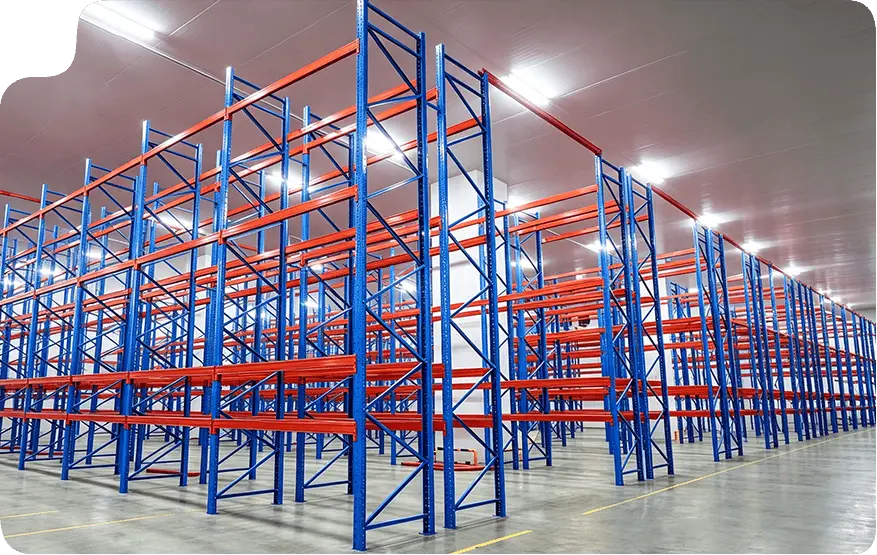
The physics of dynamic FIFO pallet flow systems requires careful balance between gravitational kinetic acceleration and controlled frictional deceleration. When full unit loads weighing up to 1,500 kg (3,300 lbs) traverse an inclined lane across 20 to 30 meters, unmanaged velocity can lead to pallet impact collisions, load shifts, or structural dislodgement at the discharge face.
HEDA Shelves incorporates advanced metallurgical and mechanical innovations:
- Centrifugal Speed Controller Rollers: Integrated internal gearboxes that automatically activate braking resistance proportionally to pallet speed, maintaining a steady, safe gliding velocity of 0.2 to 0.3 meters per second regardless of pallet weight variations.
- Pallet Separation Stop Mechanisms: Pneumatic or mechanical pedal separators at the pick face that physically isolate the discharge pallet from the upstream queue, eliminating line pressure so lift truck operators can extract pallets smoothly without binding.
- Ultra-Low Temperature Bearings: Roller assemblies lubricated with synthetic aerospace greases rated down to -35°C, ensuring zero roller lock-up in refrigerated logistics centers.
- High-Durability Galvanized Steel Rollers: Heavy-gauge zinc-electroplated or hot-dip galvanized roller tubes equipped with double-shielded precision bearings to prevent corrosion from washdowns or atmospheric condensation.
Why Top Global Brands Partner with HEDA Shelves
End-to-end quality assurance, precision roll-forming manufacturing, and verified international safety accreditations.
Free 24-Hour CAD & 3D Engineering Layouts
Our in-house team of structural racking engineers reviews your warehouse architectural drawings, floor slab load ratings, column spacing, and clear ceiling heights to deliver fully optimized AutoCAD layouts and 3D isometric BIM renderings within 24 hours. Load calculations are supplied in both metric and imperial measurements (lbs, in, ft) for international engineering sign-off.
Certified ISO 9001:2015 & CE Quality
Production operations follow strict ISO 9001:2015 quality management procedures (Certificate No. 18624Q00169R0M) and European CE Marking standards (No. 2435-CPR-8605159). Tensile coupon tests, weld seam ultrasonic inspections, and salt spray corrosion assessments ensure every batch meets or exceeds global racking safety benchmarks.
Turnkey Export Packaging & Ocean Logistics
Racking components are bundled with steel strapping, edge protectors, heavy-gauge poly wrapping, and engineered timber dunnage to prevent transport abrasion during intermodal transit. Our logistics coordinators maximize container payload weight and cube across 20GP, 40GP, and 40HQ ocean containers shipped to major ports across North America, Europe, the Middle East, and Latin America.
Frequently Asked Questions (FAQ) for Industrial Racking Buyers
Detailed answers to critical engineering, installation, and supply chain questions encountered during the evaluation and procurement of FIFO storage systems.
1. What is the fundamental operational difference between FIFO and LIFO pallet storage systems? +
2. How do engineers determine the correct pitch angle for gravity pallet flow racking? +
3. What concrete floor slab specifications are required for high-density FIFO installations? +
4. Can HEDA Shelves customize racking to accommodate both US 48×40 GMA pallets and European 1200×800 pallets? +
5. How does HEDA Shelves ensure seismic resilience in high-risk geographic zones? +
6. What is the typical production and delivery lead time for an overseas containerized project? +
7. How do brake rollers operate without external electricity in dynamic pallet flow systems? +
Optimize Your Warehouse Capacity & FIFO Workflow Today
Connect directly with Guangzhou HEDA Shelves' engineering team for a complimentary warehouse storage optimization analysis. Send us your facility dimensions, clear ceiling height, pallet specifications, and throughput targets to receive a custom AutoCAD layout and itemized export price quote within 24 hours.